Imperial China Collapses Ch 14 3 The Qing



- Slides: 15
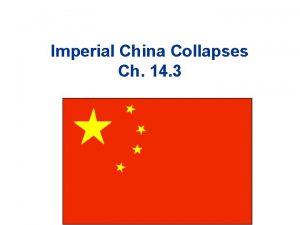
Imperial China Collapses Ch. 14. 3
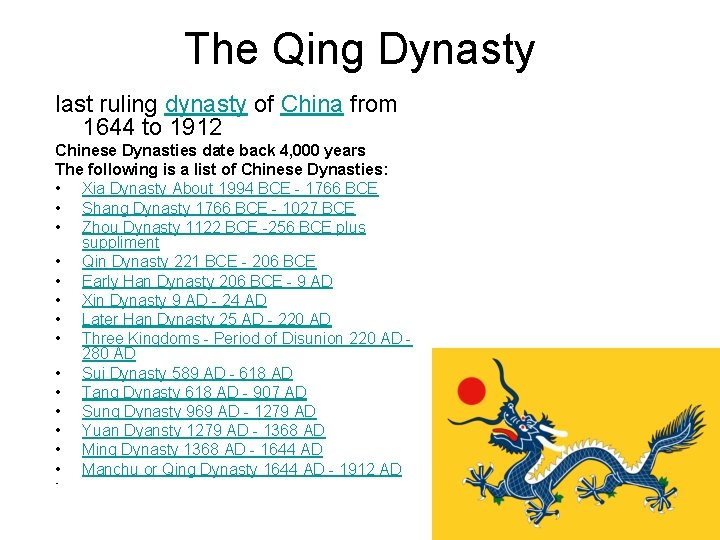
The Qing Dynasty last ruling dynasty of China from 1644 to 1912 Chinese Dynasties date back 4, 000 years The following is a list of Chinese Dynasties: • Xia Dynasty About 1994 BCE - 1766 BCE • Shang Dynasty 1766 BCE - 1027 BCE • Zhou Dynasty 1122 BCE -256 BCE plus suppliment • Qin Dynasty 221 BCE - 206 BCE • Early Han Dynasty 206 BCE - 9 AD • Xin Dynasty 9 AD - 24 AD • Later Han Dynasty 25 AD - 220 AD • Three Kingdoms - Period of Disunion 220 AD - 280 AD • Sui Dynasty 589 AD - 618 AD • Tang Dynasty 618 AD - 907 AD • Sung Dynasty 969 AD - 1279 AD • Yuan Dyansty 1279 AD - 1368 AD • Ming Dynasty 1368 AD - 1644 AD • Manchu or Qing Dynasty 1644 AD - 1912 AD •
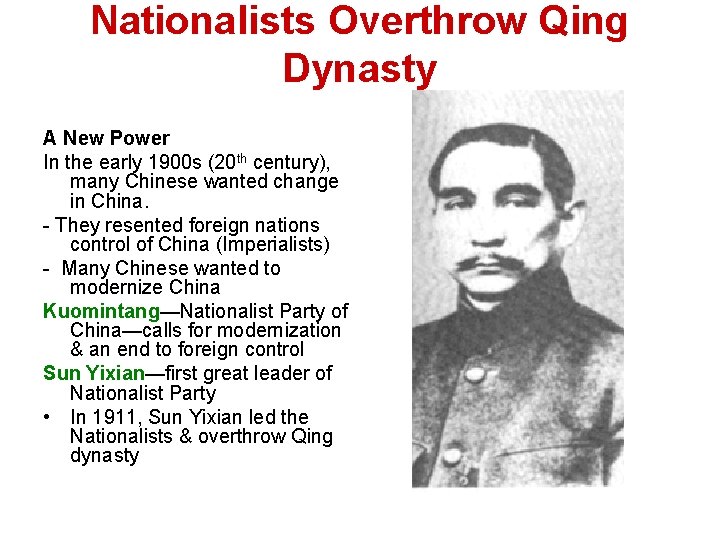
Nationalists Overthrow Qing Dynasty A New Power In the early 1900 s (20 th century), many Chinese wanted change in China. - They resented foreign nations control of China (Imperialists) - Many Chinese wanted to modernize China Kuomintang—Nationalist Party of China—calls for modernization & an end to foreign control Sun Yixian—first great leader of Nationalist Party • In 1911, Sun Yixian led the Nationalists & overthrow Qing dynasty
Nationalism vs. Communism • Nationalism: The strong belief that the interests of a country are most important. Also, the belief that a people who share a common language, history, and culture should constitute an independent nation, free of foreign domination. • Do what is best for nation • Communism: is a social, political, and economic ideology and movement whose ultimate goal is the establishment of thecommunist society, which is a socioeconomic order structured upon the common ownership of the means of production
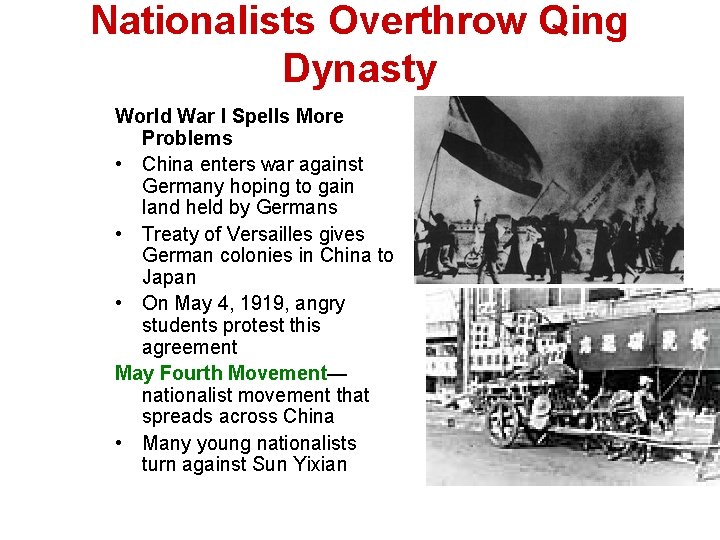
Nationalists Overthrow Qing Dynasty World War I Spells More Problems • China enters war against Germany hoping to gain land held by Germans • Treaty of Versailles gives German colonies in China to Japan • On May 4, 1919, angry students protest this agreement May Fourth Movement— nationalist movement that spreads across China • Many young nationalists turn against Sun Yixian
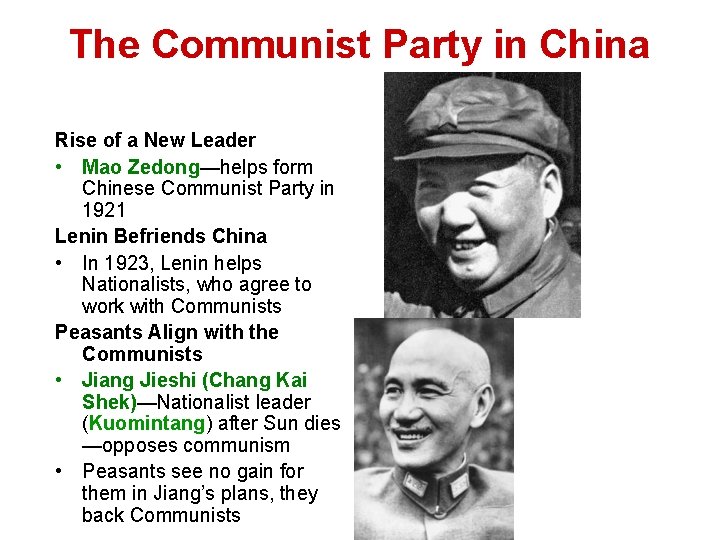
The Communist Party in China Rise of a New Leader • Mao Zedong—helps form Chinese Communist Party in 1921 Lenin Befriends China • In 1923, Lenin helps Nationalists, who agree to work with Communists Peasants Align with the Communists • Jiang Jieshi (Chang Kai Shek)—Nationalist leader (Kuomintang) after Sun dies —opposes communism • Peasants see no gain for them in Jiang’s plans, they back Communists
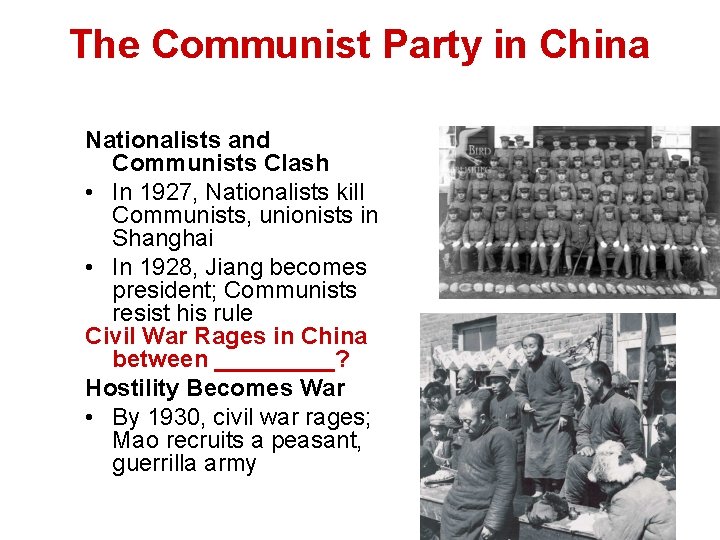
The Communist Party in China Nationalists and Communists Clash • In 1927, Nationalists kill Communists, unionists in Shanghai • In 1928, Jiang becomes president; Communists resist his rule Civil War Rages in China between _____? Hostility Becomes War • By 1930, civil war rages; Mao recruits a peasant, guerrilla army
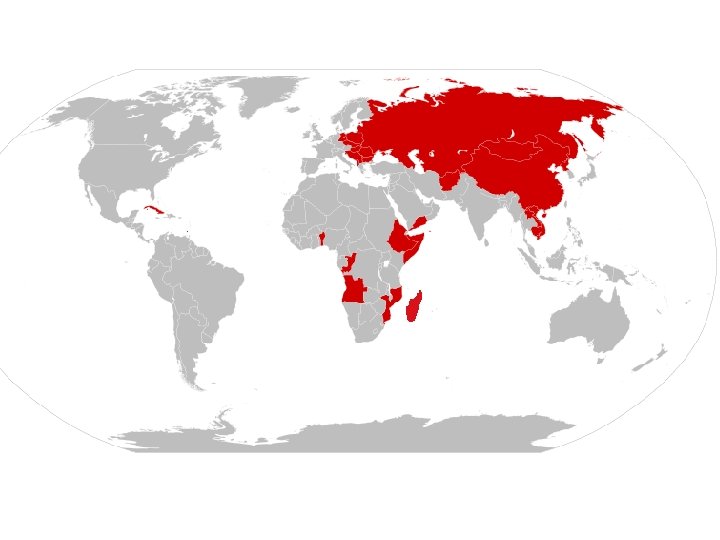
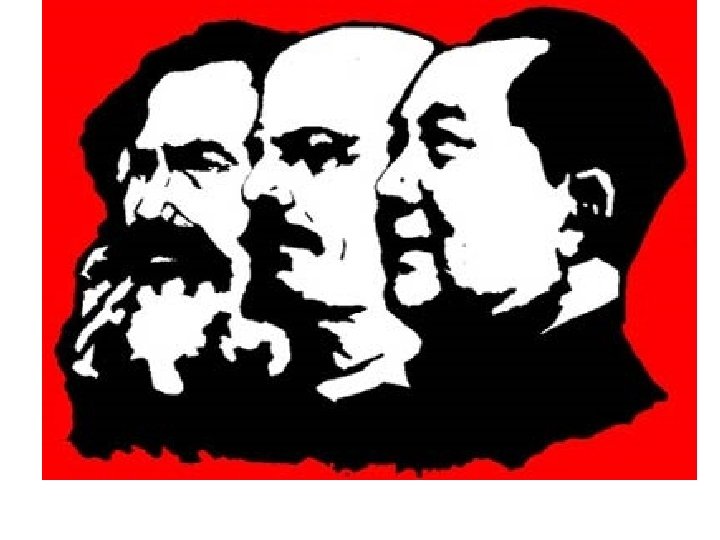
GAME: You will see a series of images. Look at the image, and then I will raise my hand. Once my hand is raised, you should yell (quiet yell) whether the image represents NATIONALISM or COMMUNISM.