Human Computer Interaction Research in the MIS Discipline


- Slides: 11
Human Computer Interaction Research in the MIS Discipline HCI Panel AMCIS ’ 02 Dr. Jane M. Carey
Definition of HCI “Human Factors in IS (HCI) is the scientific study of the interaction between people, computers, and the work environment. The knowledge gained from this study is used to create information systems and work environments which help to make people more productive and more satisfied with their work life. ” (Beard & Peterson, 1988) Consensus definition from the HFIS Symposia series
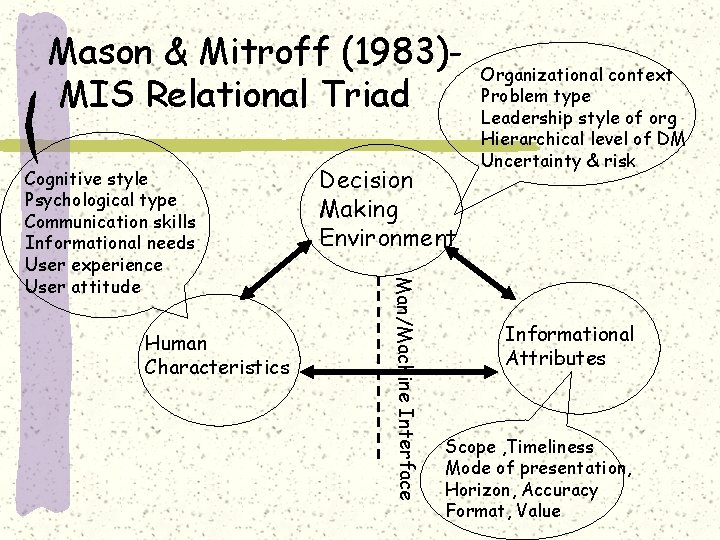
Mason & Mitroff (1983)MIS Relational Triad Human Characteristics Decision Making Environment Man/Machine Interface Cognitive style Psychological type Communication skills Informational needs User experience User attitude Organizational context Problem type Leadership style of org Hierarchical level of DM Uncertainty & risk Informational Attributes Scope , Timeliness Mode of presentation, Horizon, Accuracy Format, Value
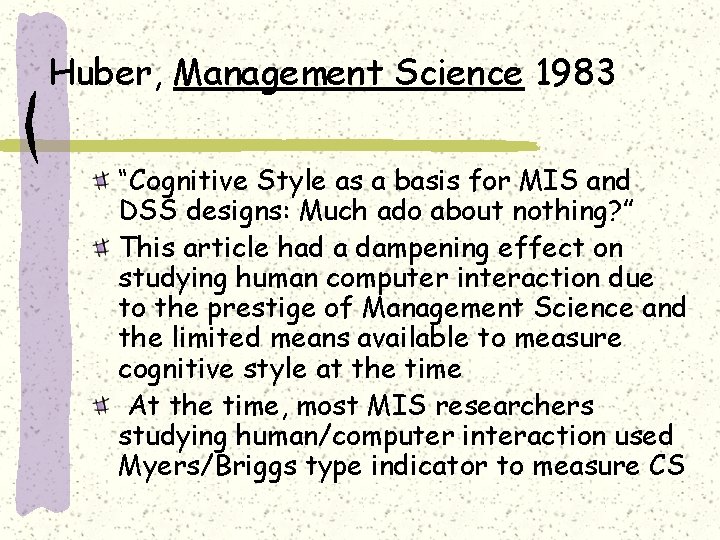
Huber, Management Science 1983 “Cognitive Style as a basis for MIS and DSS designs: Much ado about nothing? ” This article had a dampening effect on studying human computer interaction due to the prestige of Management Science and the limited means available to measure cognitive style at the time At the time, most MIS researchers studying human/computer interaction used Myers/Briggs type indicator to measure CS
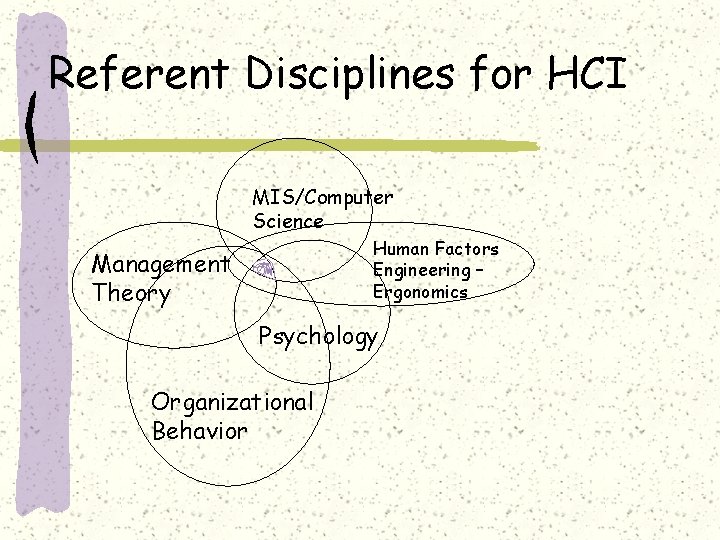
Referent Disciplines for HCI MIS/Computer Science Human Factors Engineering – Ergonomics Management Theory Psychology Organizational Behavior
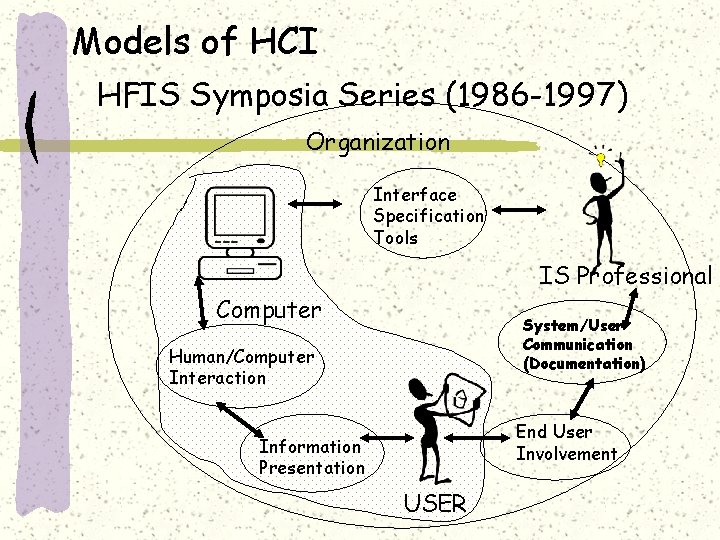
Models of HCI HFIS Symposia Series (1986 -1997) Organization Interface Specification Tools IS Professional Computer System/User Communication (Documentation) Human/Computer Interaction End User Involvement Information Presentation USER
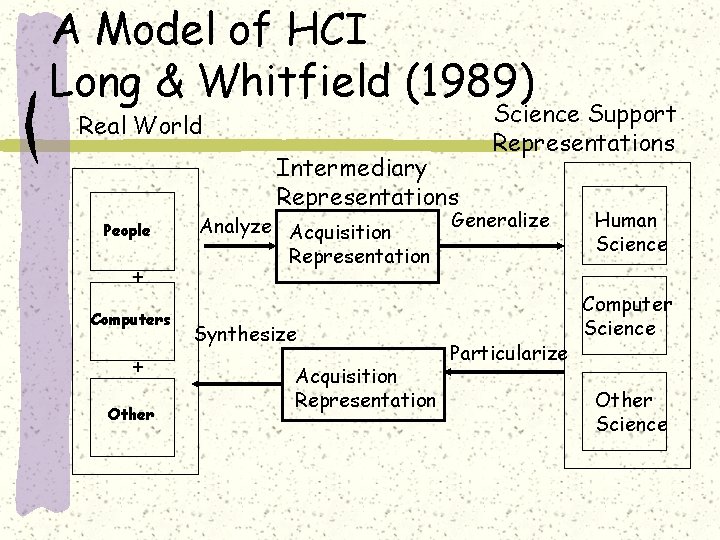
A Model of HCI Long & Whitfield (1989) Real World Intermediary Representations People + Computers + Other Analyze Acquisition Representation Synthesize Acquisition Representation Science Support Representations Generalize Particularize Human Science Computer Science Other Science
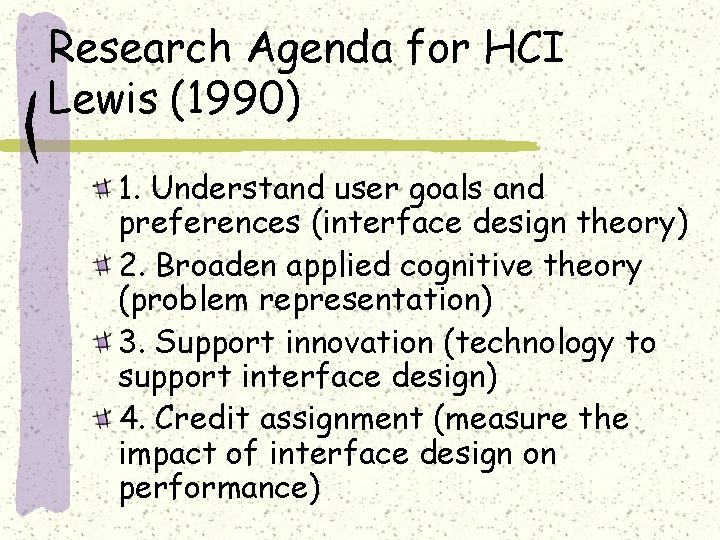
Research Agenda for HCI Lewis (1990) 1. Understand user goals and preferences (interface design theory) 2. Broaden applied cognitive theory (problem representation) 3. Support innovation (technology to support interface design) 4. Credit assignment (measure the impact of interface design on performance)
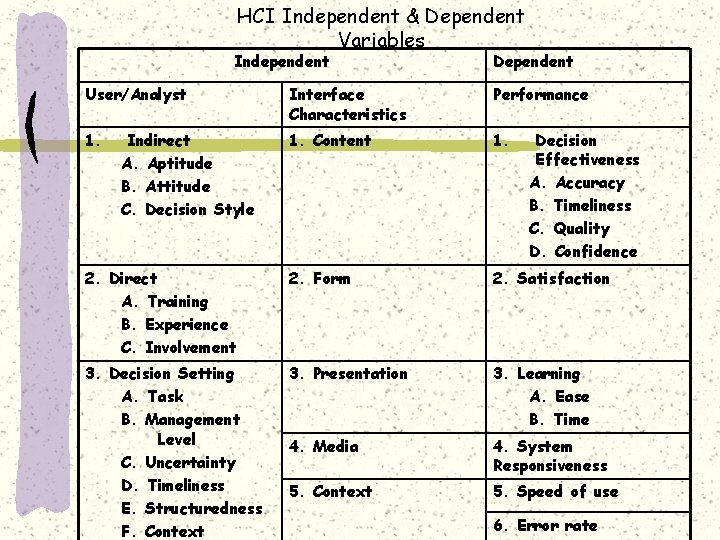
HCI Independent & Dependent Variables Independent Dependent User/Analyst Interface Characteristics Performance 1. Content 1. 2. Direct A. Training B. Experience C. Involvement 2. Form 2. Satisfaction 3. Decision Setting A. Task B. Management Level C. Uncertainty D. Timeliness E. Structuredness F. Context 3. Presentation 3. Learning A. Ease B. Time 4. Media 4. System Responsiveness 5. Context 5. Speed of use Indirect A. Aptitude B. Attitude C. Decision Style Decision Effectiveness A. Accuracy B. Timeliness C. Quality D. Confidence 6. Error rate
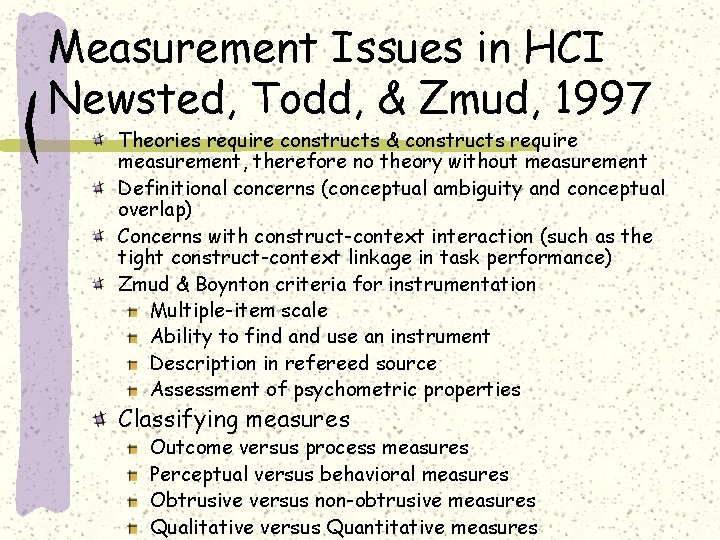
Measurement Issues in HCI Newsted, Todd, & Zmud, 1997 Theories require constructs & constructs require measurement, therefore no theory without measurement Definitional concerns (conceptual ambiguity and conceptual overlap) Concerns with construct-context interaction (such as the tight construct-context linkage in task performance) Zmud & Boynton criteria for instrumentation Multiple-item scale Ability to find and use an instrument Description in refereed source Assessment of psychometric properties Classifying measures Outcome versus process measures Perceptual versus behavioral measures Obtrusive versus non-obtrusive measures Qualitative versus Quantitative measures
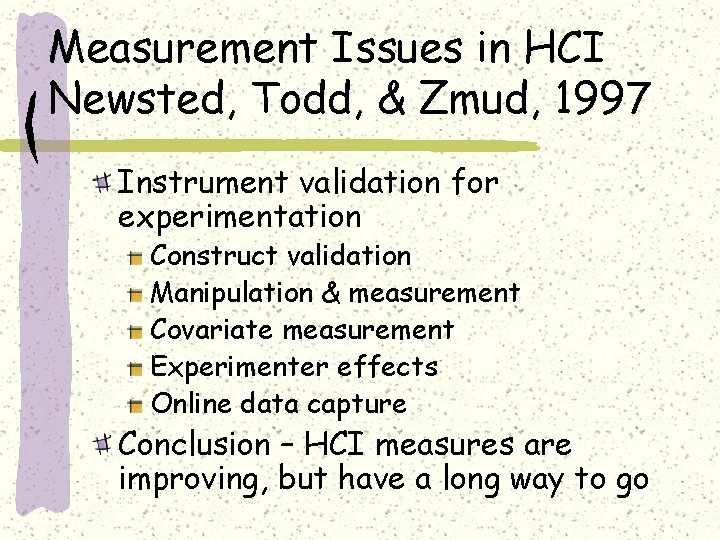
Measurement Issues in HCI Newsted, Todd, & Zmud, 1997 Instrument validation for experimentation Construct validation Manipulation & measurement Covariate measurement Experimenter effects Online data capture Conclusion – HCI measures are improving, but have a long way to go