How to Start and Carry on a Conversation


- Slides: 13
How to Start and Carry on a Conversation http: //www. wikihow. com/Start-a-Conversation-When-You-Have-Nothing-to-Talk-About
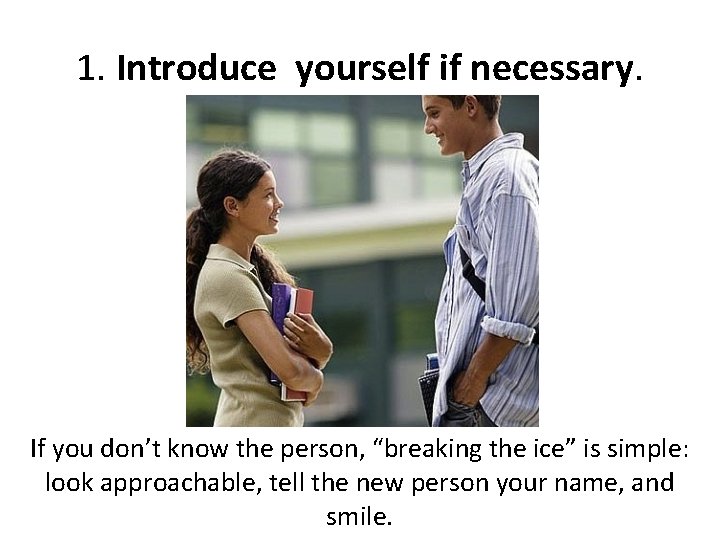
1. Introduce yourself if necessary. If you don’t know the person, “breaking the ice” is simple: look approachable, tell the new person your name, and smile.
2. Remark on the location or occasion. Look around and see if there is anything worth pointing out. Examples : "This is a gorgeous room!", "Such incredible catering!", "I love this view!", or "Great dog!"
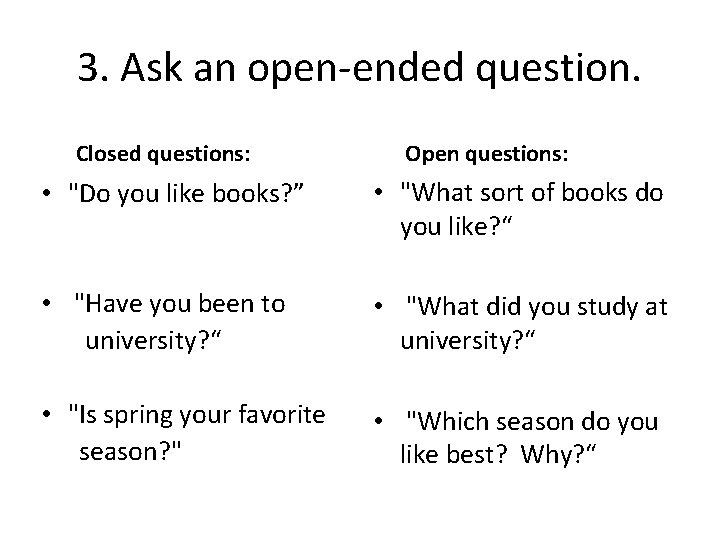
3. Ask an open-ended question. Closed questions: Open questions: • "Do you like books? ” • "What sort of books do you like? “ • "Have you been to university? “ • "What did you study at university? “ • "Is spring your favorite season? " • "Which season do you like best? Why? “
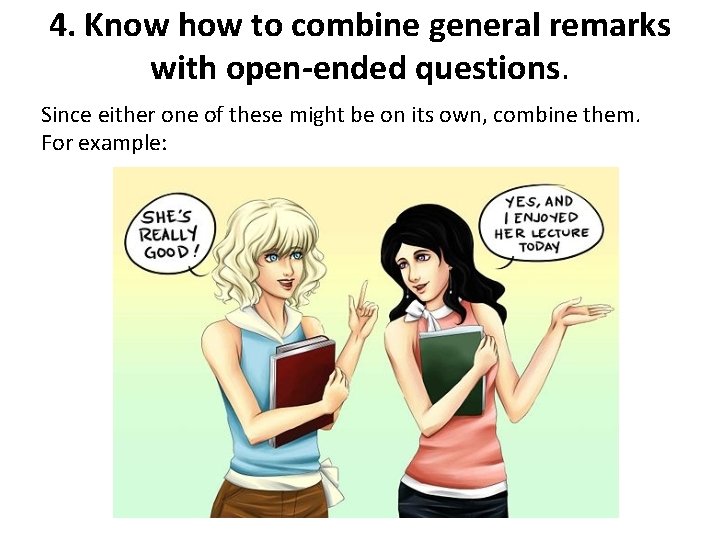
4. Know how to combine general remarks with open-ended questions. Since either one of these might be on its own, combine them. For example:
5. Keep the conversation going with small talk. This keeps the conversation light and simple, which is especially useful for people who are still getting to know one another better. – Small talk includes such topics as your blog or website, the purchase of a new scooter, vacation plans, a good movie you've just seen, etc. – Small talk does not include politics, other controversial topics, or criticizing someone else. – Although talking about the weather is a cliche, if there's something unusual about the weather, you've got a great topic of conversation.
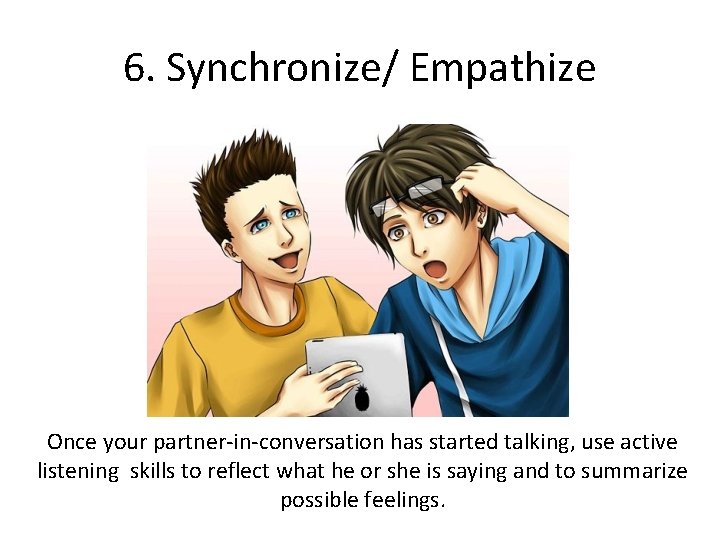
6. Synchronize/ Empathize Once your partner-in-conversation has started talking, use active listening skills to reflect what he or she is saying and to summarize possible feelings.
Synchronize (cont’d. ) • Say the other person's name now and then. Not only does it help you to remember them but it's a warming sign of respect and mutual like. • Give encouraging feedback. You don't even have to say things a lot of the time; you can nod, say “ah-ha” or “wow’ or “oh” or “hmm, ’ sigh, , and give short encouraging statements such as "Is that so? " and "Goodness!", and "What did you do/say then? " and "That's amazing!", etc. • Keep your body language open and receptive. Nod in agreement, make occasional genuine eye contact without staring, and lean in toward the other person. • Keep good thoughts going through your head. Stay interested in the other person and focused on them. • Smile a lot and laugh when the other person makes a funny comment. However, don’t force laughter; smile and nod instead.
7. Use words of a sensory nature. These are words such as "see", "imagine", "feel", "tell", "sense", etc. , which encourage the other person to keep painting a descriptive picture. – How did you feel when that happened? – What do you see yourself doing four years from now? – Tell me about the time that you slept through your train stop.
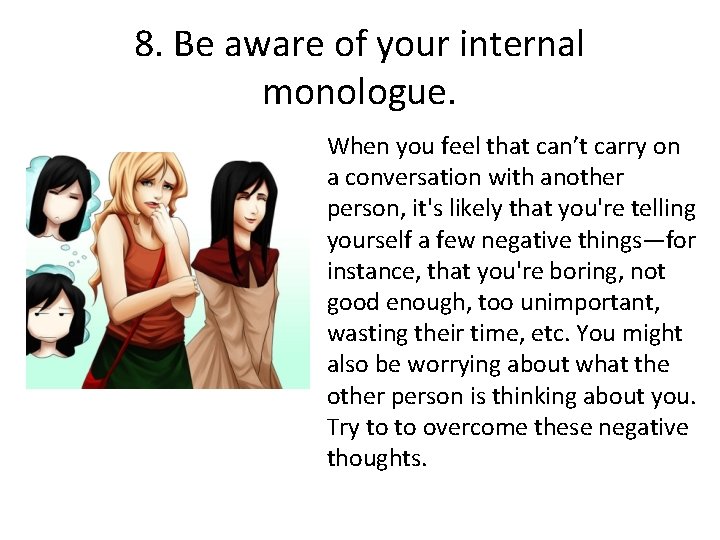
8. Be aware of your internal monologue. When you feel that can’t carry on a conversation with another person, it's likely that you're telling yourself a few negative things—for instance, that you're boring, not good enough, too unimportant, wasting their time, etc. You might also be worrying about what the other person is thinking about you. Try to to overcome these negative thoughts.
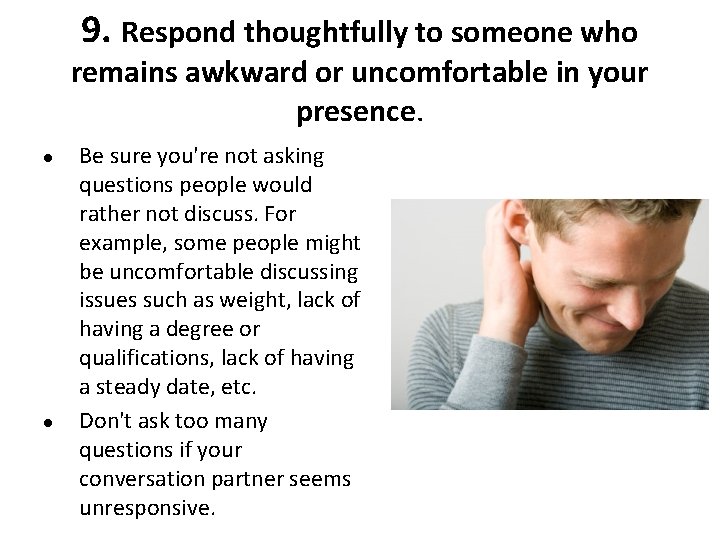
9. Respond thoughtfully to someone who remains awkward or uncomfortable in your presence. l l Be sure you're not asking questions people would rather not discuss. For example, some people might be uncomfortable discussing issues such as weight, lack of having a degree or qualifications, lack of having a steady date, etc. Don't ask too many questions if your conversation partner seems unresponsive.
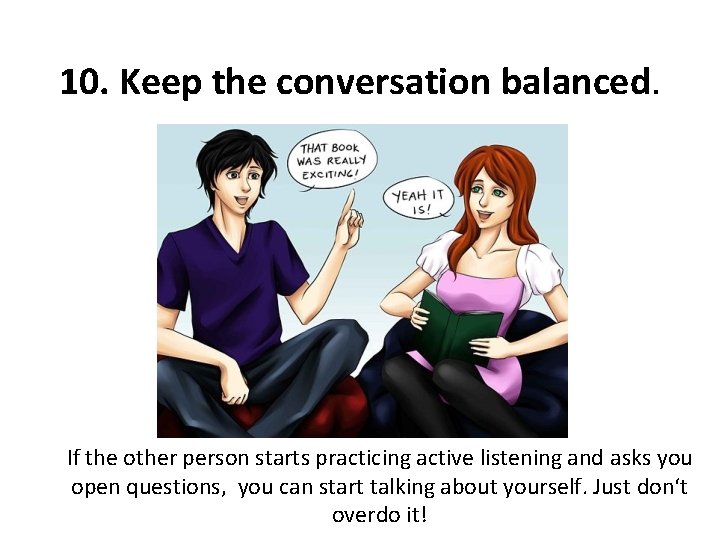
10. Keep the conversation balanced. If the other person starts practicing active listening and asks you open questions, you can start talking about yourself. Just don‘t overdo it!
11. Practice getting conversations started. • You may feel a little clumsy at first, but with practice, it can become easy to start good conversations. Every time you're in a situation where you're called upon to converse with others, see it as part of your ongoing practice, and note how you're improving each time that you try it.