How is the oxidation of pyruvate regulated PDH
- Slides: 9
How is the oxidation of pyruvate regulated?
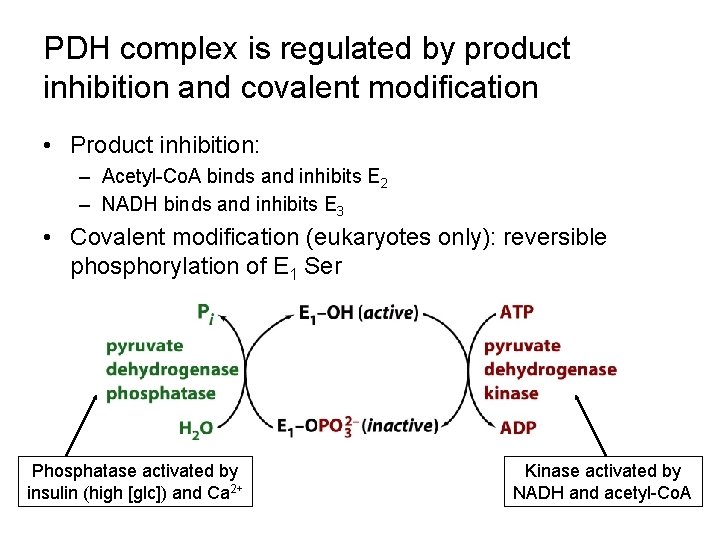
PDH complex is regulated by product inhibition and covalent modification • Product inhibition: – Acetyl-Co. A binds and inhibits E 2 – NADH binds and inhibits E 3 • Covalent modification (eukaryotes only): reversible phosphorylation of E 1 Ser Phosphatase activated by insulin (high [glc]) and Ca 2+ Kinase activated by NADH and acetyl-Co. A
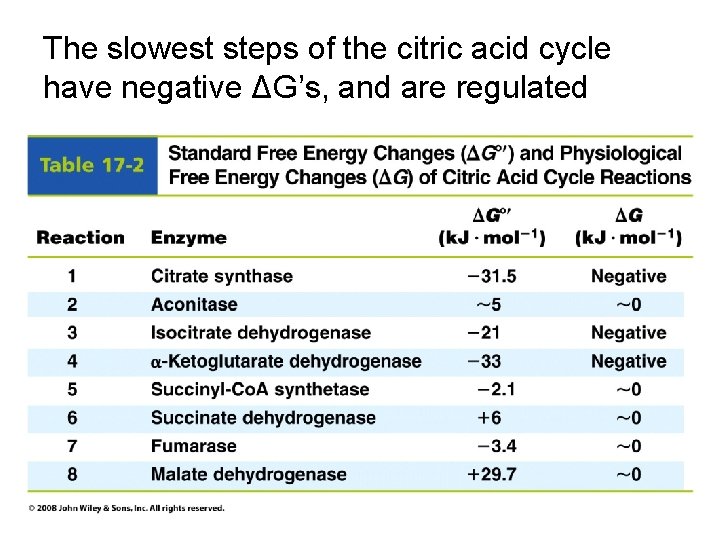
The slowest steps of the citric acid cycle have negative ΔG’s, and are regulated
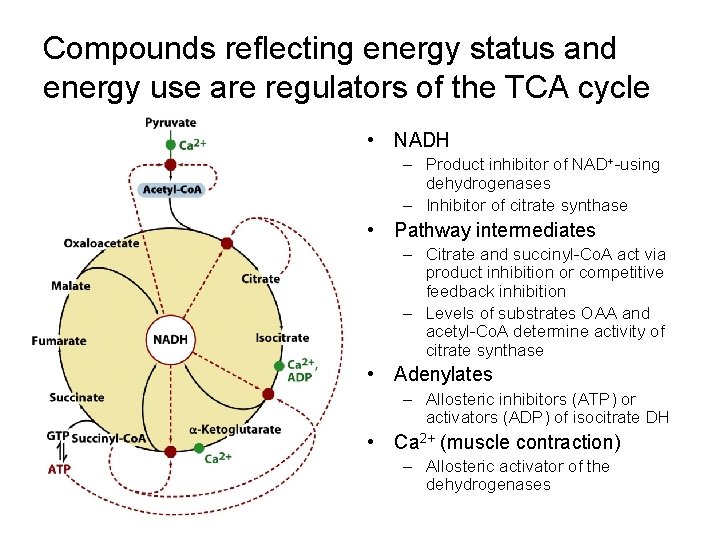
Compounds reflecting energy status and energy use are regulators of the TCA cycle • NADH – Product inhibitor of NAD+-using dehydrogenases – Inhibitor of citrate synthase • Pathway intermediates – Citrate and succinyl-Co. A act via product inhibition or competitive feedback inhibition – Levels of substrates OAA and acetyl-Co. A determine activity of citrate synthase • Adenylates – Allosteric inhibitors (ATP) or activators (ADP) of isocitrate DH • Ca 2+ (muscle contraction) – Allosteric activator of the dehydrogenases
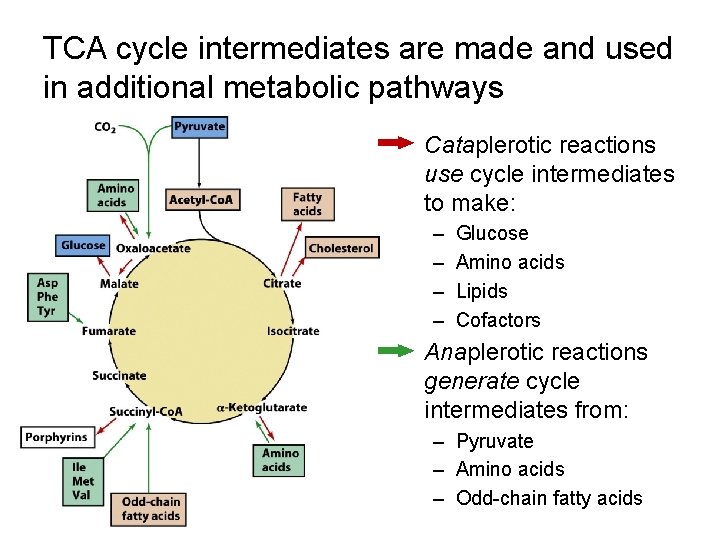
TCA cycle intermediates are made and used in additional metabolic pathways • Cataplerotic reactions use cycle intermediates to make: – – Glucose Amino acids Lipids Cofactors • Anaplerotic reactions generate cycle intermediates from: – Pyruvate – Amino acids – Odd-chain fatty acids
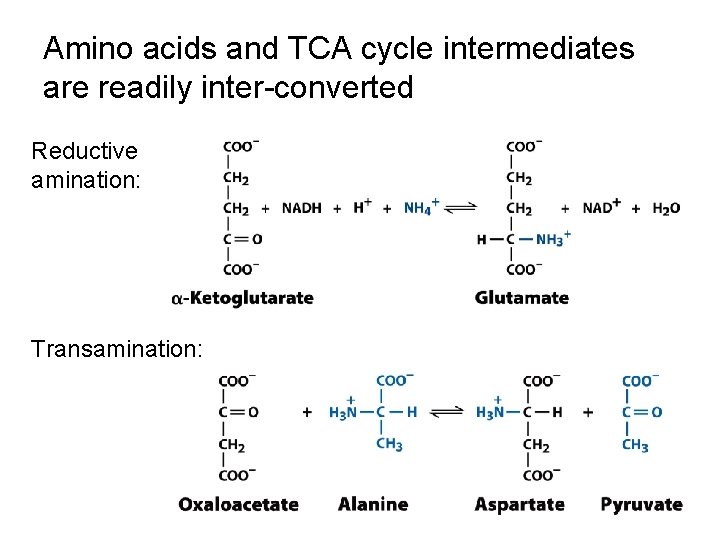
Amino acids and TCA cycle intermediates are readily inter-converted Reductive amination: Transamination:
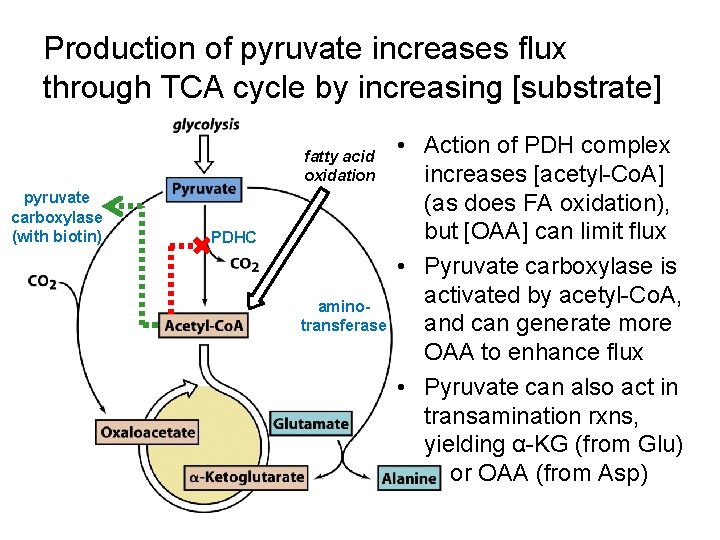
Production of pyruvate increases flux through TCA cycle by increasing [substrate] fatty acid oxidation pyruvate carboxylase (with biotin) PDHC aminotransferase • Action of PDH complex increases [acetyl-Co. A] (as does FA oxidation), but [OAA] can limit flux • Pyruvate carboxylase is activated by acetyl-Co. A, and can generate more OAA to enhance flux • Pyruvate can also act in transamination rxns, yielding α-KG (from Glu) or OAA (from Asp)
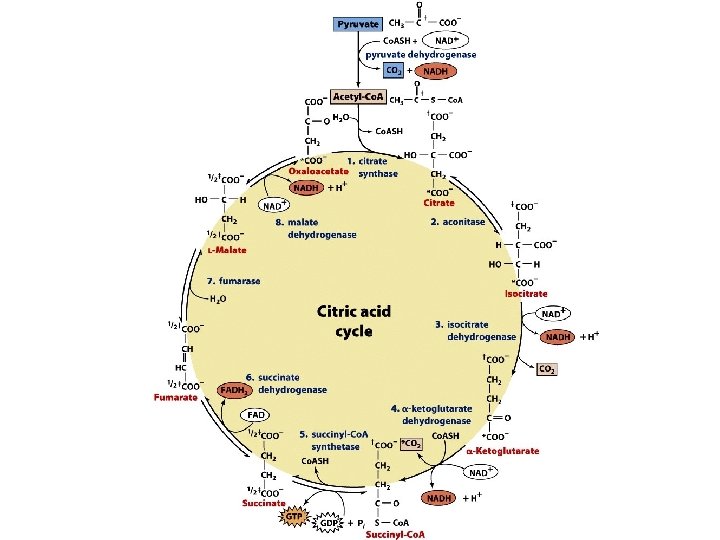
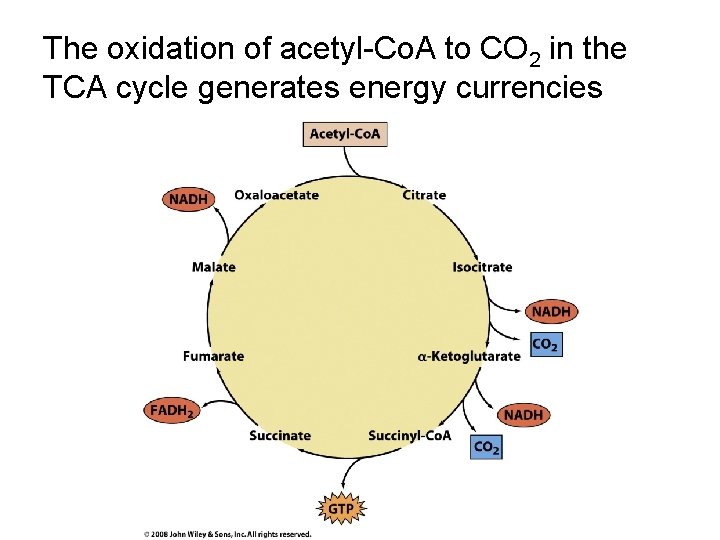
The oxidation of acetyl-Co. A to CO 2 in the TCA cycle generates energy currencies