History of Russia 1547 Ivan IV was crowned



- Slides: 7
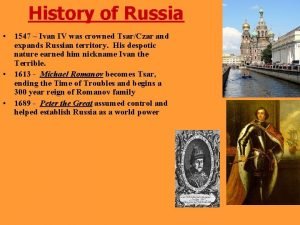
History of Russia • 1547 – Ivan IV was crowned Tsar/Czar and expands Russian territory. His despotic nature earned him nickname Ivan the Terrible. • 1613 - Michael Romanov becomes Tsar, ending the Time of Troubles and begins a 300 year reign of Romanov family • 1689 - Peter the Great assumed control and helped establish Russia as a world power
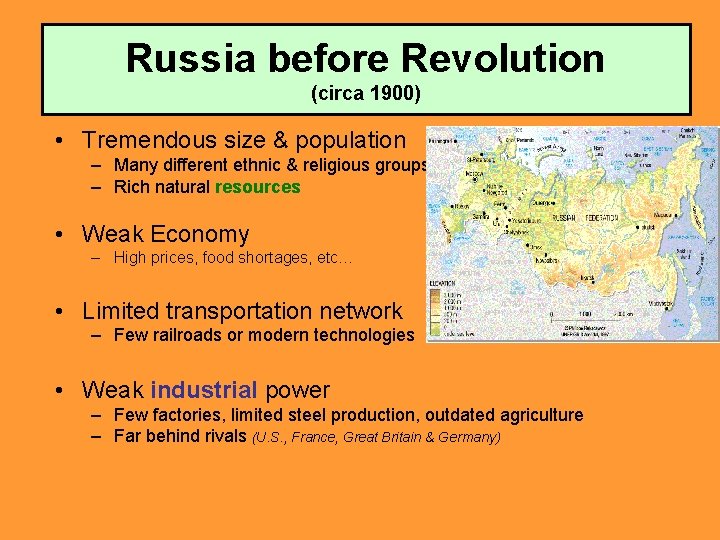
Russia before Revolution (circa 1900) • Tremendous size & population – Many different ethnic & religious groups – Rich natural resources • Weak Economy – High prices, food shortages, etc… • Limited transportation network – Few railroads or modern technologies • Weak industrial power – Few factories, limited steel production, outdated agriculture – Far behind rivals (U. S. , France, Great Britain & Germany)
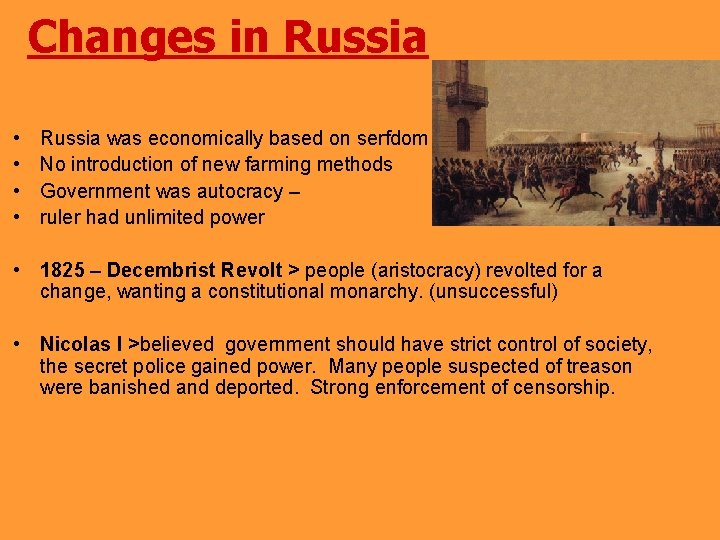
Changes in Russia • • Russia was economically based on serfdom No introduction of new farming methods Government was autocracy – ruler had unlimited power • 1825 – Decembrist Revolt > people (aristocracy) revolted for a change, wanting a constitutional monarchy. (unsuccessful) • Nicolas I >believed government should have strict control of society, the secret police gained power. Many people suspected of treason were banished and deported. Strong enforcement of censorship.
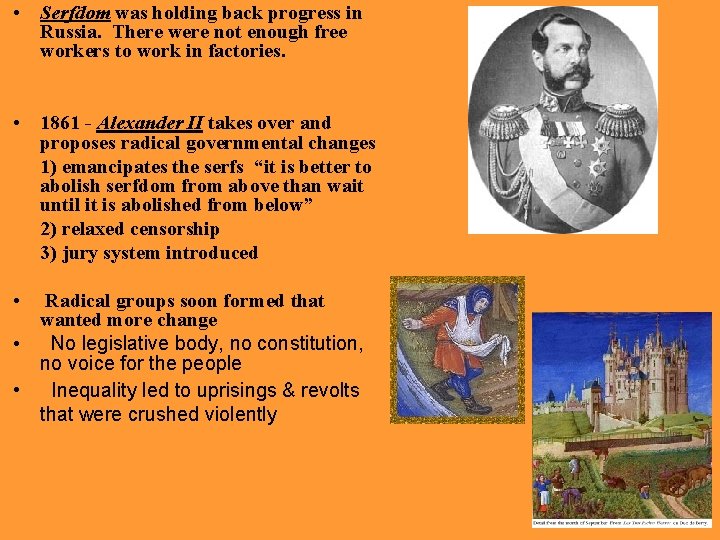
• Serfdom was holding back progress in Russia. There were not enough free workers to work in factories. • 1861 - Alexander II takes over and proposes radical governmental changes 1) emancipates the serfs “it is better to abolish serfdom from above than wait until it is abolished from below” 2) relaxed censorship 3) jury system introduced • Radical groups soon formed that wanted more change • No legislative body, no constitution, no voice for the people • Inequality led to uprisings & revolts that were crushed violently
• Alexander III - crushed the revolutionary movement. Enforced Russian language and Orthodox religion was enforced while many Jews were persecuted. • 1894 - Nicholas II takes over and continues repressive policies. However, by 1900 Russia becomes 4 th largest producer of Iron in the world. No unions allowed and there was constant labor unrest. Often revolutionaries were killing government officials.
Key Events • 1904 - Russo-Japanese War begins. Fighting took place because of imperialism in Manchuria and Korea. Russia lost. • Jan. 22, 1905 - people were protesting for better working conditions. A march was taking place in St. Petersburg. People were going to ask the Tsar “Little Father” for help. The Tsar was not there and the military shot at the crowded streets. 1, 000 people died. known as Bloody Sunday. • Riots soon broke out in major cities across Russia. The revolution is afoot!! • Tsar then created the Duma (nationally assembly of elected) to appease the people.
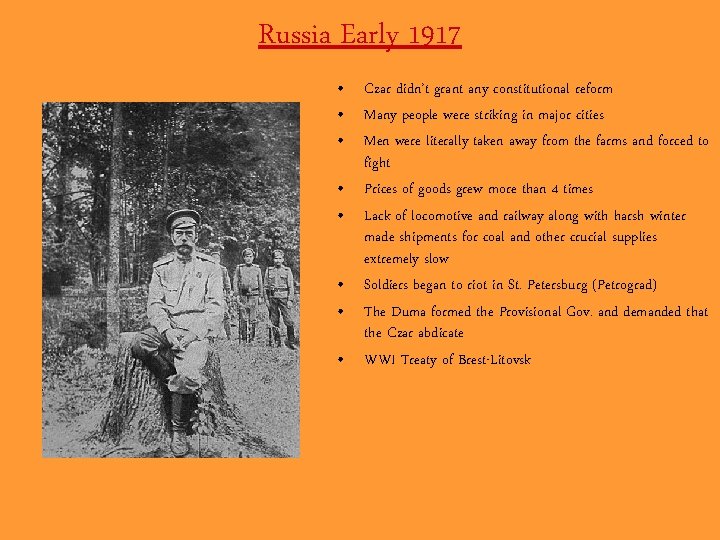
Russia Early 1917 • Czar didn’t grant any constitutional reform • Many people were striking in major cities • Men were literally taken away from the farms and forced to fight • Prices of goods grew more than 4 times • Lack of locomotive and railway along with harsh winter made shipments for coal and other crucial supplies extremely slow • Soldiers began to riot in St. Petersburg (Petrograd) • The Duma formed the Provisional Gov. and demanded that the Czar abdicate • WWI Treaty of Brest-Litovsk