Helping Parents Learn to Facilitate Young Childrens Speech


- Slides: 32
Helping Parents Learn to Facilitate Young Children’s Speech Fluency David W. Hammer, M. A. , CCC-SLP Children’s Hospital of Pittsburgh J. Scott Yaruss, Ph. D. , CCC-SLP University of Pittsburgh
Purpose • To present a model for teaching parents to facilitate their children’s development of normal fluency – Based on reductions in interpersonal and communicative stressors – Takes into account various aspects of the child’s personality that may contribute to disfluency or stuttering – Can be adapted to a variety of settings
Goals of Treatment • The overall goal of treatment for preschool children who stutter is to eliminate stuttering while supporting the child’s language development • This treatment program focuses on one component of this overall goal… parental facilitation of the child’s fluency in real-world situations
Rationale for Treatment • Treatment is based on widely held beliefs about the factors that affect children’s speech fluency, e. g. : – Modifying aspects of the child’s daily interactions will help the child achieve fluency speech in that speaking situation – The more time a child spends speaking fluently, the less likely the child will develop a chronic stuttering disorder
General Structure of Treatment • Treatment consists of: – Two parent-only sessions for parental counseling and overview of treatment – Four parent/child modeling sessions when parents are taught modifications • Treatment program is administered by itself or prior to more direct intervention with the child or family
Session #1 Overview of Stuttering Interpersonal Stressors
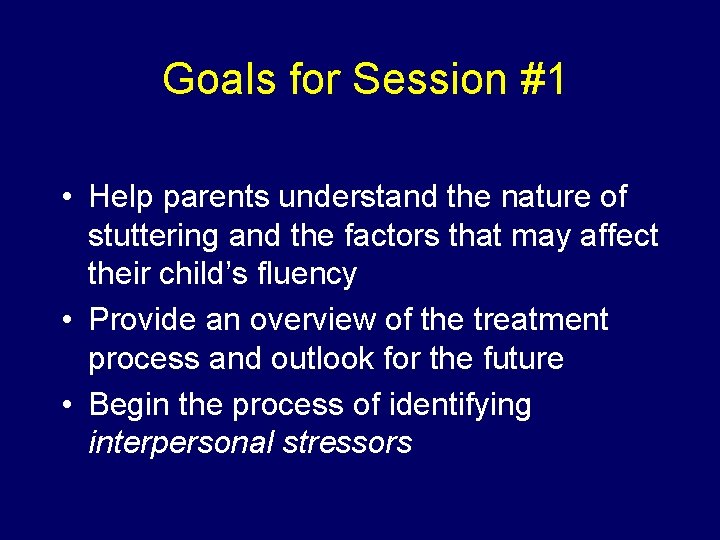
Goals for Session #1 • Help parents understand the nature of stuttering and the factors that may affect their child’s fluency • Provide an overview of the treatment process and outlook for the future • Begin the process of identifying interpersonal stressors
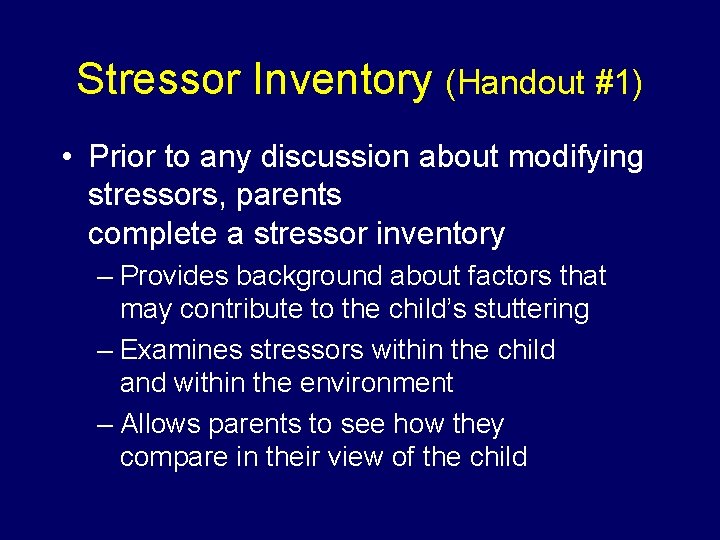
Stressor Inventory (Handout #1) • Prior to any discussion about modifying stressors, parents complete a stressor inventory – Provides background about factors that may contribute to the child’s stuttering – Examines stressors within the child and within the environment – Allows parents to see how they compare in their view of the child
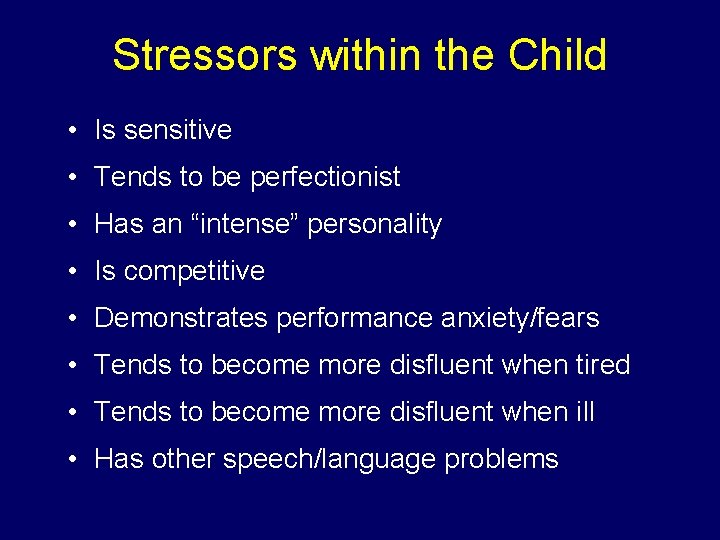
Stressors within the Child • Is sensitive • Tends to be perfectionist • Has an “intense” personality • Is competitive • Demonstrates performance anxiety/fears • Tends to become more disfluent when tired • Tends to become more disfluent when ill • Has other speech/language problems
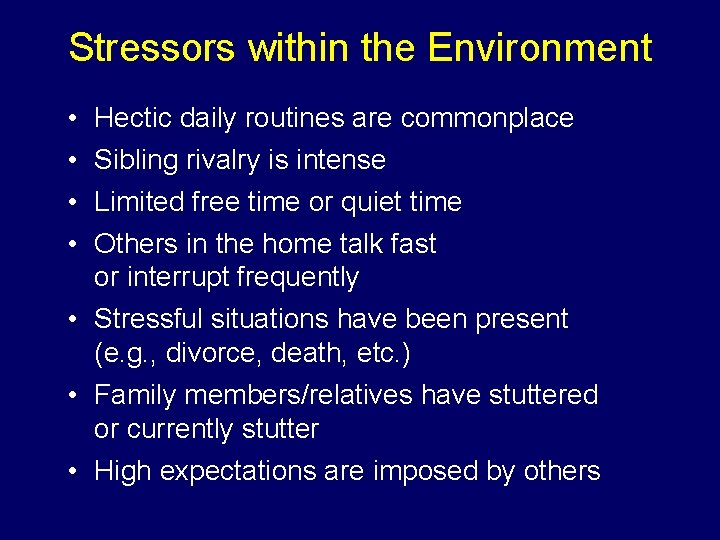
Stressors within the Environment • • Hectic daily routines are commonplace Sibling rivalry is intense Limited free time or quiet time Others in the home talk fast or interrupt frequently • Stressful situations have been present (e. g. , divorce, death, etc. ) • Family members/relatives have stuttered or currently stutter • High expectations are imposed by others
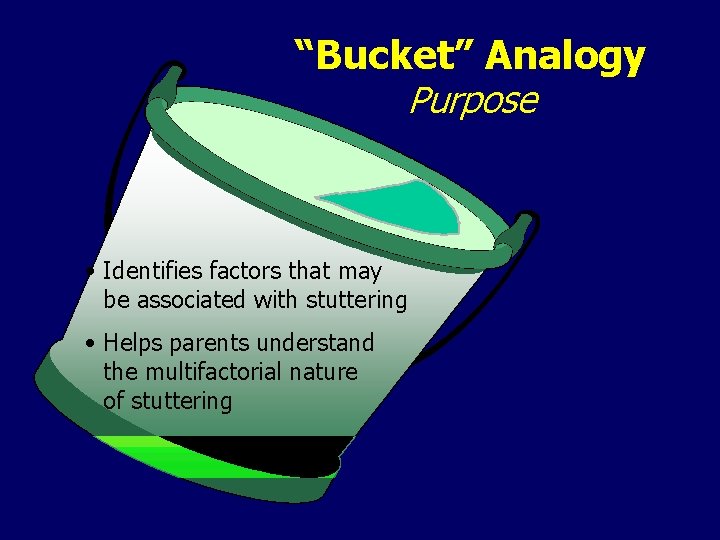
“Bucket” Analogy Purpose • Identifies factors that may be associated with stuttering • Helps parents understand the multifactorial nature of stuttering
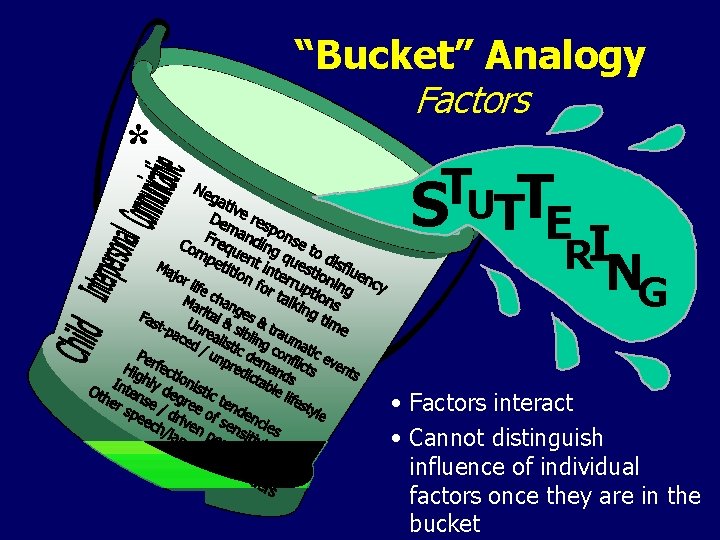
* “Bucket” Analogy Factors T S UTTE RI NG • Factors interact • Cannot distinguish influence of individual factors once they are in the bucket
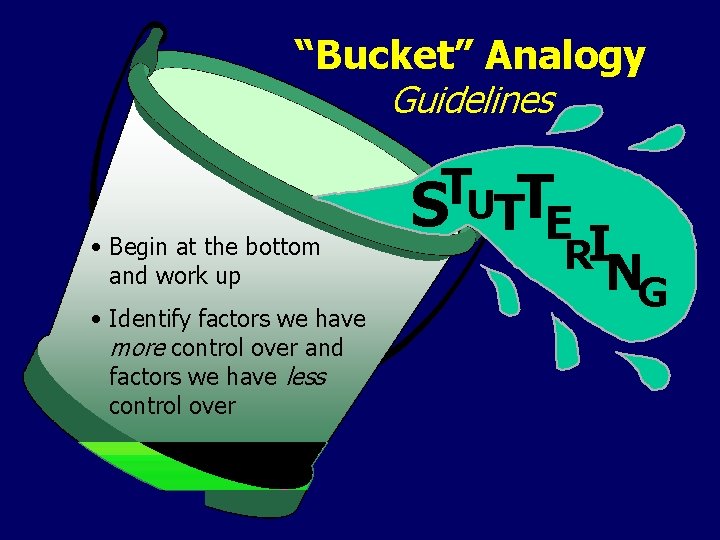
“Bucket” Analogy Guidelines • Begin at the bottom and work up • Identify factors we have more control over and factors we have less control over T S UTTE RI NG
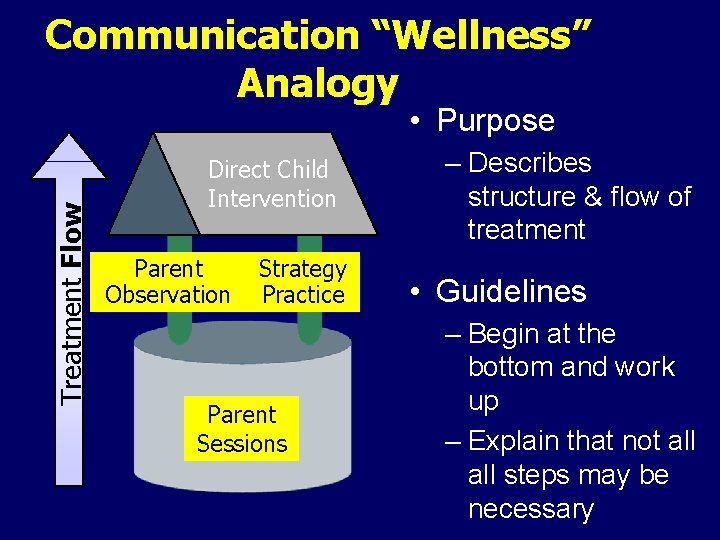
Communication “Wellness” Analogy Treatment Flow • Purpose Direct Child Intervention Parent Observation Strategy Practice Parent Sessions – Describes structure & flow of treatment • Guidelines – Begin at the bottom and work up – Explain that not all steps may be necessary
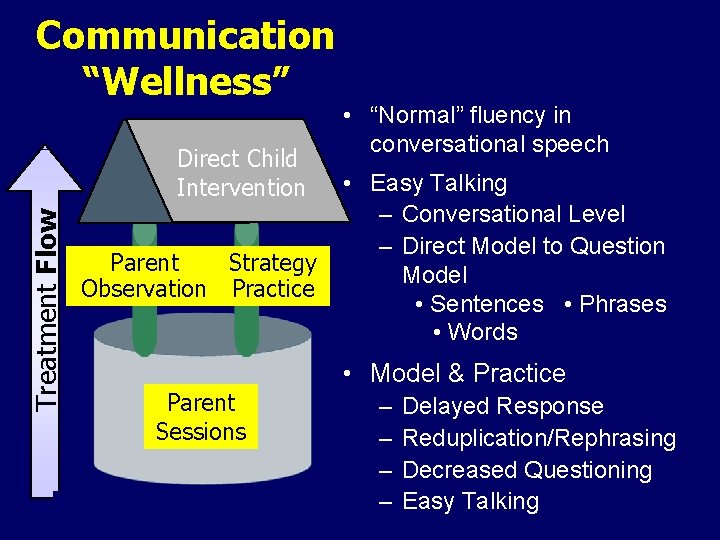
Communication “Wellness” Treatment Flow Direct Child Intervention Parent Strategy Observation Practice Parent Sessions • “Normal” fluency in conversational speech • Easy Talking – Conversational Level – Direct Model to Question Model • Sentences • Phrases • Words • Model & Practice – – Delayed Response Reduplication/Rephrasing Decreased Questioning Easy Talking
Discussing Types of Disfluencies • Helps parents learn to distinguish between different disfluency types • Helps parents understand how to view progress during treatment • Reduces parental misconceptions – stuttering is just repetition – prolongations are “better” than repetitions
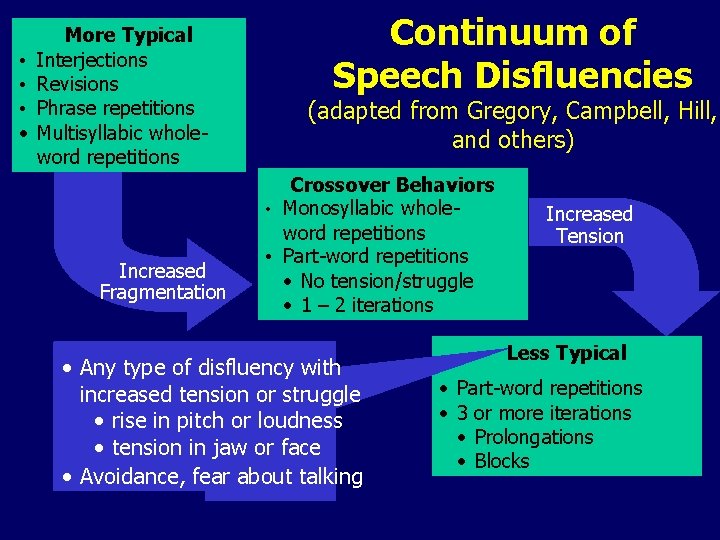
• • More Typical Interjections Revisions Phrase repetitions Multisyllabic wholeword repetitions Increased Fragmentation Continuum of Speech Disfluencies (adapted from Gregory, Campbell, Hill, and others) Crossover Behaviors • Monosyllabic wholeword repetitions • Part-word repetitions • No tension/struggle • 1 – 2 iterations • Any type of disfluency with increased tension or struggle • rise in pitch or loudness • tension in jaw or face • Avoidance, fear about talking Increased Tension Less Typical • Part-word repetitions • 3 or more iterations • Prolongations • Blocks
Examining Stressors • Compare stressor inventories completed by both parents – Parents may view situations differently • Focus on interpersonal stressors first – Establish need for additional counseling • Discuss ways to modify stressors – Parents take lead in finding solutions
Home Charting • Increase parents’ awareness of – Situational factors that affect fluency – Their reactions to their child’s stuttering • Helps parents focus their energy on helping the child rather than worrying • Gives opportunity to assess parents’ commitment to treatment early in therapeutic process
Home Charting • Guidelines – No “Aha!” expected – Provide examples of successful charting (see handout) – Parents should bring completed chart to next treatment session
Provide Supporting Literature • Reassures parents that others have had similar concerns and questions • Provides concrete examples of ways parents can help their children • Additional opportunity to assess parents’ commitment to treatment
Examples of Supporting Literature • Stuttering Foundation of America (SFA) – Stuttering and Your Child: Questions & Answers – If Your Child Stutters: A Guide for Parents • National Stuttering Association (NSA) • Stuttering Center Handouts • Internet Resources – Stuttering Home Page
Session #2 Overview of Fluency Enhancing Strategies
Goals for Session #2 • Additional opportunity for counseling to to address parents’ concerns • Further explore interpersonal stressors (when applicable) • Begin the process of modifying communicative stressors • Introduce next phase of treatment: parent/child modeling
Guidelines for Session #2 • First, Review Info from Session #1 – Review results from home charting – Answer questions about booklets and supporting literature – Address parents’ concerns about treatment and child’s fluency – Continue discussion of interpersonal stressors and modifications
Fluency Enhancing Strategies • Reducing parents’ speaking rates • Reducing time pressures • Reducing demand for talking • Modifying questioning • Providing supportive communicative environment
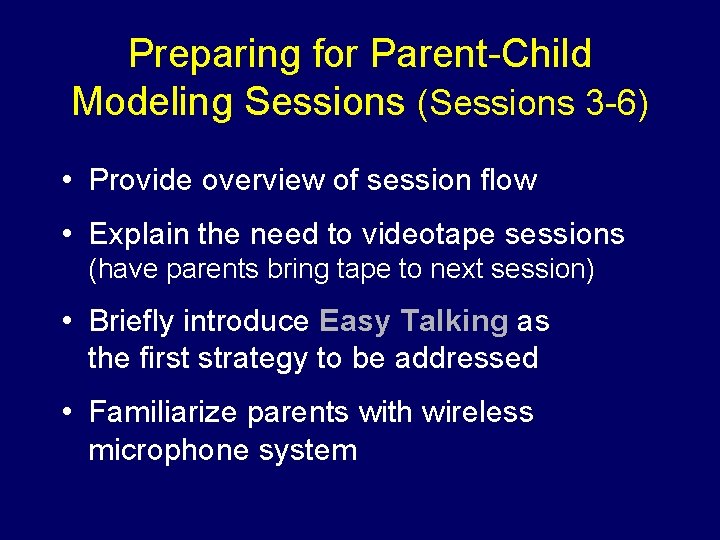
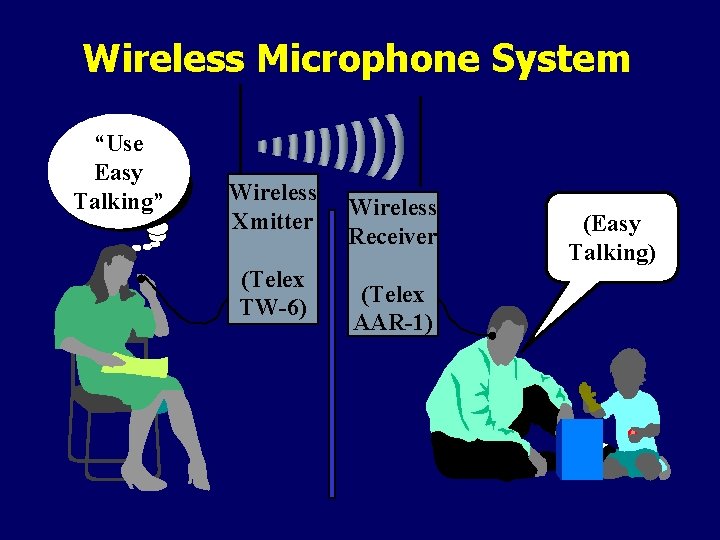
Preparing for Parent-Child Modeling Sessions (Sessions 3 -6) • Provide overview of session flow • Explain the need to videotape sessions (have parents bring tape to next session) • Briefly introduce Easy Talking as the first strategy to be addressed • Familiarize parents with wireless microphone system
Wireless Microphone System “Use Easy Talking” Wireless Xmitter (Telex TW-6) Wireless Receiver (Telex AAR-1) (Easy Talking)
Session #3 Easy Talking
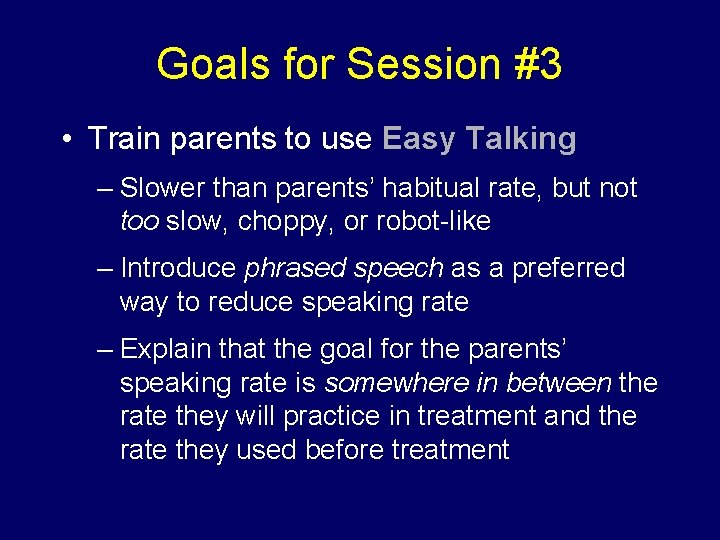
Goals for Session #3 • Train parents to use Easy Talking – Slower than parents’ habitual rate, but not too slow, choppy, or robot-like – Introduce phrased speech as a preferred way to reduce speaking rate – Explain that the goal for the parents’ speaking rate is somewhere in between the rate they will practice in treatment and the rate they used before treatment
Guidelines for Session #3 • Set up video equipment and wireless microphone system before session • Review Easy Talking handout – Introduce phrasing as a preferred way to reduce speaking rate – Explain that the goal for the parents’ speaking rate is somewhere in between the rate they will practice in treatment and the rate they used before treatment
Model and Practice Easy Talking • Clinician models Easy Talking with the child while parents observe • One parent interacts with child while receiving on-line feedback • Second parent interacts with child while receiving on-line feedback • Discuss observations and importance of reviewing videotape at home