Gupta Empire Golden Age of India 320 550

- Slides: 17
Gupta Empire Golden Age of India 320 -550 CE/AD GUPTAS GONE WILD!
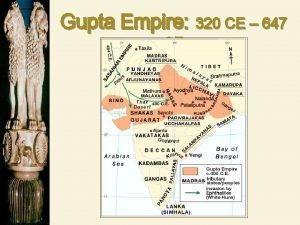
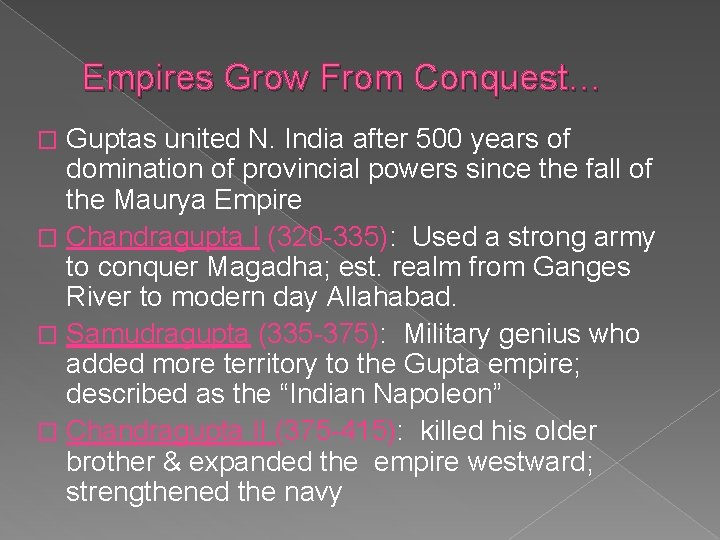
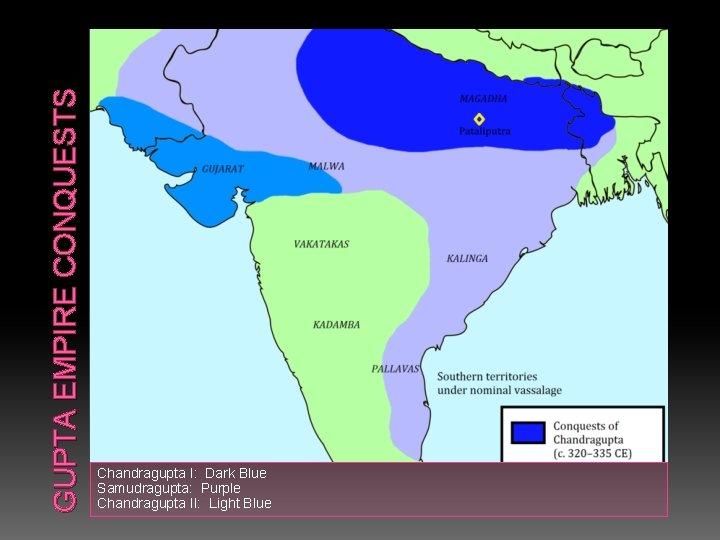
Empires Grow From Conquest… Guptas united N. India after 500 years of domination of provincial powers since the fall of the Maurya Empire � Chandragupta I (320 -335): Used a strong army to conquer Magadha; est. realm from Ganges River to modern day Allahabad. � Samudragupta (335 -375): Military genius who added more territory to the Gupta empire; described as the “Indian Napoleon” � Chandragupta II (375 -415): killed his older brother & expanded the empire westward; strengthened the navy �
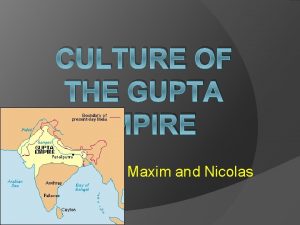
GUPTA EMPIRE CONQUESTS Chandragupta I: Dark Blue Samudragupta: Purple Chandragupta II: Light Blue
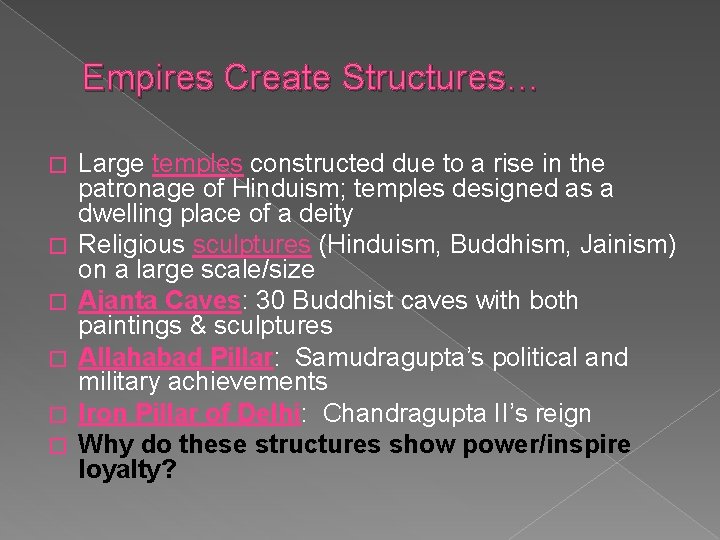
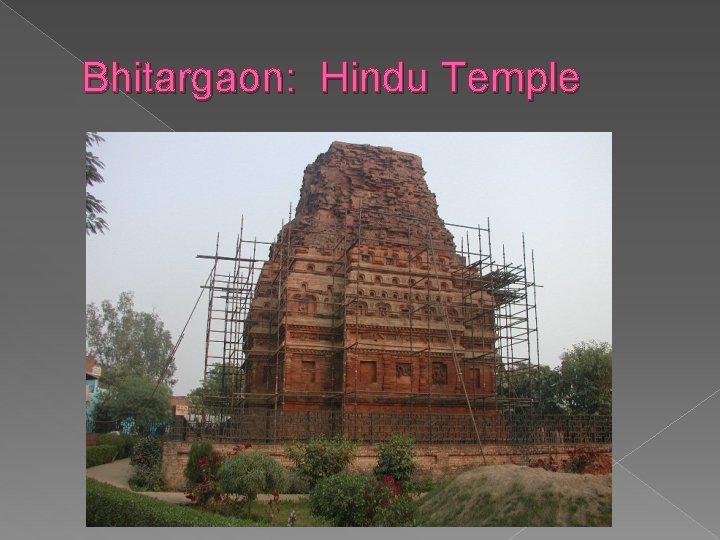
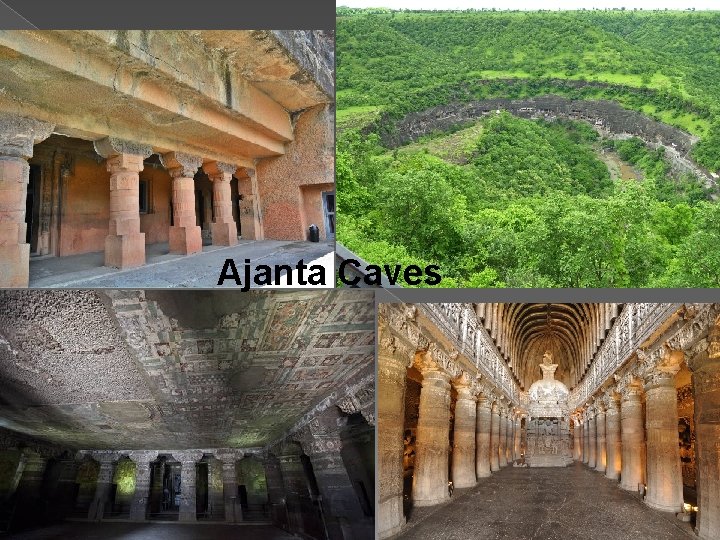
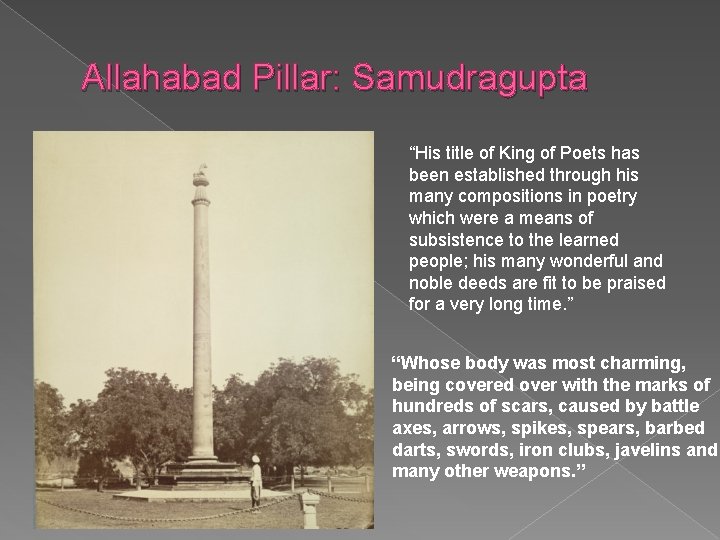
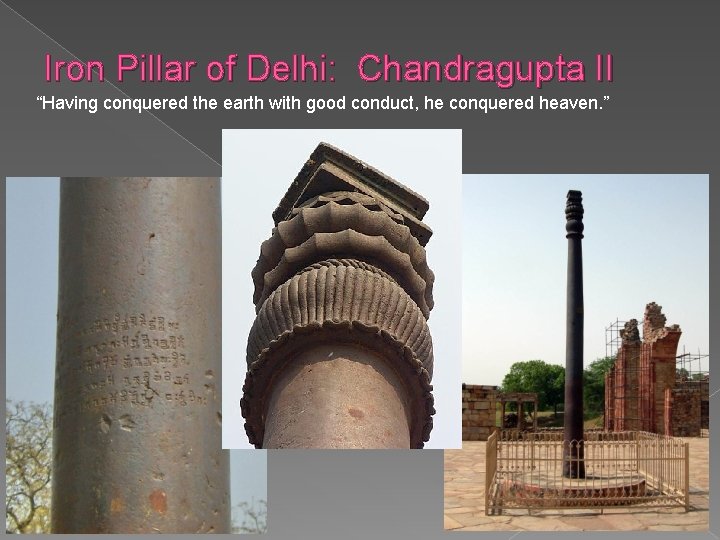
Empires Create Structures… � � � Large temples constructed due to a rise in the patronage of Hinduism; temples designed as a dwelling place of a deity Religious sculptures (Hinduism, Buddhism, Jainism) on a large scale/size Ajanta Caves: 30 Buddhist caves with both paintings & sculptures Allahabad Pillar: Samudragupta’s political and military achievements Iron Pillar of Delhi: Chandragupta II’s reign Why do these structures show power/inspire loyalty?
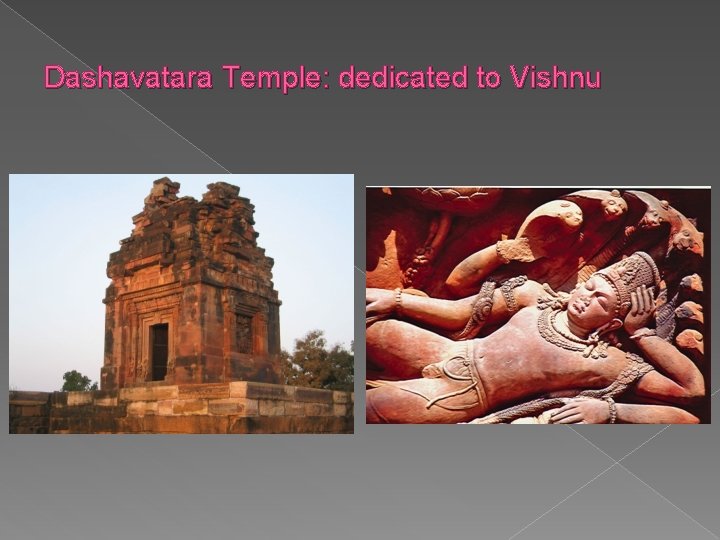
Dashavatara Temple: dedicated to Vishnu
Bhitargaon: Hindu Temple
Ajanta Caves
Allahabad Pillar: Samudragupta “His title of King of Poets has been established through his many compositions in poetry which were a means of subsistence to the learned people; his many wonderful and noble deeds are fit to be praised for a very long time. ” “Whose body was most charming, being covered over with the marks of hundreds of scars, caused by battle axes, arrows, spikes, spears, barbed darts, swords, iron clubs, javelins and many other weapons. ”
Iron Pillar of Delhi: Chandragupta II “Having conquered the earth with good conduct, he conquered heaven. ”
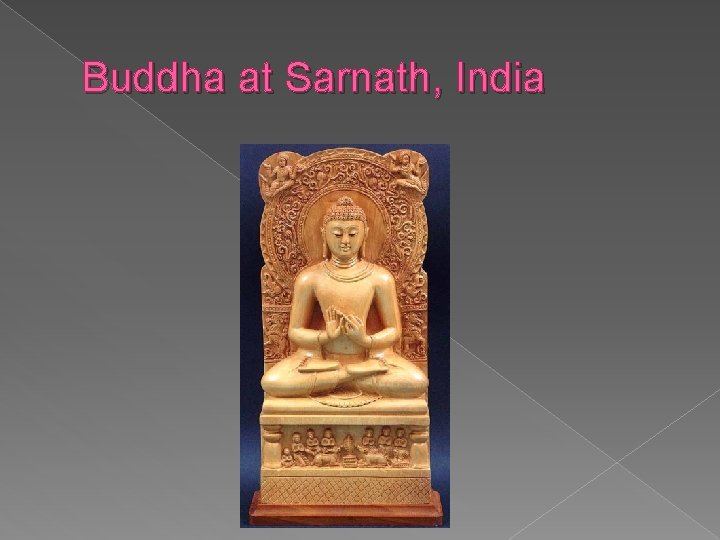
Buddha at Sarnath, India
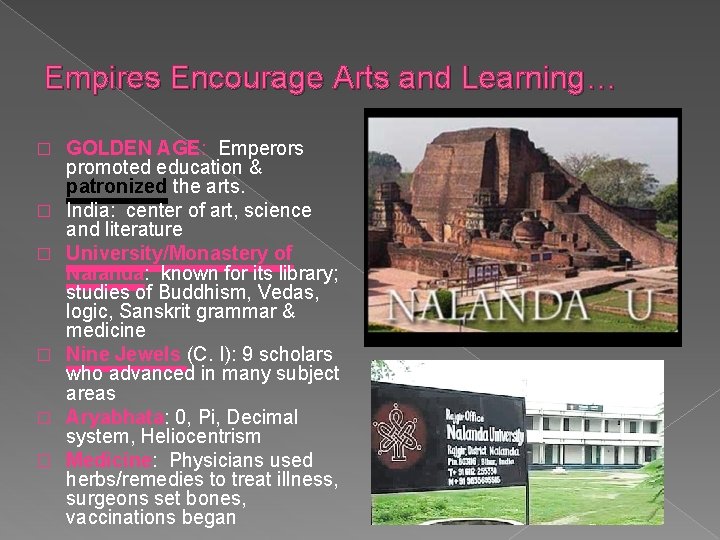
Empires Encourage Arts and Learning… � � � GOLDEN AGE: Emperors promoted education & patronized the arts. India: center of art, science and literature University/Monastery of Nalanda: known for its library; studies of Buddhism, Vedas, logic, Sanskrit grammar & medicine Nine Jewels (C. I): 9 scholars who advanced in many subject areas Aryabhata: 0, Pi, Decimal system, Heliocentrism Medicine: Physicians used herbs/remedies to treat illness, surgeons set bones, vaccinations began
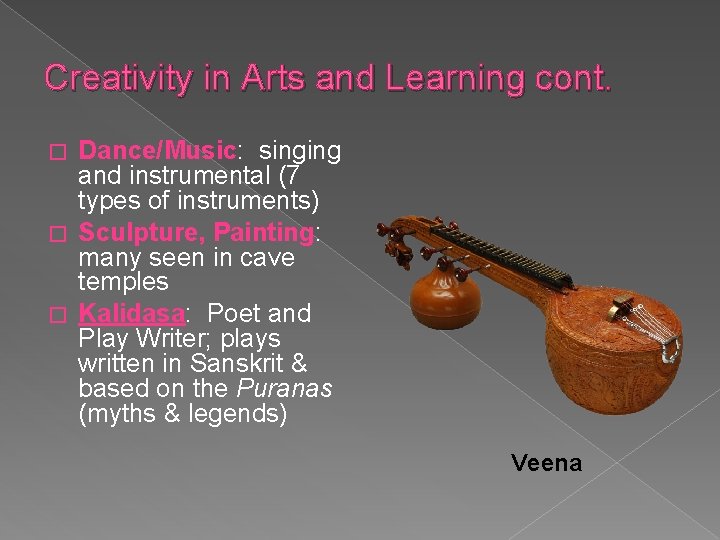
Creativity in Arts and Learning cont. Dance/Music: singing and instrumental (7 types of instruments) � Sculpture, Painting: many seen in cave temples � Kalidasa: Poet and Play Writer; plays written in Sanskrit & based on the Puranas (myths & legends) � Veena
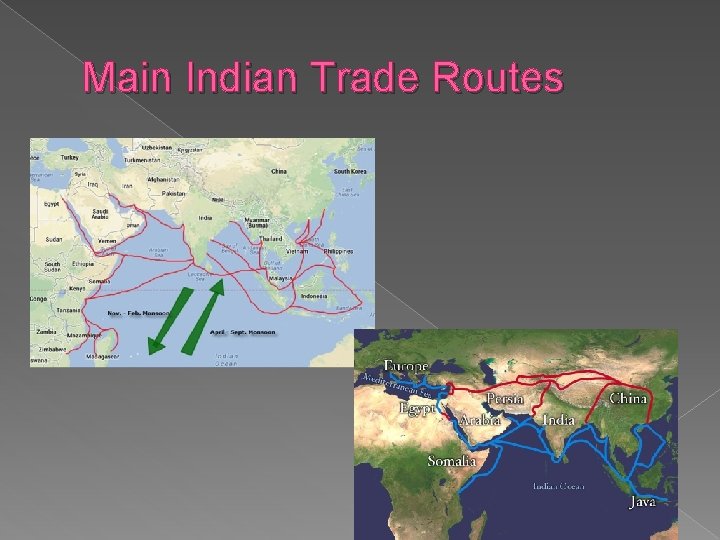
Empires Establish Vast Marketplaces… Trade & farming flourished across the empire. � Gold & silver coins issued in great #s � Local markets were places of trade � Villages relied on trade for essential goods such as salt & other spices � Trade routes (land & H 2 O) were kept safe; travelers enjoyed freedom of movement � Rest houses set up for travelers � Story of India �
Main Indian Trade Routes
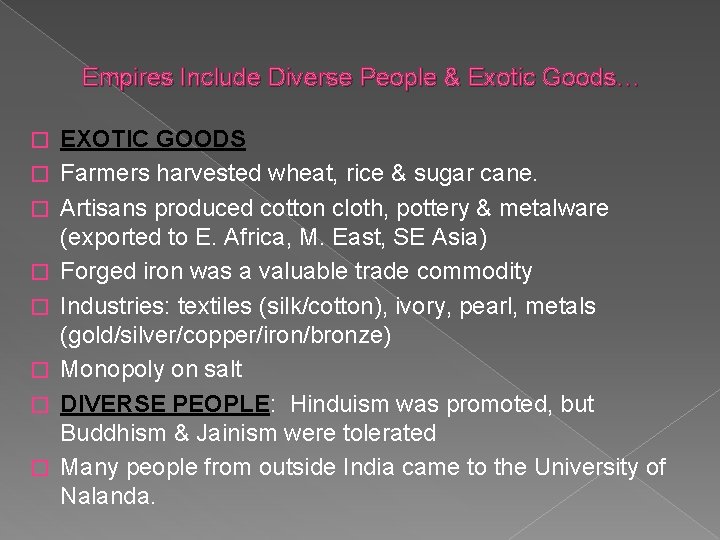
Empires Include Diverse People & Exotic Goods… � � � � EXOTIC GOODS Farmers harvested wheat, rice & sugar cane. Artisans produced cotton cloth, pottery & metalware (exported to E. Africa, M. East, SE Asia) Forged iron was a valuable trade commodity Industries: textiles (silk/cotton), ivory, pearl, metals (gold/silver/copper/iron/bronze) Monopoly on salt DIVERSE PEOPLE: Hinduism was promoted, but Buddhism & Jainism were tolerated Many people from outside India came to the University of Nalanda.
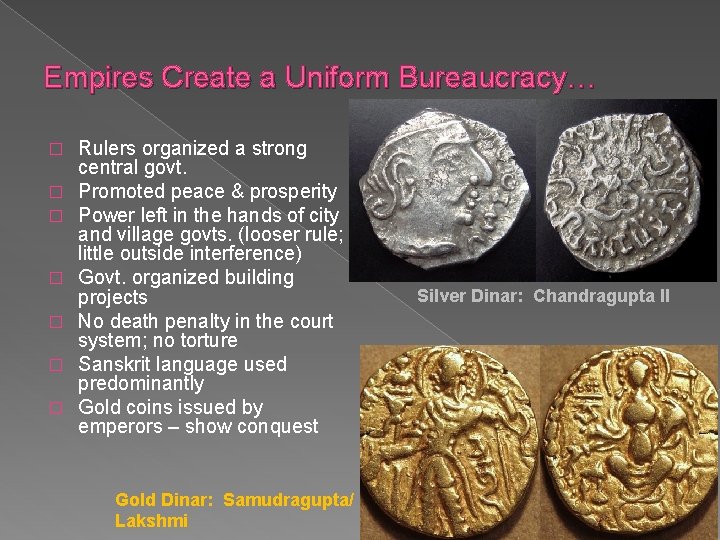
Empires Create a Uniform Bureaucracy… � � � � Rulers organized a strong central govt. Promoted peace & prosperity Power left in the hands of city and village govts. (looser rule; little outside interference) Govt. organized building projects No death penalty in the court system; no torture Sanskrit language used predominantly Gold coins issued by emperors – show conquest Gold Dinar: Samudragupta/ Lakshmi Silver Dinar: Chandragupta II
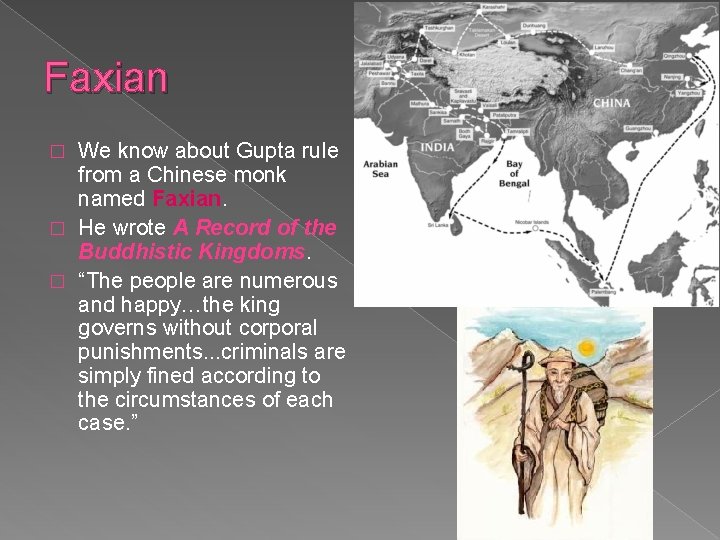
Faxian We know about Gupta rule from a Chinese monk named Faxian. � He wrote A Record of the Buddhistic Kingdoms. � “The people are numerous and happy…the king governs without corporal punishments. . . criminals are simply fined according to the circumstances of each case. ” �