Grammar Galaxy Unit 1 Nouns v Common and



- Slides: 33
Grammar Galaxy
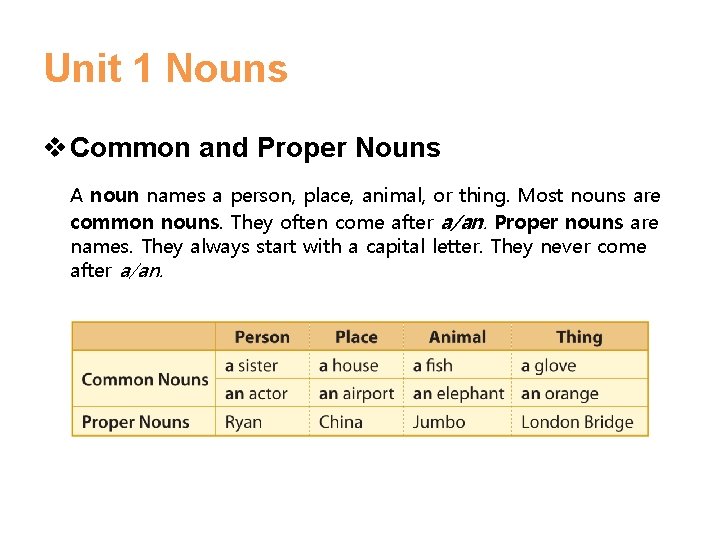
Unit 1 Nouns v Common and Proper Nouns A noun names a person, place, animal, or thing. Most nouns are common nouns. They often come after a/an. Proper nouns are names. They always start with a capital letter. They never come after a/an.
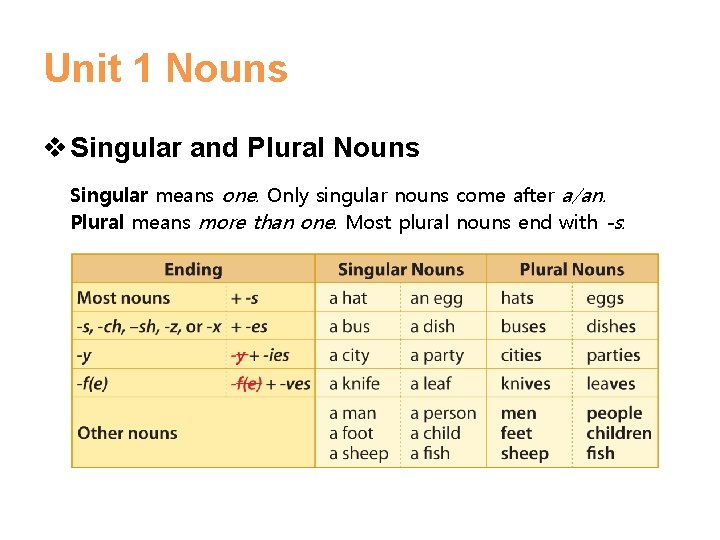
Unit 1 Nouns v Singular and Plural Nouns Singular means one. Only singular nouns come after a/an. Plural means more than one. Most plural nouns end with -s.
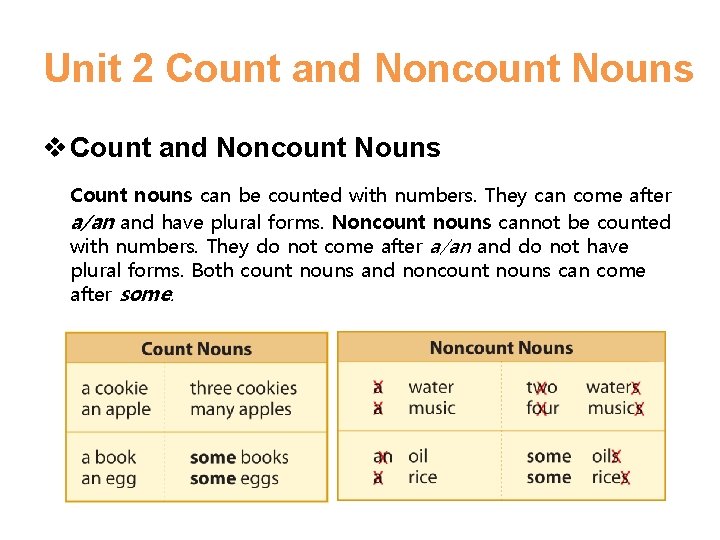
Unit 2 Count and Noncount Nouns v Count and Noncount Nouns Count nouns can be counted with numbers. They can come after a/an and have plural forms. Noncount nouns cannot be counted with numbers. They do not come after a/an and do not have plural forms. Both count nouns and noncount nouns can come after some.
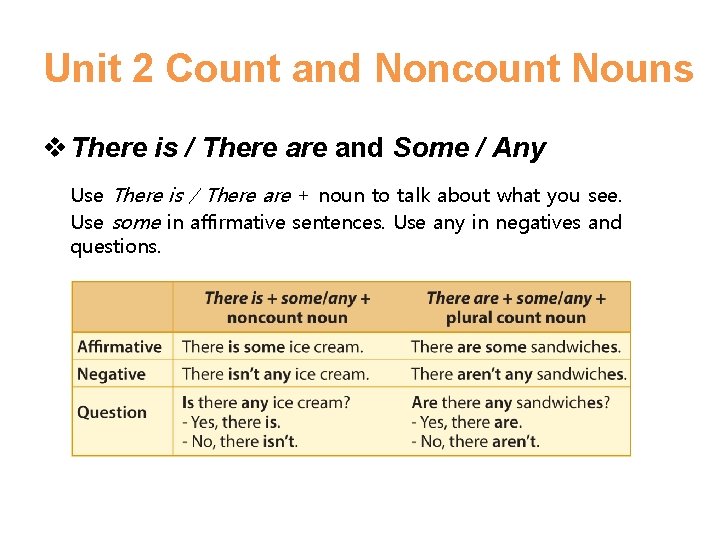
Unit 2 Count and Noncount Nouns v There is / There and Some / Any Use There is / There are + noun to talk about what you see. Use some in affirmative sentences. Use any in negatives and questions.
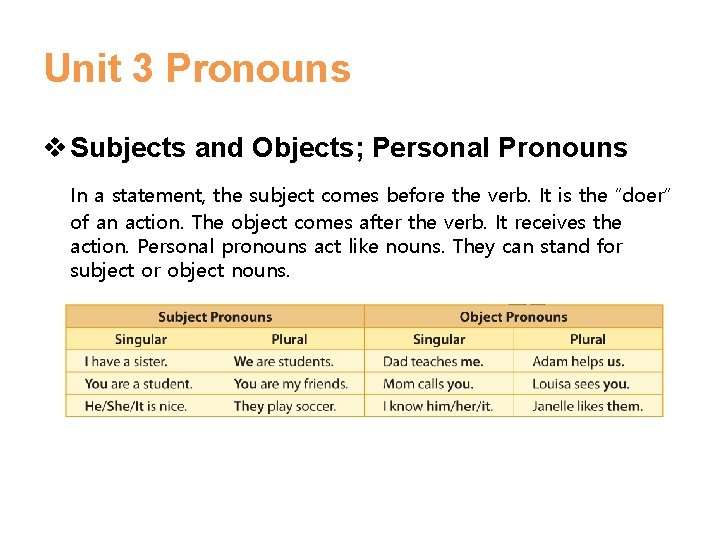
Unit 3 Pronouns v Subjects and Objects; Personal Pronouns In a statement, the subject comes before the verb. It is the “doer” of an action. The object comes after the verb. It receives the action. Personal pronouns act like nouns. They can stand for subject or object nouns.
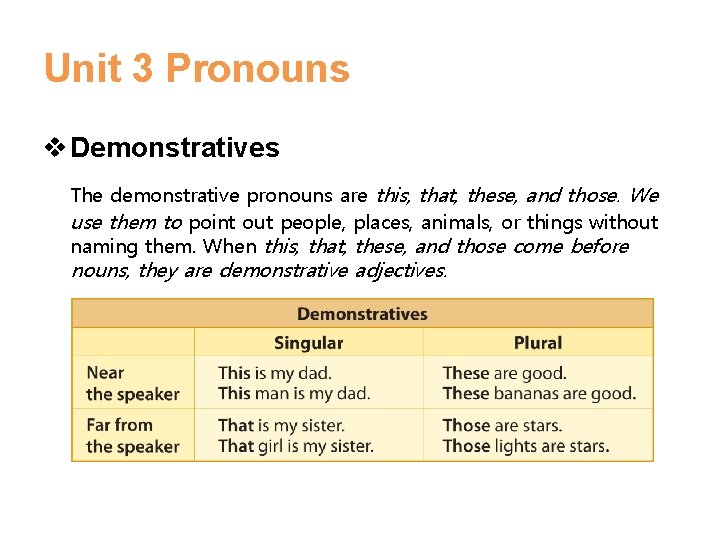
Unit 3 Pronouns v Demonstratives The demonstrative pronouns are this, that, these, and those. We use them to point out people, places, animals, or things without naming them. When this, that, these, and those come before nouns, they are demonstrative adjectives.
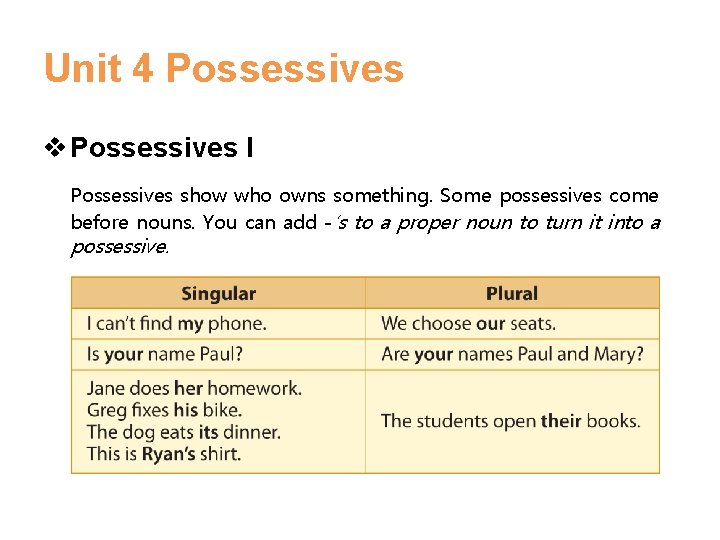
Unit 4 Possessives v Possessives I Possessives show who owns something. Some possessives come before nouns. You can add -’s to a proper noun to turn it into a possessive.
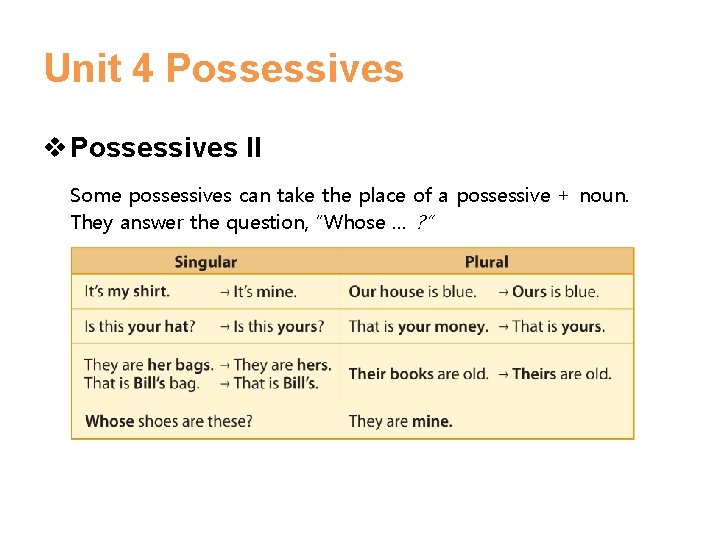
Unit 4 Possessives v Possessives II Some possessives can take the place of a possessive + noun. They answer the question, “Whose … ? ”
Unit 5 The Verb Be v The Verb Be Use the verb be to say who, what, how, and where a person or thing is. The verb be has different forms. I am Kevin. She is happy.
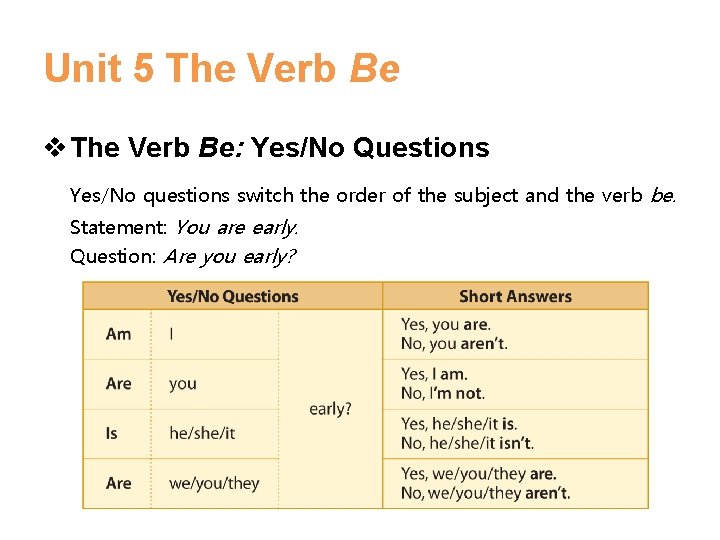
Unit 5 The Verb Be v The Verb Be: Yes/No Questions Yes/No questions switch the order of the subject and the verb be. Statement: You are early. Question: Are you early?
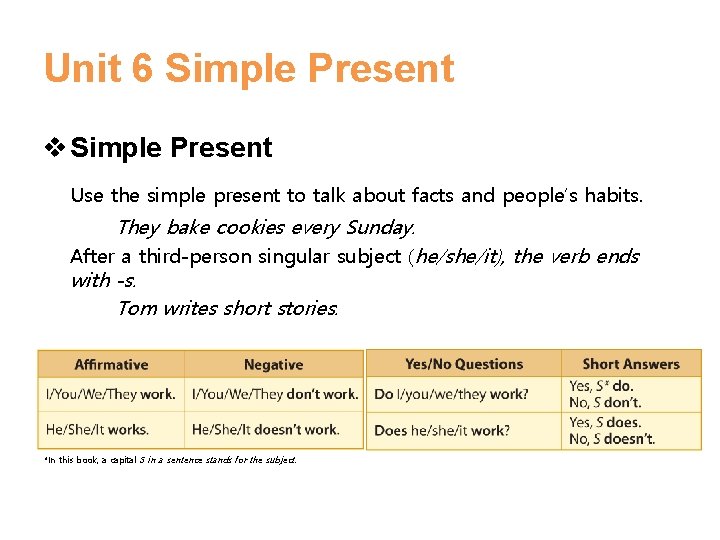
Unit 6 Simple Present v Simple Present Use the simple present to talk about facts and people’s habits. They bake cookies every Sunday. After a third-person singular subject (he/she/it), the verb ends with -s. Tom writes short stories. *In this book, a capital S in a sentence stands for the subject.
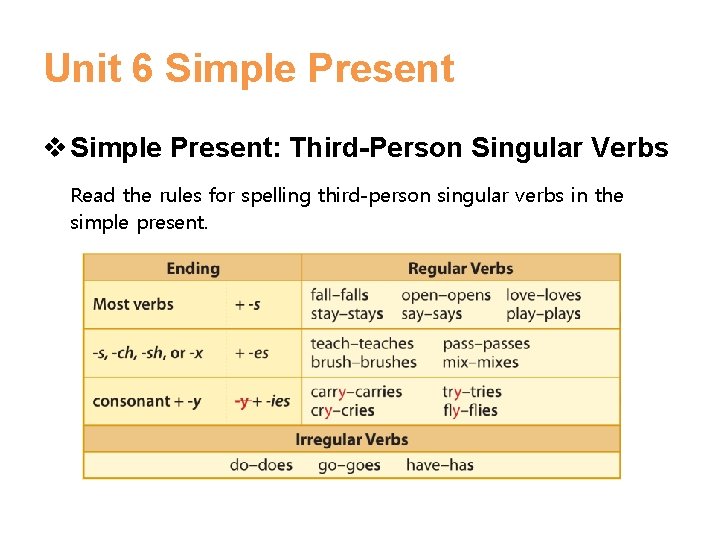
Unit 6 Simple Present v Simple Present: Third-Person Singular Verbs Read the rules for spelling third-person singular verbs in the simple present.
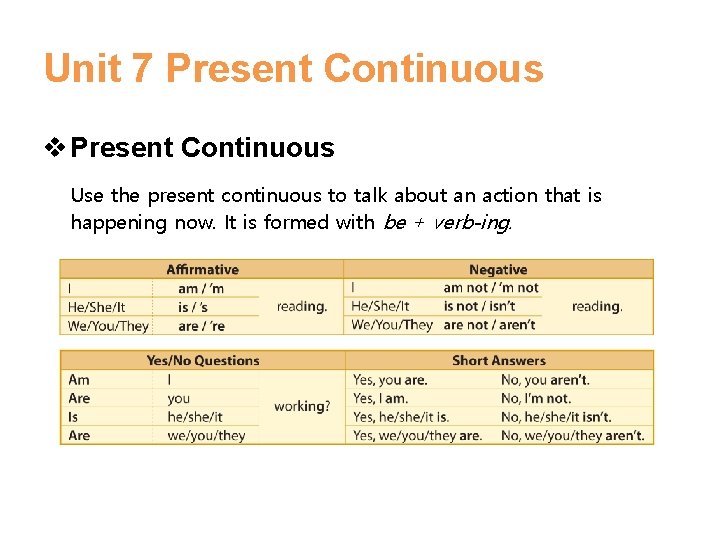
Unit 7 Present Continuous v Present Continuous Use the present continuous to talk about an action that is happening now. It is formed with be + verb-ing.
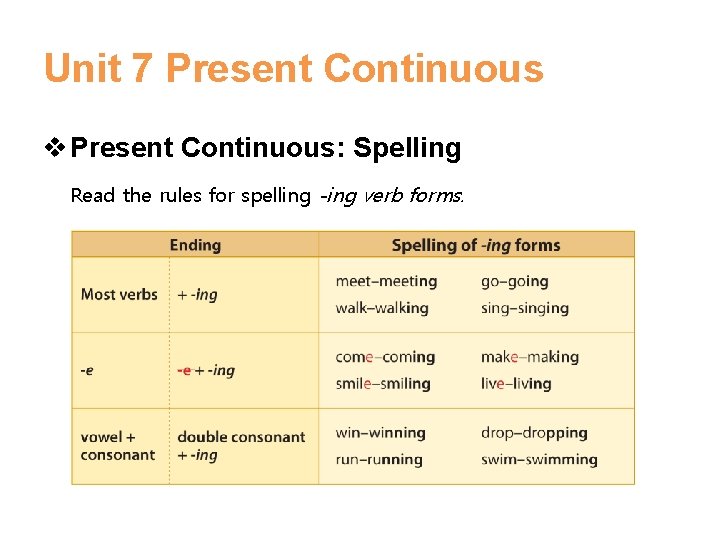
Unit 7 Present Continuous v Present Continuous: Spelling Read the rules for spelling -ing verb forms.
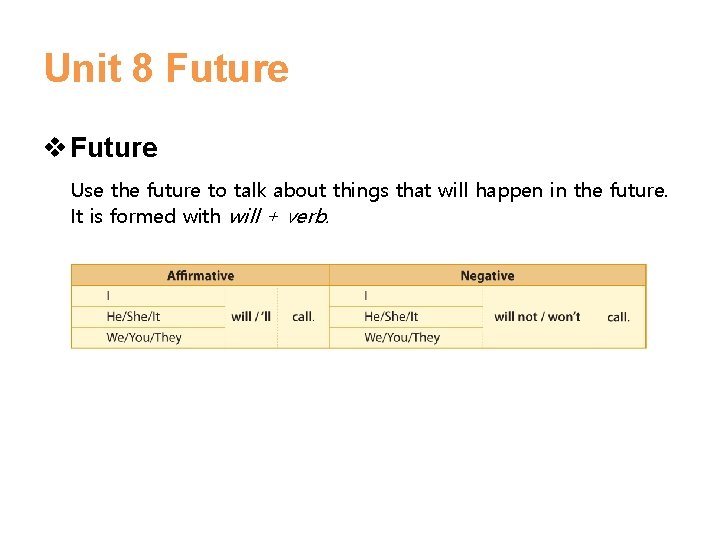
Unit 8 Future v Future Use the future to talk about things that will happen in the future. It is formed with will + verb.
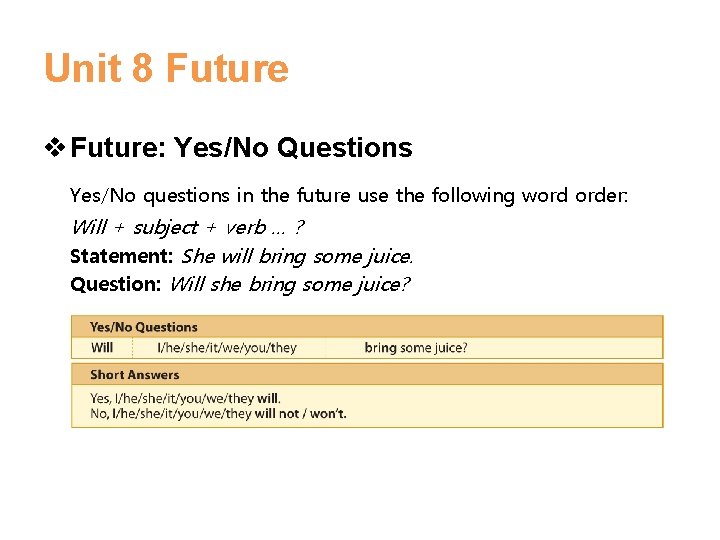
Unit 8 Future v Future: Yes/No Questions Yes/No questions in the future use the following word order: Will + subject + verb … ? Statement: She will bring some juice. Question: Will she bring some juice?
Unit 9 Simple Past of Be v Simple Past of Be Use the simple past of the verb be to say who, what, how, and where a person or thing was in the past. The simple past of be has two different forms. Past time expressions are often used with the simple past.
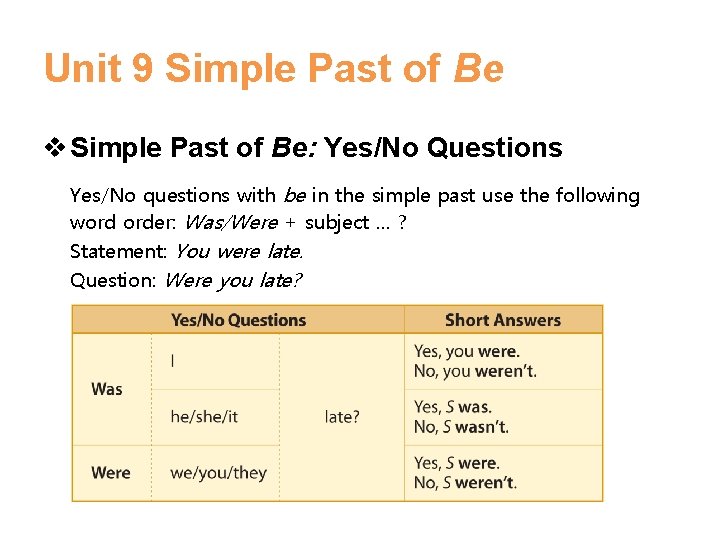
Unit 9 Simple Past of Be v Simple Past of Be: Yes/No Questions Yes/No questions with be in the simple past use the following word order: Was/Were + subject … ? Statement: You were late. Question: Were you late?
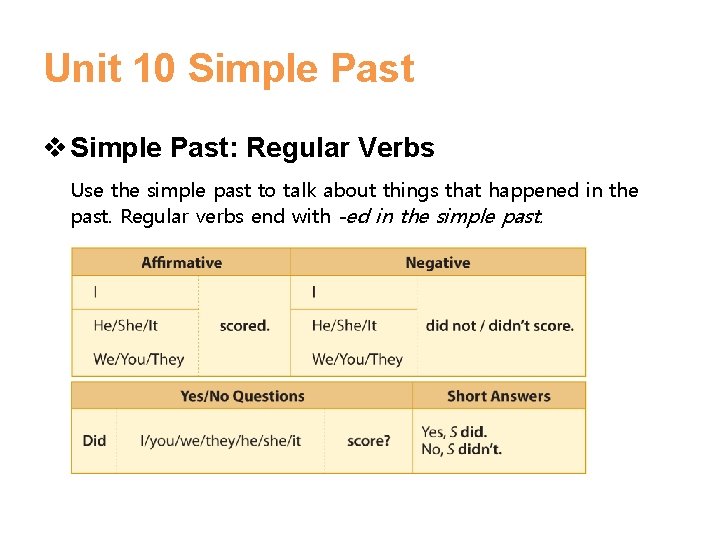
Unit 10 Simple Past v Simple Past: Regular Verbs Use the simple past to talk about things that happened in the past. Regular verbs end with -ed in the simple past.
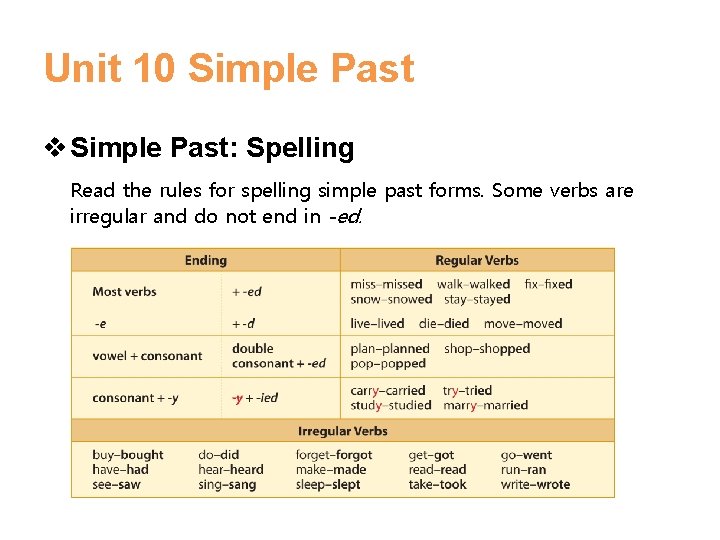
Unit 10 Simple Past v Simple Past: Spelling Read the rules for spelling simple past forms. Some verbs are irregular and do not end in -ed.
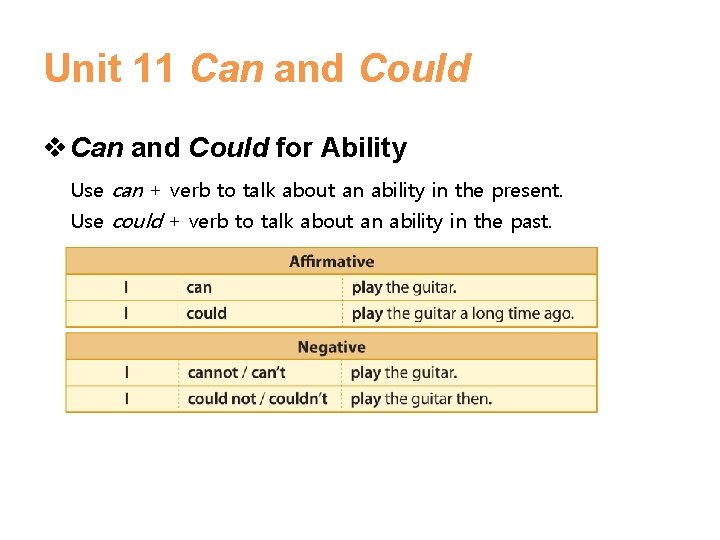
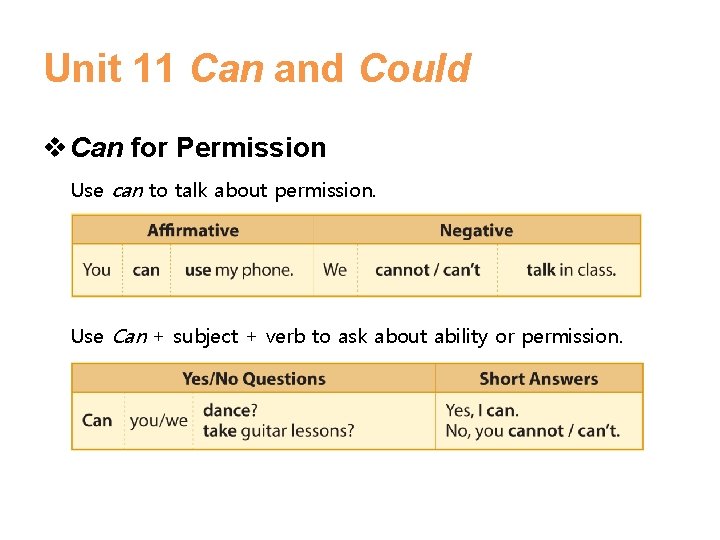
Unit 11 Can and Could v Can and Could for Ability Use can + verb to talk about an ability in the present. Use could + verb to talk about an ability in the past.
Unit 11 Can and Could v Can for Permission Use can to talk about permission. Use Can + subject + verb to ask about ability or permission.
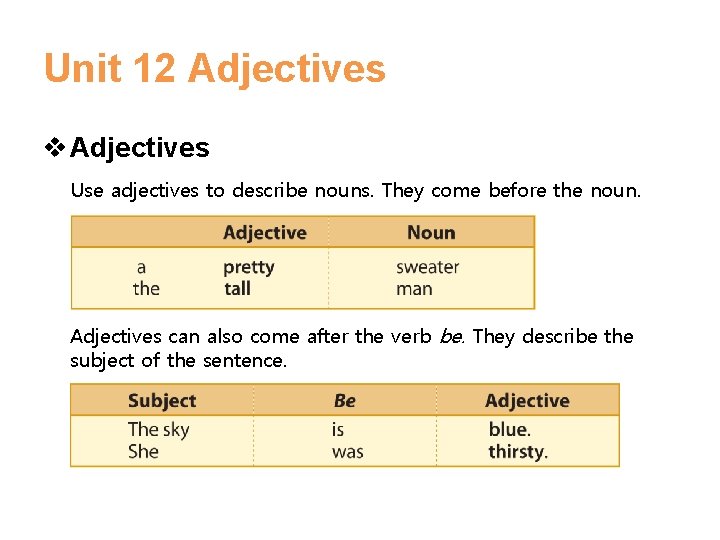
Unit 12 Adjectives v Adjectives Use adjectives to describe nouns. They come before the noun. Adjectives can also come after the verb be. They describe the subject of the sentence.
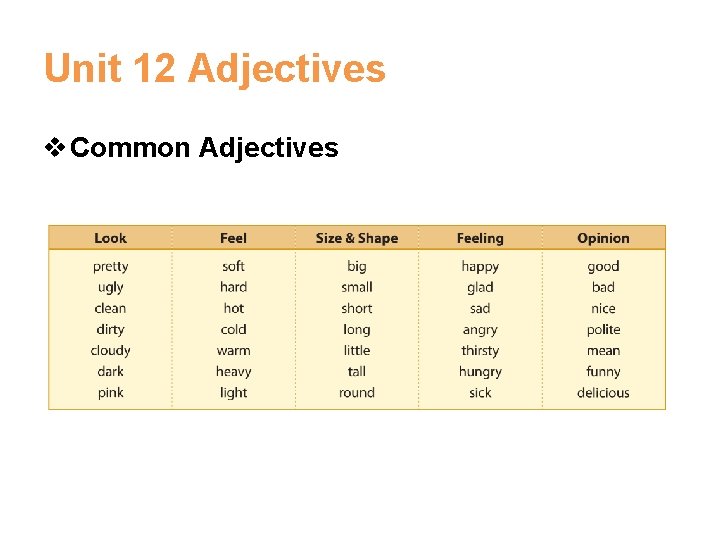
Unit 12 Adjectives v Common Adjectives
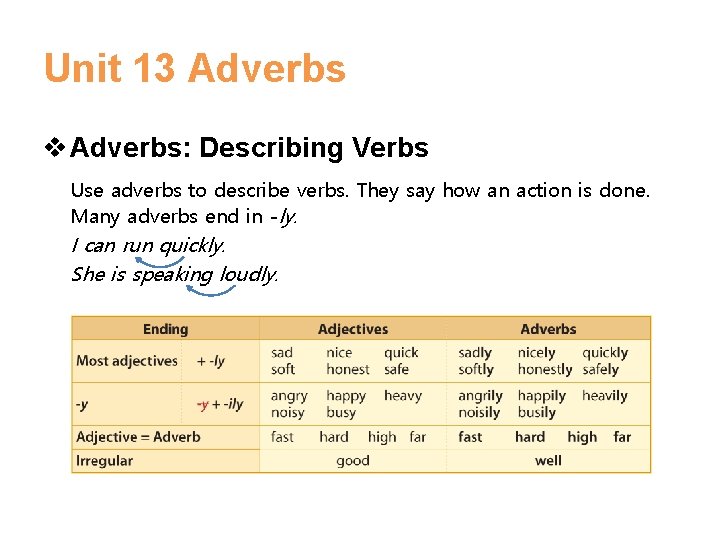
Unit 13 Adverbs v Adverbs: Describing Verbs Use adverbs to describe verbs. They say how an action is done. Many adverbs end in -ly. I can run quickly. She is speaking loudly.
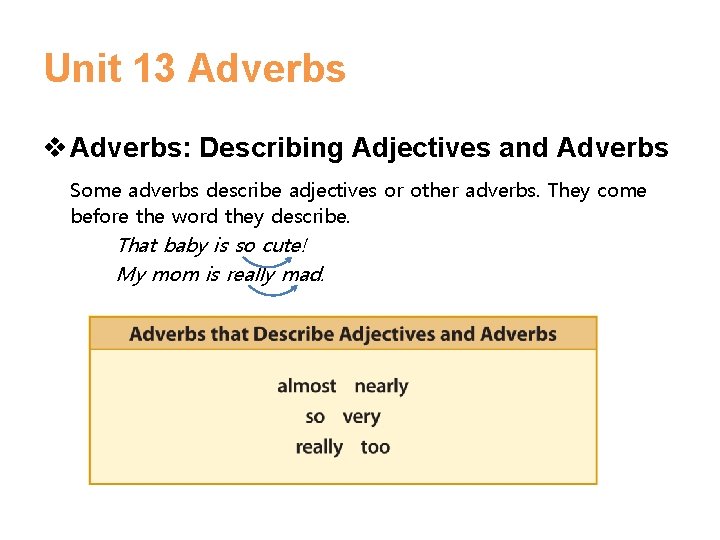
Unit 13 Adverbs v Adverbs: Describing Adjectives and Adverbs Some adverbs describe adjectives or other adverbs. They come before the word they describe. That baby is so cute! My mom is really mad.
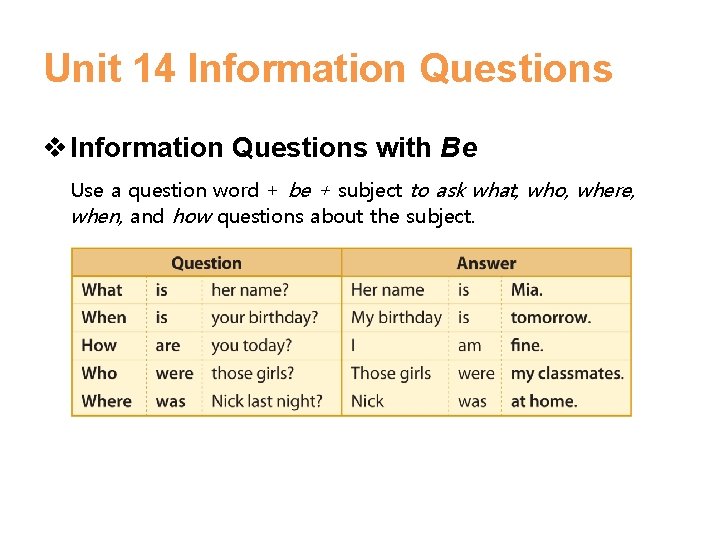
Unit 14 Information Questions v Information Questions with Be Use a question word + be + subject to ask what, who, where, when, and how questions about the subject.
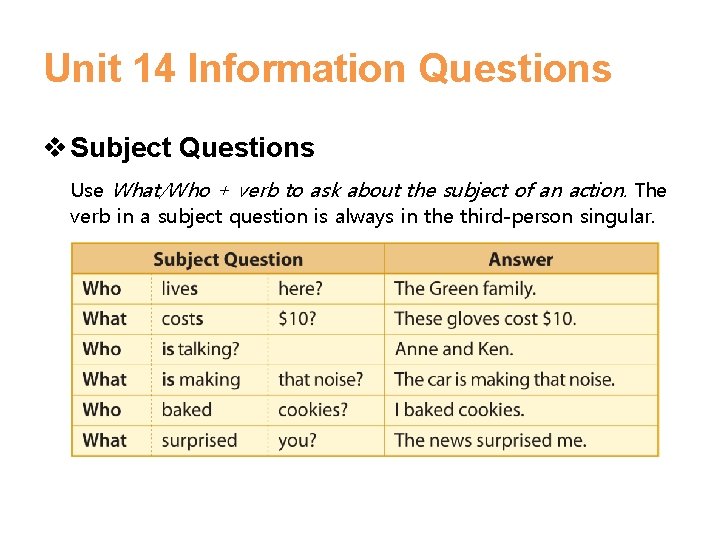
Unit 14 Information Questions v Subject Questions Use What/Who + verb to ask about the subject of an action. The verb in a subject question is always in the third-person singular.
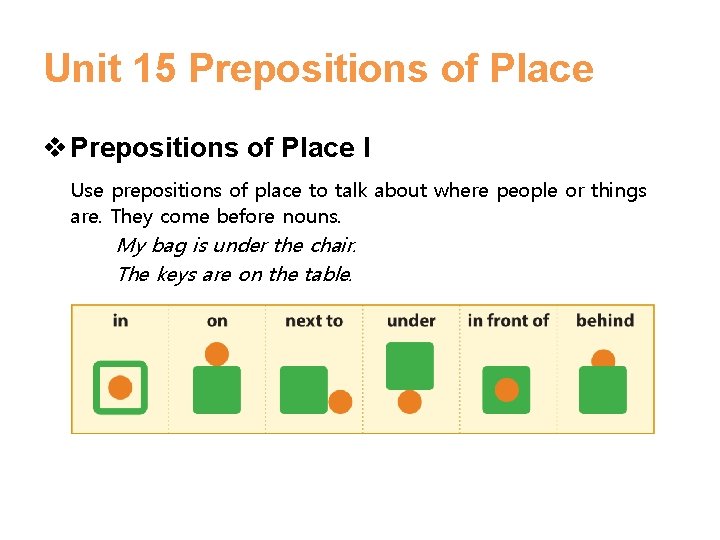
Unit 15 Prepositions of Place v Prepositions of Place I Use prepositions of place to talk about where people or things are. They come before nouns. My bag is under the chair. The keys are on the table.
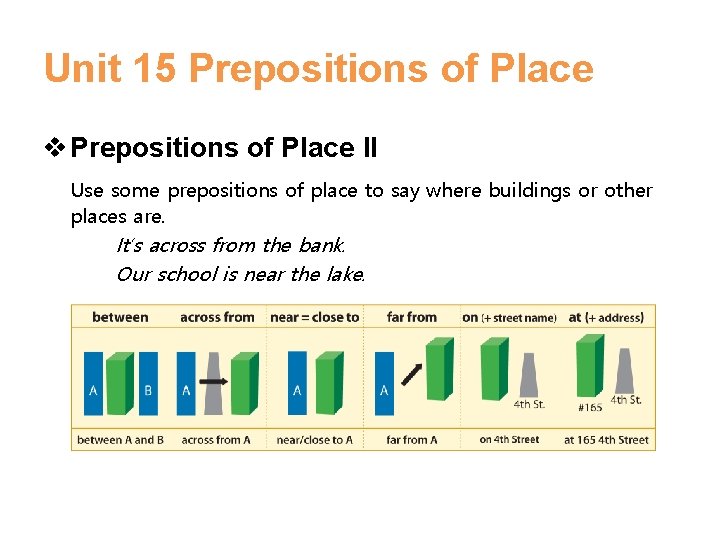
Unit 15 Prepositions of Place v Prepositions of Place II Use some prepositions of place to say where buildings or other places are. It’s across from the bank. Our school is near the lake.
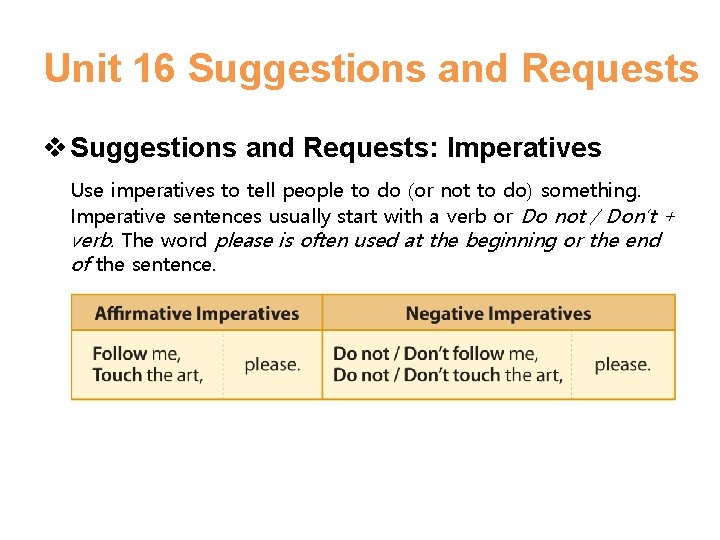
Unit 16 Suggestions and Requests v Suggestions and Requests: Imperatives Use imperatives to tell people to do (or not to do) something. Imperative sentences usually start with a verb or Do not / Don’t + verb. The word please is often used at the beginning or the end of the sentence.
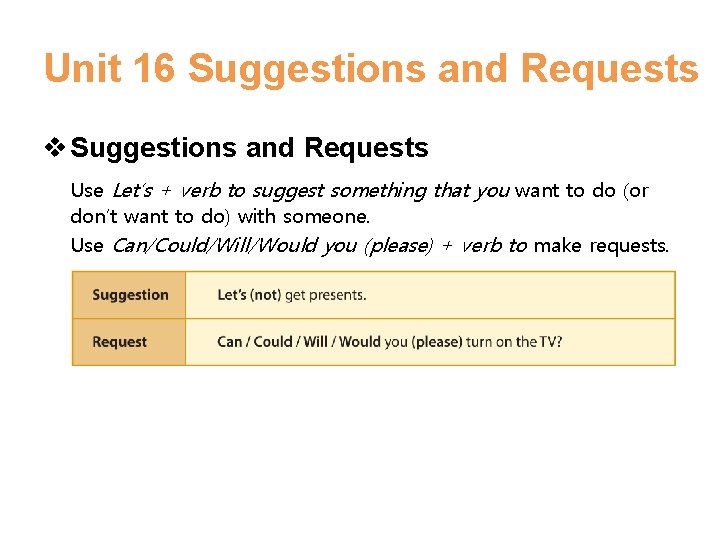
Unit 16 Suggestions and Requests v Suggestions and Requests Use Let’s + verb to suggest something that you want to do (or don’t want to do) with someone. Use Can/Could/Will/Would you (please) + verb to make requests.