Grains Potatoes Legumes Types of Rice Long Grain





- Slides: 13
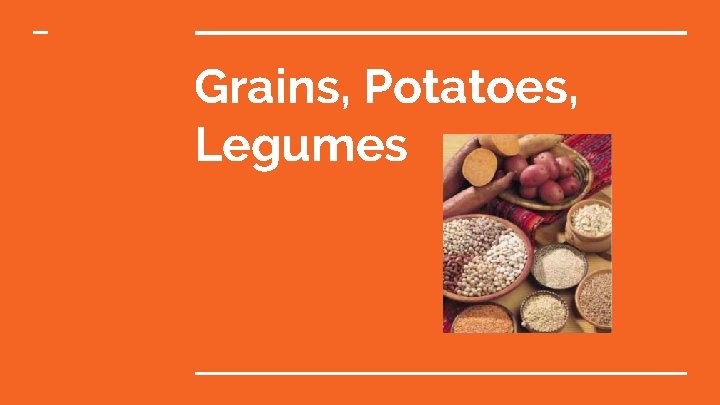
Grains, Potatoes, Legumes
Types of Rice Long Grain: ○ Basmati, Jasmine – most common in the US. Medium Grain: ○ Arborio and carnaroli (commonly used in risotto) Short grain: ○ Ideal for sushi and desserts, this rice is also called sticky rice. Whole Grain: ○ Brown rice is usually just a general variety of long grain. Converted: ○ Partially cooked with steam and dried ○ During this process some of the surface starch is removed, does not stick together ○ This rice is also fortified with nutrients by forcing them into the outer layer of the grain.
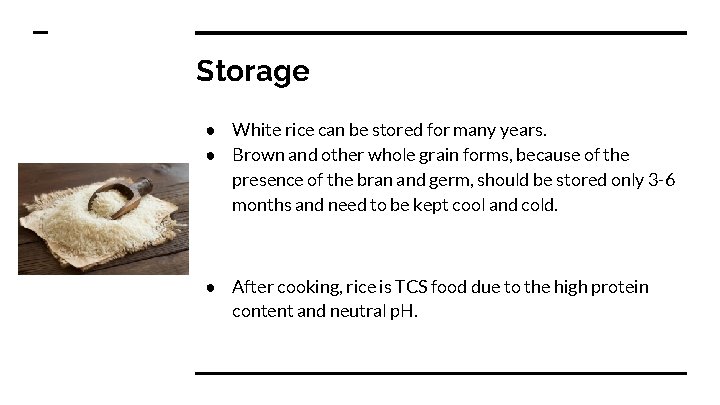
Storage ● White rice can be stored for many years. ● Brown and other whole grain forms, because of the presence of the bran and germ, should be stored only 3 -6 months and need to be kept cool and cold. ● After cooking, rice is TCS food due to the high protein content and neutral p. H.
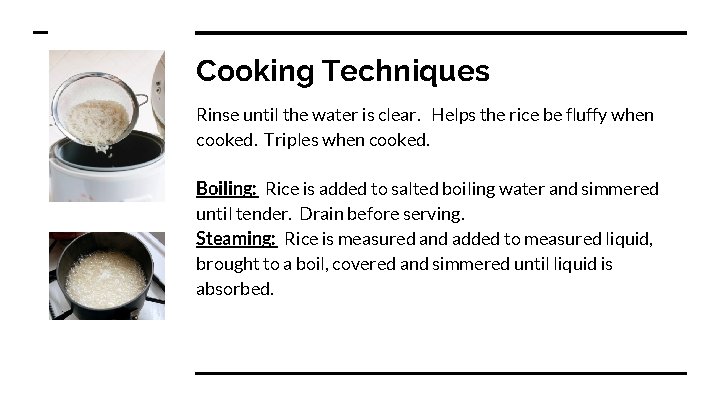
Cooking Techniques Rinse until the water is clear. Helps the rice be fluffy when cooked. Triples when cooked. Boiling: Rice is added to salted boiling water and simmered until tender. Drain before serving. Steaming: Rice is measured and added to measured liquid, brought to a boil, covered and simmered until liquid is absorbed.
Cooking Techniques Braising or Pilaf: Aromatics are sweated in fat. Then the rice is added and coated in the fat. A measured amount of water or a flavored liquid is then added and is simmered until tender. Risotto: Rice is cooked while stirring in warm, flavorful liquid a little at a time. The result is a creamy, because of the starch from the rice. Baked: Rice and measured amount of hot water are placed in a tightly covered container in the oven.
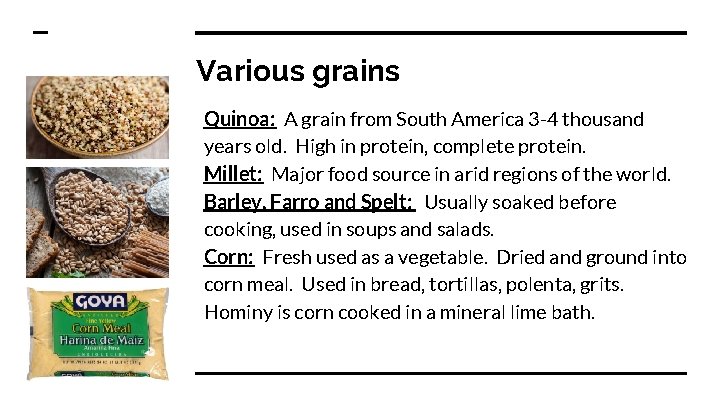
Various grains Quinoa: A grain from South America 3 -4 thousand years old. High in protein, complete protein. Millet: Major food source in arid regions of the world. Barley, Farro and Spelt: Usually soaked before cooking, used in soups and salads. Corn: Fresh used as a vegetable. Dried and ground into corn meal. Used in bread, tortillas, polenta, grits. Hominy is corn cooked in a mineral lime bath.
Pasta: Basic Ingredients Flour: ● Usually wheat, specially semolina, a hard-grain wheat that is high in gluten Liquid: ● Water and/or eggs and sometimes oil.
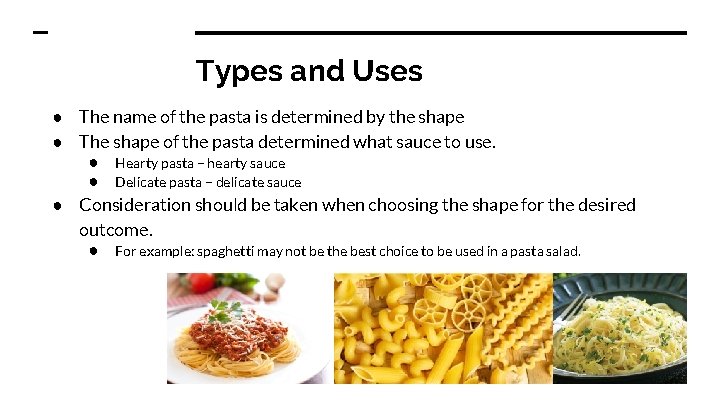
Types and Uses ● The name of the pasta is determined by the shape ● The shape of the pasta determined what sauce to use. ● Hearty pasta – hearty sauce ● Delicate pasta – delicate sauce ● Consideration should be taken when choosing the shape for the desired outcome. ● For example: spaghetti may not be the best choice to be used in a pasta salad.
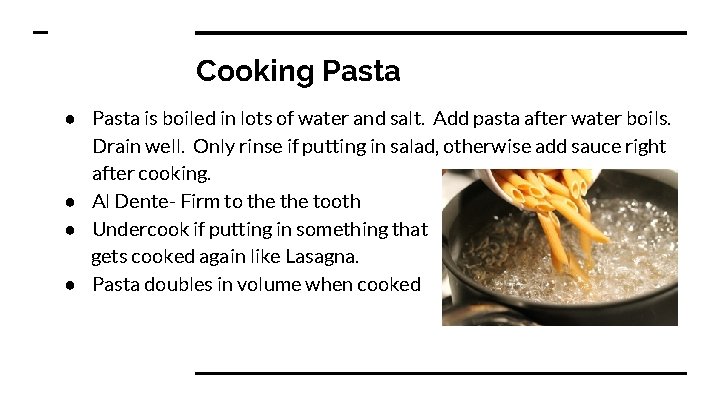
Cooking Pasta ● Pasta is boiled in lots of water and salt. Add pasta after water boils. Drain well. Only rinse if putting in salad, otherwise add sauce right after cooking. ● Al Dente- Firm to the tooth ● Undercook if putting in something that gets cooked again like Lasagna. ● Pasta doubles in volume when cooked
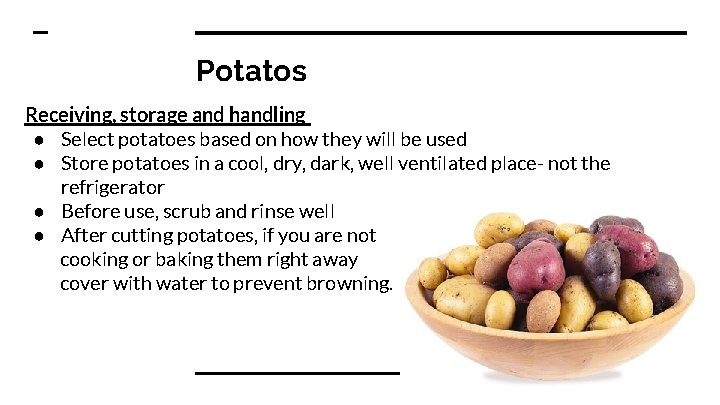
Potatos Receiving, storage and handling ● Select potatoes based on how they will be used ● Store potatoes in a cool, dry, dark, well ventilated place- not the refrigerator ● Before use, scrub and rinse well ● After cutting potatoes, if you are not cooking or baking them right away cover with water to prevent browning.
Categories of Potatoes Starchy: Idaho, russets, and yellow sweet potatoes ● They are high in starch and low in moisture making them fluffy when cooked ● Good for boiling, baking, and frying. They do not hold their shape well after cooking. Waxy: Red bliss or new potatoes ● Good for roasting, boiling, casseroles and potato salad. They hold shape well after cooking All-Purpose: Yukon gold, purple Peruvian ● Medium starch content and good for anything.
Types of Legumes 1. Beans: Lima, cannellini, black, pinto, kidney, soy 2. Lentils: Yellow, green, and brown 3. Peanuts: (Raw or unroasted) 4. Split peas
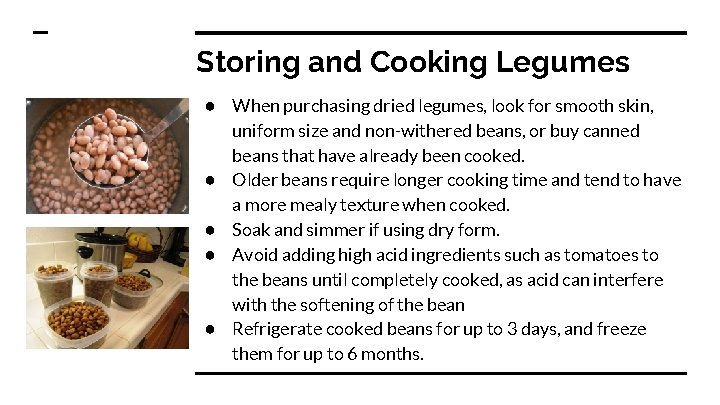
Storing and Cooking Legumes ● When purchasing dried legumes, look for smooth skin, ● ● uniform size and non-withered beans, or buy canned beans that have already been cooked. Older beans require longer cooking time and tend to have a more mealy texture when cooked. Soak and simmer if using dry form. Avoid adding high acid ingredients such as tomatoes to the beans until completely cooked, as acid can interfere with the softening of the bean Refrigerate cooked beans for up to 3 days, and freeze them for up to 6 months.