
11 Potatoes Grains 11 1 Potatoes Objectives Outline
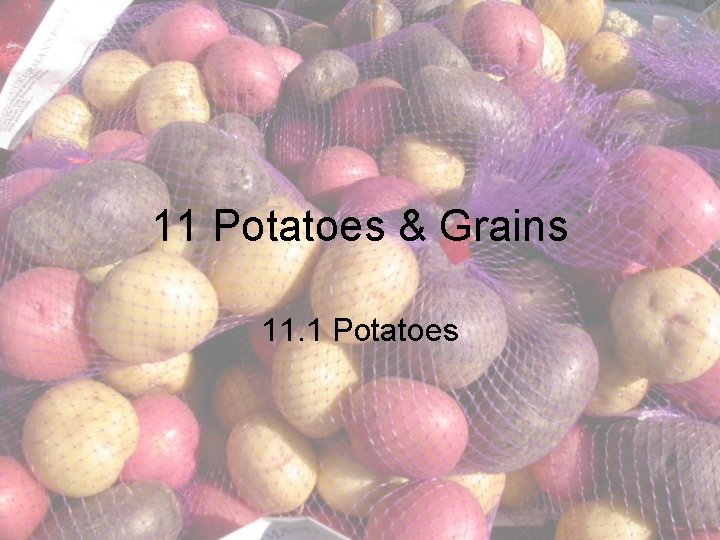
11 Potatoes & Grains 11. 1 Potatoes
Objectives • Outline methods to select receive, and store potatoes • Describe physical properties of potatoes • Distinguish between various forms of potatoes • Using a variety of recipes and cooking techniques, prepare potatoes
Terms All-purpose potato Russet potato Chef’s potato Single-stage technique En casserole Idaho potato Solanine (SOLE-ahneen) Sweet potato Lyonnaise Tuber Mealy Waxy Multiple-stage technique New potato Yam
Potatoes • Native to North and South America • 15 th century, Francisco Pizarro • Staple in many countries: inexpensive, nourishing and easy to grow • Average American eats nearly 50# annually
Potatoes • Tuber: fleshy portion of certain plants that usually grows underground
Potatoes, Types • Mealy: high starch/low moisture, includes russets, Burbank, Idaho. Tend toward dry and granular after cooking, use for baking pureeing, mashing and frying
Potatoes • Waxy: low starch/high moisture, includes red skinned, yellow, [all-purpose, chef’s are slightly drier], boiling, and heirloom such as purple. Tend to hold shape after cooking, use for boiling, steaming, sautéing, oven roasting, braise, stew, soup, salad – New potatoes < 1 ½-2 inches in diameter are high in moisture
Potatoes, Types • Yams: starchier, less sweet, rougher skin, blocky in shape, pale to deep yellow flesh • Sweet potatoes: lower starch, smoother skin, tapered ends, deep orange flesh • Like russets, yams and sweet potatoes tend toward higher starch, lower moisture
Potatoes • Starch test – Prepare brine, 11 parts water to 1 part salt (by weight). Floaters contain less starch
Potatoes, Select/Store • Choose potatoes that are firm and relatively smooth • Potatoes exposed to light develop a greenish color indicating solanine, a bitter tasting, harmful substance. Sprouts contain solanine.
Potatoes, Select/Store • Store potatoes cool, dry, out of sun, good ventilation. (45 -55 degrees F. ) • Russet and all-purpose: 30 days • New/immature: 1 week • As potatoes age, the starch content increases
Potatoes, Cook • Single-stage technique: taken from raw state to finished state using 1 cooking method – Boiled, baked, steamed • Multiple-stage technique: using more than 1 method – Lyonnaise potatoes: precooked, sliced, then fried with onions
Potatoes, Cook • Boiling – One of the easiest methods – Often first step for other preparations • Puréed potatoes – Mashed/whipped – Duchesse – Croquettes
Potatoes, Cook • Boiling – Place washed potatoes in a pot of cold water, enough liquid to cover. Bring water to boil and simmer until done – Done when fork pierces, then slides easily through potato – Serve immediately or hold up to one hour
Potatoes, Cook • Steaming – Good for new potatoes because of high moisture content
Potatoes, Cook • Baked – Served and skins – Idaho/russet – oil to keep skin soft – wrapping in foil makes inside less fluffy, and steams potato – Baked potatoes should be scrubbed clean and pierced with fork
Potatoes, Cook • En casserole: potato dishes combine peeled and sliced raw potatoes with heavy cream, sauce, or uncooked custard and are then slowly baked in a buttered pan – Often topped with bread crumbs, butter, grated cheese and then broiled briefly – Hold well on serving line
Potatoes, Cook • Chef’s potatoes are the best for sautéing – Irregularly shaped, less expensive
Potatoes, Cook • Deep-fried – Russet/low moisture – Often blanched (325°F. ), refrigerated, then finished (375°F. ) at time of service – Do not hold well
Potatoes, Cook • Potato pancakes are made with grated potatoes and other ingredients, and their pan-fried to a crispy brown – Latkes are American-Jewish version and traditionally served with applesauce and sour cream
Potatoes, Cook • Puréed – Include mashed, whipped, Duchesse, croquettes – Whenever possible, Cook potatoes in their skins to retain their nutrients – Peeled potatoes should be completely covered in a liquid to prevent discoloring
- Slides: 21