GE 21001 Dynamic Human Worlds Economic Geography Lecture
- Slides: 12
GE 21001 Dynamic Human Worlds Economic Geography, Lecture 3 Globalisation, Inequality and Space (Part 1) Dr. Susan P. Mains Geography
Lecture Outline • Recap from Lecture 3 • Defining Globalisation • Forms of Globalisation: • Economic • Maquiladoras Useful Readings: *Mac. Kinnon, D. and Cumbers, A. (2007) An Introduction to Economic Geography: globalisation, uneven development and place. London, Pearson Prentice Hall. Chapters 6, 7 and 10.
Producers, Products, Places and Consumers • www. followthethings. com – ‘invisible’ ecomomies and geographies – e. g. , i. Pad factory production • https: //www. youtube. com/watch? v=f. Hxi 2 jn. Yhb. E • https: //www. youtube. com/watch? v=y 9 STw 1 ou. M 2 k • https: //www. youtube. com/watch? v=5 Yfv. SP 7 Kq 6 E • Poverty: economic and spatial inequalities • Images of poverty: tends to be associated with particular regions/countries • …but, more complex and contradictory • E. g. , poverty in the UK http: //www. youtube. com/watch? v=p. M 5 vf. Qo. V 2 lo
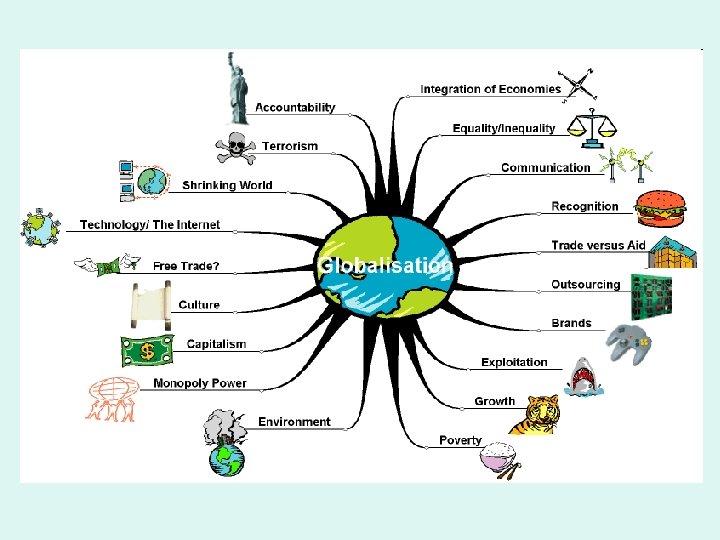
Defining Globalisation • Globalisation as a “discourse” of social and spatial relations • Economic, social and political linkages • “uneven” development • quantitatively and qualitatively different • global village or global image? • long history of global links
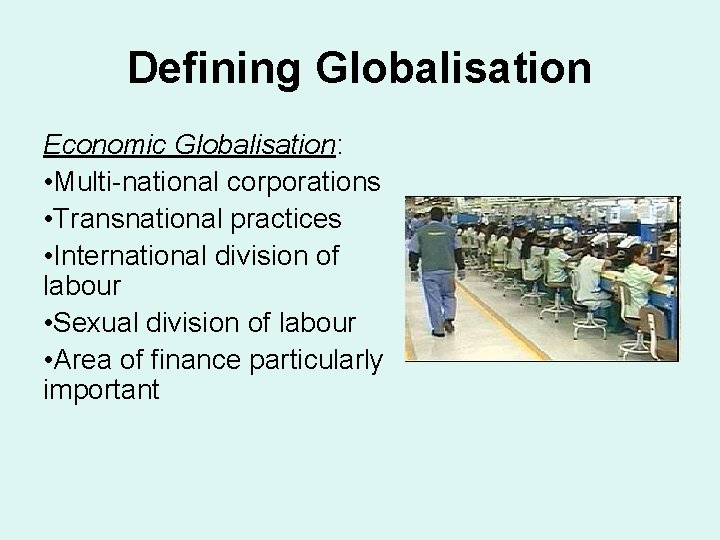
Defining Globalisation Economic Globalisation: • Multi-national corporations • Transnational practices • International division of labour • Sexual division of labour • Area of finance particularly important
Defining Globalisation Economic Globalisation: • technology industries, “footloose” industries • increased capital flows • humans as mobile capital: • migration, seasonal workers, • sex workers, sweatshops • historically: slave trade-constructions of race
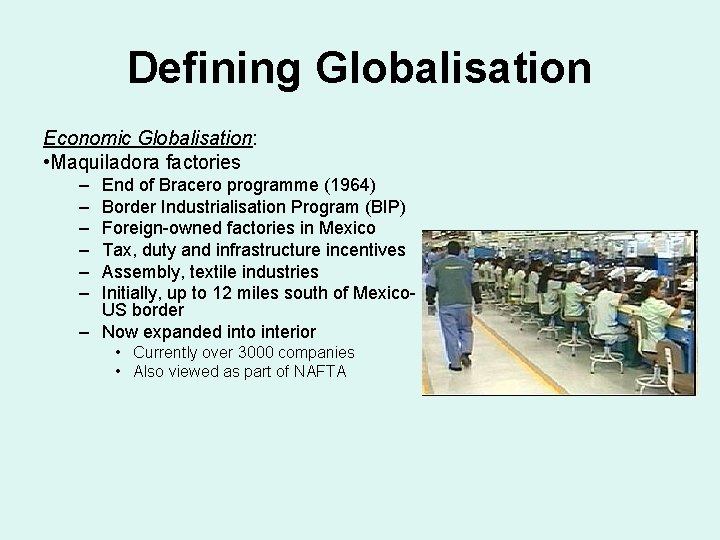
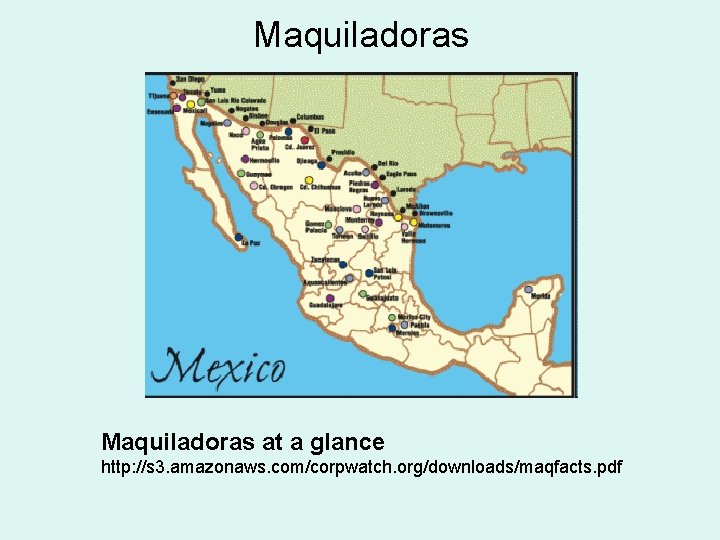
Defining Globalisation Economic Globalisation: • Maquiladora factories – – – End of Bracero programme (1964) Border Industrialisation Program (BIP) Foreign-owned factories in Mexico Tax, duty and infrastructure incentives Assembly, textile industries Initially, up to 12 miles south of Mexico. US border – Now expanded into interior • Currently over 3000 companies • Also viewed as part of NAFTA
Maquiladoras at a glance http: //s 3. amazonaws. com/corpwatch. org/downloads/maqfacts. pdf
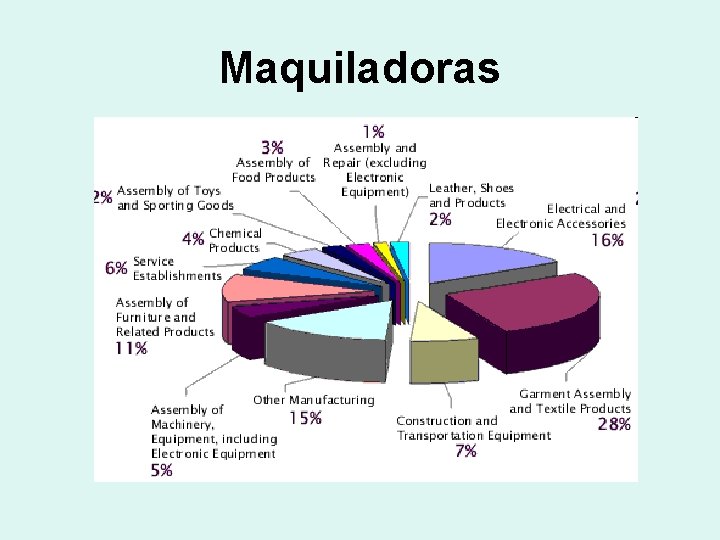
Maquiladoras
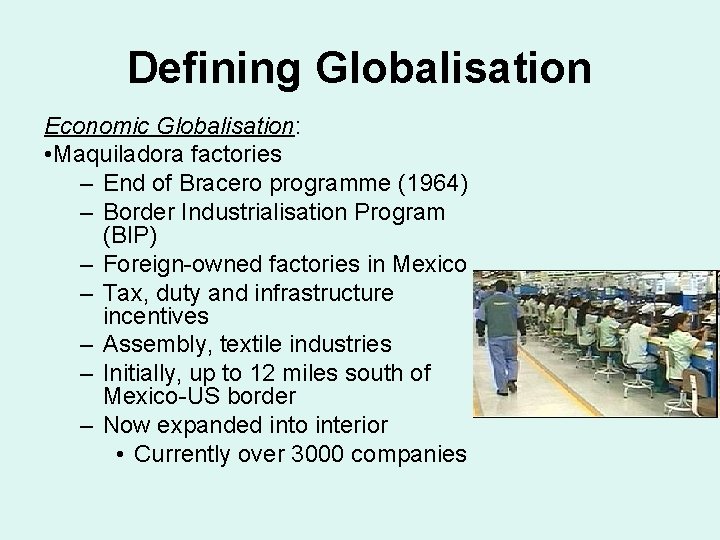
Defining Globalisation Economic Globalisation: • Maquiladora factories – End of Bracero programme (1964) – Border Industrialisation Program (BIP) – Foreign-owned factories in Mexico – Tax, duty and infrastructure incentives – Assembly, textile industries – Initially, up to 12 miles south of Mexico-US border – Now expanded into interior • Currently over 3000 companies
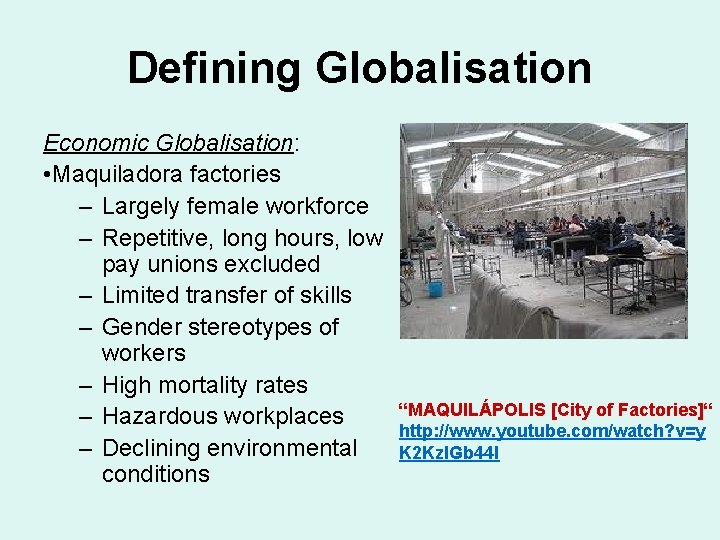
Defining Globalisation Economic Globalisation: • Maquiladora factories – Largely female workforce – Repetitive, long hours, low pay unions excluded – Limited transfer of skills – Gender stereotypes of workers – High mortality rates – Hazardous workplaces – Declining environmental conditions “MAQUILÁPOLIS [City of Factories]“ http: //www. youtube. com/watch? v=y K 2 Kz. IGb 44 I