Facial Expression Recognition Shane Steward Facial Action Coding

- Slides: 13
Facial Expression Recognition Shane Steward
Facial Action Coding System • Anatomically based • Splits face into upper and lower regions • Action units (AU)
Hidden Markov Models • Finite State Machine • Current state not observable • Each transition and initial state has a probability • Each state has output with probability
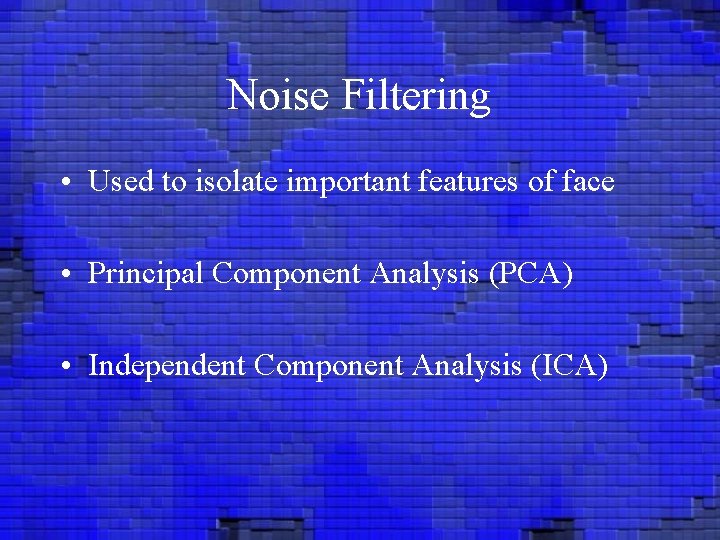
Noise Filtering • Used to isolate important features of face • Principal Component Analysis (PCA) • Independent Component Analysis (ICA)
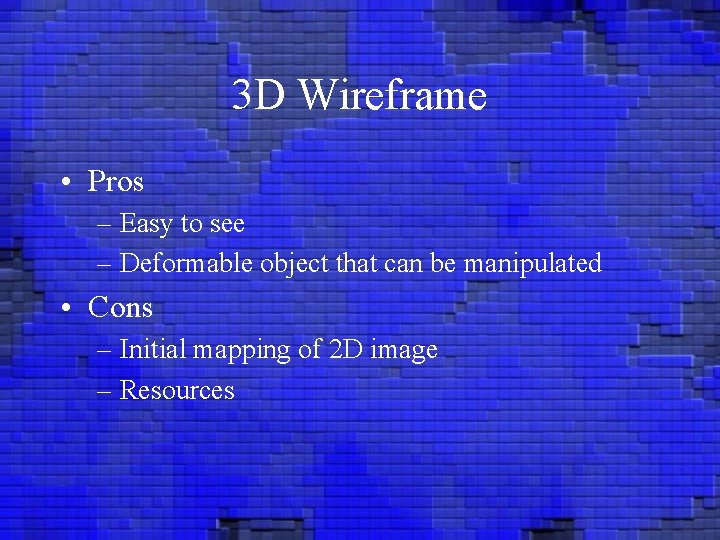
3 D Wireframe • Pros – Easy to see – Deformable object that can be manipulated • Cons – Initial mapping of 2 D image – Resources
Comparison to Neutral Image • Subtract image from neutral expression
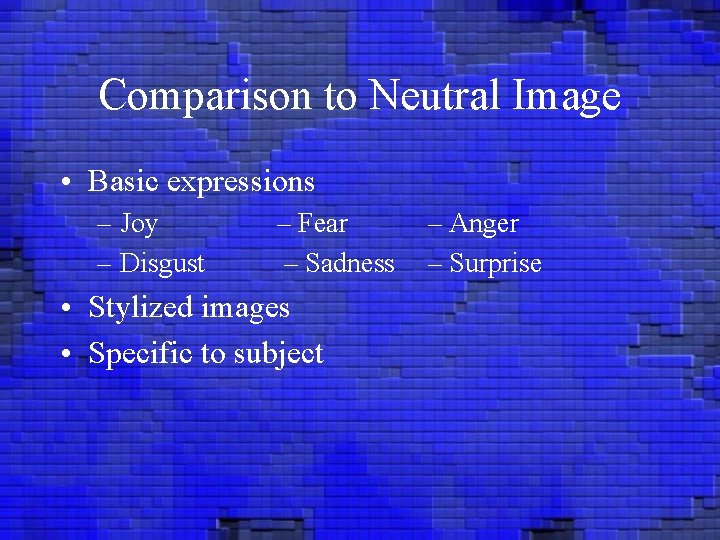
Comparison to Neutral Image • Basic expressions – Joy – Disgust – Fear – Sadness • Stylized images • Specific to subject – Anger – Surprise
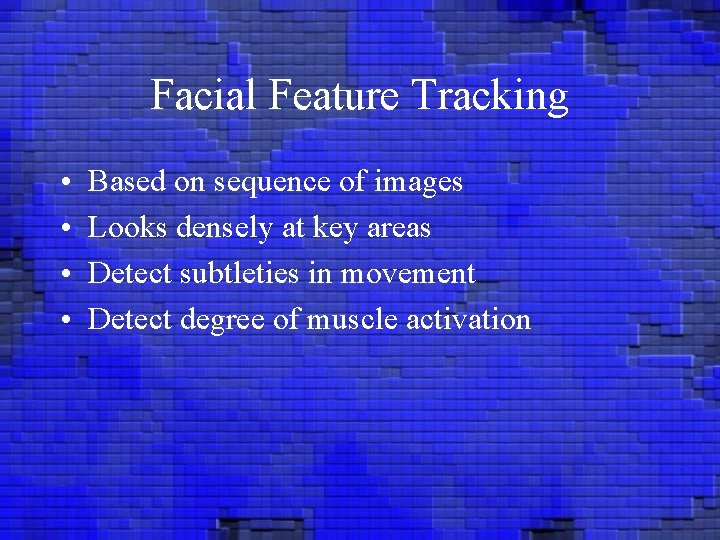
Facial Feature Tracking • • Based on sequence of images Looks densely at key areas Detect subtleties in movement Detect degree of muscle activation
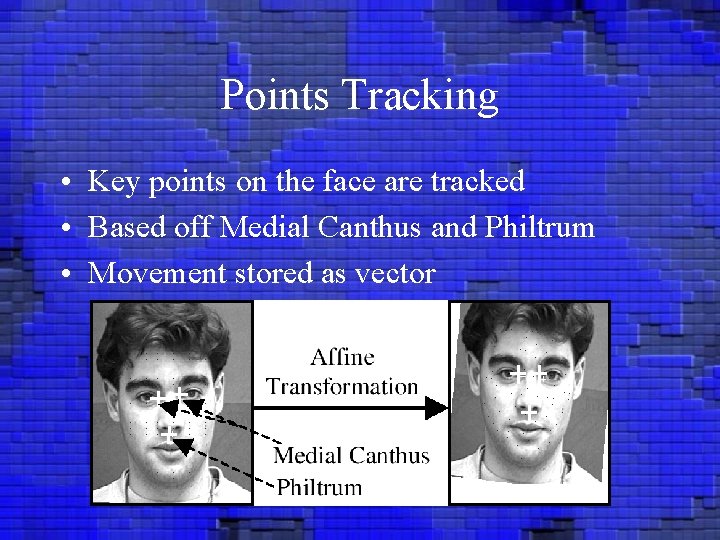
Points Tracking • Key points on the face are tracked • Based off Medial Canthus and Philtrum • Movement stored as vector
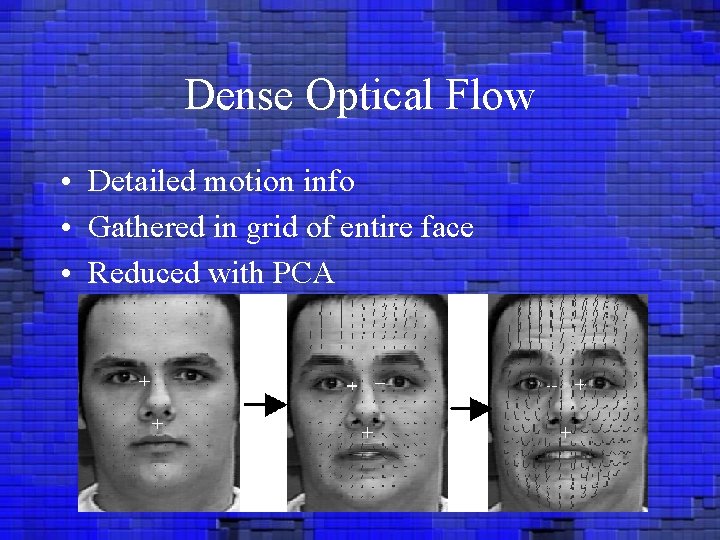
Dense Optical Flow • Detailed motion info • Gathered in grid of entire face • Reduced with PCA
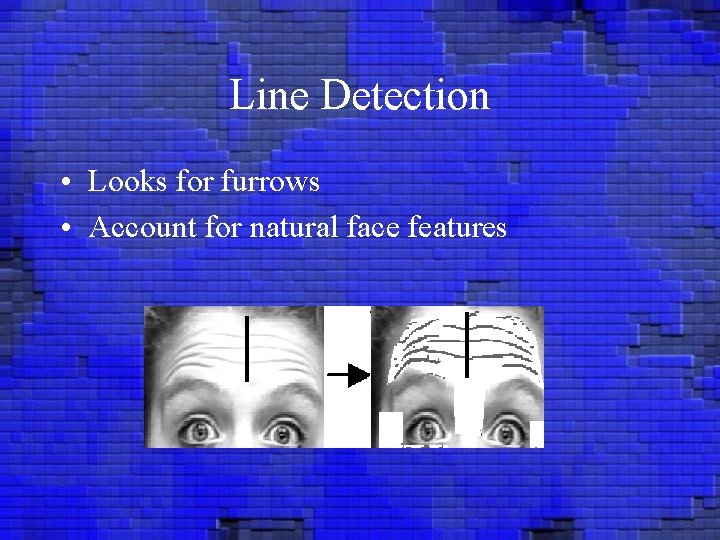
Line Detection • Looks for furrows • Account for natural face features
Facial Feature Tracking • Identifies AUs • Uses results as input to HMM – Expression with highest probability • Detects intensity of emotion • Identifies subtle emotions
Homework • Name the six basic Facial Expressions • Name three parts of Facial Feature tracking.