European cooperatives and the future CAP Paulo Gouveia

- Slides: 8
“European cooperatives and the future CAP” Paulo Gouveia, Chief Policy Advisor, Copa and Cogeca 1 st Agricultural Conference of SASOEE, Athens, Greece, 27 th March 2018
The future CAP ØObjectives of the CAP ØImportance of a strong CAP ØMain elements to ensure a more Sustainable European Agriculture ØPossible timeline for the future CAP
Objectives of the CAP • The current objectives of the CAP as stated in article 39(1) of TFEU are still valid and must be maintained. • The CAP contributes to a stable rural environment and employment for the 40 million people working in the agri-food chain. This is very important at a time of severe unemployment in the EU. • CAP must continue the market orientation of previous reforms. However support is needed for a number of public goods & services provided by farmers that cannot be remunerated by the market.
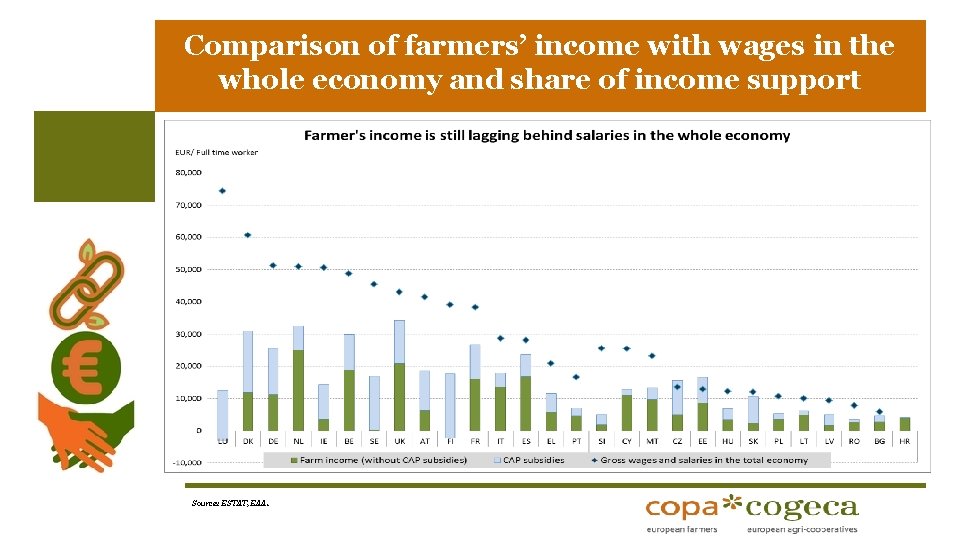
Comparison of farmers’ income with wages in the whole economy and share of income support Source: ESTAT, EAA.
Importance of a strong CAP • The EU must secure common funding for common policies. • The CAP costs less than 1% of total EU public spending. • The next EU budget must ensure, at least, the maintenance of the current CAP funding. • A properly financed CAP will ensure a strong, economically viable and competitive agriculture for the benefit of consumers and farmers. • CAP support must focus on active farmers – those who actively contribute to a sustainable sector and provide public goods. § The future CAP must focus on improving the current policy measures – it’s an evolution, not a revolution!
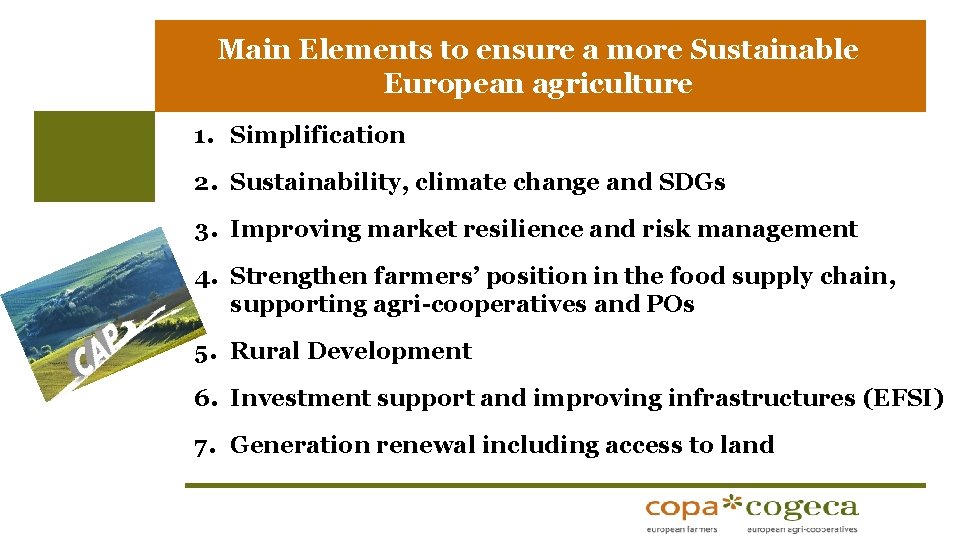
Main Elements to ensure a more Sustainable European agriculture 1. Simplification 2. Sustainability, climate change and SDGs 3. Improving market resilience and risk management 4. Strengthen farmers’ position in the food supply chain, supporting agri-cooperatives and POs 5. Rural Development 6. Investment support and improving infrastructures (EFSI) 7. Generation renewal including access to land
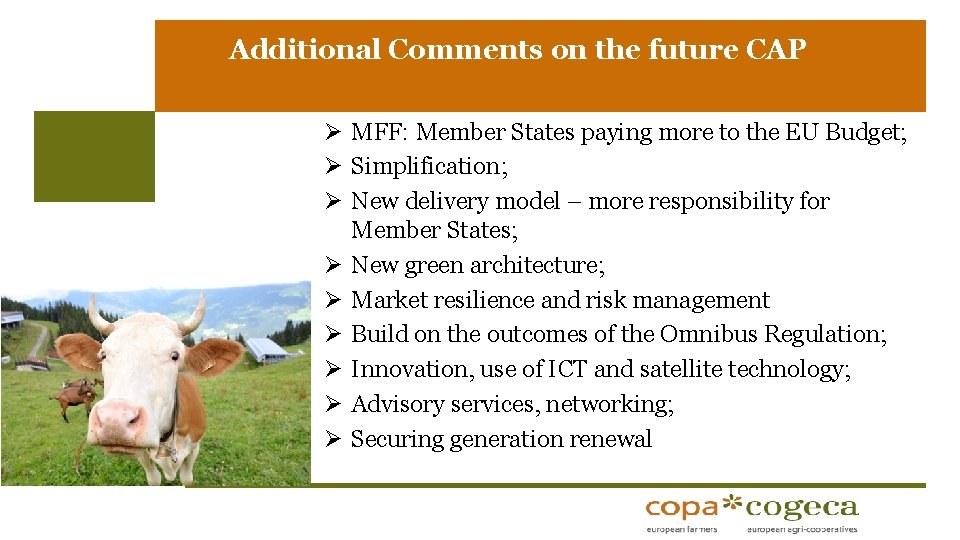
Additional Comments on the future CAP Ø MFF: Member States paying more to the EU Budget; Ø Simplification; Ø New delivery model – more responsibility for Member States; Ø New green architecture; Ø Market resilience and risk management Ø Build on the outcomes of the Omnibus Regulation; Ø Innovation, use of ICT and satellite technology; Ø Advisory services, networking; Ø Securing generation renewal
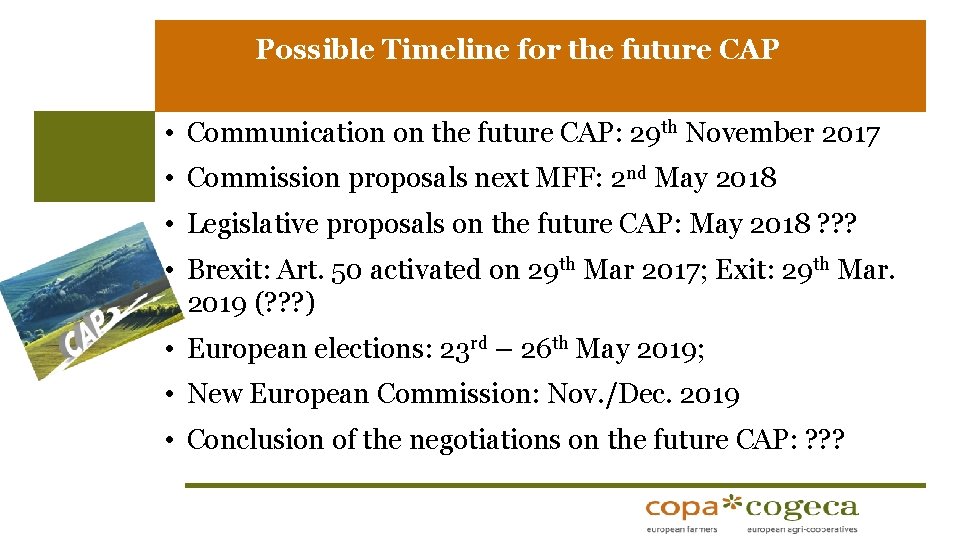
Possible Timeline for the future CAP • Communication on the future CAP: 29 th November 2017 • Commission proposals next MFF: 2 nd May 2018 • Legislative proposals on the future CAP: May 2018 ? ? ? • Brexit: Art. 50 activated on 29 th Mar 2017; Exit: 29 th Mar. 2019 (? ? ? ) • European elections: 23 rd – 26 th May 2019; • New European Commission: Nov. /Dec. 2019 • Conclusion of the negotiations on the future CAP: ? ? ?