Ethical Hacking Hacking GMail HandsOn Ethical Hacking and
- Slides: 22
Ethical Hacking: Hacking GMail Hands-On Ethical Hacking and Network Defense
Teaching Hacking Hands-On Ethical Hacking and Network Defense
What do Hackers Do? Get into computer systems without valid accounts and passwords n Open encrypted files without the key n Take over Web servers n Collect passwords from Internet traffic n Take over computers with remote access trojans n And much, much more n 3
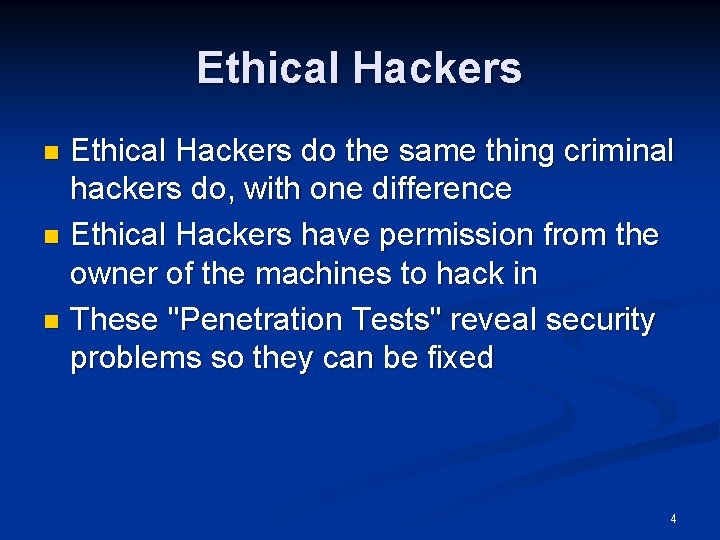
Ethical Hackers do the same thing criminal hackers do, with one difference n Ethical Hackers have permission from the owner of the machines to hack in n These "Penetration Tests" reveal security problems so they can be fixed n 4
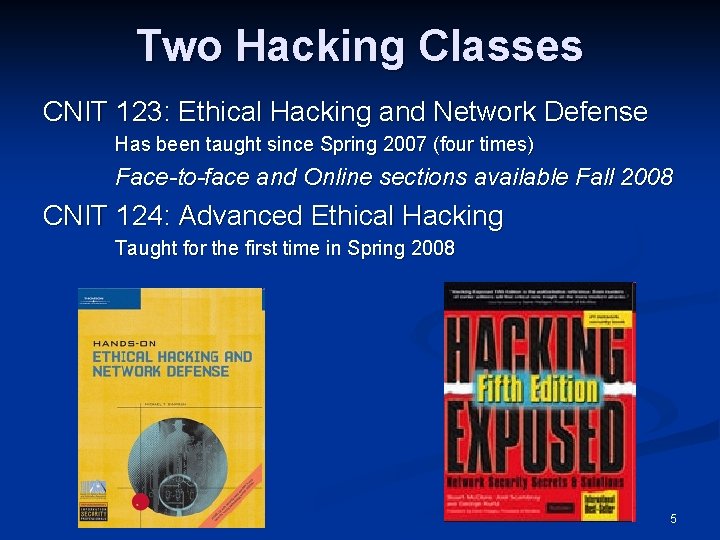
Two Hacking Classes CNIT 123: Ethical Hacking and Network Defense Has been taught since Spring 2007 (four times) Face-to-face and Online sections available Fall 2008 CNIT 124: Advanced Ethical Hacking Taught for the first time in Spring 2008 5
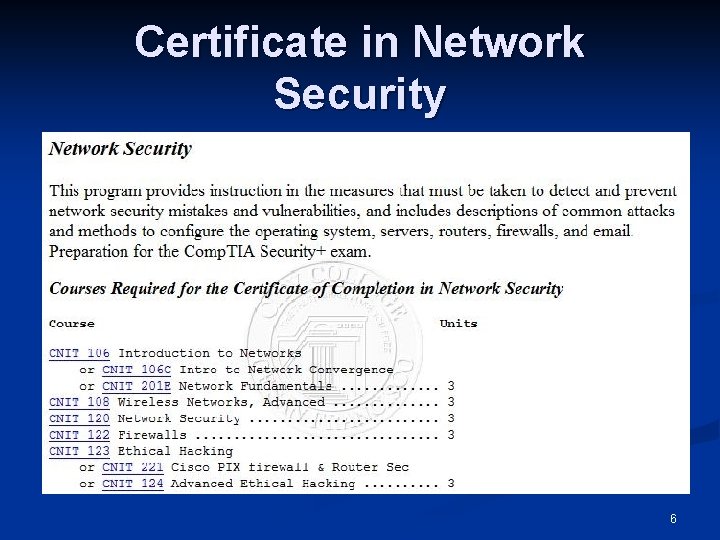
Certificate in Network Security 6
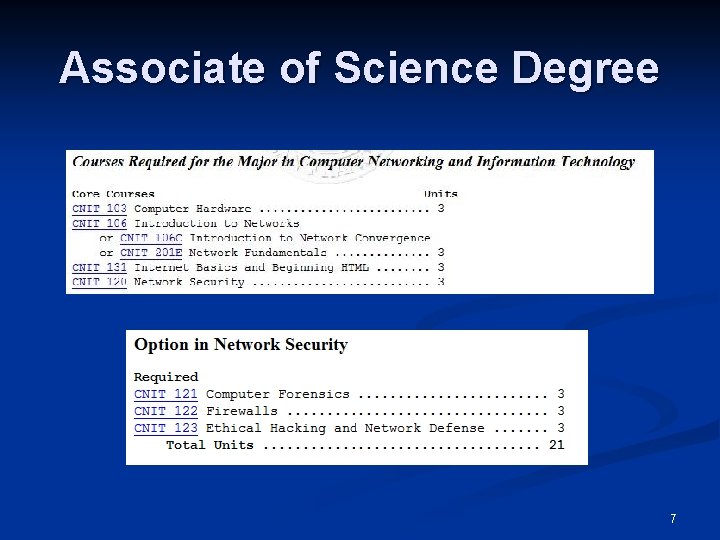
Associate of Science Degree 7
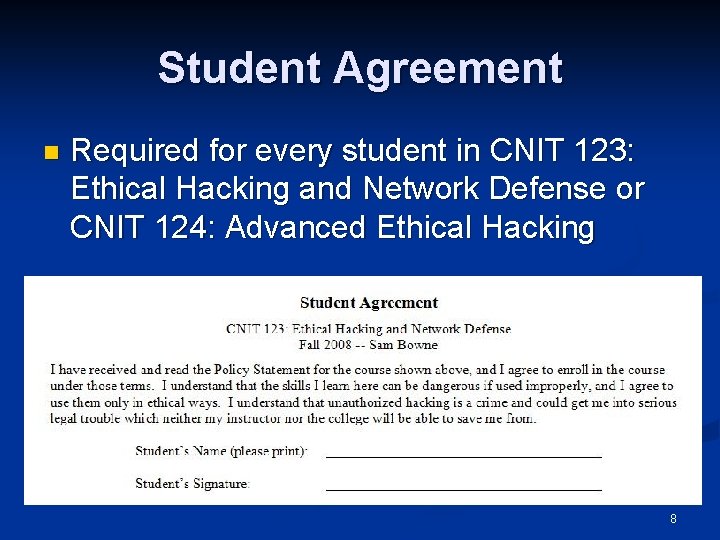
Student Agreement n Required for every student in CNIT 123: Ethical Hacking and Network Defense or CNIT 124: Advanced Ethical Hacking 8
Sniffing Plaintext Passwords Hands-On Ethical Hacking and Network Defense
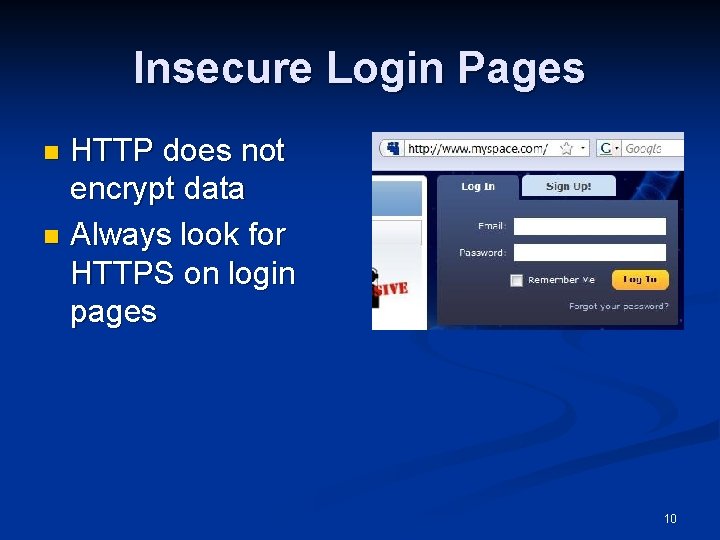
Insecure Login Pages HTTP does not encrypt data n Always look for HTTPS on login pages n 10
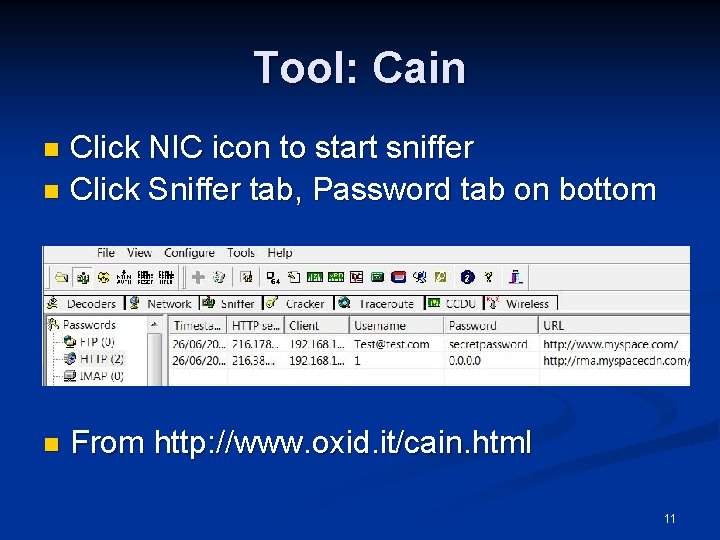
Tool: Cain Click NIC icon to start sniffer n Click Sniffer tab, Password tab on bottom n n From http: //www. oxid. it/cain. html 11
Authentication Cookies Hands-On Ethical Hacking and Network Defense
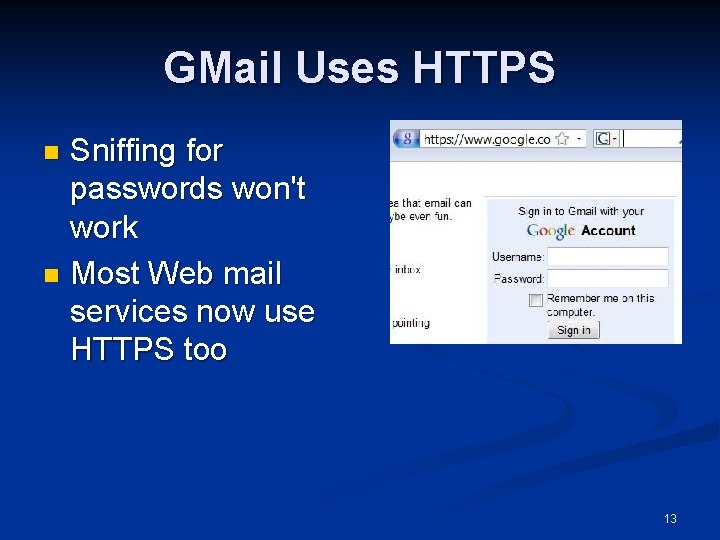
GMail Uses HTTPS Sniffing for passwords won't work n Most Web mail services now use HTTPS too n 13
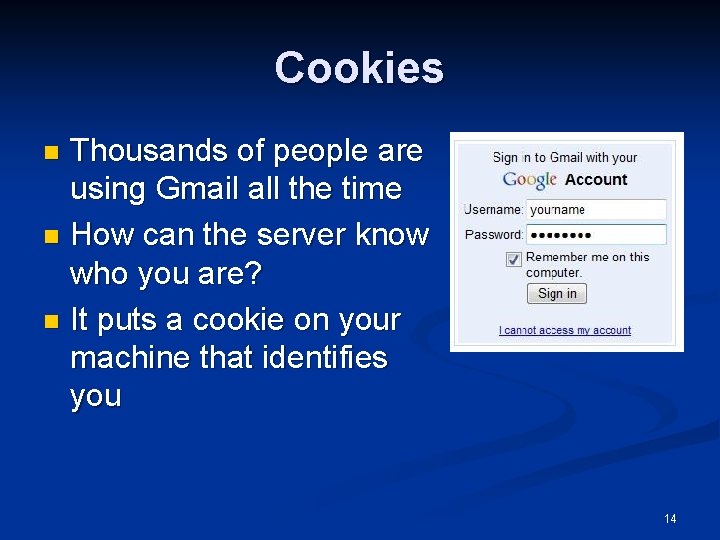
Cookies Thousands of people are using Gmail all the time n How can the server know who you are? n It puts a cookie on your machine that identifies you n 14
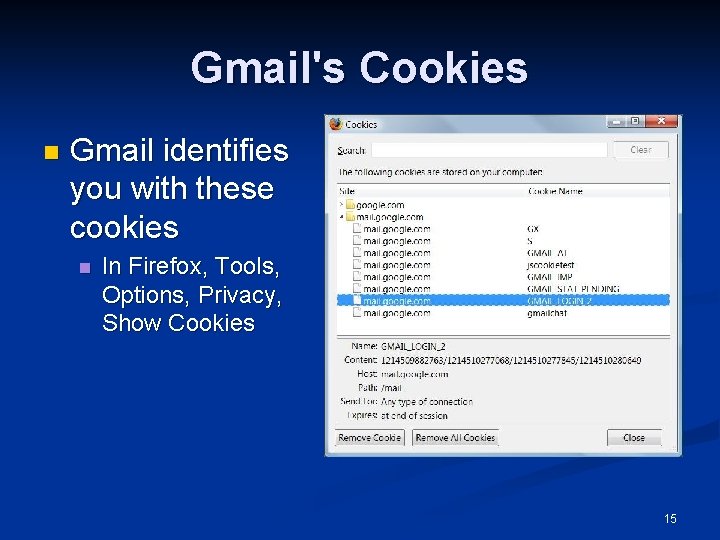
Gmail's Cookies n Gmail identifies you with these cookies n In Firefox, Tools, Options, Privacy, Show Cookies 15
Cross-Site Request Forgery (XSRF) Hands-On Ethical Hacking and Network Defense
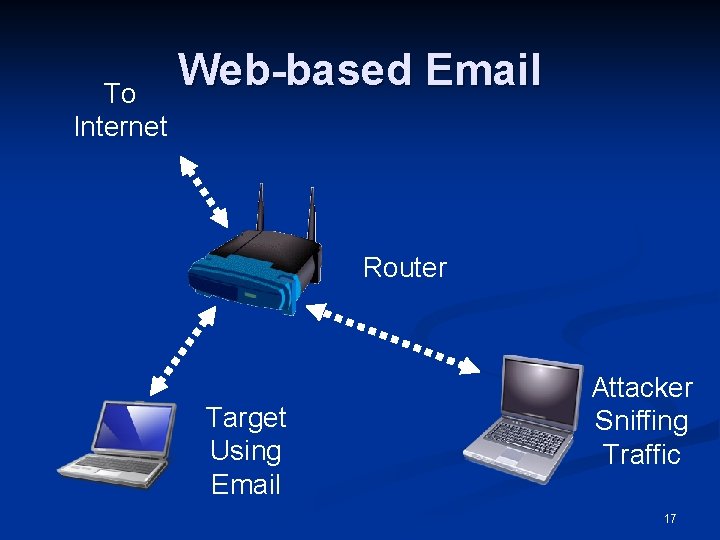
To Internet Web-based Email Router Target Using Email Attacker Sniffing Traffic 17
Cross-Site Request Forgery (XSRF) n Gmail sends the password through a secure HTTPS connection n n But the cookie identifying the user is sent in the clear—with HTTP n n That cannot be captured by the attacker That can easily be captured by the attacker The attacker gets into your account without learning your password 18
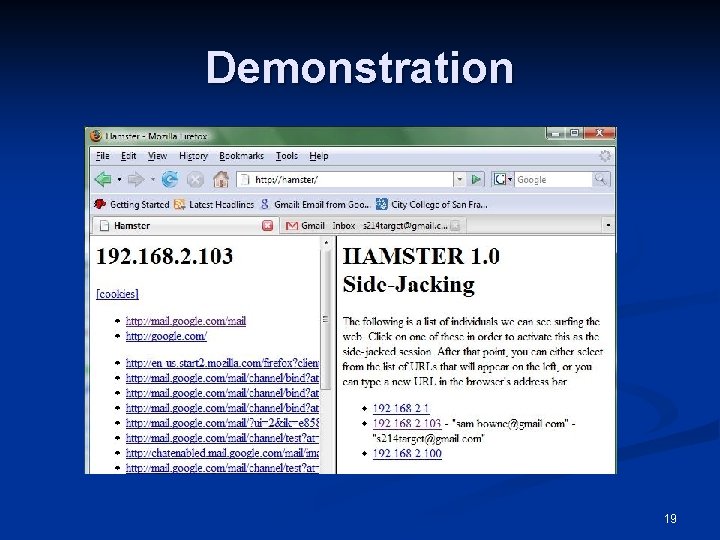
Demonstration 19
XSRF Countermeasure Use https: //mail. google. com instead of http: //gmail. com n No other mail service has this option at all, as far as I know n 20
References n Cain n n http: //www. oxid. it/cain. html Hamster n http: //erratasec. blogspot. com/2007/08/sidejac king-with-hamster_05. html 21
Contact Sam Bowne n Computer Networking and Information Technology n City College San Francisco n Email: sbowne@ccsf. edu n Web: samsclass. info n n Last modified 6 -26 -08 22