Ethan Holaday Watson and the Shark John Singleton
- Slides: 21
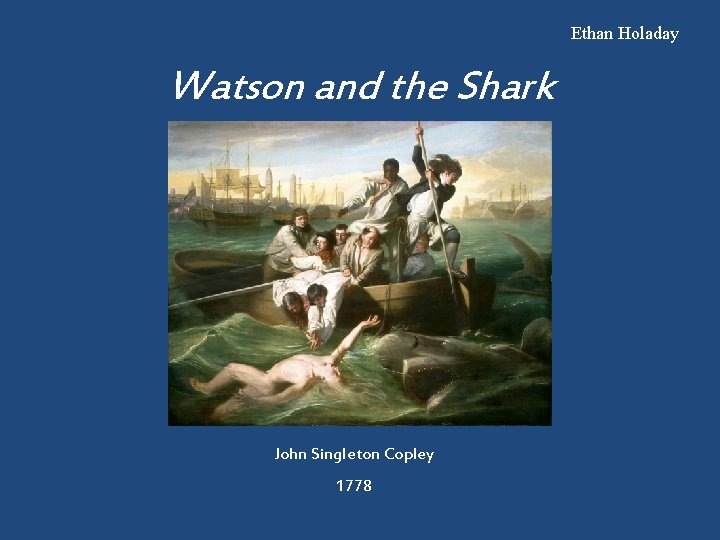
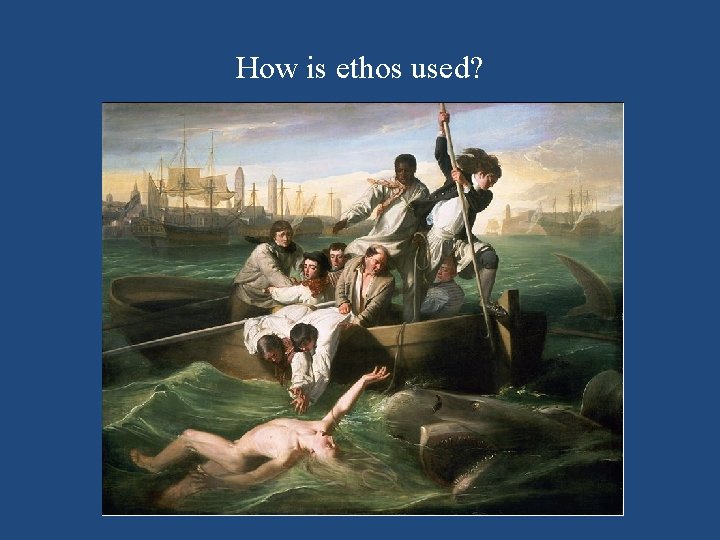
Ethan Holaday Watson and the Shark John Singleton Copley 1778
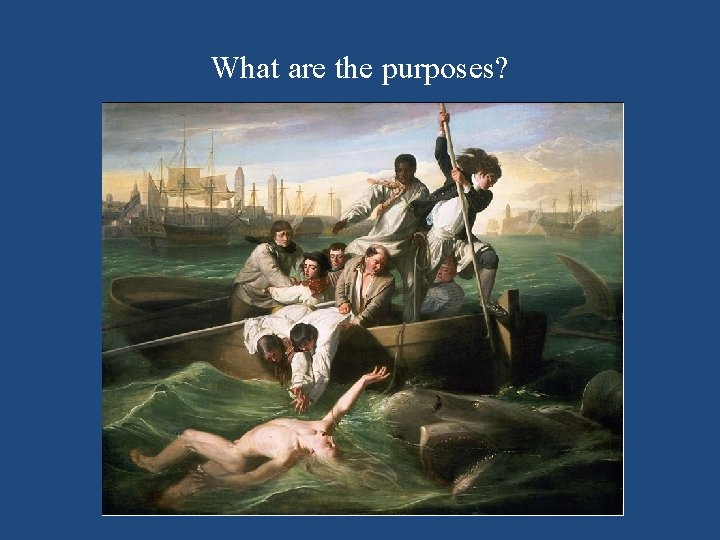
Background • Artist: John Singleton Copley • Medium: Oil on Canvas • Style: Neo-Classicism • Contractor: Brook Watson • Current Location: National Gallery of Art
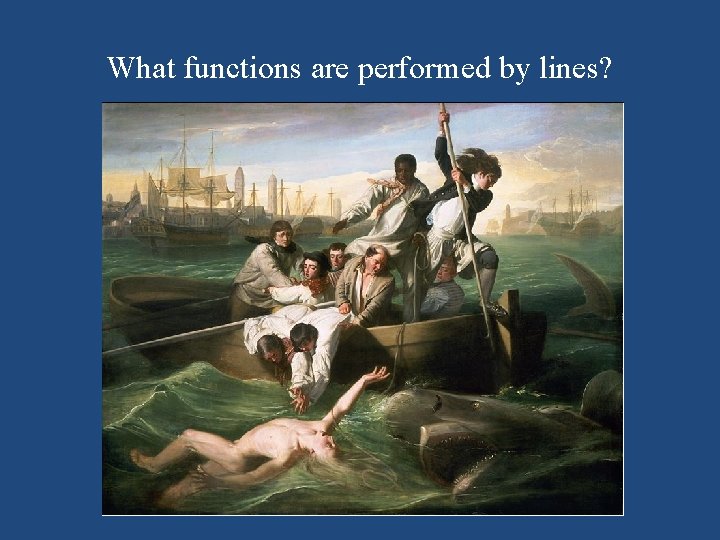
What functions are performed by lines?
• Outline Shape • Implies Movement • Create Focus • Create Sense of Calm
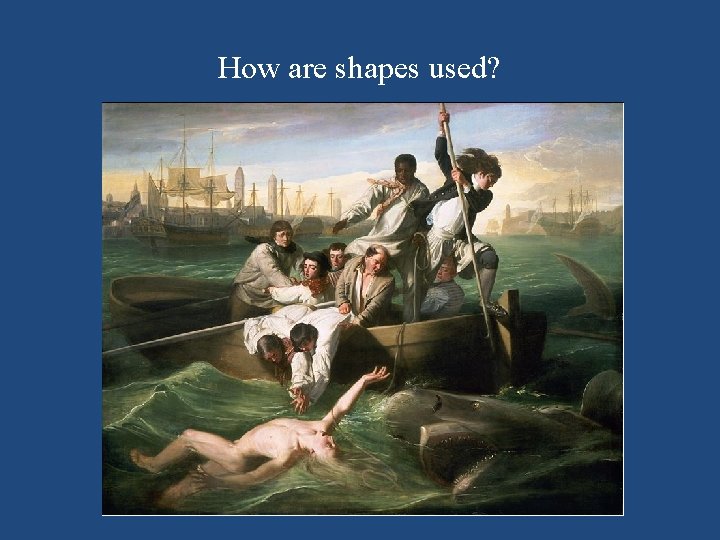
How are shapes used?
• Organic Shapes in the Foreground – Imply chaos, lack of order, randomness • Geometric Shapes in the Background – Express control, peace, order
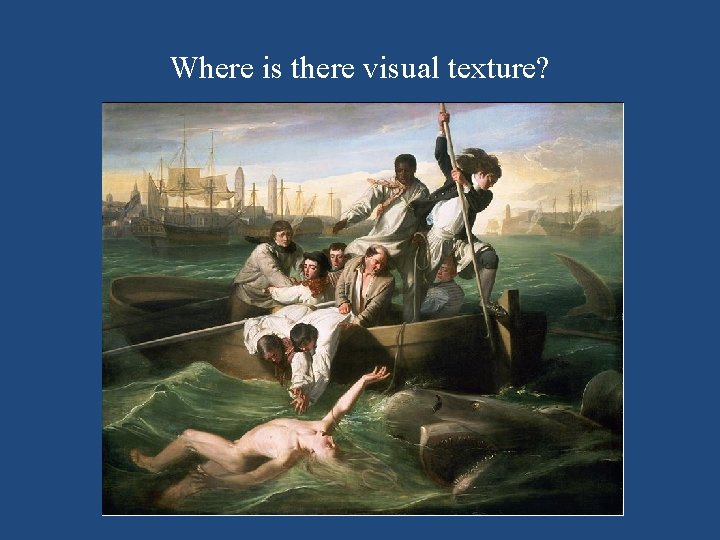
Where is there visual texture?
• Smoothness of Watson’s skin • Turbulence of waves • Jagged teeth of shark • Ruffles in Clothing • Smoothness and sharpness of harpoon • Gossamer lightness of sails
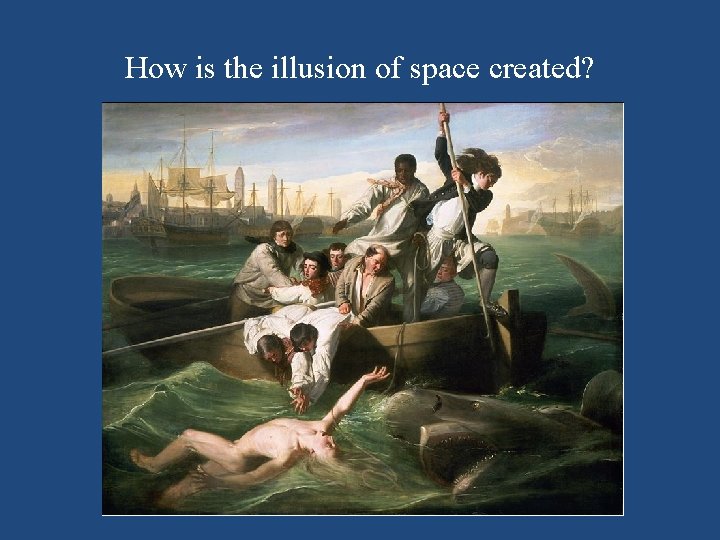
How is the illusion of space created?
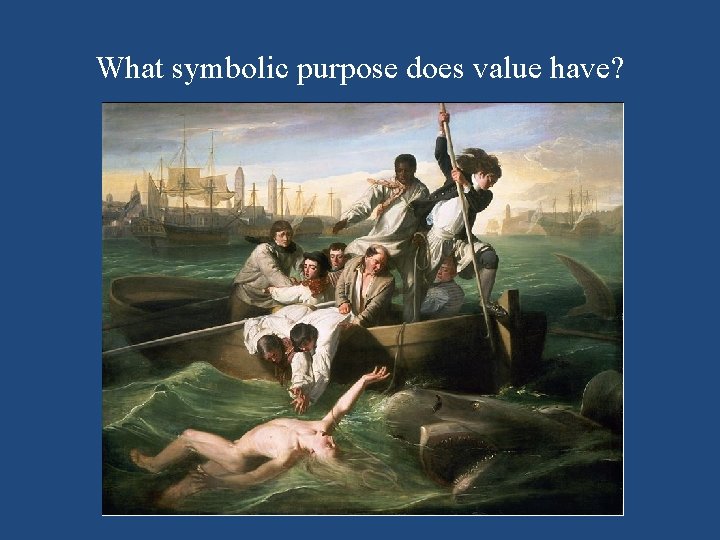
• Things in foreground (Watson, shark, and boat) larger • Things in background (harbor, boats, battlements) smaller • Vanishing point behind harpooner • No definite horizon line • Sense of urgency and epic nature
What symbolic purpose does value have?
• Watson bright, glowing – Freedom – Purity – Goodness • Shark and Clouds above dark, murky – Danger – Chaos • Clouds in the distance bright, glowing – Hope
What unity and variety is present?
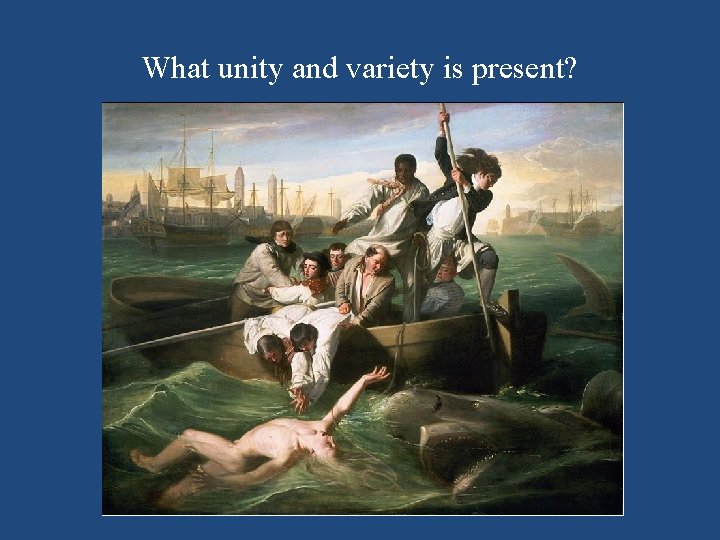
• Unity – Proximity of men in boat • Togetherness, strength – Repetition of ships on harbor • Order, perfection, peace • Variety – Reactions of men • Complexity of human emotion – Watson’s Nudity • Youth, innocence, vulnerability
How is ethos used?
• Watson’s terror • Varied emotions of men • Rage of the harpooner • Violent fury of the shark
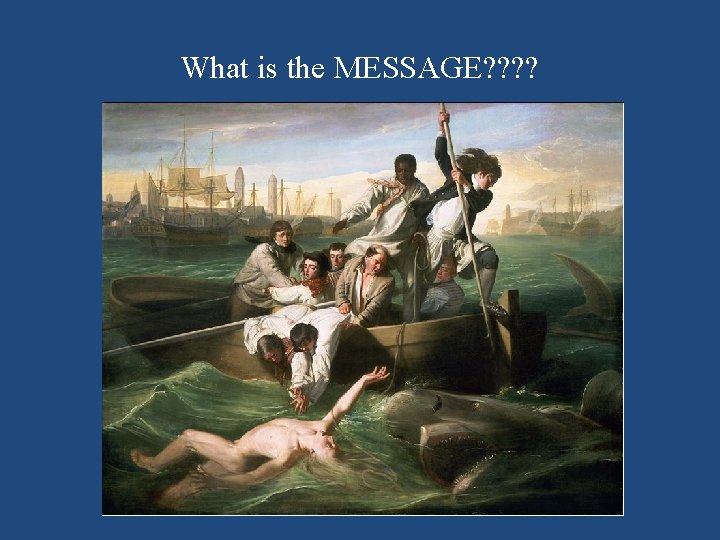
What is the MESSAGE? ?
• My opinion: – Social Contract theory of John Locke • Man is pure, innocent, and totally free in his natural state. However he is completely vulnerable and lacks any measure of security. Therefore man must become a part of society, giving up absolute freedom for the security and strength offered by it. When this is accepted, the man experiences a new birth of life and can have hope for his future.
What are the purposes?
• To entertain the English people with an exciting scene in a faraway place and the past • To convey the Social Contract Theory • For Copley to earn respect in the artistic world • To make people think twice before swimming alone in shark infested waters
Bibliography • Copley, John Singleton. Watson and the Shark. 1778. National Gallery of Art, Washington DC. Smart History. Web. 26 Oct. 2011 • Floryan, Meg. “Copley’s Watson and the Shark. ” Smart History. Academy, n. d. Web. 26 Oct. 2011 Khan • Gersh-Nesic, Beth. “Neo-Classicism. ” Smart History. Khan Academy, n. d. Web. 26 Oct. 2011 • “Watson and the Shark. ” National Gallery of Art, n. d. Web. 26 Oct. 2011