ERA OF GOOD FEELINGS Nationalism A sense of
- Slides: 15
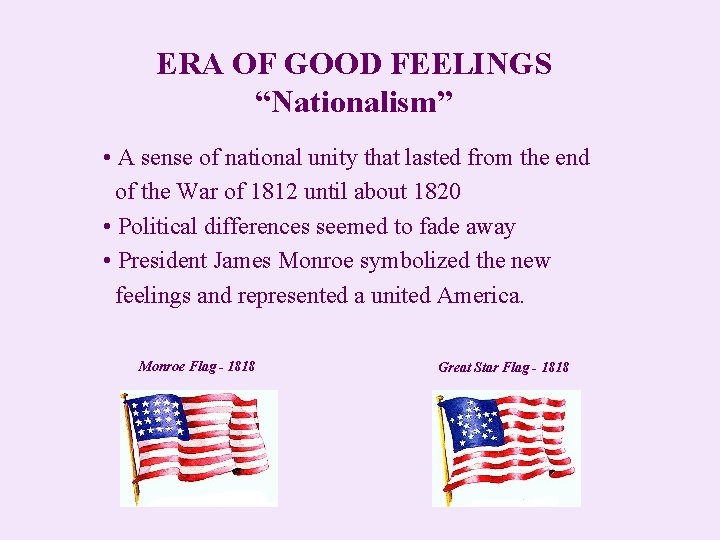
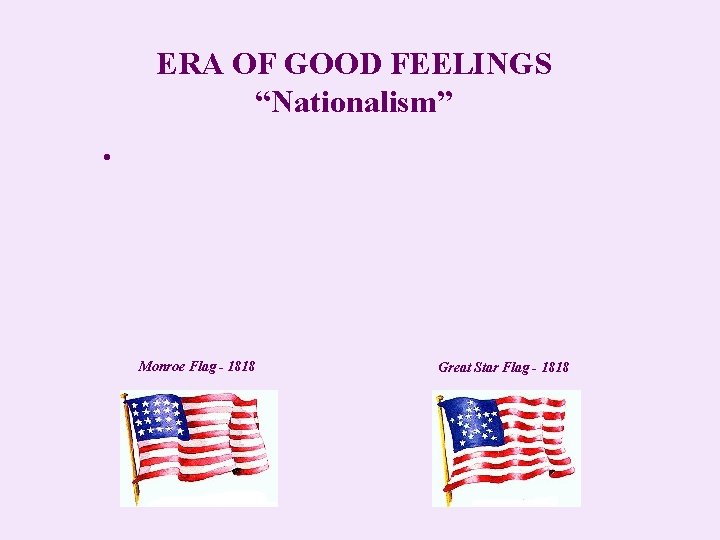
ERA OF GOOD FEELINGS “Nationalism” • A sense of national unity that lasted from the end of the War of 1812 until about 1820 • Political differences seemed to fade away • President James Monroe symbolized the new feelings and represented a united America. Monroe Flag - 1818 Great Star Flag - 1818
ERA OF GOOD FEELINGS “Nationalism” • Monroe Flag - 1818 Great Star Flag - 1818
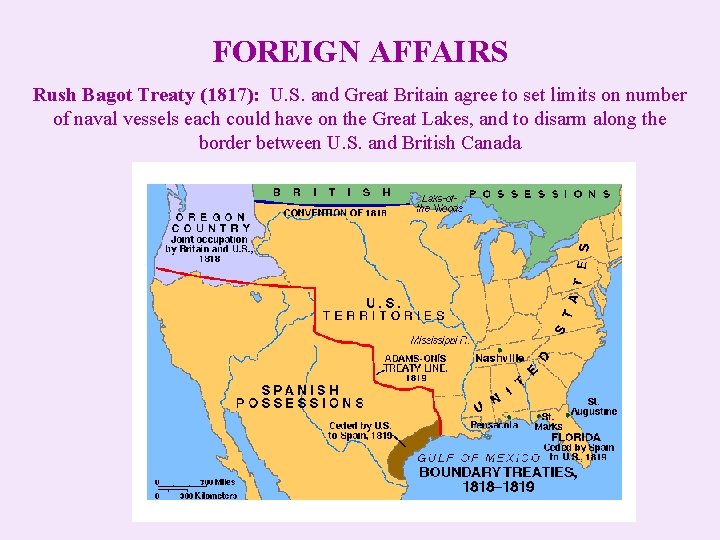
FOREIGN AFFAIRS Rush Bagot Treaty (1817): U. S. and Great Britain agree to set limits on number of naval vessels each could have on the Great Lakes, and to disarm along the border between U. S. and British Canada
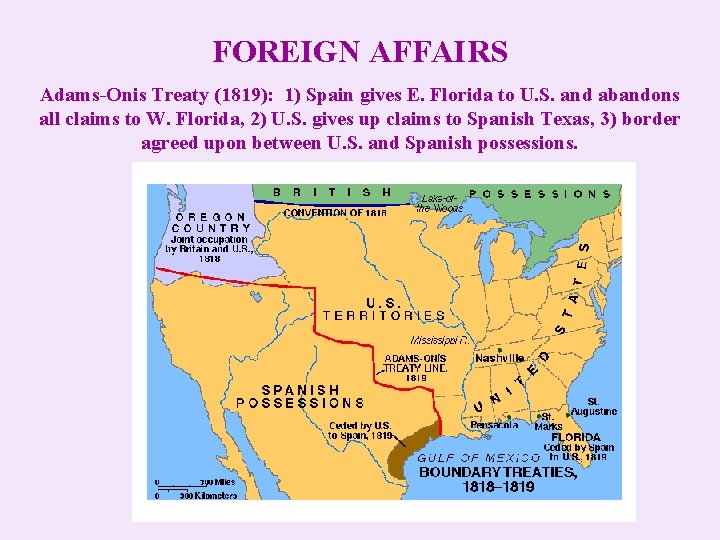
FOREIGN AFFAIRS Adams-Onis Treaty (1819): 1) Spain gives E. Florida to U. S. and abandons all claims to W. Florida, 2) U. S. gives up claims to Spanish Texas, 3) border agreed upon between U. S. and Spanish possessions.
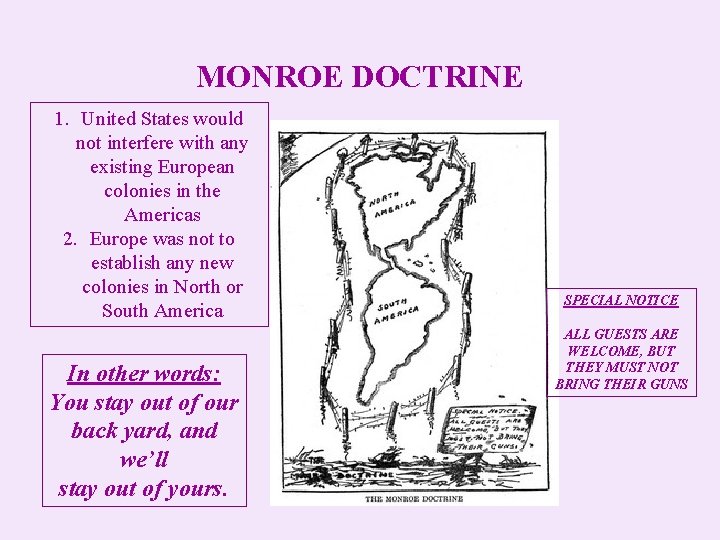
MONROE DOCTRINE 1. United States would not interfere with any existing European colonies in the Americas 2. Europe was not to establish any new colonies in North or South America In other words: You stay out of our back yard, and we’ll stay out of yours. SPECIAL NOTICE ALL GUESTS ARE WELCOME, BUT THEY MUST NOT BRING THEIR GUNS
SECTIONALISM GROWS (loyalty to a region) • Conflict over slavery – Southerners believed in the necessity and value of slavery • To protect slavery, Southerners stressed importance of states’ rights – Northerners increasingly opposed slavery • Regions disagreed on need for tariffs, a national bank, and internal improvements • Three main spokespersons for their individual regions emerged in Congress – John C. Calhoun – Daniel Webster – Henry Clay
SECTIONALISM GROWS (loyalty to a region) • – Southerners believed in the necessity and value of slavery • To protect slavery, Southerners stressed importance of states’ rights • Northerners increasingly opposed slavery • • Three main spokespersons for their individual regions emerged in Congress
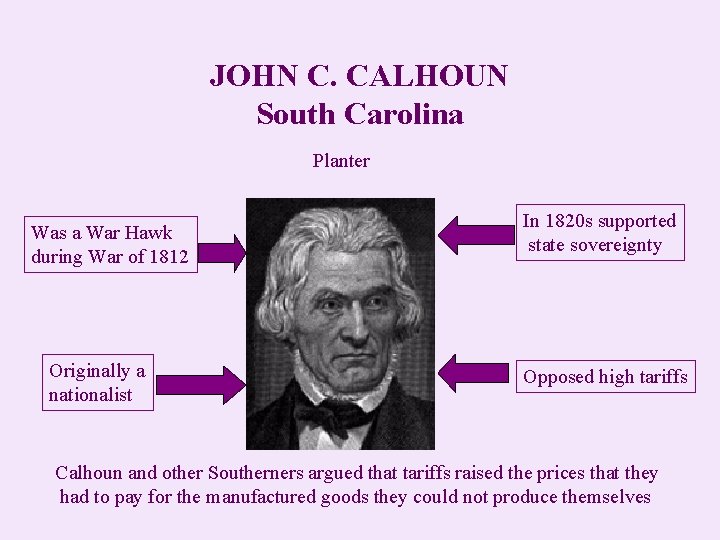
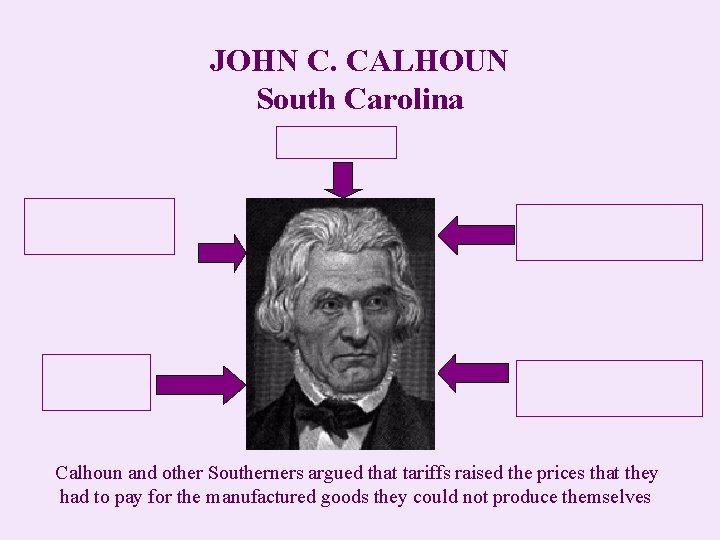
JOHN C. CALHOUN South Carolina Planter Was a War Hawk during War of 1812 Originally a nationalist In 1820 s supported state sovereignty Opposed high tariffs Calhoun and other Southerners argued that tariffs raised the prices that they had to pay for the manufactured goods they could not produce themselves
JOHN C. CALHOUN South Carolina Calhoun and other Southerners argued that tariffs raised the prices that they had to pay for the manufactured goods they could not produce themselves
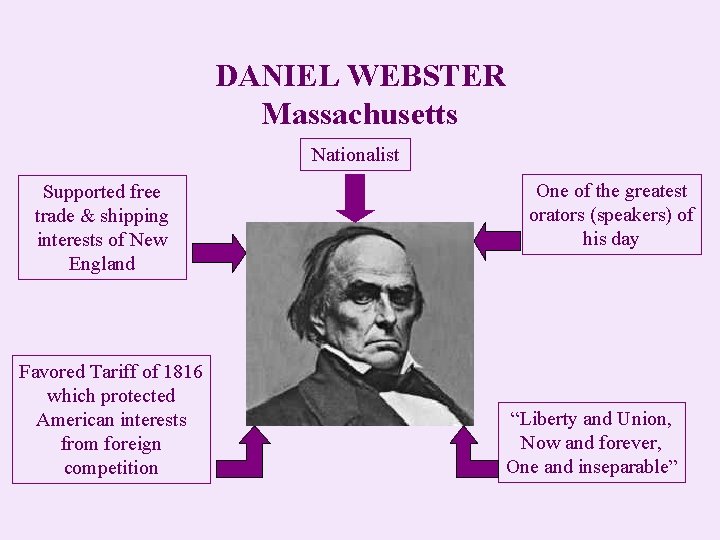
DANIEL WEBSTER Massachusetts Nationalist Supported free trade & shipping interests of New England Favored Tariff of 1816 which protected American interests from foreign competition One of the greatest orators (speakers) of his day “Liberty and Union, Now and forever, One and inseparable”
DANIEL WEBSTER Massachusetts
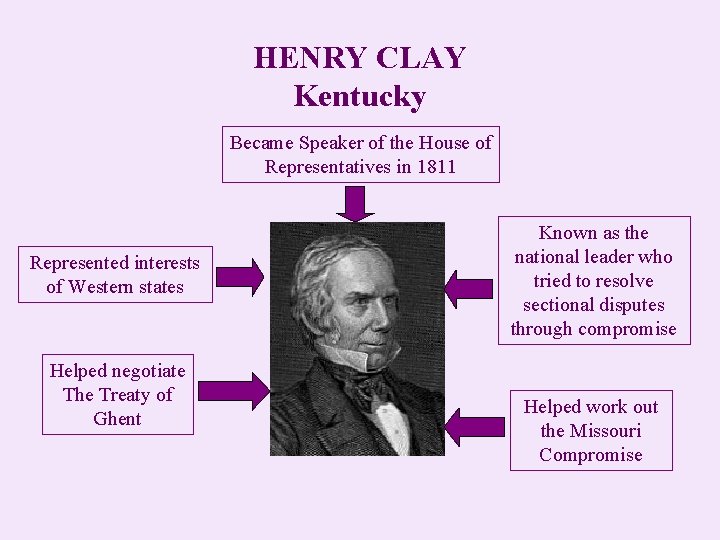
HENRY CLAY Kentucky Became Speaker of the House of Representatives in 1811 Represented interests of Western states Helped negotiate The Treaty of Ghent Known as the national leader who tried to resolve sectional disputes through compromise Helped work out the Missouri Compromise
HENRY CLAY Kentucky
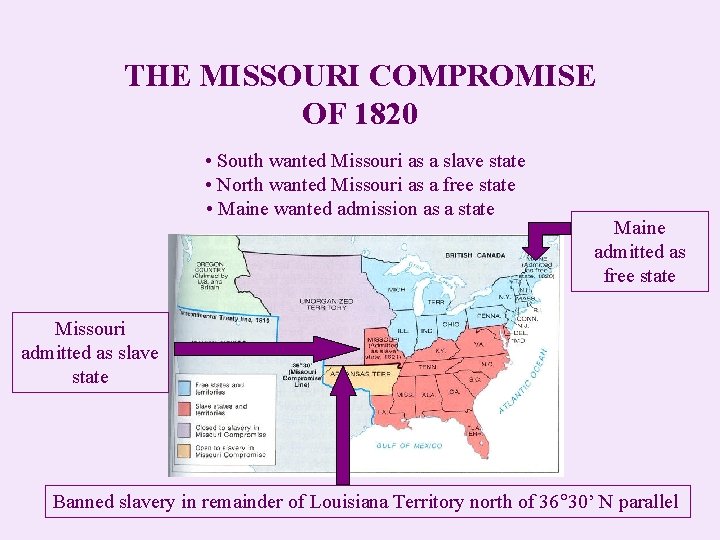
THE MISSOURI COMPROMISE OF 1820 • South wanted Missouri as a slave state • North wanted Missouri as a free state • Maine wanted admission as a state Maine admitted as free state Missouri admitted as slave state Banned slavery in remainder of Louisiana Territory north of 36 30’ N parallel
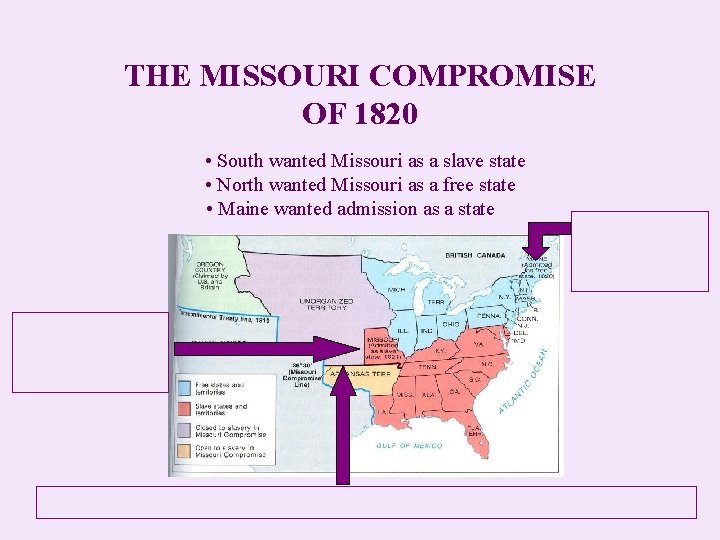
THE MISSOURI COMPROMISE OF 1820 • South wanted Missouri as a slave state • North wanted Missouri as a free state • Maine wanted admission as a state