Environmental factors and TROPISM Dormancy A period of
- Slides: 20
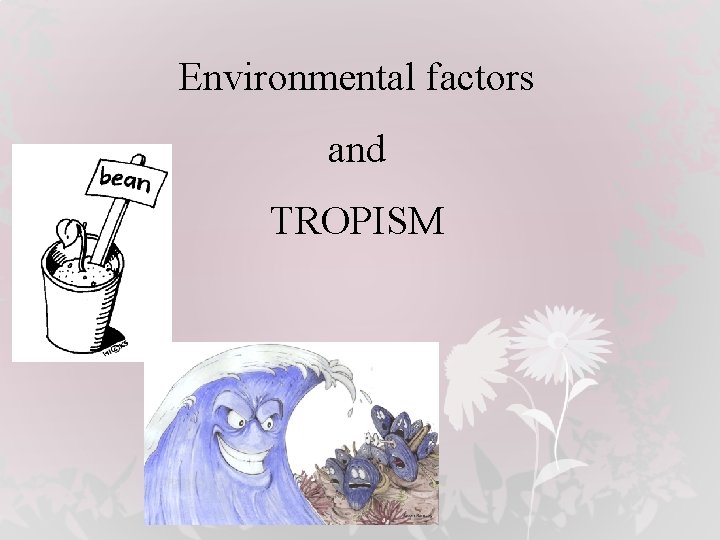
Environmental factors and TROPISM
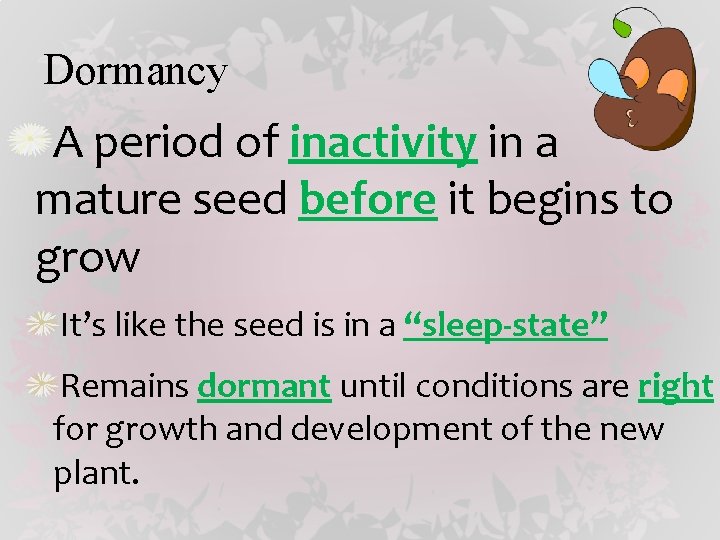
Dormancy A period of inactivity in a mature seed before it begins to grow It’s like the seed is in a “sleep-state” Remains dormant until conditions are right for growth and development of the new plant.
Changes in the Environment can affect the survival of individual organisms and entire species Some changes happen outside the organism and are called external stimuli Examples are light intensity, day length, gravity, and temperature. Some changes happen inside the organism and are called internal stimuli Examples are germs, dehydration, lack of energy etc.
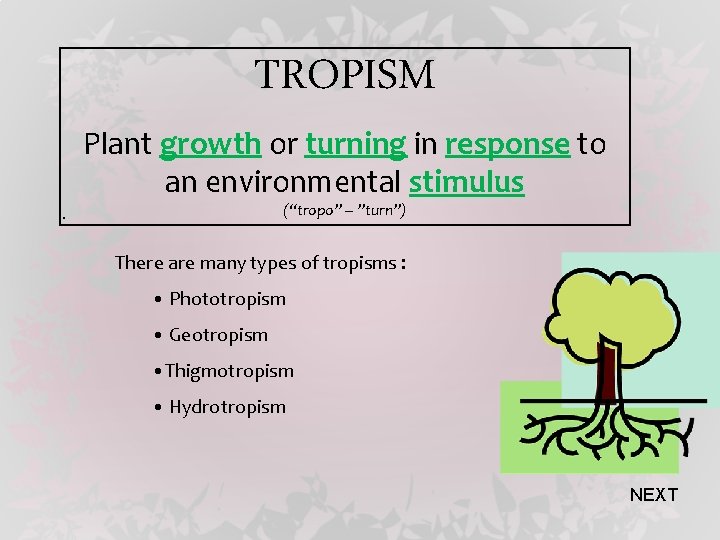
TROPISM Plant growth or turning in response to an environmental stimulus (“tropo” – ”turn”) . There are many types of tropisms : • Phototropism • Geotropism • Thigmotropism • Hydrotropism NEXT
Tropism can be… POSITIVE NEGATIVE If the plant moves TOWARD the stimulus If the plant moves AWAY from the stimulus
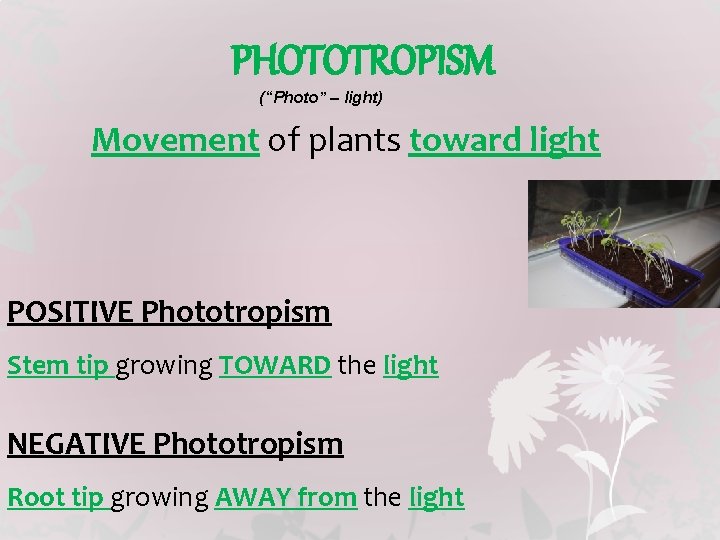
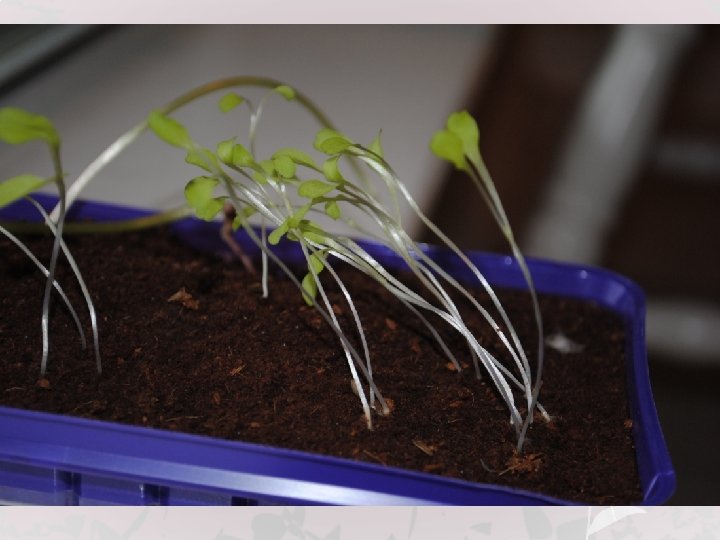
PHOTOTROPISM (“Photo” – light) Movement of plants toward light POSITIVE Phototropism Stem tip growing TOWARD the light NEGATIVE Phototropism Root tip growing AWAY from the light
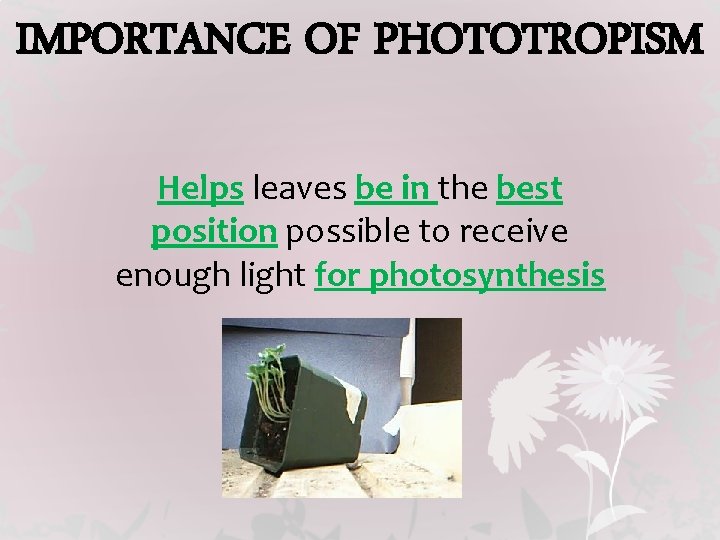
IMPORTANCE OF PHOTOTROPISM Helps leaves be in the best position possible to receive enough light for photosynthesis
EXAMPLES OF PHOTOTROPISM http: //www. youtube. com/watch? NR=1&v=KQOC_b. Prq. Fs&safety_mo de=true&persist_safety_mode=1 http: //www. youtube. com/watch? v=Ze 8 NV 7 cv. W 8 k&feature=results_ main&playnext=1&list=PL 5464 C 68 C 7644 DD 4 D&safety_mode=true& persist_safety_mode=1
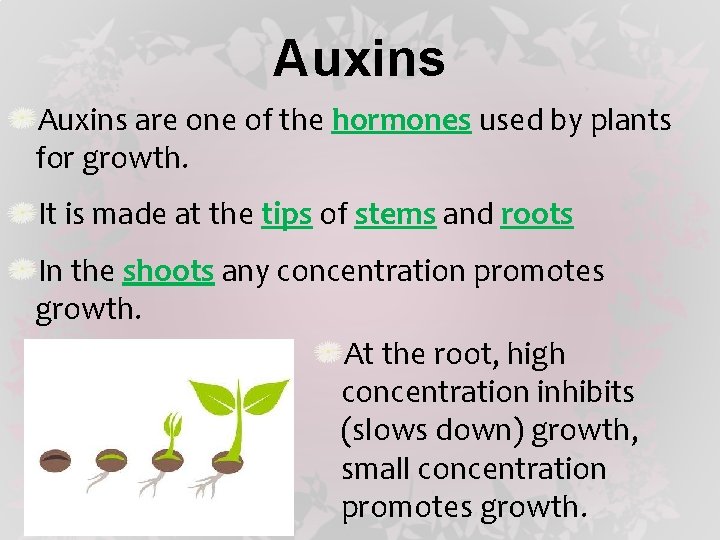
Auxins are one of the hormones used by plants for growth. It is made at the tips of stems and roots In the shoots any concentration promotes growth. At the root, high concentration inhibits (slows down) growth, small concentration promotes growth.
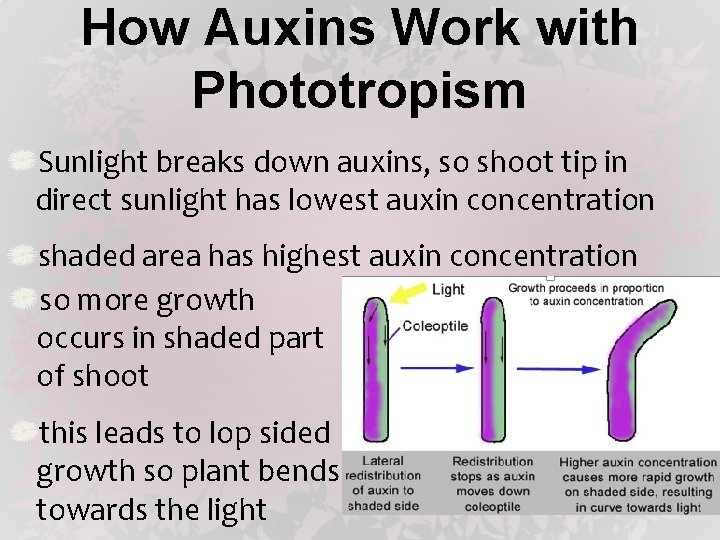
How Auxins Work with Phototropism Sunlight breaks down auxins, so shoot tip in direct sunlight has lowest auxin concentration shaded area has highest auxin concentration so more growth occurs in shaded part of shoot this leads to lop sided growth so plant bends towards the light
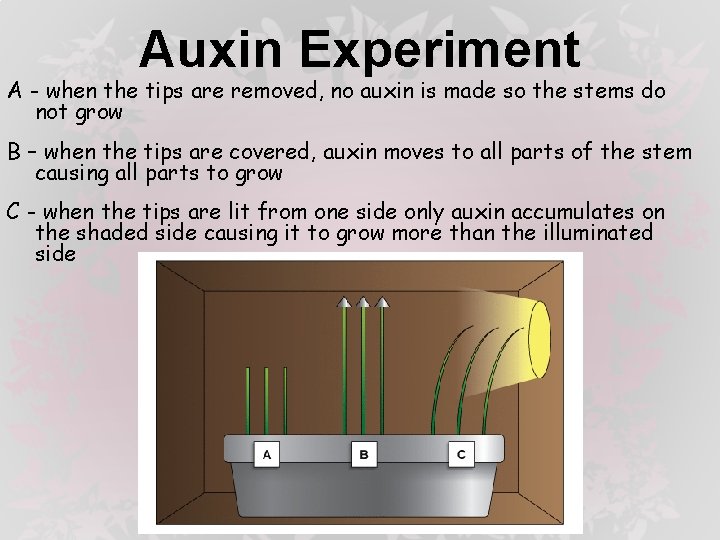
Auxin Experiment A - when the tips are removed, no auxin is made so the stems do not grow B – when the tips are covered, auxin moves to all parts of the stem causing all parts to grow C - when the tips are lit from one side only auxin accumulates on the shaded side causing it to grow more than the illuminated side
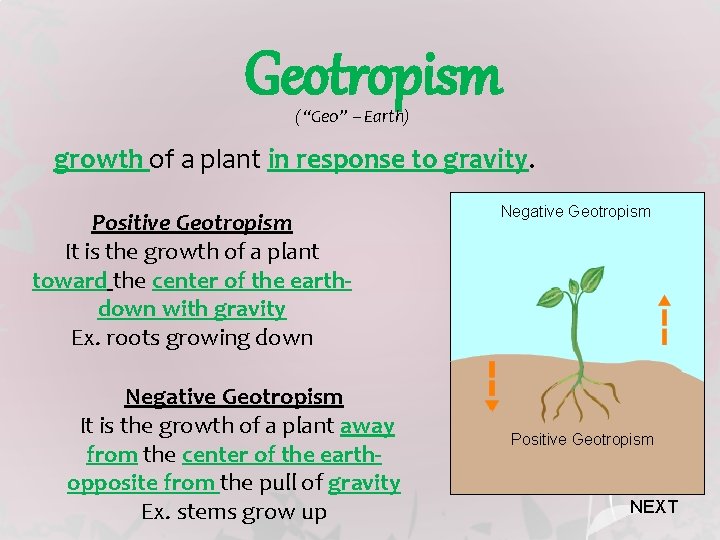
Geotropism (“Geo” – Earth) growth of a plant in response to gravity. Positive Geotropism It is the growth of a plant toward the center of the earthdown with gravity Ex. roots growing down Negative Geotropism It is the growth of a plant away from the center of the earthopposite from the pull of gravity Ex. stems grow up Negative Geotropism Positive Geotropism NEXT
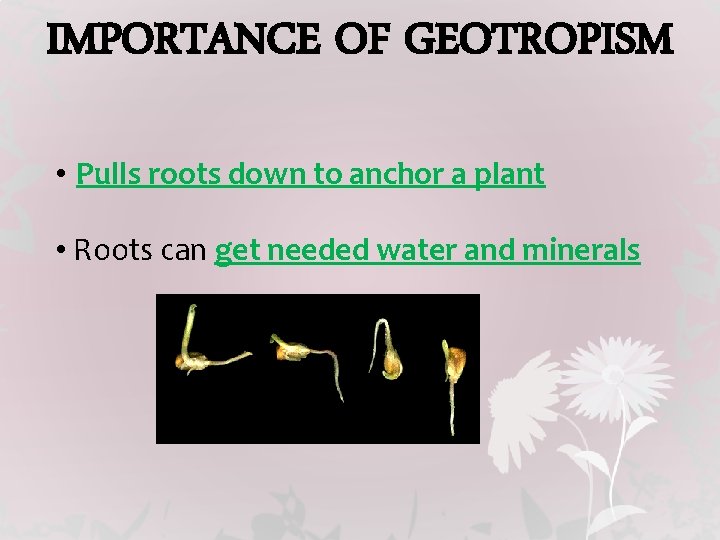
IMPORTANCE OF GEOTROPISM • Pulls roots down to anchor a plant • Roots can get needed water and minerals
EXAMPLES OF GEOTROPISM http: //www. youtube. com/watch? v=i. FCd. Age. MGOA&featur e=related http: //www. youtube. com/watch? v=m. YZXax 8 V_L 0&feature =related&safety_mode=true&persist_safety_mode=1
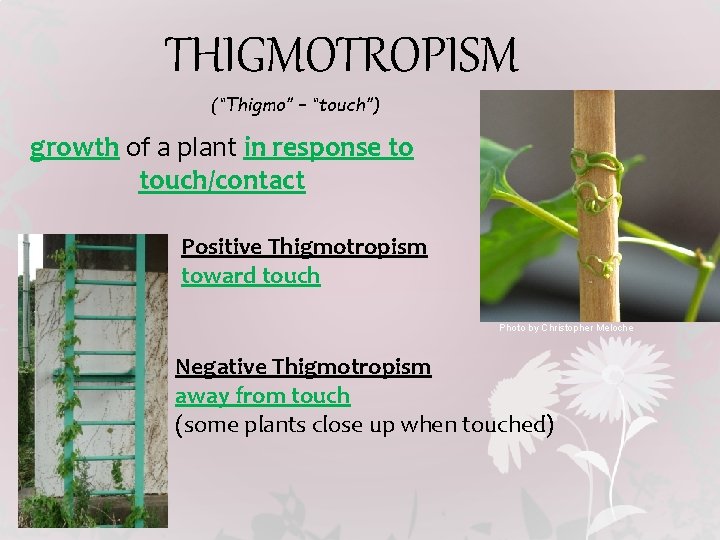
THIGMOTROPISM (“Thigmo” – “touch”) growth of a plant in response to touch/contact Positive Thigmotropism toward touch Photo by Christopher Meloche Negative Thigmotropism away from touch (some plants close up when touched)
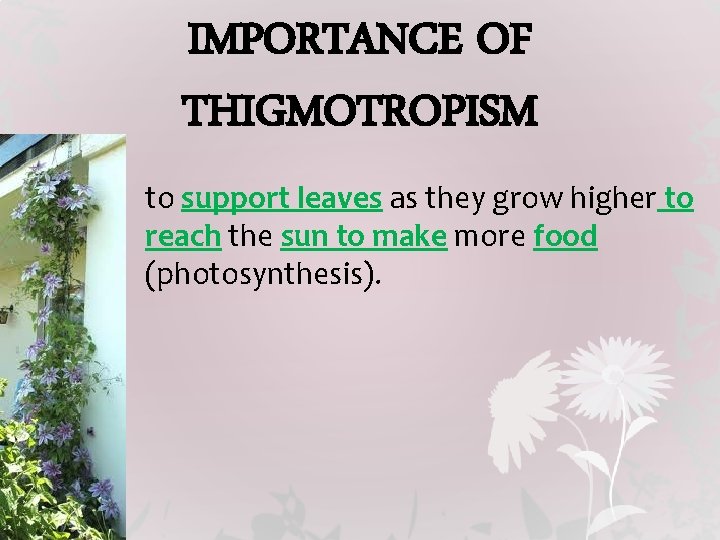
IMPORTANCE OF THIGMOTROPISM to support leaves as they grow higher to reach the sun to make more food (photosynthesis).
EXAMPLES OF THIGMOTROPISM http: //www. youtube. com/watch? v=8 Heed. WWe 6 VA&feature =related&safety_mode=true&persist_safety_mode=1 http: //www. youtube. com/watch? v=Zq 3 Uu. Hl. PLQU&feature=related &safety_mode=true&persist_safety_mode=1
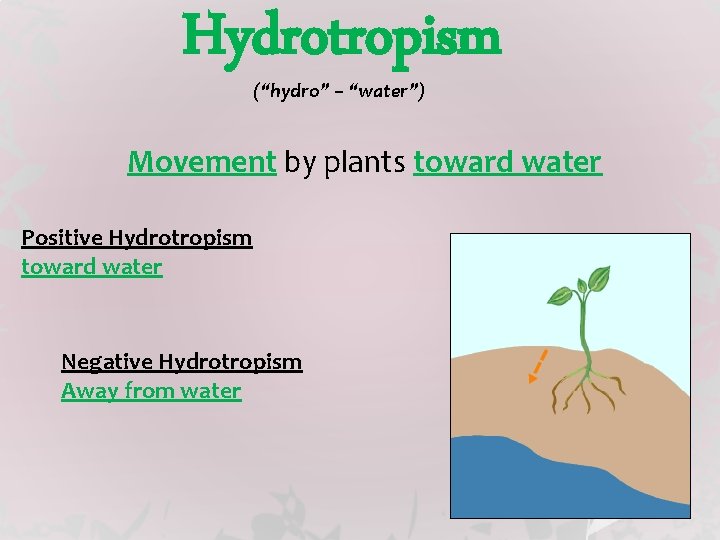
Hydrotropism (“hydro” – “water”) Movement by plants toward water Positive Hydrotropism toward water Negative Hydrotropism Away from water
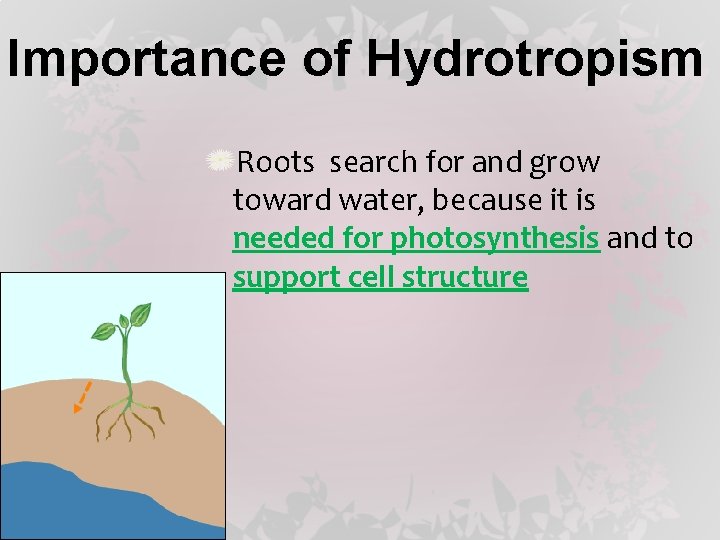
Importance of Hydrotropism Roots search for and grow toward water, because it is needed for photosynthesis and to support cell structure