
Marine Ecology Species a group of similar organisms

- Slides: 16
Marine Ecology • Species – a group of similar organisms whose members interbreed and produce viable offspring. • Population – members of the same species that live together in the same area at the same time. • Community – all the populations of different species that live and interact together within an area at the same time. • Ecosystem – a community together with its physical (abiotic) environment.
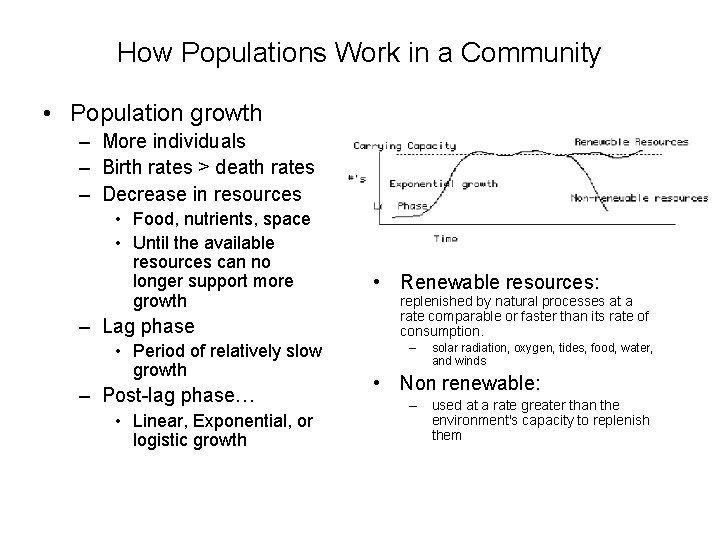
How Populations Work in a Community • Population growth – More individuals – Birth rates > death rates – Decrease in resources • Food, nutrients, space • Until the available resources can no longer support more growth – Lag phase • Period of relatively slow growth – Post-lag phase… • Linear, Exponential, or logistic growth • Renewable resources: replenished by natural processes at a rate comparable or faster than its rate of consumption. – solar radiation, oxygen, tides, food, water, and winds • Non renewable: – used at a rate greater than the environment's capacity to replenish them
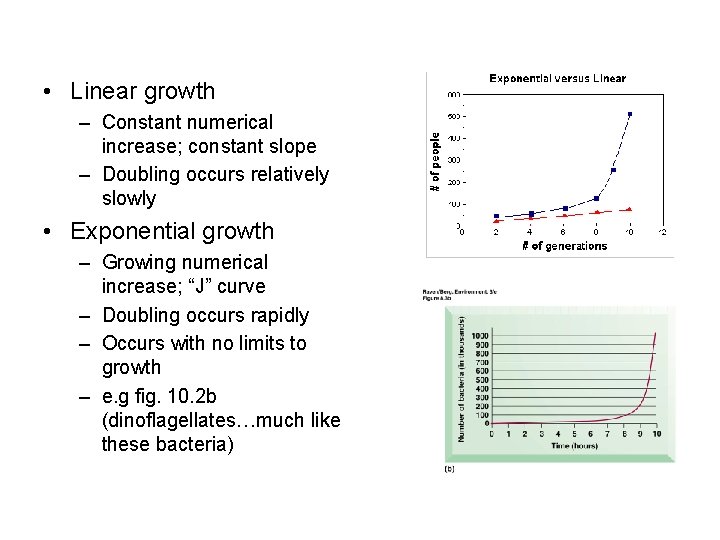
• Linear growth – Constant numerical increase; constant slope – Doubling occurs relatively slowly • Exponential growth – Growing numerical increase; “J” curve – Doubling occurs rapidly – Occurs with no limits to growth – e. g fig. 10. 2 b (dinoflagellates…much like these bacteria)
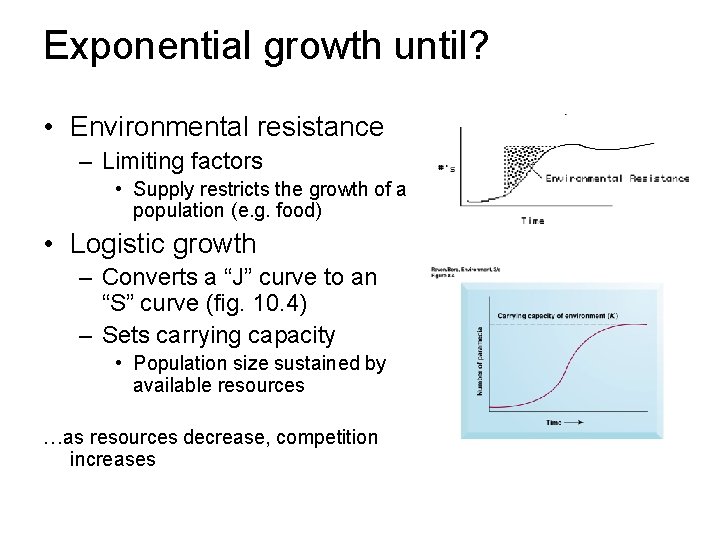
Exponential growth until? • Environmental resistance – Limiting factors • Supply restricts the growth of a population (e. g. food) • Logistic growth – Converts a “J” curve to an “S” curve (fig. 10. 4) – Sets carrying capacity • Population size sustained by available resources …as resources decrease, competition increases
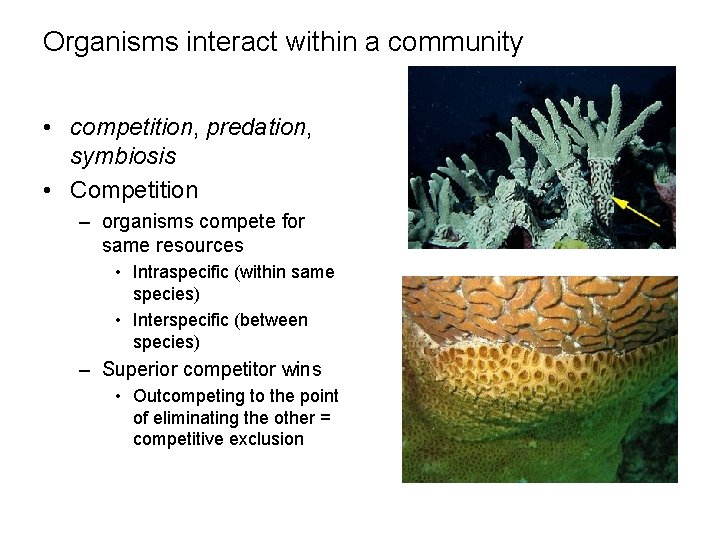
Organisms interact within a community • competition, predation, symbiosis • Competition – organisms compete for same resources • Intraspecific (within same species) • Interspecific (between species) – Superior competitor wins • Outcompeting to the point of eliminating the other = competitive exclusion
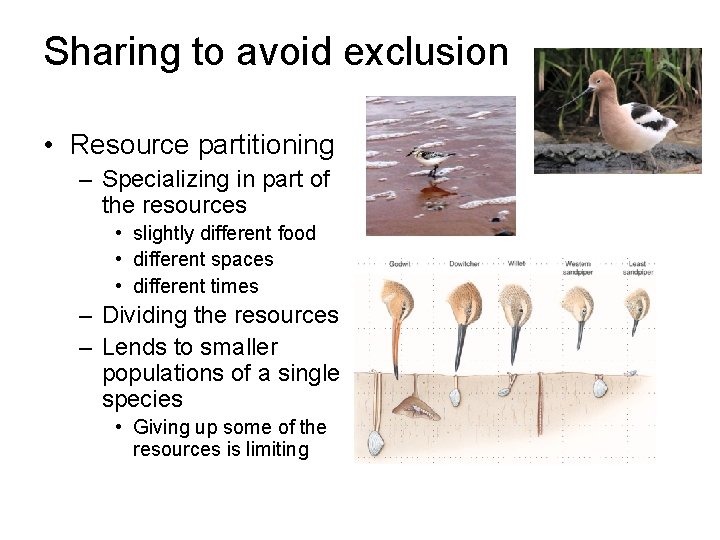
Sharing to avoid exclusion • Resource partitioning – Specializing in part of the resources • slightly different food • different spaces • different times – Dividing the resources – Lends to smaller populations of a single species • Giving up some of the resources is limiting
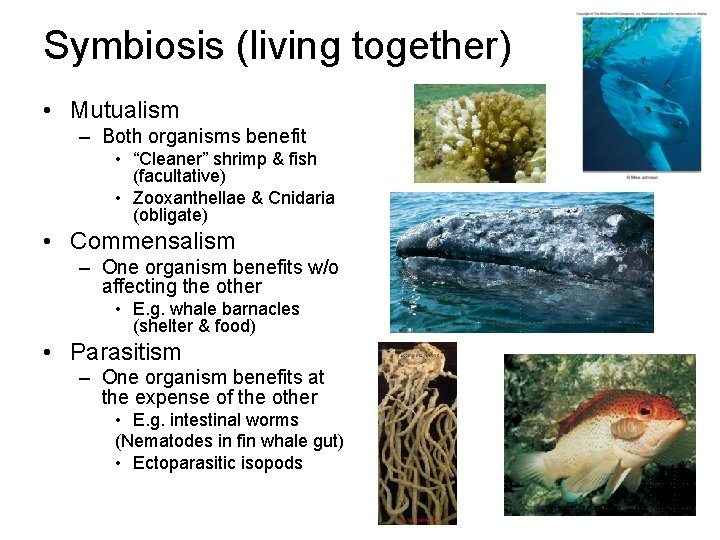
Symbiosis (living together) • Mutualism – Both organisms benefit • “Cleaner” shrimp & fish (facultative) • Zooxanthellae & Cnidaria (obligate) • Commensalism – One organism benefits w/o affecting the other • E. g. whale barnacles (shelter & food) • Parasitism – One organism benefits at the expense of the other • E. g. intestinal worms (Nematodes in fin whale gut) • Ectoparasitic isopods
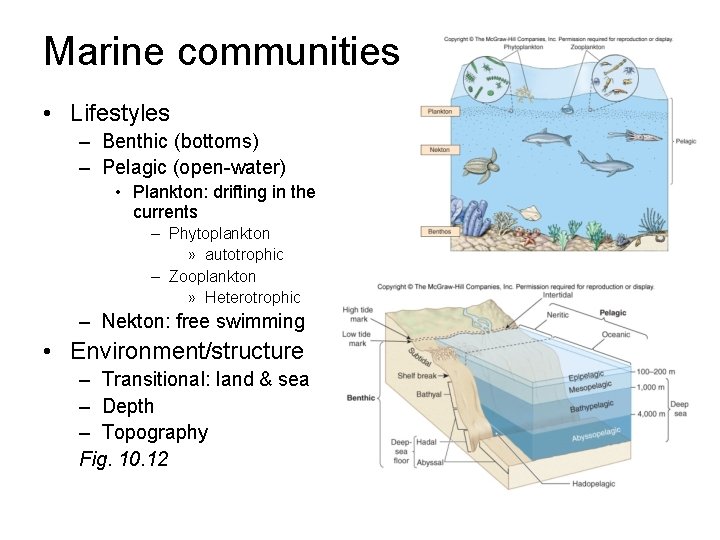
Marine communities • Lifestyles – Benthic (bottoms) – Pelagic (open-water) • Plankton: drifting in the currents – Phytoplankton » autotrophic – Zooplankton » Heterotrophic – Nekton: free swimming • Environment/structure – Transitional: land & sea – Depth – Topography Fig. 10. 12
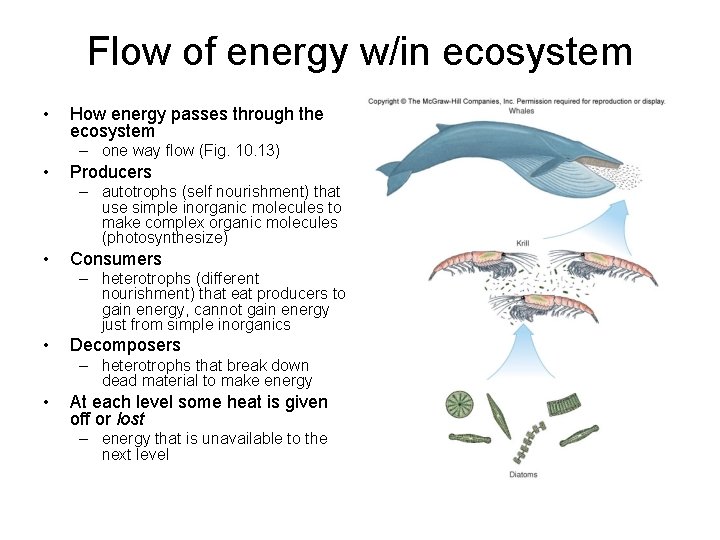
Flow of energy w/in ecosystem • How energy passes through the ecosystem – one way flow (Fig. 10. 13) • Producers – autotrophs (self nourishment) that use simple inorganic molecules to make complex organic molecules (photosynthesize) • Consumers – heterotrophs (different nourishment) that eat producers to gain energy, cannot gain energy just from simple inorganics • Decomposers – heterotrophs that break down dead material to make energy • At each level some heat is given off or lost – energy that is unavailable to the next level
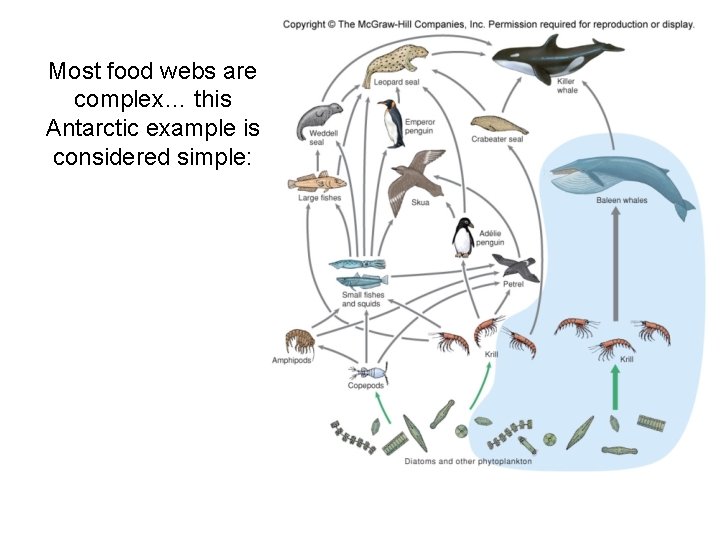
Most food webs are complex… this Antarctic example is considered simple:
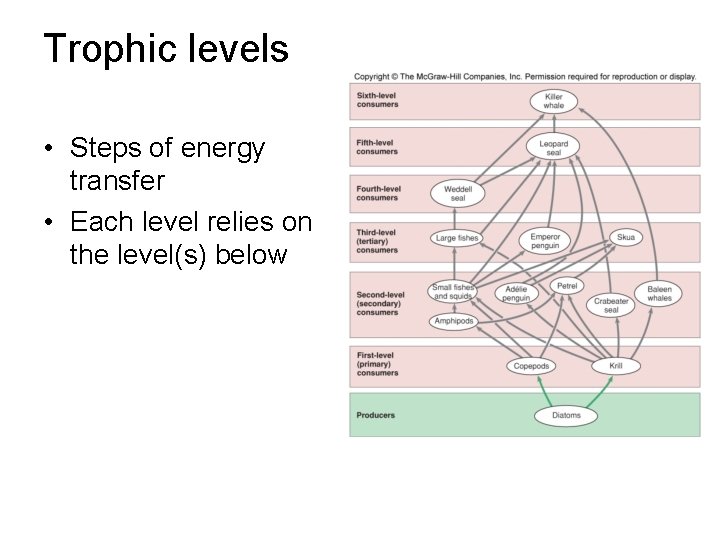
Trophic levels • Steps of energy transfer • Each level relies on the level(s) below
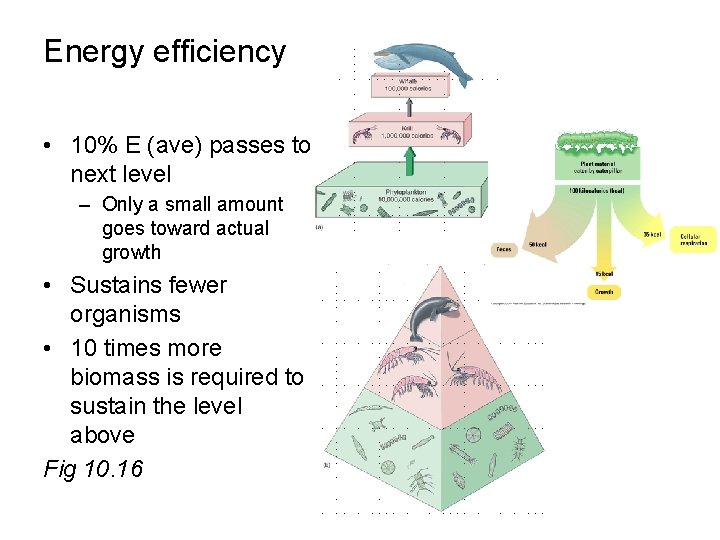
Energy efficiency • 10% E (ave) passes to next level – Only a small amount goes toward actual growth • Sustains fewer organisms • 10 times more biomass is required to sustain the level above Fig 10. 16
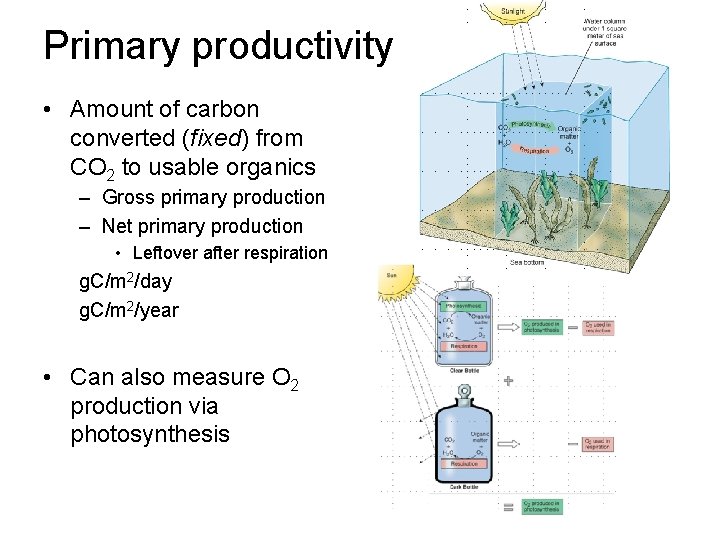
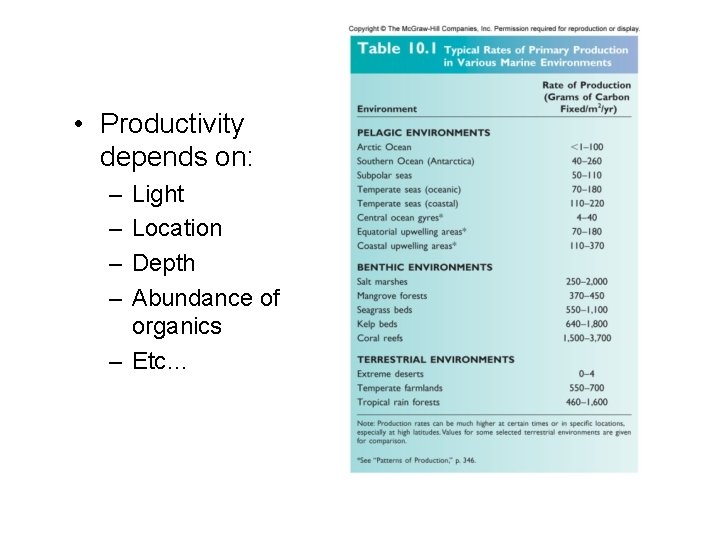
Primary productivity • Amount of carbon converted (fixed) from CO 2 to usable organics – Gross primary production – Net primary production • Leftover after respiration g. C/m 2/day g. C/m 2/year • Can also measure O 2 production via photosynthesis
• Productivity depends on: – – Light Location Depth Abundance of organics – Etc…
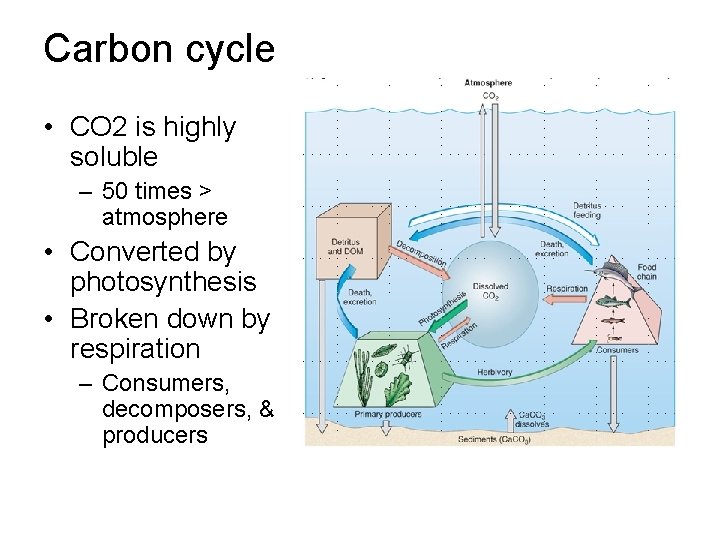
Carbon cycle • CO 2 is highly soluble – 50 times > atmosphere • Converted by photosynthesis • Broken down by respiration – Consumers, decomposers, & producers
Homework (due 4/30/08) • Review pgs. 231 -240 • Describe the human impact of burning fossil fuels & increasing the amount of CO 2 in the atmosphere • What does this do to global temperatures? • How does this impact our oceans? • How does this impact the marine trophic levels?