Endoplasmic reticulum EM x 94000 app 4 2


- Slides: 18
Endoplasmic reticulum (EM) (x 94000 app. )
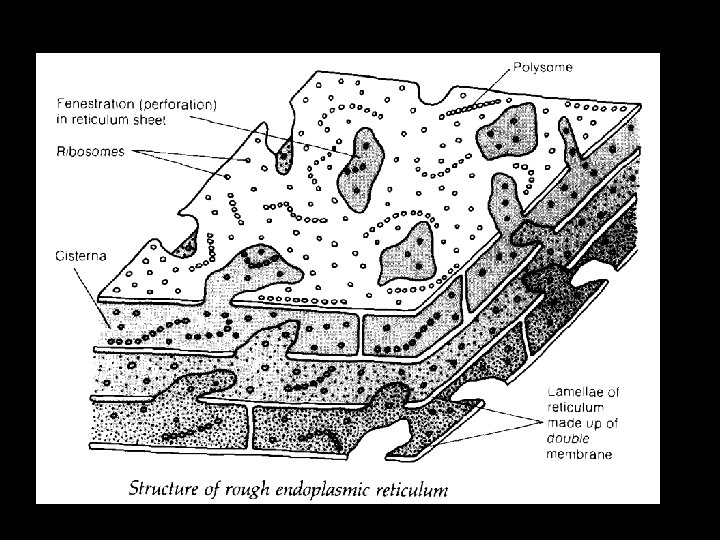
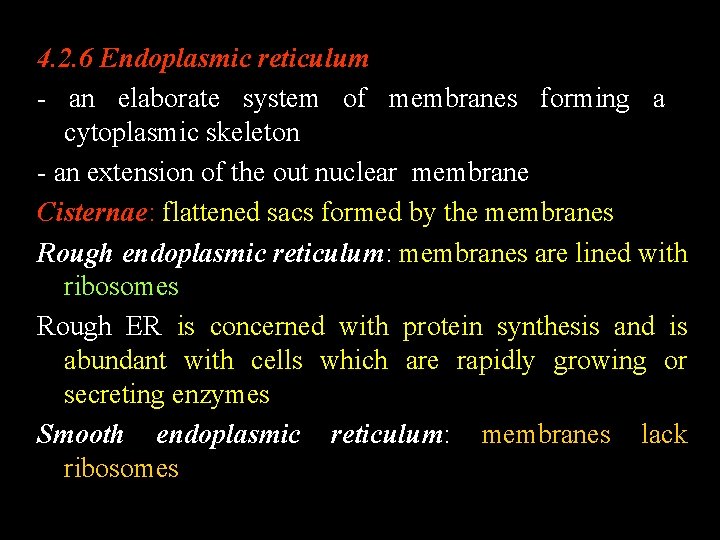
4. 2. 6 Endoplasmic reticulum - an elaborate system of membranes forming a cytoplasmic skeleton - an extension of the out nuclear membrane Cisternae: flattened sacs formed by the membranes Rough endoplasmic reticulum: membranes are lined with ribosomes Rough ER is concerned with protein synthesis and is abundant with cells which are rapidly growing or secreting enzymes Smooth endoplasmic reticulum: membranes lack ribosomes
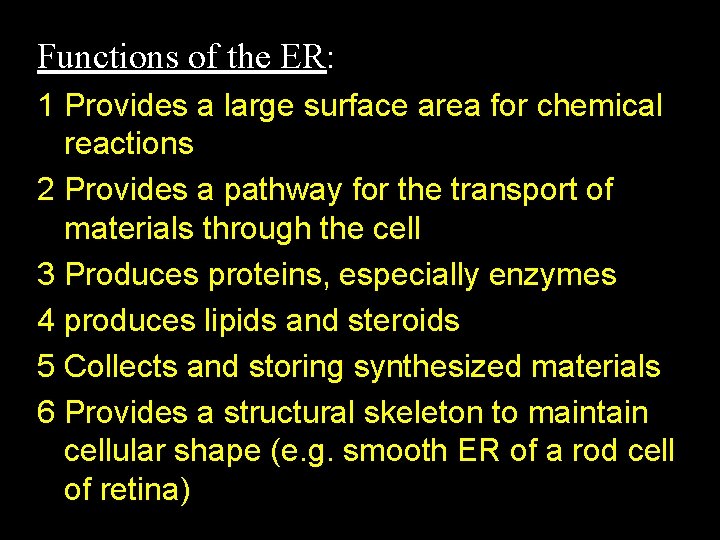
Functions of the ER: 1 Provides a large surface area for chemical reactions 2 Provides a pathway for the transport of materials through the cell 3 Produces proteins, especially enzymes 4 produces lipids and steroids 5 Collects and storing synthesized materials 6 Provides a structural skeleton to maintain cellular shape (e. g. smooth ER of a rod cell of retina)
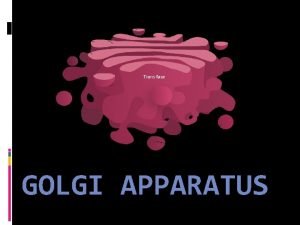
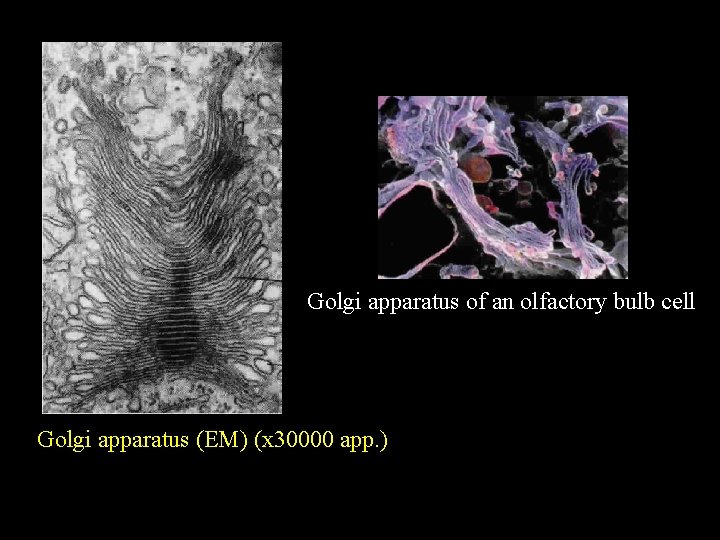
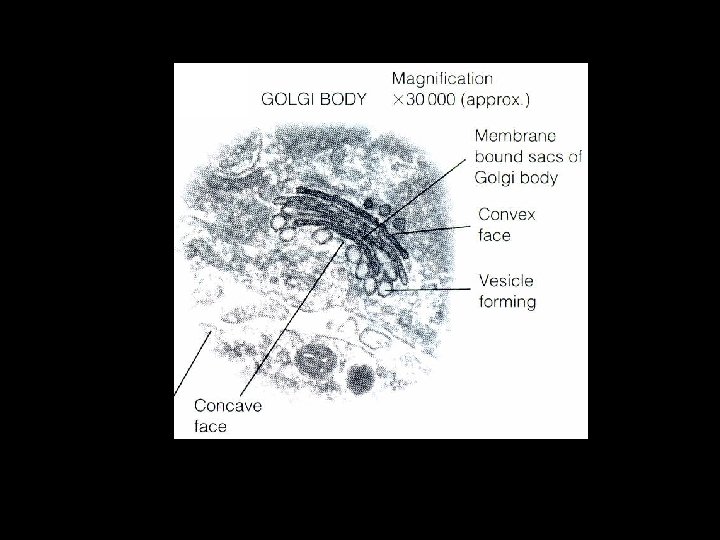
Golgi apparatus of an olfactory bulb cell Golgi apparatus (EM) (x 30000 app. )
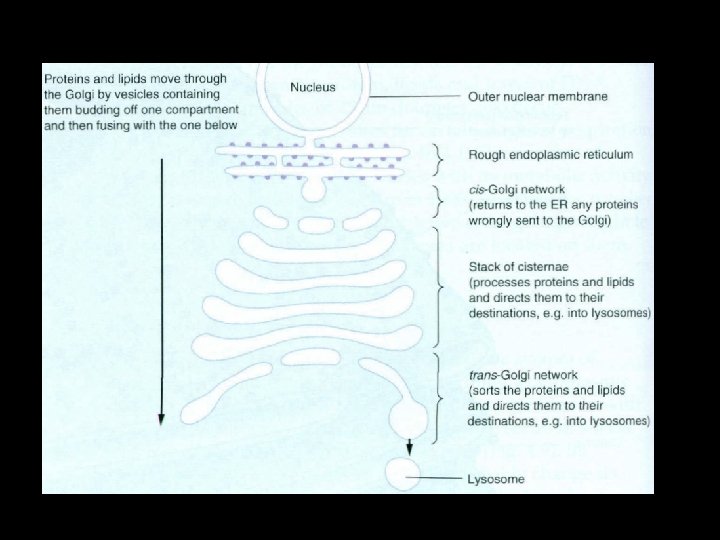
4. 2. 7 Golgi apparatus (dictyosome) - similar to smooth ER but is more compact vesicles: small membranous sacs pinching off from the cisterna - normally one Golgi apparatus in animal cells but a large number of stacks known as dictyosomes in plant cells - well developed in secretory cells and neurones for secretory functions
Functions: 1 adding carbohydrates to proteins to form glycoprotiens 2 produce secretory enzymes, e. g. pancreatic enzymes 3 produce new cell walls by secreting carbohydrates 4 transport and store lipids 5 form lysosomes
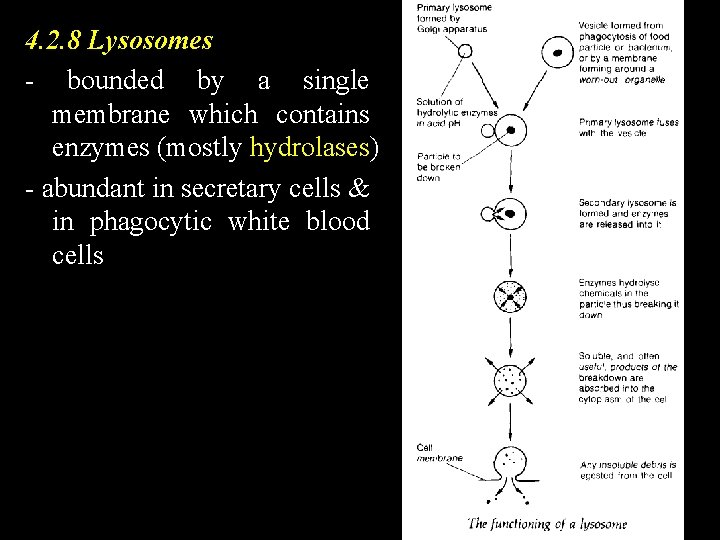
4. 2. 8 Lysosomes - bounded by a single membrane which contains enzymes (mostly hydrolases) - abundant in secretary cells & in phagocytic white blood cells
1 Digest material which the cell consumes from the outside by phogocytosis, e. g. white blood cells digest bacteria, amoeba digests food 2 Digest part of a cell or worn-out organelles, autolysis for dead cells 3 Release enzymes outside the cell (exocytosis) to break down other cells, e. g. reabsorption of tail of tadpoles during metamorphosis Therefore, they are abundant in secretory cells and phagocytic cells.
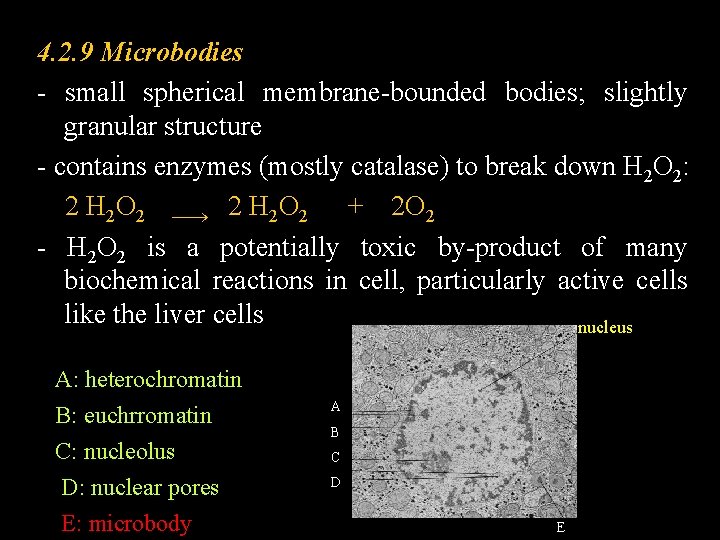
4. 2. 9 Microbodies - small spherical membrane-bounded bodies; slightly granular structure - contains enzymes (mostly catalase) to break down H 2 O 2: 2 H 2 O 2 + 2 O 2 - H 2 O 2 is a potentially toxic by-product of many biochemical reactions in cell, particularly active cells like the liver cells nucleus A: heterochromatin B: euchrromatin C: nucleolus D: nuclear pores E: microbody A B C D E
4. 2. 10 Vacuoles - tonoplast: single membrane around the vacuole - containing a solution of mineral salts, sugars, amino acids, wastes and sometimes anthocyanins - large and central in plants ; numerous but small in animal cells, e. g. food vacuole, phagocytic vacuole and contractile vacuole
Functions: 1 temporary food reservoir of sugars & amino acids 2 anthocyanins (coloured pigments) attract pollinating insects, animals for fruit dispersal 3 temporary stores for wastes, e. g. tannins, and to be removed through leaf cells when leaves fall 4 occasionally contain hydrolytic enzymes to act as lysosomes 5 provide turgidity to herbaceous plants & seedlings
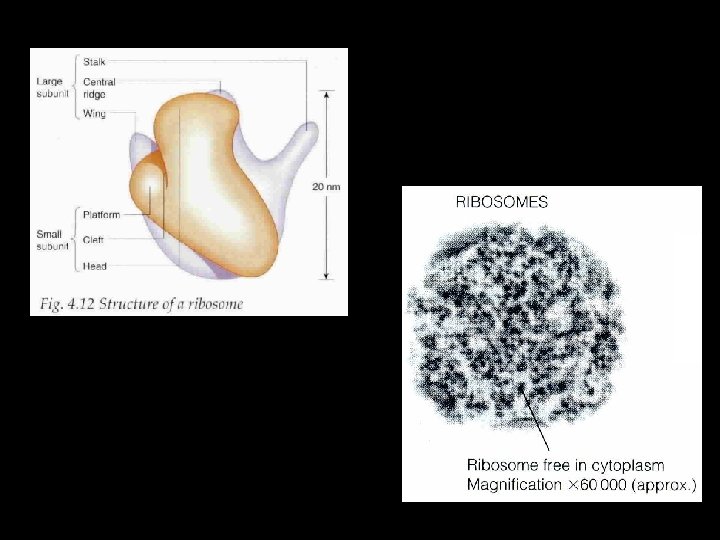
Non-membranous Structures 4. 2. 11 Ribosomes - small cytoplasmic granules of RNA molecules for protein synthesis - around 20 um in diameter in eukaryotic cells (80 S) but slightly smaller in prokaryotic cells (70 S) - account for 20% of the mass of a cell polysomes: ribosomes occur in groups assciated with rough ER or occur freely within cytoplasm
4. 2. 12 Storage granules - soluble form as sugars in vacuoles of plant cells - insoluble forms: starch grains - in chloroplasts & cytoplasm; in specialized leucoplast (amyloplast) glycogen granules – in animals cells lipid droplets – both plant and animal cells Leucoplast are colourless plastids (double membraned organelles in plants)