
DO NOW Describe OCT 17 the function of
DO NOW �Describe OCT 17 the function of the Golgi Apparatus.
ANSWER � The GA is a flattened stack of membranes with special compartments that modify proteins using special enzymes that attach carbohydrates and lipids. � It collects, modifies, packages, and delivers molecules made at one location in the cell and used at another. � Molecules can be used within the cell or exported out of the cell.
Cell Structure and Function Chapter 7 SECTION 2
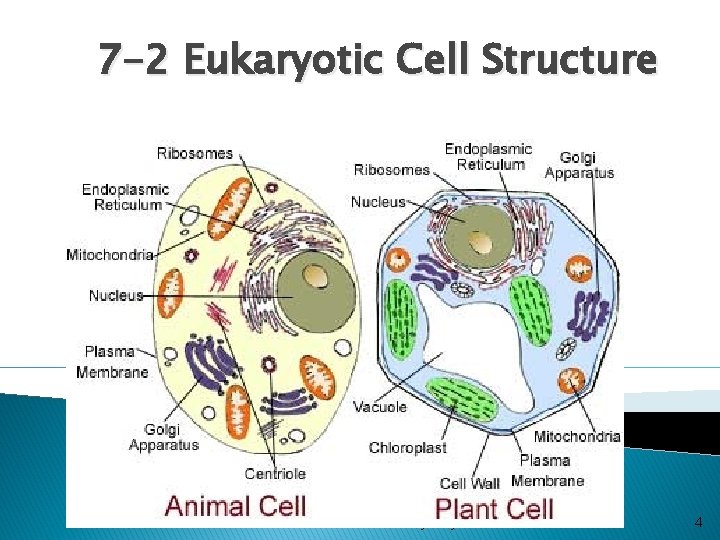
7 -2 Eukaryotic Cell Structure Template copyright www. brainybetty. com 2005 9/30/2020 4
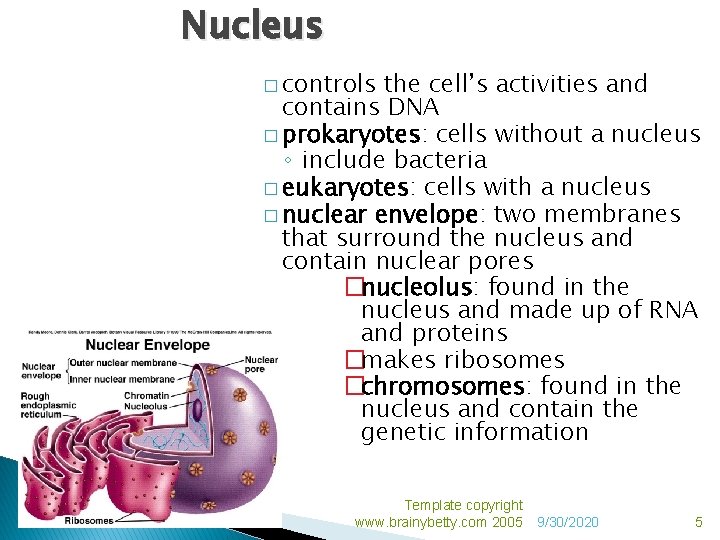
Nucleus � controls the cell’s activities and contains DNA � prokaryotes: cells without a nucleus ◦ include bacteria � eukaryotes: cells with a nucleus � nuclear envelope: two membranes that surround the nucleus and contain nuclear pores �nucleolus: found in the nucleus and made up of RNA and proteins �makes ribosomes �chromosomes: found in the nucleus and contain the genetic information Template copyright www. brainybetty. com 2005 9/30/2020 5
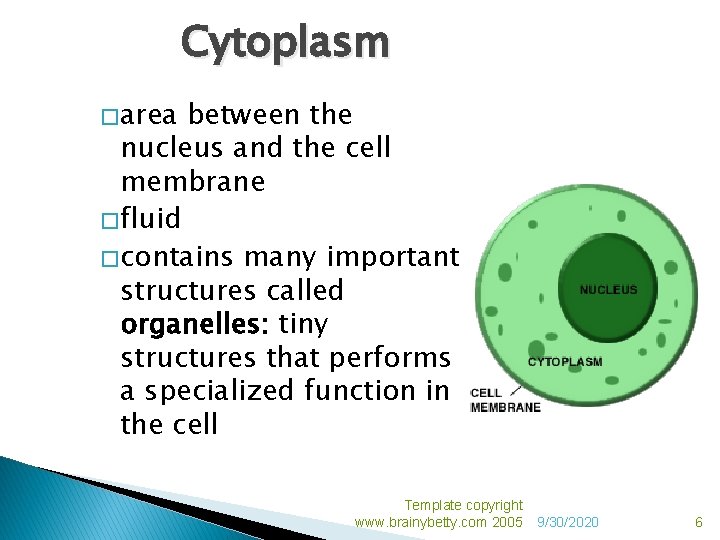
Cytoplasm � area between the nucleus and the cell membrane � fluid � contains many important structures called organelles: tiny structures that performs a specialized function in the cell Template copyright www. brainybetty. com 2005 9/30/2020 6
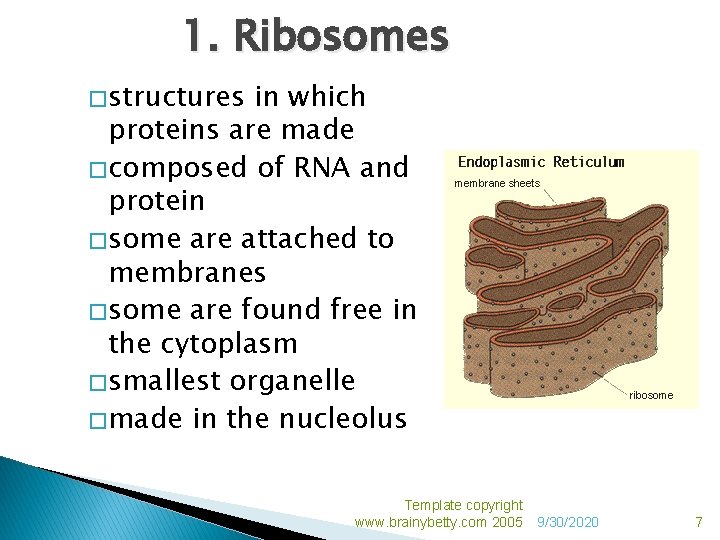
1. Ribosomes � structures in which proteins are made � composed of RNA and protein � some are attached to membranes � some are found free in the cytoplasm � smallest organelle � made in the nucleolus Template copyright www. brainybetty. com 2005 9/30/2020 7
Question of the DAY � The OCT 18 main function of the vacuole in plants is to � A. store sugar for later use in cellular respiration � B. eliminate waste from the cell � C. contain chlorophyll for use in photosynthesis � D. store water to maintain a balanced water pressure with the cell’s surroundings.
DO NOW � Explain Oct 18 the similarities and differences between chloroplasts and mitochondria.
DO NOW ANSWER � Both organelles contain two membranes. � They both have similar structures. � They both convert one form of energy into another. ◦ Mitochondria converts chemical energy into a usable compound. ◦ Chloroplasts convert light energy into chemical energy. � Similar reactions occur in both organelles. � Chloroplasts are only in plant cells and algae. � Mitochondria are found in both plant and animal cells.
AGENDA OCT 18 � BIG Question: What are the functions of a cell’s organelles? � 1. Qo. D and DO NOW � 2. FINISH Section 7 -2 Organelles � 3. Study your Chapter 7 Notes ◦ Quiz NEXT WEEK Sections 1 and 2 � 4. Homework and Review � CELL BOOKLETS DUE MONDAY OCT 21 � NO EXCEPTIONS � All NOTES Posted on my webpage!!! USE THEM!!!
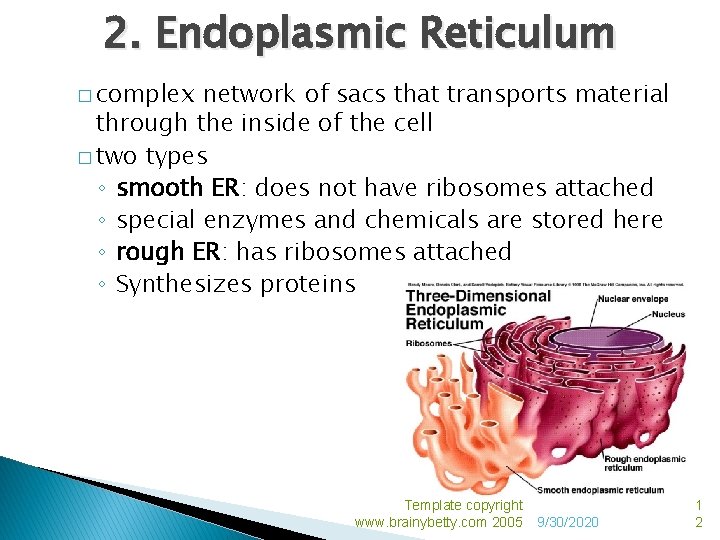
2. Endoplasmic Reticulum � complex network of sacs that transports material through the inside of the cell � two types ◦ smooth ER: does not have ribosomes attached ◦ special enzymes and chemicals are stored here ◦ rough ER: has ribosomes attached ◦ Synthesizes proteins Template copyright www. brainybetty. com 2005 9/30/2020 1 2
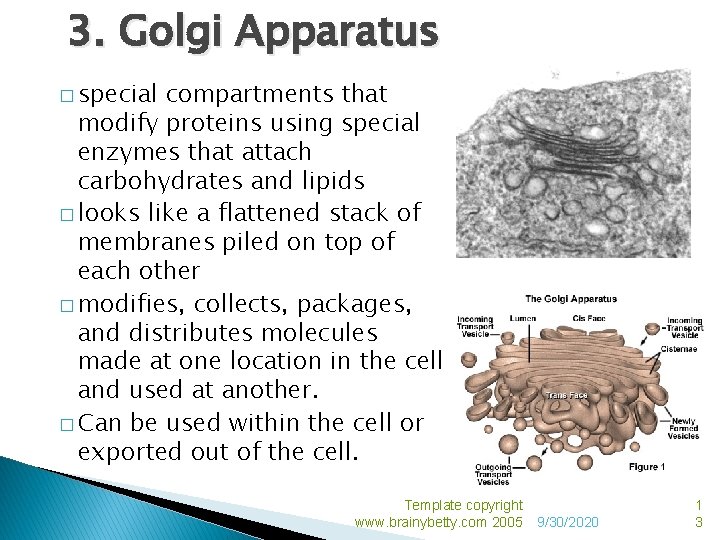
3. Golgi Apparatus � special compartments that modify proteins using special enzymes that attach carbohydrates and lipids � looks like a flattened stack of membranes piled on top of each other � modifies, collects, packages, and distributes molecules made at one location in the cell and used at another. � Can be used within the cell or exported out of the cell. Template copyright www. brainybetty. com 2005 9/30/2020 1 3
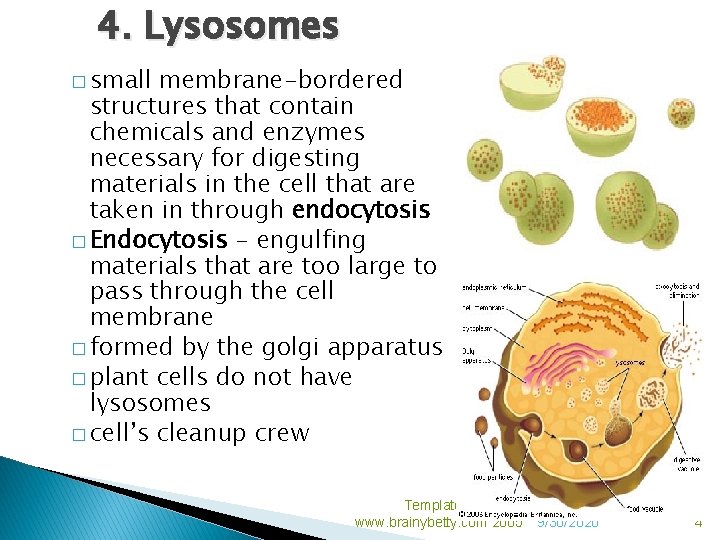
4. Lysosomes � small membrane-bordered structures that contain chemicals and enzymes necessary for digesting materials in the cell that are taken in through endocytosis � Endocytosis - engulfing materials that are too large to pass through the cell membrane � formed by the golgi apparatus � plant cells do not have lysosomes � cell’s cleanup crew Template copyright www. brainybetty. com 2005 9/30/2020 1 4
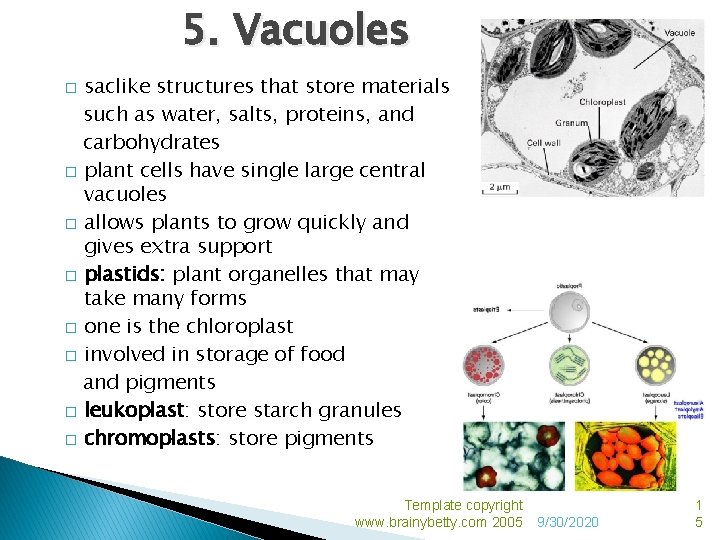
5. Vacuoles saclike structures that store materials such as water, salts, proteins, and carbohydrates � plant cells have single large central vacuoles � allows plants to grow quickly and gives extra support � plastids: plant organelles that may take many forms � one is the chloroplast � involved in storage of food and pigments � leukoplast: store starch granules � chromoplasts: store pigments � Template copyright www. brainybetty. com 2005 9/30/2020 1 5
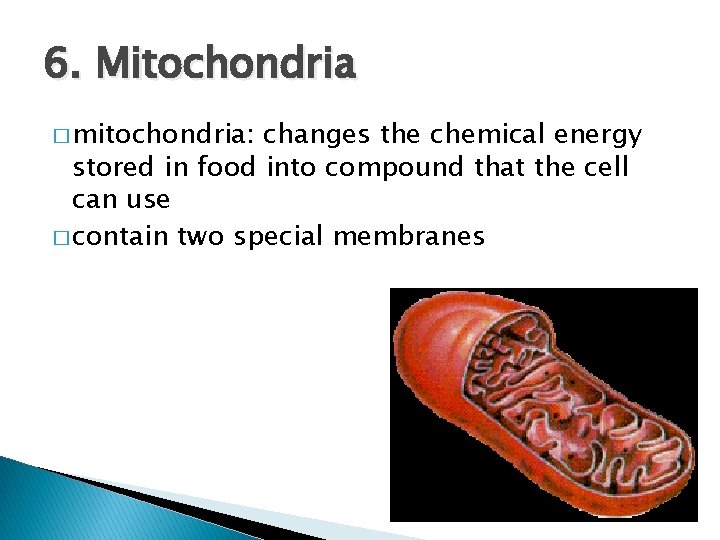
6. Mitochondria � mitochondria: changes the chemical energy stored in food into compound that the cell can use � contain two special membranes
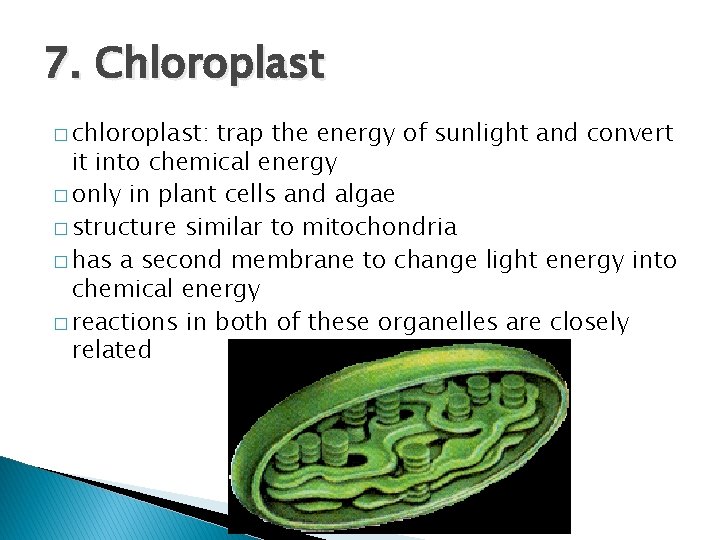
7. Chloroplast � chloroplast: trap the energy of sunlight and convert it into chemical energy � only in plant cells and algae � structure similar to mitochondria � has a second membrane to change light energy into chemical energy � reactions in both of these organelles are closely related
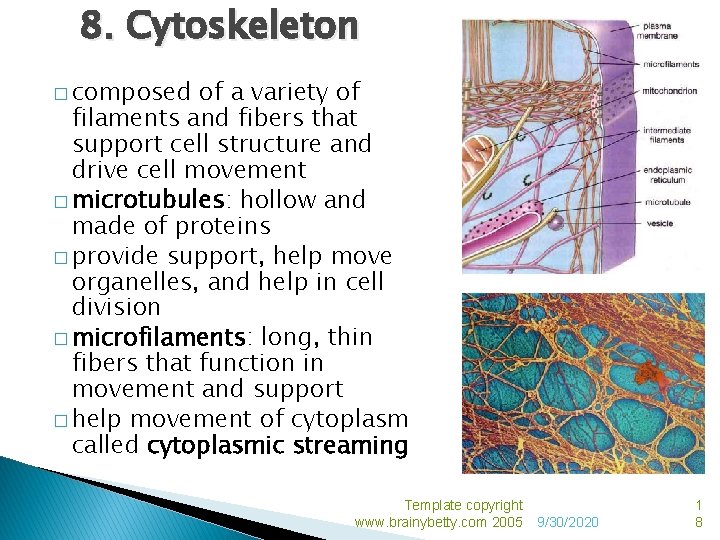
8. Cytoskeleton � composed of a variety of filaments and fibers that support cell structure and drive cell movement � microtubules: hollow and made of proteins � provide support, help move organelles, and help in cell division � microfilaments: long, thin fibers that function in movement and support � help movement of cytoplasm called cytoplasmic streaming Template copyright www. brainybetty. com 2005 9/30/2020 1 8
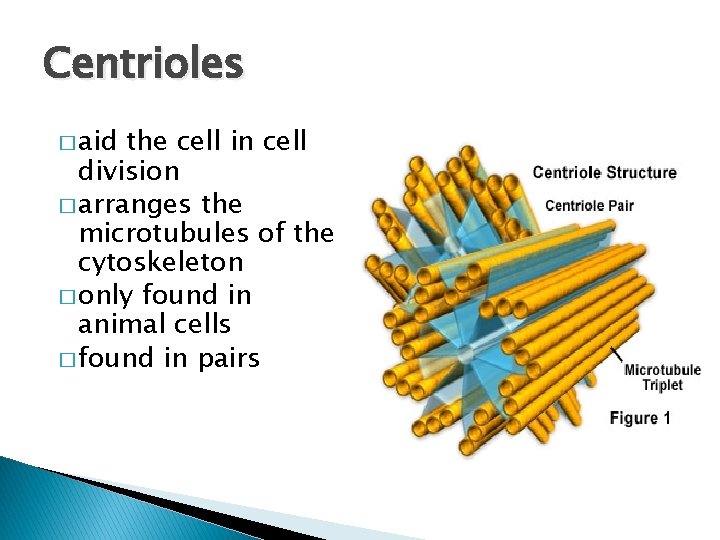
Centrioles � aid the cell in cell division � arranges the microtubules of the cytoskeleton � only found in animal cells � found in pairs

SECTION 7 -2 REVIEW � Close your notebooks. � 1. Which organelle contains chemicals and enzymes necessary to break down or digest materials in the cell? � 2. Which structures are found in pairs and only present in animal cells? � 3. What is the function of a ribosome?
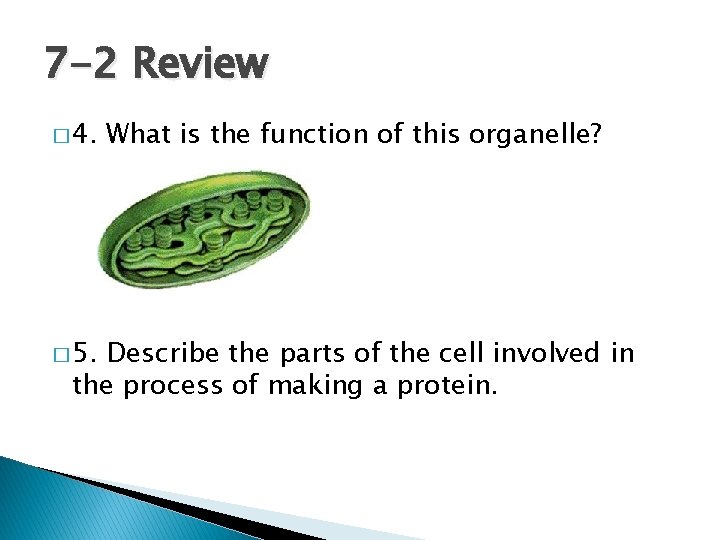
7 -2 Review � 4. � 5. What is the function of this organelle? Describe the parts of the cell involved in the process of making a protein.
7 -2 Review Answers � 1. � 2. � 3. � 4. � 5. Lysosomes Centrioles Makes proteins Traps energy from sunlight and converts it into chemical energy Located within the nucleus, the nucleolus makes ribosomes. Ribosomes make proteins.
- Slides: 22