ELA 200 READING RESOURCE Stacey Thompson 136713 Creating
- Slides: 16
ELA 200 – READING RESOURCE Stacey Thompson 136713 Creating your own Dreamtime Story
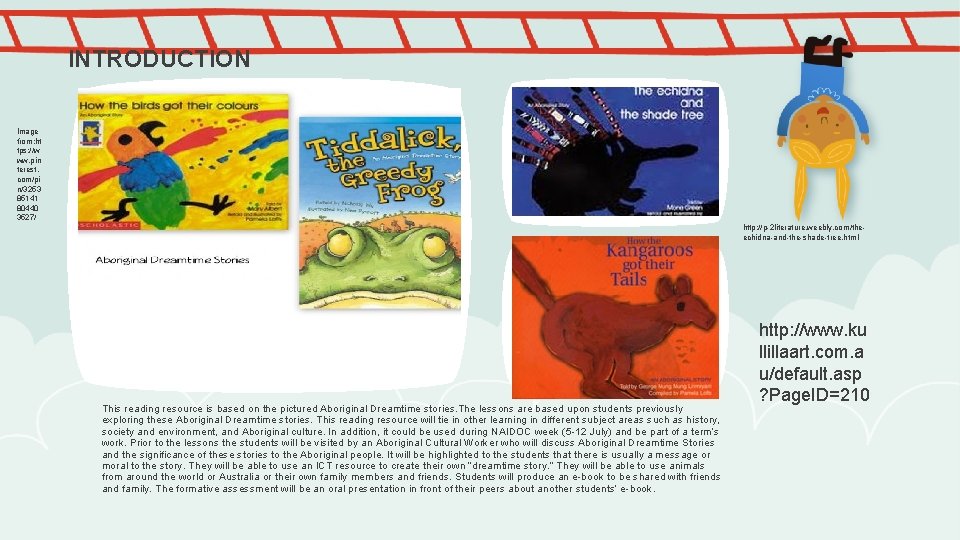
INTRODUCTION Image from: ht tps: //w ww. pin terest. com/pi n/3253 85141 80440 3527/ http: //p-2 literature. weebly. com/theechidna-and-the-shade-tree. html This reading resource is based on the pictured Aboriginal Dreamtime stories. The lessons are based upon students previously exploring these Aboriginal Dreamtime stories. This reading resource will tie in other learning in different subject areas such as history, society and environment, and Aboriginal culture. In addition, it could be used during NAIDOC week (5 -12 July) and be part of a term’s work. Prior to the lessons the students will be visited by an Aboriginal Cultural Worker who will discuss Aboriginal Dreamtime Stories and the significance of these stories to the Aboriginal people. It will be highlighted to the students that there is usually a message or moral to the story. They will be able to use an ICT resource to create their own “dreamtime story. ” They will be able to use animals from around the world or Australia or their own family members and friends. Students will produce an e-book to be shared with friends and family. The formative assessment will be an oral presentation in front of their peers about another students’ e-book. http: //www. ku llillaart. com. a u/default. asp ? Page. ID=210
THE CLASSROOM The classroom is a Year 2 in a small Catholic school in the suburbs of Adelaide. There are 22 students (10 boys, 12 girls) and there are no students with any disabilities such as autism or dyslexia, however there is a male student with ADD. There are behaviour controls put into place with a focus on praising positive behaviour. The majority of students are Caucasian-Australian, with one student with a Philipino background, one that is mixed race (Sudanese/Caucasian Australian) and two who are white South Africans.
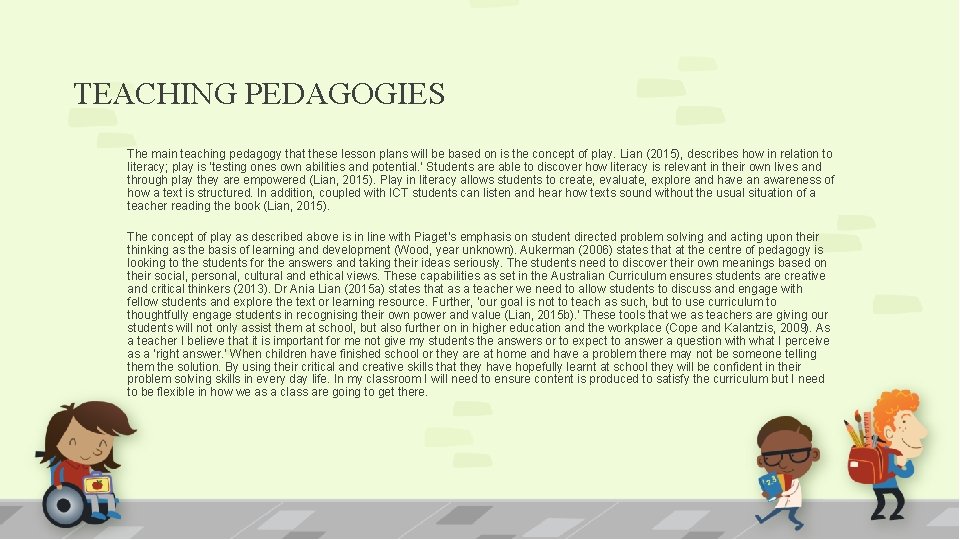
TEACHING PEDAGOGIES The main teaching pedagogy that these lesson plans will be based on is the concept of play. Lian (2015), describes how in relation to literacy; play is ‘testing ones own abilities and potential. ’ Students are able to discover how literacy is relevant in their own lives and through play they are empowered (Lian, 2015). Play in literacy allows students to create, evaluate, explore and have an awareness of how a text is structured. In addition, coupled with ICT students can listen and hear how texts sound without the usual situation of a teacher reading the book (Lian, 2015). The concept of play as described above is in line with Piaget’s emphasis on student directed problem solving and acting upon their thinking as the basis of learning and development (Wood, year unknown). Aukerman (2006) states that at the centre of pedagogy is looking to the students for the answers and taking their ideas seriously. The students need to discover their own meanings based on their social, personal, cultural and ethical views. These capabilities as set in the Australian Curriculum ensures students are creative and critical thinkers (2013). Dr Ania Lian (2015 a) states that as a teacher we need to allow students to discuss and engage with fellow students and explore the text or learning resource. Further, 'our goal is not to teach as such, but to use curriculum to thoughtfully engage students in recognising their own power and value (Lian, 2015 b). ' These tools that we as teachers are giving our students will not only assist them at school, but also further on in higher education and the workplace (Cope and Kalantzis, 2009). As a teacher I believe that it is important for me not give my students the answers or to expect to answer a question with what I perceive as a ‘right answer. ’ When children have finished school or they are at home and have a problem there may not be someone telling them the solution. By using their critical and creative skills that they have hopefully learnt at school they will be confident in their problem solving skills in every day life. In my classroom I will need to ensure content is produced to satisfy the curriculum but I need to be flexible in how we as a class are going to get there.
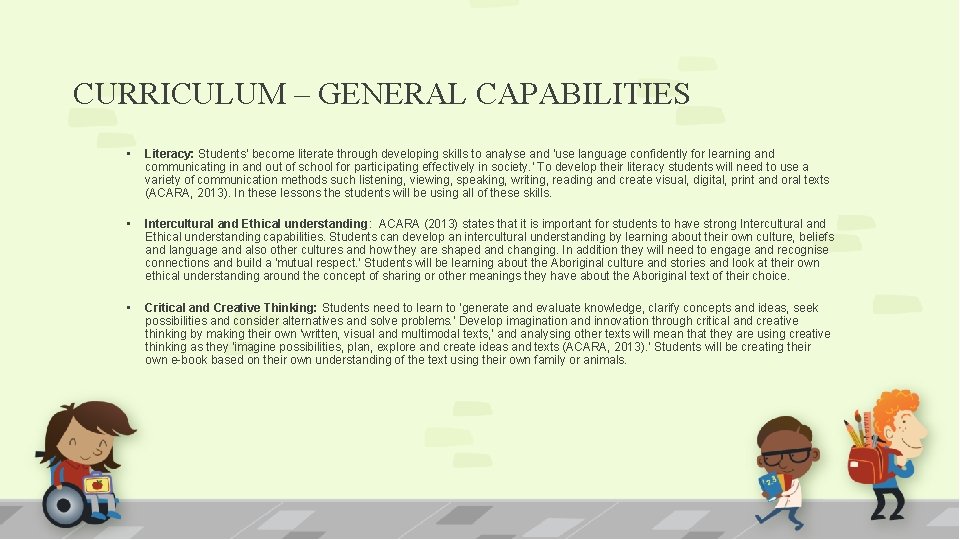
CURRICULUM – GENERAL CAPABILITIES • Literacy: Students’ become literate through developing skills to analyse and 'use language confidently for learning and communicating in and out of school for participating effectively in society. ' To develop their literacy students will need to use a variety of communication methods such listening, viewing, speaking, writing, reading and create visual, digital, print and oral texts (ACARA, 2013). In these lessons the students will be using all of these skills. • Intercultural and Ethical understanding: ACARA (2013) states that it is important for students to have strong Intercultural and Ethical understanding capabilities. Students can develop an intercultural understanding by learning about their own culture, beliefs and language and also other cultures and how they are shaped and changing. In addition they will need to engage and recognise connections and build a 'mutual respect. ’ Students will be learning about the Aboriginal culture and stories and look at their own ethical understanding around the concept of sharing or other meanings they have about the Aboriginal text of their choice. • Critical and Creative Thinking: Students need to learn to 'generate and evaluate knowledge, clarify concepts and ideas, seek possibilities and consider alternatives and solve problems. ‘ Develop imagination and innovation through critical and creative thinking by making their own 'written, visual and multimodal texts, ' and analysing other texts will mean that they are using creative thinking as they 'imagine possibilities, plan, explore and create ideas and texts (ACARA, 2013). ‘ Students will be creating their own e-book based on their own understanding of the text using their own family or animals.
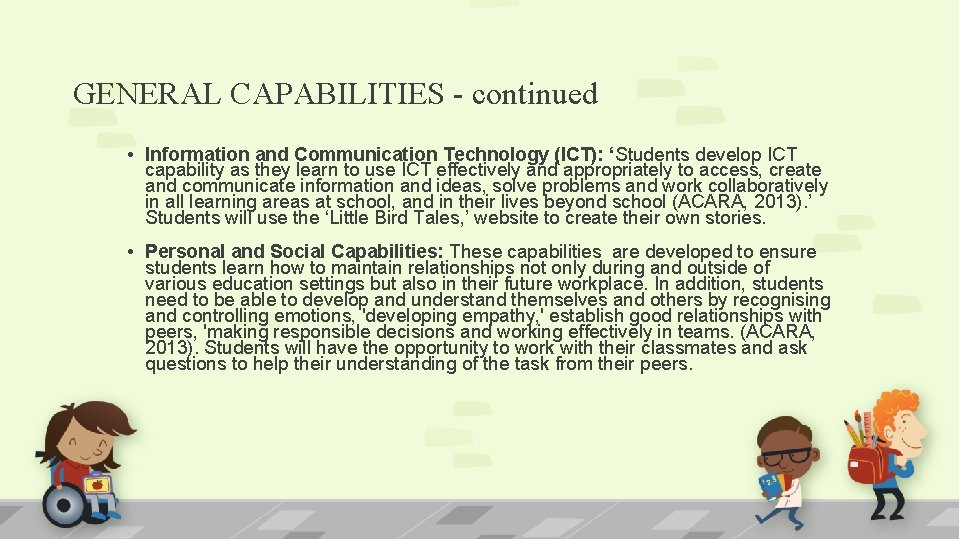
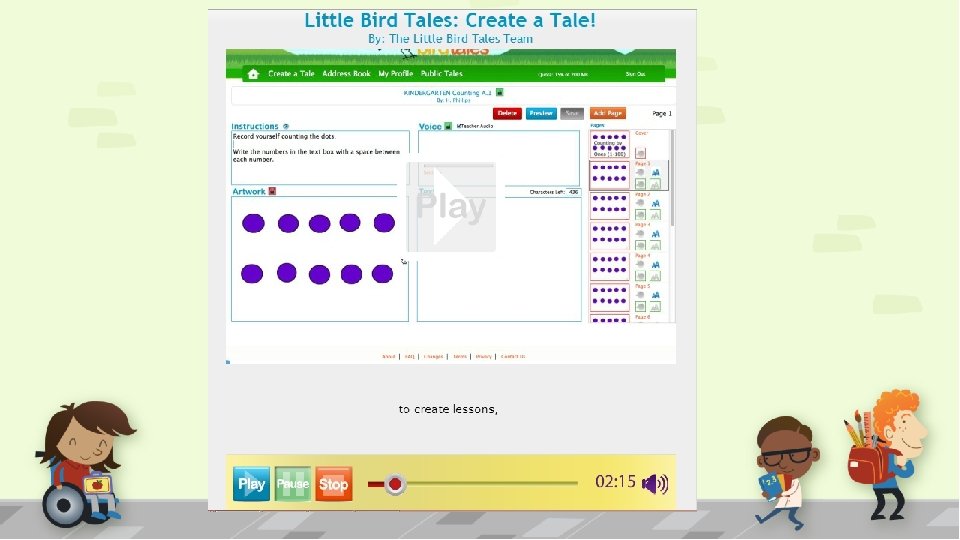
GENERAL CAPABILITIES - continued • Information and Communication Technology (ICT): ‘Students develop ICT capability as they learn to use ICT effectively and appropriately to access, create and communicate information and ideas, solve problems and work collaboratively in all learning areas at school, and in their lives beyond school (ACARA, 2013). ’ Students will use the ‘Little Bird Tales, ’ website to create their own stories. • Personal and Social Capabilities: These capabilities are developed to ensure students learn how to maintain relationships not only during and outside of various education settings but also in their future workplace. In addition, students need to be able to develop and understand themselves and others by recognising and controlling emotions, 'developing empathy, ' establish good relationships with peers, 'making responsible decisions and working effectively in teams. (ACARA, 2013). Students will have the opportunity to work with their classmates and ask questions to help their understanding of the task from their peers.
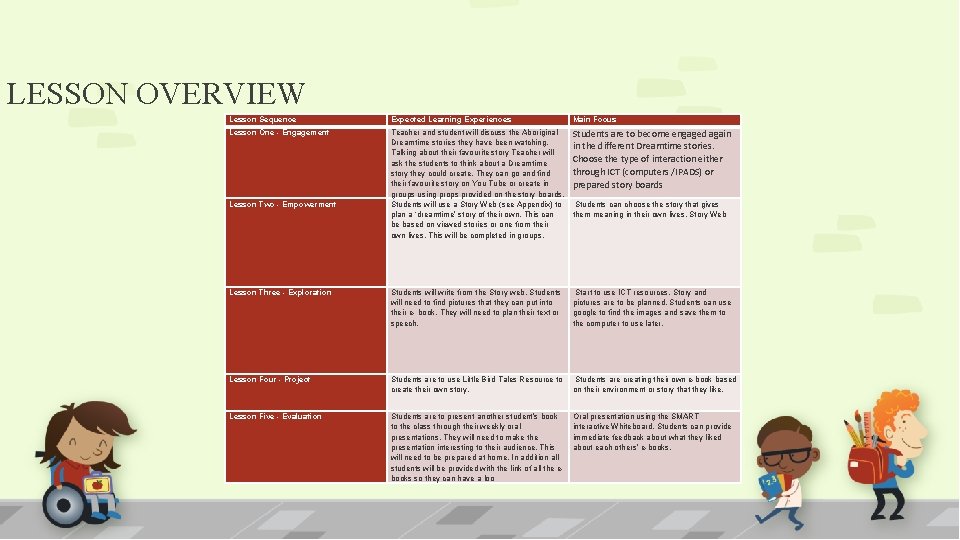
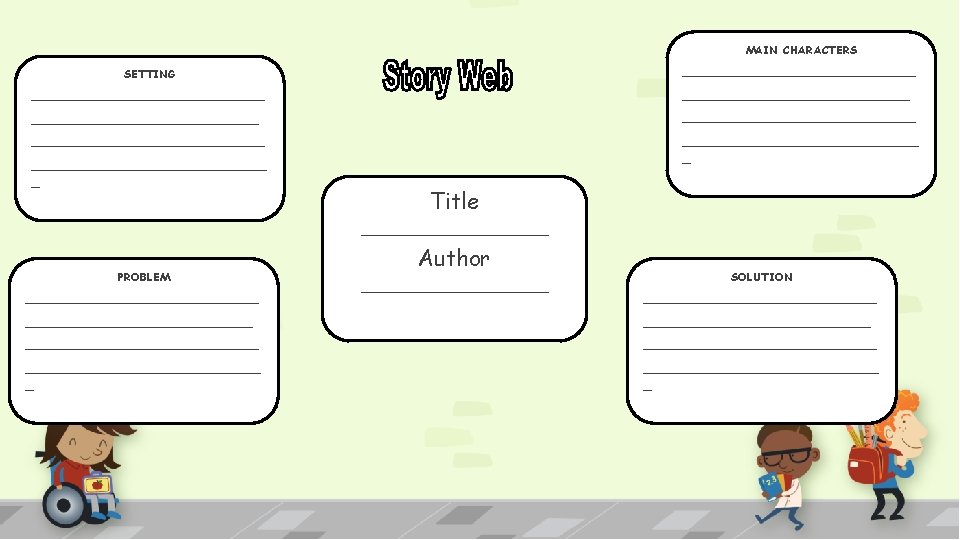
LESSON OVERVIEW Lesson Sequence Expected Learning Experiences Lesson One - Engagement Teacher and student will discuss the Aboriginal Students are to become engaged again Dreamtime stories they have been watching. in the different Dreamtime stories. Talking about their favourite story Teacher will Choose the type of interaction either ask the students to think about a Dreamtime through ICT (computers /IPADS) or story they could create. They can go and find their favourite story on You Tube or create in prepared story boards groups using props provided on the story boards. Students will use a Story Web (see Appendix) to Students can choose the story that gives plan a ‘dreamtime’ story of their own. This can them meaning in their own lives. Story Web be based on viewed stories or one from their own lives. This will be completed in groups. Lesson Two - Empowerment Main Focus Lesson Three - Exploration Students will write from the Story web. Students will need to find pictures that they can put into their e- book. They will need to plan their text or speech. Start to use ICT resources. Story and pictures are to be planned. Students can use google to find the images and save them to the computer to use later. Lesson Four - Project Students are to use Little Bird Tales Resource to Students are creating their own e-book based create their own story. on their environment or story that they like. Lesson Five - Evaluation Students are to present another student’s book to the class through their weekly oral presentations. They will need to make the presentation interesting to their audience. This will need to be prepared at home. In addition all students will be provided with the link of all the ebooks so they can have a loo Oral presentation using the SMART interactive Whiteboard. Students can provide immediate feedback about what they liked about each others’ e-books.
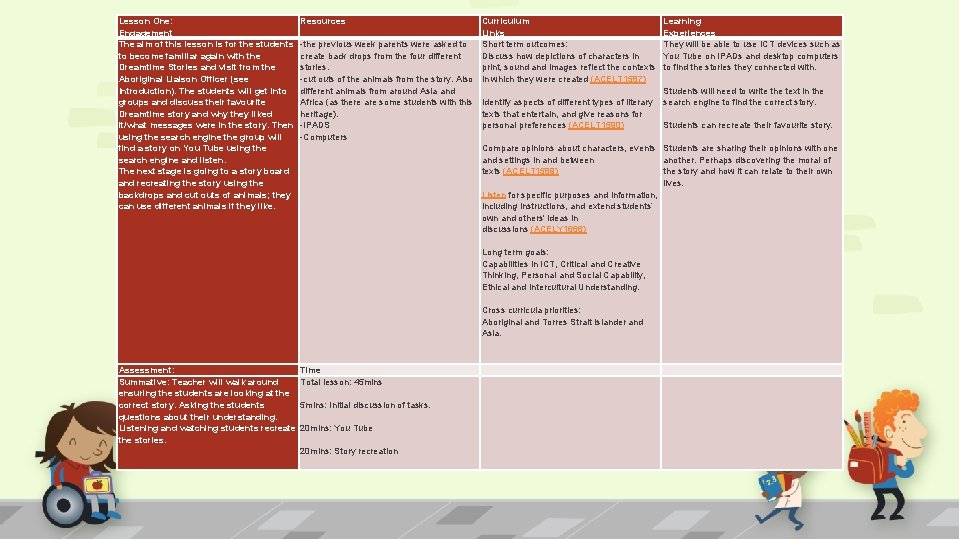
Lesson One: Engagement The aim of this lesson is for the students to become familiar again with the Dreamtime Stories and visit from the Aboriginal Liaison Officer (see Introduction). The students will get into groups and discuss their favourite Dreamtime story and why they liked it/what messages were in the story. Then using the search engine the group will find a story on You Tube using the search engine and listen. The next stage is going to a story board and recreating the story using the backdrops and cut outs of animals; they can use different animals if they like. Resources Curriculum Links -the previous week parents were asked to Short term outcomes: create back drops from the four different Discuss how depictions of characters in stories. print, sound and images reflect the contexts -cut outs of the animals from the story. Also in which they were created (ACELT 1587) different animals from around Asia and Africa (as there are some students with this Identify aspects of different types of literary heritage). texts that entertain, and give reasons for -IPADS personal preferences (ACELT 1590) -Computers Compare opinions about characters, events and settings in and between texts (ACELT 1589) Listen for specific purposes and information, including instructions, and extend students’ own and others' ideas in discussions (ACELY 1666) Long term goals: Capabilities in ICT, Critical and Creative Thinking, Personal and Social Capability, Ethical and Intercultural Understanding. Cross curricula priorities: Aboriginal and Torres Strait Islander and Asia. Assessment: Time Summative: Teacher will walk around Total lesson: 45 mins ensuring the students are looking at the correct story. Asking the students 5 mins: Initial discussion of tasks. questions about their understanding. Listening and watching students recreate 20 mins: You Tube the stories. 20 mins: Story recreation Learning Experiences They will be able to use ICT devices such as You Tube on IPADs and desktop computers to find the stories they connected with. Students will need to write the text in the search engine to find the correct story. Students can recreate their favourite story. Students are sharing their opinions with one another. Perhaps discovering the moral of the story and how it can relate to their own lives.
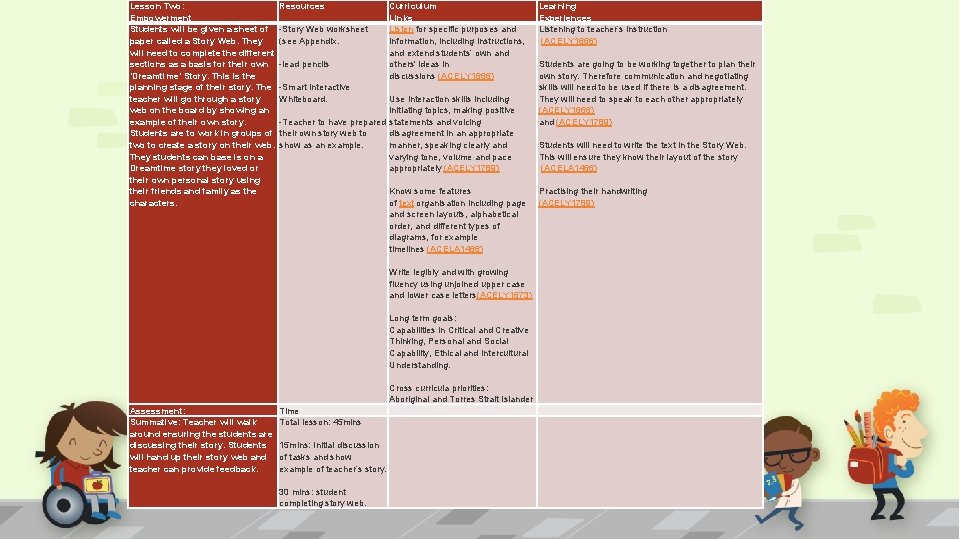
Lesson Two: Resources Curriculum Empowerment Links Students will be given a sheet of -Story Web worksheet Listen for specific purposes and paper called a Story Web. They (see Appendix. information, including instructions, will need to complete the different and extend students’ own and sections as a basis for their own -lead pencils others' ideas in ‘Dreamtime’ Story. This is the discussions (ACELY 1666) planning stage of their story. The -Smart Interactive teacher will go through a story Whiteboard. Use interaction skills including web on the board by showing an initiating topics, making positive example of their own story. -Teacher to have prepared statements and voicing Students are to work in groups of their own story web to disagreement in an appropriate two to create a story on their web. show as an example. manner, speaking clearly and They students can base is on a varying tone, volume and pace Dreamtime story they loved or appropriately (ACELY 1789) their own personal story using their friends and family as the Know some features characters. of text organisation including page and screen layouts, alphabetical order, and different types of diagrams, for example timelines (ACELA 1466) Write legibly and with growing fluency using unjoined upper case and lower case letters(ACELY 1673) Long term goals: Capabilities in Critical and Creative Thinking, Personal and Social Capability, Ethical and Intercultural Understanding. Cross curricula priorities: Aboriginal and Torres Strait Islander Assessment: Time Summative: Teacher will walk Total lesson: 45 mins around ensuring the students are discussing their story. Students 15 mins: Initial discussion will hand up their story web and of tasks and show teacher can provide feedback. example of teacher’s story. 30 mins: student completing story web. Learning Experiences Listening to teacher’s instruction (ACELY 1666) Students are going to be working together to plan their own story. Therefore communication and negotiating skills will need to be used if there is a disagreement. They will need to speak to each other appropriately (ACELY 1666) and (ACELY 1789) Students will need to write the text in the Story Web. This will ensure they know their layout of the story (ACELA 1466) Practising their handwriting (ACELY 1789)
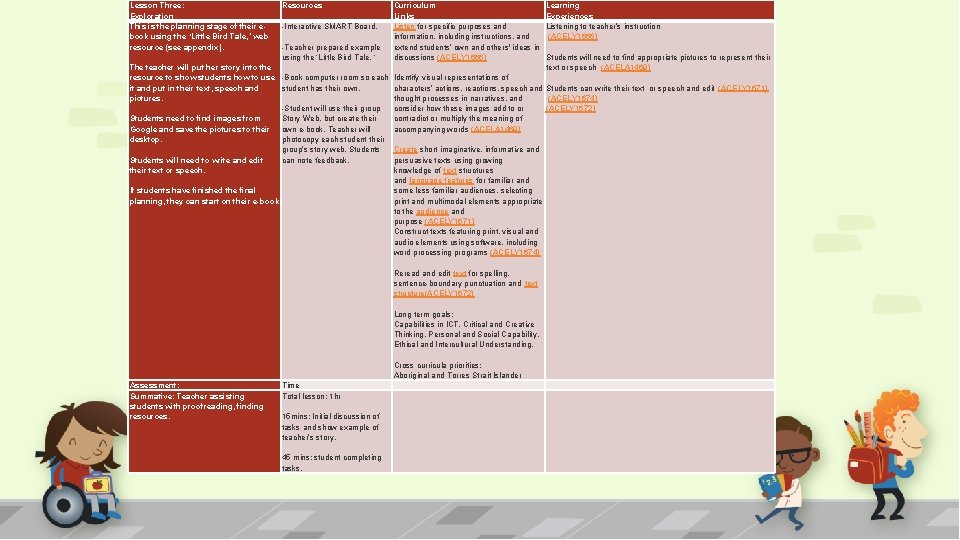
Lesson Three: Resources Exploration This is the planning stage of their e-Interactive SMART Board. book using the ‘Little Bird Tale, ’ web resource (see appendix). -Teacher prepared example using the ‘Little Bird Tale. ‘ The teacher will put her story into the resource to show students how to use -Book computer room so each it and put in their text, speech and student has their own. pictures. -Student will use their group Students need to find images from Story Web, but create their Google and save the pictures to their own e-book. Teacher will desktop. photocopy each student their group’s story web. Students will need to write and edit can note feedback. their text or speech. If students have finished the final planning, they can start on their e-book. Assessment: Summative: Teacher assisting students with proofreading, finding resources. Time Total lesson: 1 hr 15 mins: Initial discussion of tasks and show example of teacher’s story. 45 mins: student completing tasks. Curriculum Learning Links Experiences Listen for specific purposes and Listening to teacher’s instruction information, including instructions, and (ACELY 1666) extend students’ own and others' ideas in discussions (ACELY 1666) Students will need to find appropriate pictures to represent their text or speech (ACELA 1469) Identify visual representations of characters’ actions, reactions, speech and Students can write their text or speech and edit (ACELY 1671) thought processes in narratives, and (ACELY 1674) consider how these images add to or (ACELY 1672) contradict or multiply the meaning of accompanying words (ACELA 1469) Create short imaginative, informative and persuasive texts using growing knowledge of text structures and language features for familiar and some less familiar audiences, selecting print and multimodal elements appropriate to the audience and purpose (ACELY 1671) Construct texts featuring print, visual and audio elements using software, including word processing programs (ACELY 1674) Reread and edit text for spelling, sentence-boundary punctuation and text structure(ACELY 1672) Long term goals: Capabilities in ICT, Critical and Creative Thinking, Personal and Social Capability, Ethical and Intercultural Understanding. Cross curricula priorities: Aboriginal and Torres Strait Islander
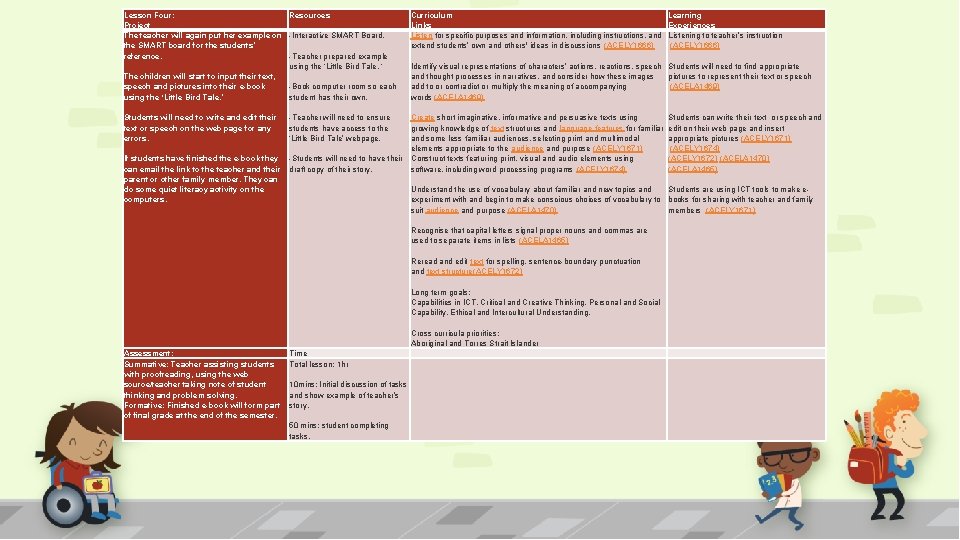
Lesson Four: Project The teacher will again put her example on the SMART board for the students’ reference. The children will start to input their text, speech and pictures into their e-book using the ‘Little Bird Tale. ’ Students will need to write and edit their text or speech on the web page for any errors. If students have finished the e-book they can email the link to the teacher and their parent or other family member. They can do some quiet literacy activity on the computers. Resources Curriculum Learning Links Experiences -Interactive SMART Board. Listen for specific purposes and information, including instructions, and Listening to teacher’s instruction extend students’ own and others' ideas in discussions (ACELY 1666) -Teacher prepared example using the ‘Little Bird Tale. ‘ Identify visual representations of characters’ actions, reactions, speech Students will need to find appropriate and thought processes in narratives, and consider how these images pictures to represent their text or speech -Book computer room so each add to or contradict or multiply the meaning of accompanying (ACELA 1469) student has their own. words (ACELA 1469) -Teacher will need to ensure Create short imaginative, informative and persuasive texts using Students can write their text or speech and students have access to the growing knowledge of text structures and language features for familiar edit on their web page and insert ‘Little Bird Tale’ webpage. and some less familiar audiences, selecting print and multimodal appropriate pictures (ACELY 1671) elements appropriate to the audience and purpose (ACELY 1671) (ACELY 1674) -Students will need to have their Construct texts featuring print, visual and audio elements using (ACELY 1672) (ACELA 1470) draft copy of their story. software, including word processing programs (ACELY 1674) (ACELA 1465) Understand the use of vocabulary about familiar and new topics and Students are using ICT tools to make eexperiment with and begin to make conscious choices of vocabulary to books for sharing with teacher and family suit audience and purpose (ACELA 1470) members (ACELY 1671) Recognise that capital letters signal proper nouns and commas are used to separate items in lists (ACELA 1465) Reread and edit text for spelling, sentence-boundary punctuation and text structure(ACELY 1672) Long term goals: Capabilities in ICT, Critical and Creative Thinking, Personal and Social Capability, Ethical and Intercultural Understanding. Cross curricula priorities: Aboriginal and Torres Strait Islander Assessment: Time Summative: Teacher assisting students Total lesson: 1 hr with proofreading, using the web source/teacher taking note of student 10 mins: Initial discussion of tasks thinking and problem solving. and show example of teacher’s Formative: Finished e-book will form part story. of final grade at the end of the semester. 50 mins: student completing tasks.
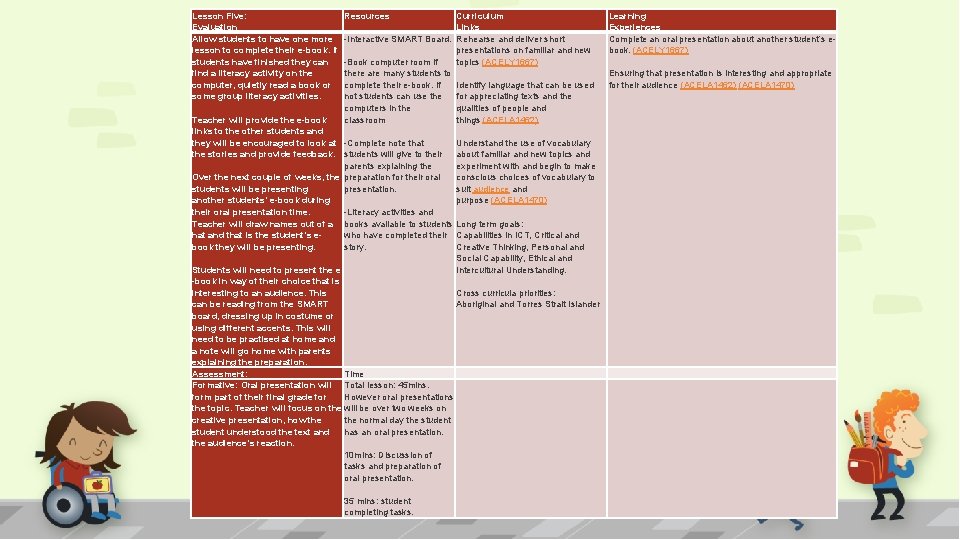
Lesson Five: Resources Curriculum Evaluation Links Allow students to have one more -Interactive SMART Board. Rehearse and deliver short lesson to complete their e-book. If presentations on familiar and new students have finished they can -Book computer room if topics (ACELY 1667) find a literacy activity on there are many students to computer, quietly read a book or complete their e-book. If Identify language that can be used some group literacy activities. not students can use the for appreciating texts and the computers in the qualities of people and Teacher will provide the e-book classroom things (ACELA 1462) links to the other students and they will be encouraged to look at -Complete note that Understand the use of vocabulary the stories and provide feedback. students will give to their about familiar and new topics and parents explaining the experiment with and begin to make Over the next couple of weeks, the preparation for their oral conscious choices of vocabulary to students will be presenting presentation. suit audience and another students’ e-book during purpose (ACELA 1470) their oral presentation time. -Literacy activities and Teacher will draw names out of a books available to students Long term goals: hat and that is the student’s ewho have completed their Capabilities in ICT, Critical and book they will be presenting. story. Creative Thinking, Personal and Social Capability, Ethical and Students will need to present the e Intercultural Understanding. -book in way of their choice that is interesting to an audience. This Cross curricula priorities: can be reading from the SMART Aboriginal and Torres Strait Islander board, dressing up in costume or using different accents. This will need to be practised at home and a note will go home with parents explaining the preparation. Assessment: Time Formative: Oral presentation will Total lesson: 45 mins. form part of their final grade for However oral presentations the topic. Teacher will focus on the will be over two weeks on creative presentation, how the normal day the student understood the text and has an oral presentation. the audience’s reaction. 10 mins: Discussion of tasks and preparation of oral presentation. 35 mins: student completing tasks. Learning Experiences Complete an oral presentation about another student’s ebook. (ACELY 1667) Ensuring that presentation is interesting and appropriate for their audience (ACELA 1462) (ACELA 1470)
APPENDIX
REFERENCES ACARA (2013). Literacy Overview, Australian Curriculum, Assessment and Reporting Authority, Australia, viewed 21 st May 2015, <http: //www. australiancurriculum. edu. au/english/content-structure/literacy> Aukerman M, (2006). 'Who's Afraid of the Big, "Bad Answer. "' 'Reading, Writing, Thinking, ' Educational Leadership, Vol. 64, No. 2, pp 37 -41. Cope, B. and Kalantzis, M. (2009), '“Multiliteracies”: New Literacies, New Learning', Pedagogies, ' An International Journal, Vol. 4 No. 3, pp 164 -195, viewed 21 st May 2015 http: //newlearningonline. com/files/2009/03/pedagogiesm-litsarticle 1. pdf Lian, A (2015 a). Lecture One, [video file], viewed 21 st May 2015, <https: //www. youtube. com/watch? v=p 1 Th. GIJve. UA&feature=youtu. be> Lian, A (2015 b). 19 March lecture Part 1 [video file], viewed 21 st May 2015, https: //www. youtube. com/watch? v=t. TOg 70 px 0 -U&feature=youtu. be&spfreload=1 The Little Bird Tales Team (2015), ‘Little Birds Tales: Create a Tale!’ ( web resource), viewed 21 st May 2015, https: //littlebirdtales. com/ Wood, D (Year Unknown), ‘From Pavlov to Piaget (Introduction), from CDU ereadings, viewed 21 st May 2015, http: //ereadings. cdu. edu. au/eserv/cdu: 19621/doc. pdf