Drifting Continents Did Pangea Exist The Theory of


- Slides: 17
Drifting Continents Did Pangea Exist?
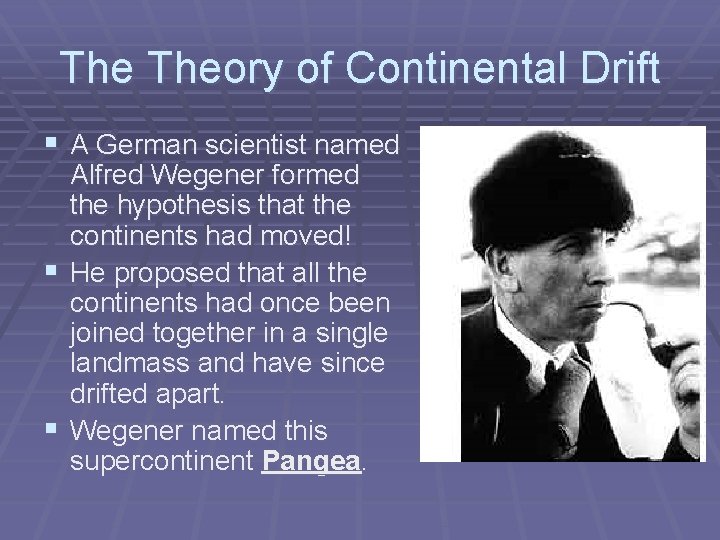
The Theory of Continental Drift § A German scientist named Alfred Wegener formed the hypothesis that the continents had moved! § He proposed that all the continents had once been joined together in a single landmass and have since drifted apart. § Wegener named this supercontinent Pangea.
The Theory of Continental Drift § Wegener’s idea that the continents slowly moved over the earth became known as continental drift. § Unfortunately Wegener could not provide a satisfactory explanation for the force that pushed or pull the continents. Therefore most geologists rejected his idea.
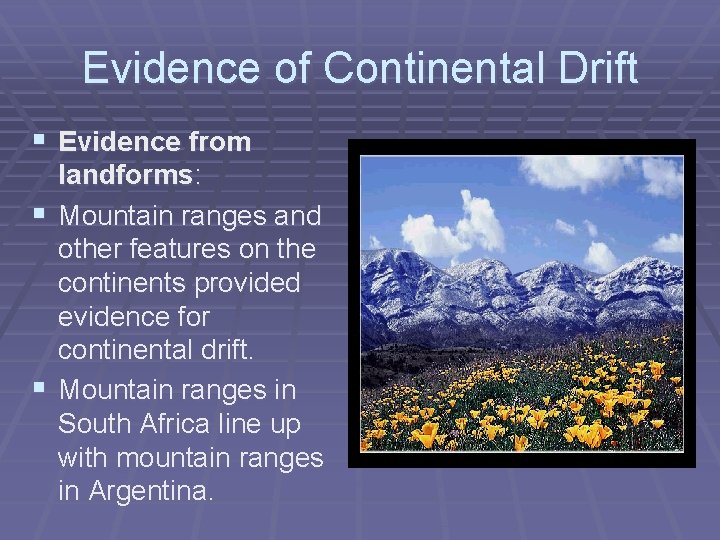
Evidence of Continental Drift § Evidence from landforms: § Mountain ranges and other features on the continents provided evidence for continental drift. § Mountain ranges in South Africa line up with mountain ranges in Argentina.
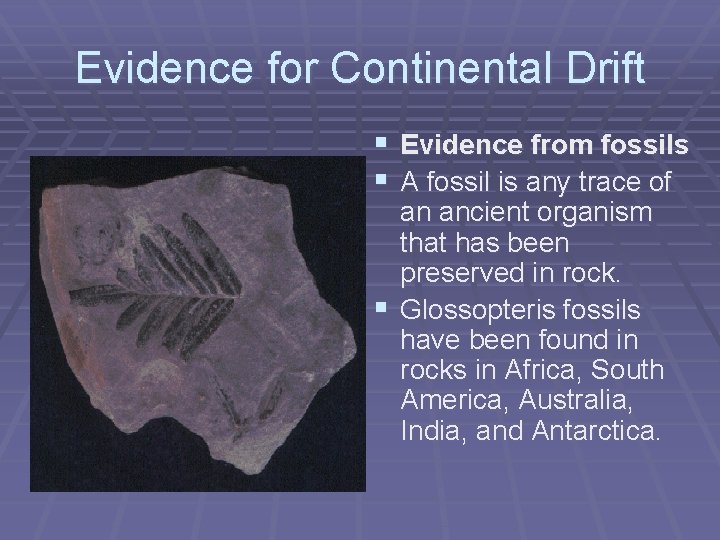
Evidence for Continental Drift § Evidence from fossils § A fossil is any trace of an ancient organism that has been preserved in rock. § Glossopteris fossils have been found in rocks in Africa, South America, Australia, India, and Antarctica.
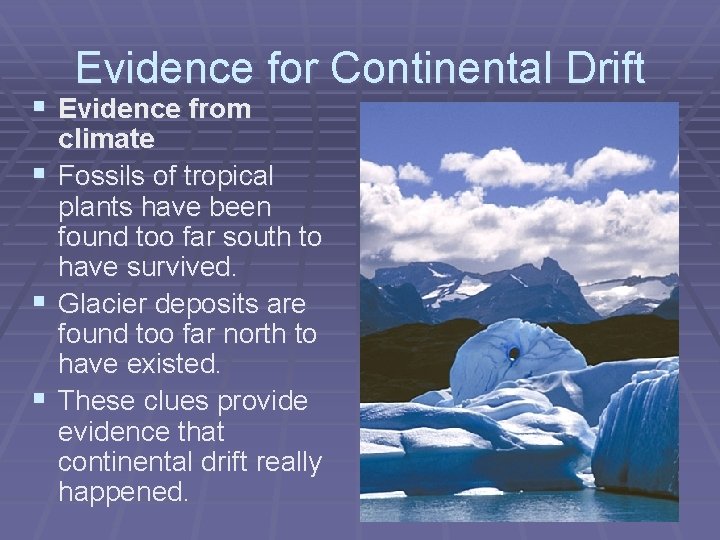
Evidence for Continental Drift § Evidence from climate § Fossils of tropical plants have been found too far south to have survived. § Glacier deposits are found too far north to have existed. § These clues provide evidence that continental drift really happened.
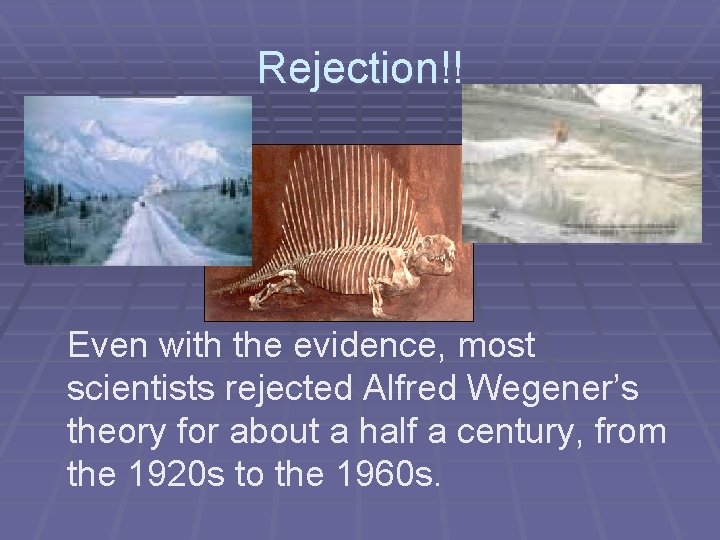
Rejection!! Even with the evidence, most scientists rejected Alfred Wegener’s theory for about a half a century, from the 1920 s to the 1960 s.
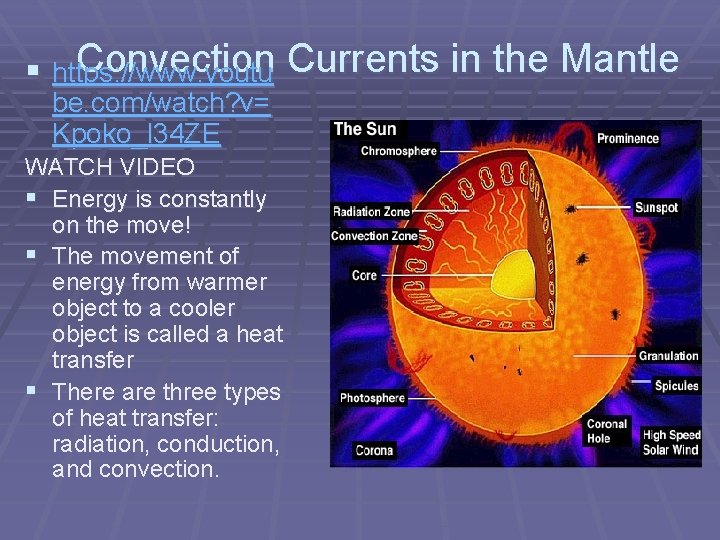
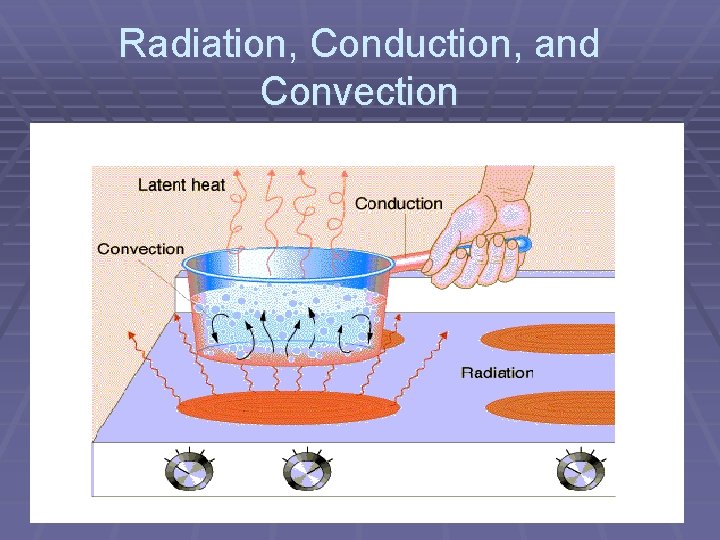
Convection Currents in the Mantle § https: //www. youtu be. com/watch? v= Kpoko_l 34 ZE WATCH VIDEO § Energy is constantly on the move! § The movement of energy from warmer object to a cooler object is called a heat transfer § There are three types of heat transfer: radiation, conduction, and convection.
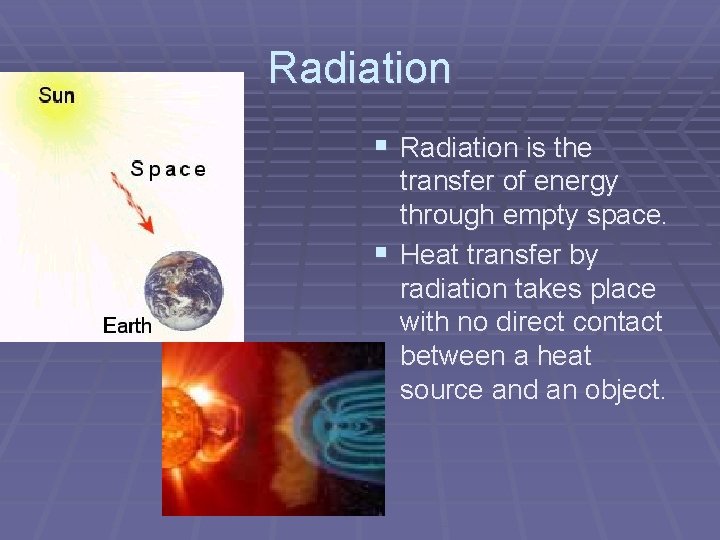
Radiation § Radiation is the transfer of energy through empty space. § Heat transfer by radiation takes place with no direct contact between a heat source and an object.
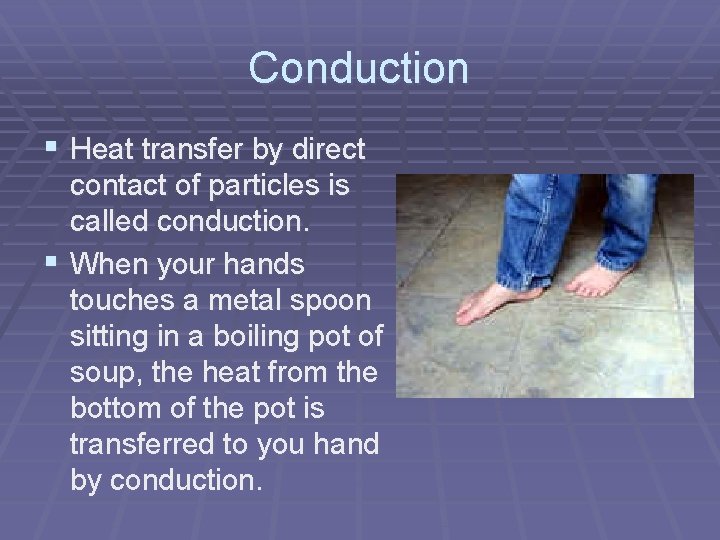
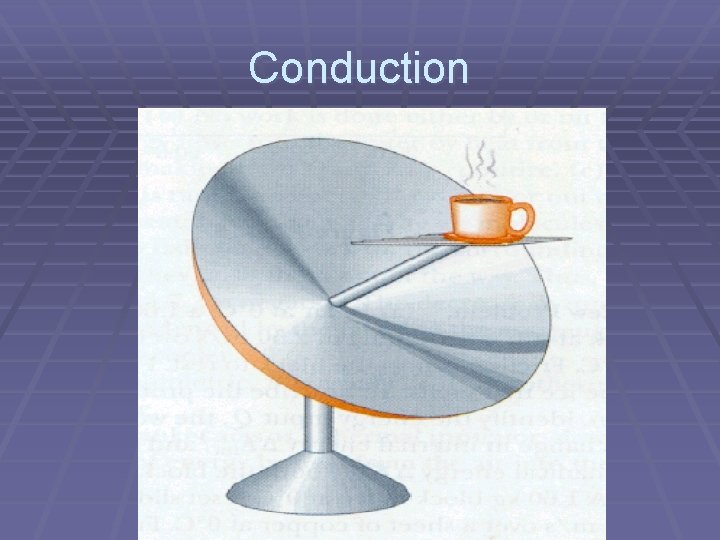
Conduction § Heat transfer by direct contact of particles is called conduction. § When your hands touches a metal spoon sitting in a boiling pot of soup, the heat from the bottom of the pot is transferred to you hand by conduction.
Conduction
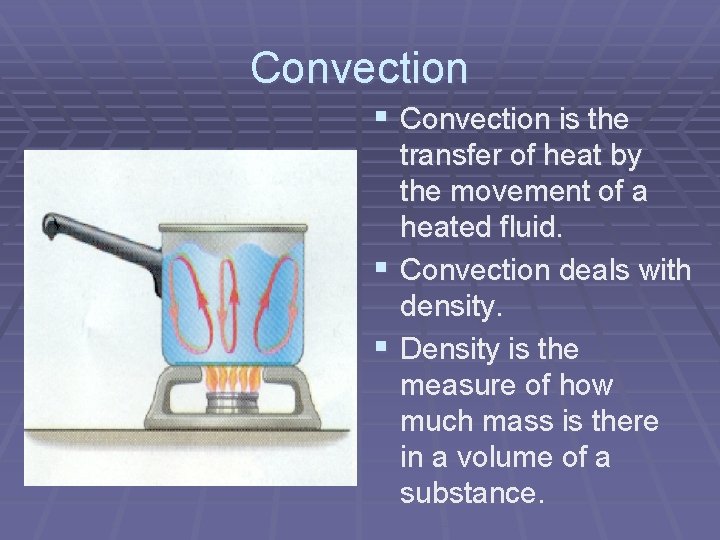
Convection § Convection is the § § transfer of heat by the movement of a heated fluid. Convection deals with density. Density is the measure of how much mass is there in a volume of a substance.
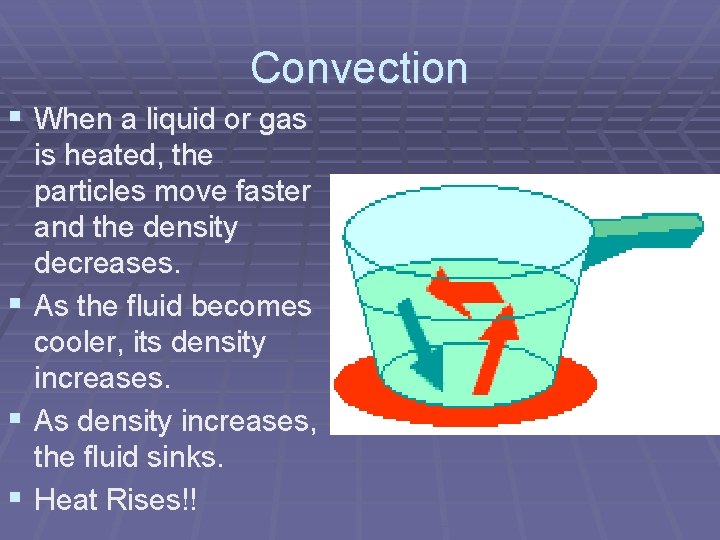
Convection § When a liquid or gas § § § is heated, the particles move faster and the density decreases. As the fluid becomes cooler, its density increases. As density increases, the fluid sinks. Heat Rises!!
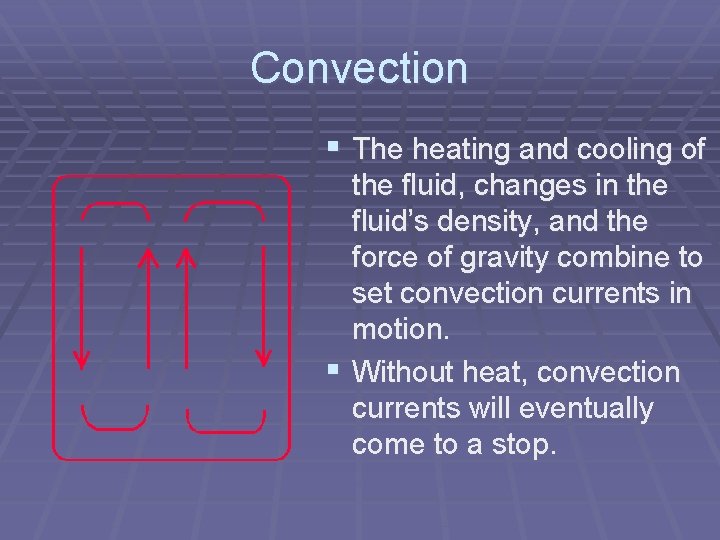
Convection § The heating and cooling of the fluid, changes in the fluid’s density, and the force of gravity combine to set convection currents in motion. § Without heat, convection currents will eventually come to a stop.
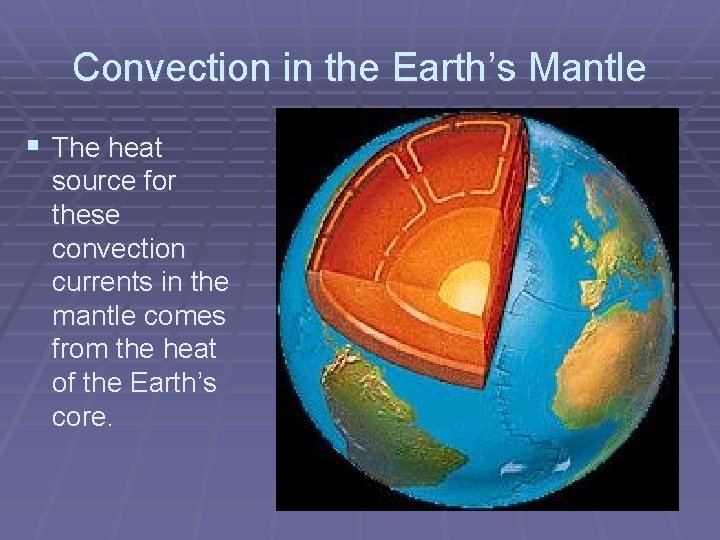
Convection in the Earth’s Mantle § The heat source for these convection currents in the mantle comes from the heat of the Earth’s core.
Radiation, Conduction, and Convection