Dreams sequence of images emotions and thoughts passing
- Slides: 12
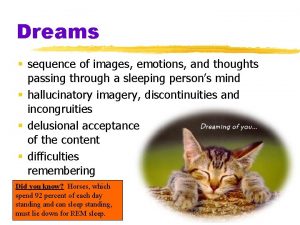
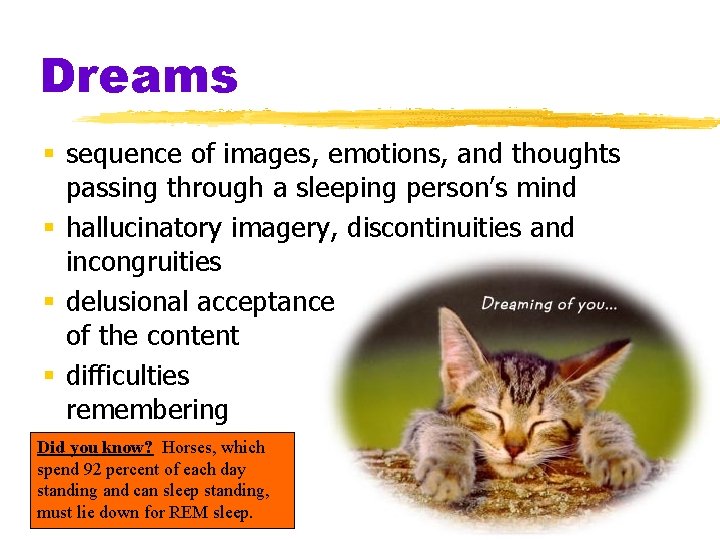
Dreams § sequence of images, emotions, and thoughts passing through a sleeping person’s mind § hallucinatory imagery, discontinuities and incongruities § delusional acceptance of the content § difficulties remembering Did you know? Horses, which spend 92 percent of each day standing and can sleep standing, must lie down for REM sleep.
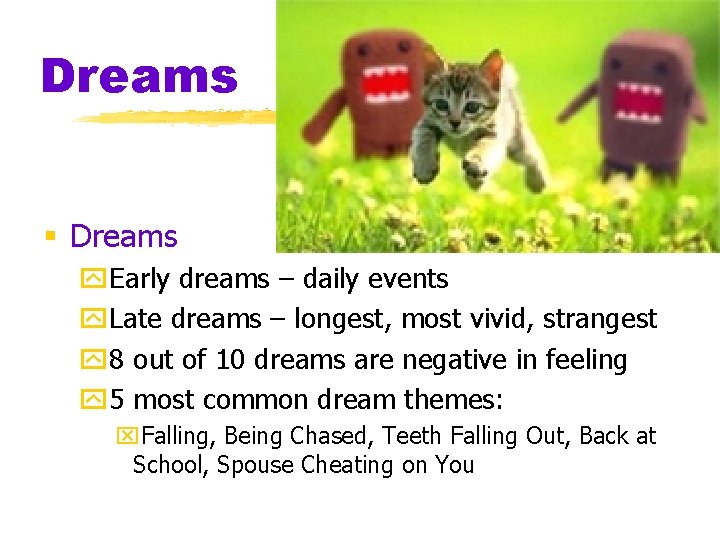
Dreams § Dreams y. Early dreams – daily events y. Late dreams – longest, most vivid, strangest y 8 out of 10 dreams are negative in feeling y 5 most common dream themes: x. Falling, Being Chased, Teeth Falling Out, Back at School, Spouse Cheating on You
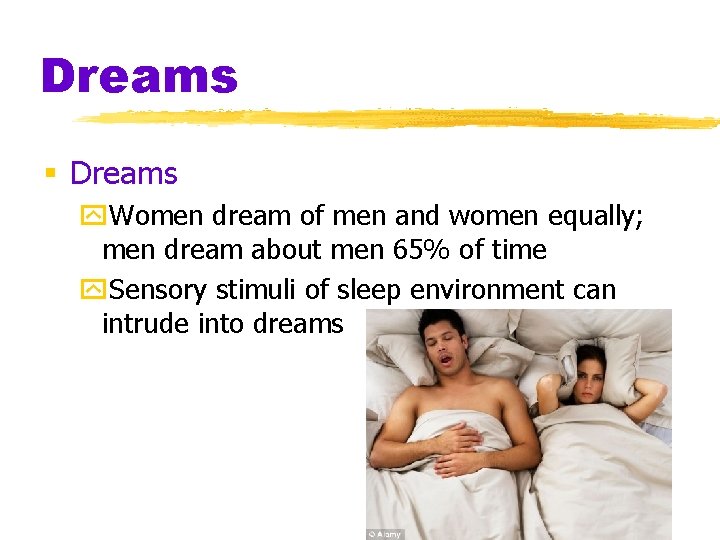
Dreams § Dreams y. Women dream of men and women equally; men dream about men 65% of time y. Sensory stimuli of sleep environment can intrude into dreams
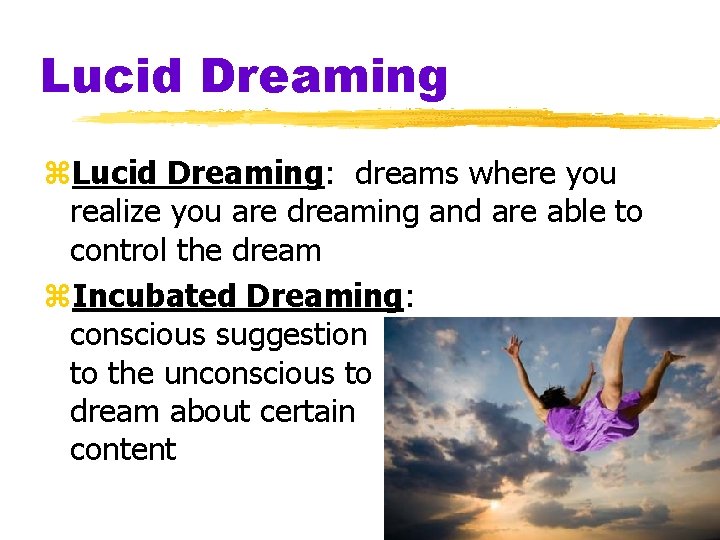
Lucid Dreaming z. Lucid Dreaming: dreams where you realize you are dreaming and are able to control the dream z. Incubated Dreaming: conscious suggestion to the unconscious to dream about certain content
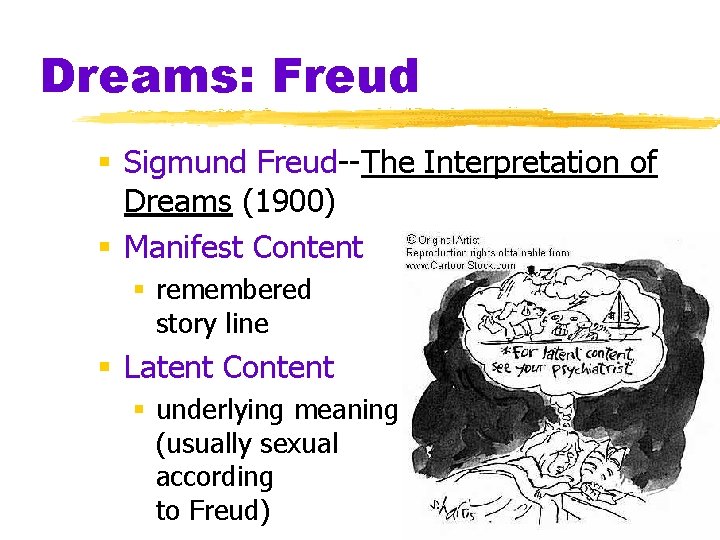
Dreams: Freud § Sigmund Freud--The Interpretation of Dreams (1900) § Manifest Content § remembered story line § Latent Content § underlying meaning (usually sexual according to Freud)
Manifest Content Facts z After suffering a trauma, people commonly report nightmares. Americans who were recording their dreams during September 2001 reported an increase in threatening dreams following 9/11. z After playing the computer game “Tetris” for seven hours and then being awakened repeatedly during their first hour of sleep, 3 in 4 people reported experiencing images of the game’s falling blocks. z People in hunter-gatherer societies often dream of animals; urban Japanese rarely do. z Compared with nonmusicians, musicians report twice as many dreams of music.
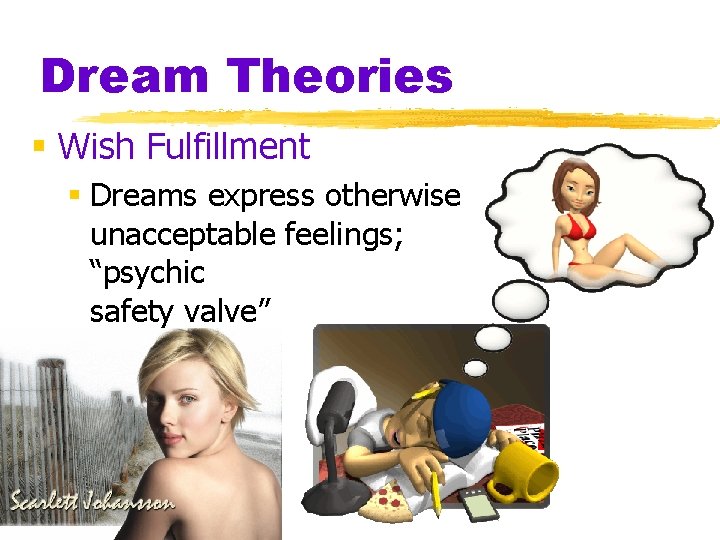
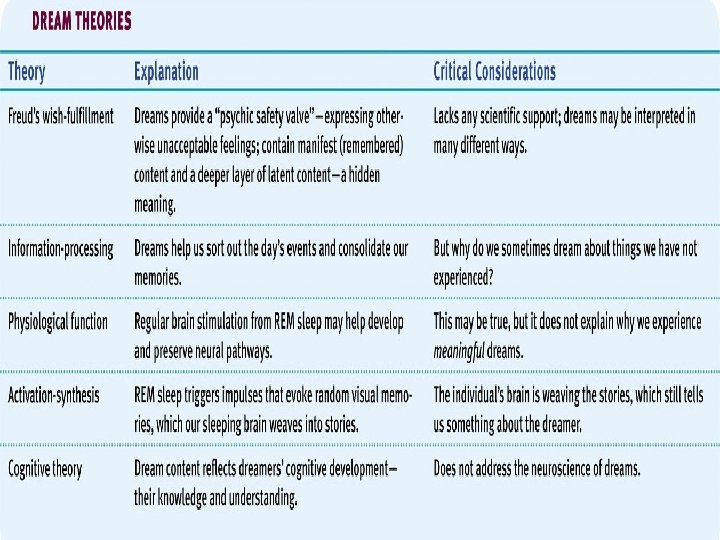
Dream Theories § Wish Fulfillment § Dreams express otherwise unacceptable feelings; “psychic safety valve”
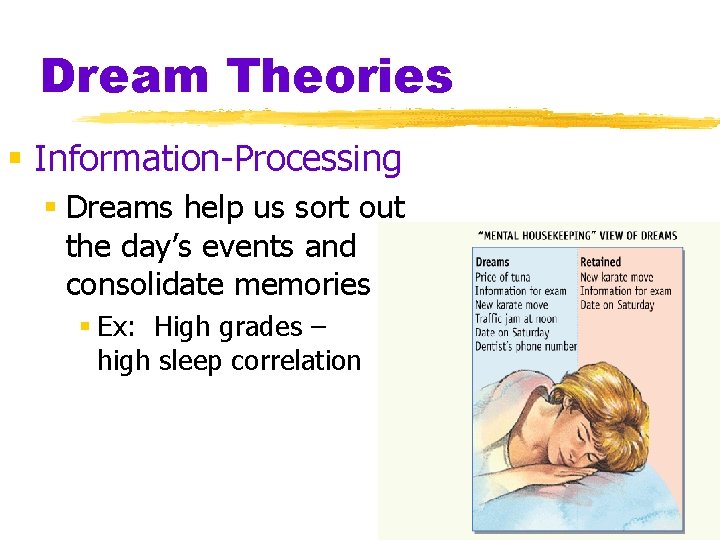
Dream Theories § Information-Processing § Dreams help us sort out the day’s events and consolidate memories § Ex: High grades – high sleep correlation
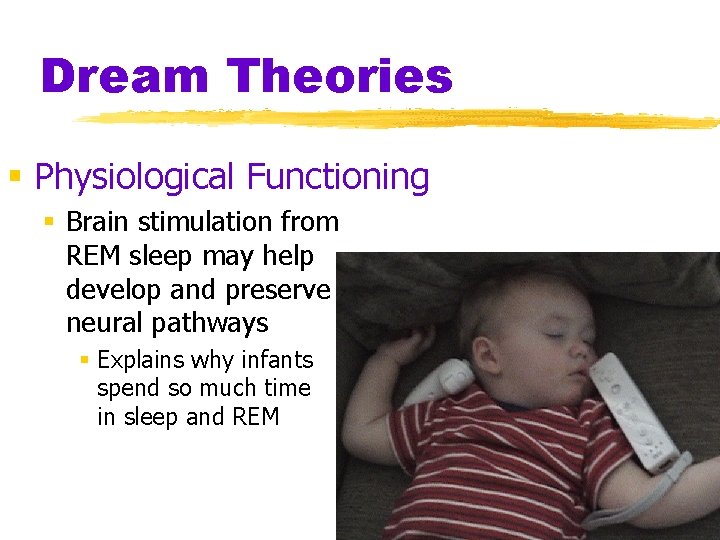
Dream Theories § Physiological Functioning § Brain stimulation from REM sleep may help develop and preserve neural pathways § Explains why infants spend so much time in sleep and REM
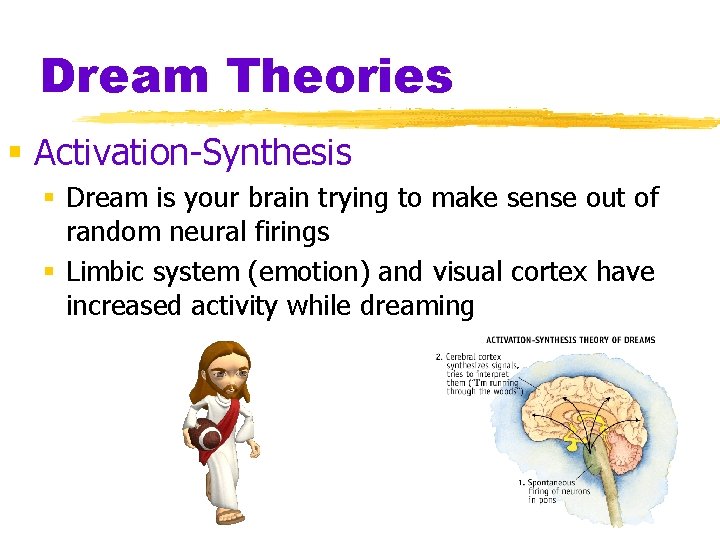
Dream Theories § Activation-Synthesis § Dream is your brain trying to make sense out of random neural firings § Limbic system (emotion) and visual cortex have increased activity while dreaming
Dream Theories § Cognitive Theory § Dream content reflects dreamer’s cognitive development § Children under 9: Dreams are like slideshows that don’t make sense § Older: Coherent storylines in which we are actors