Deodar Weevil Pissodes nemorensis Snout weevils Curculionidae 1
- Slides: 12
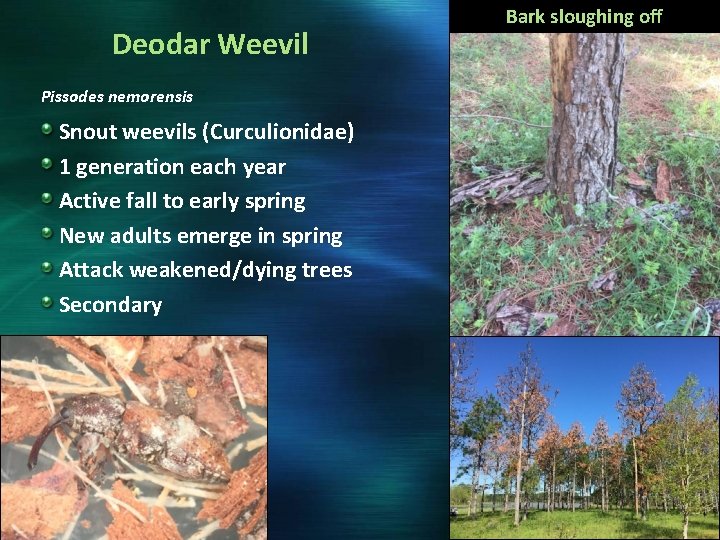
Deodar Weevil Pissodes nemorensis Snout weevils (Curculionidae) 1 generation each year Active fall to early spring New adults emerge in spring Attack weakened/dying trees Secondary Bark sloughing off
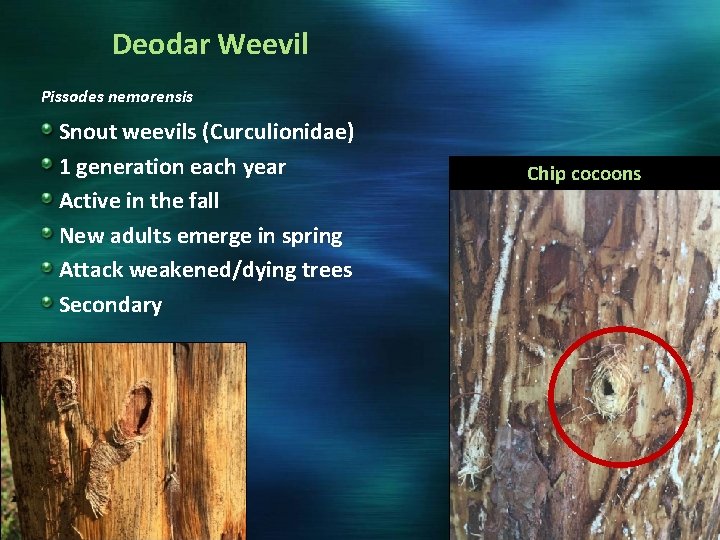
Deodar Weevil Pissodes nemorensis Snout weevils (Curculionidae) 1 generation each year Active in the fall New adults emerge in spring Attack weakened/dying trees Secondary Chip cocoons
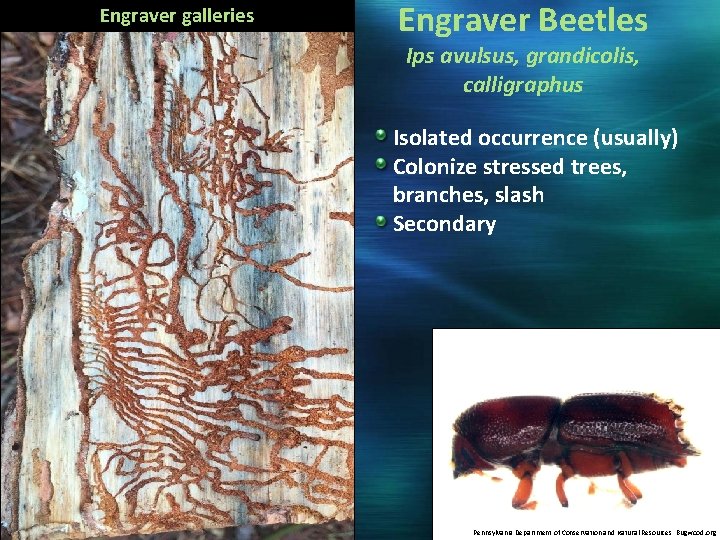
Engraver galleries Engraver Beetles Ips avulsus, grandicolis, calligraphus Isolated occurrence (usually) Colonize stressed trees, branches, slash Secondary Pennsylvaniaof. Department of and Conservation and Natural Resources Pennsylvania Department Conservation Natural Resources, Bugwood. org
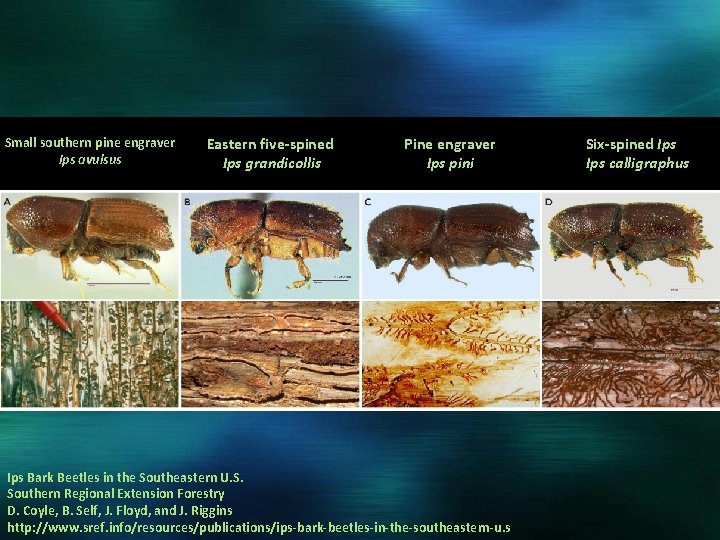
Small southern pine engraver Ips avulsus Eastern five-spined Ips grandicollis Pine engraver Ips pini Ips Bark Beetles in the Southeastern U. S. Southern Regional Extension Forestry D. Coyle, B. Self, J. Floyd, and J. Riggins http: //www. sref. info/resources/publications/ips-bark-beetles-in-the-southeastern-u. s Six-spined Ips calligraphus
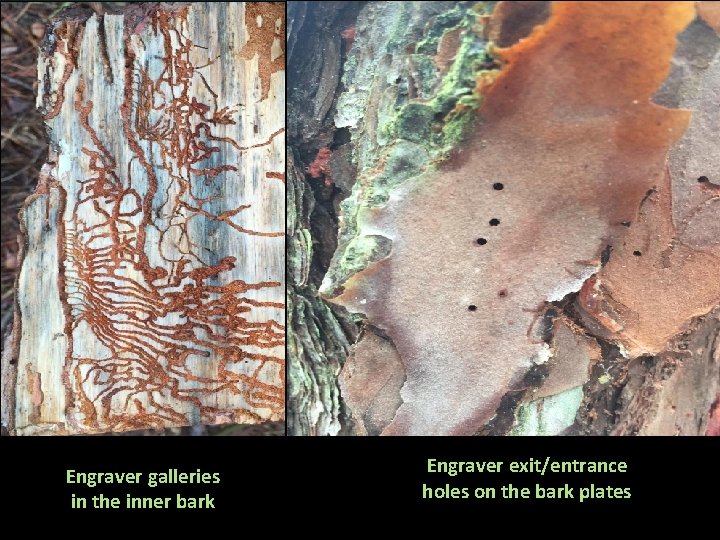
Engraver Beetles Ips avulsus, grandicolis, calligraphus Colonize stressed trees, braches, slash Stressed trees Isolated occurrence Engraver galleries in the inner bark Engraver exit/entrance holes on the bark plates
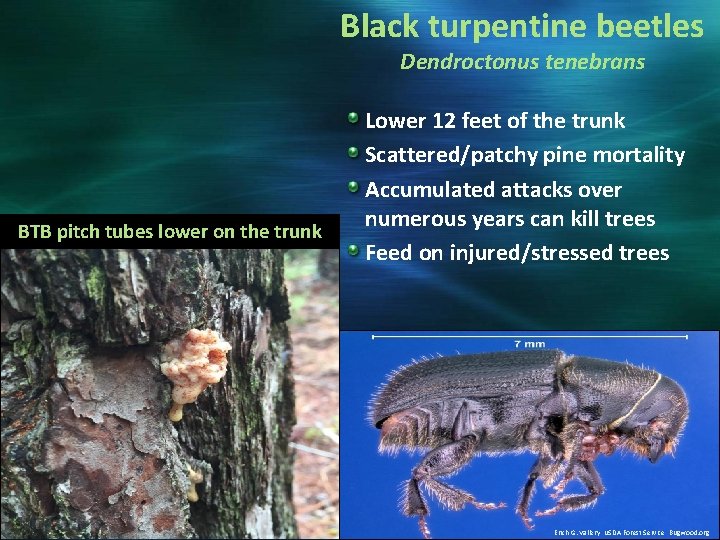
Black turpentine beetles Dendroctonus tenebrans BTB pitch tubes lower on the trunk Lower 12 feet of the trunk Scattered/patchy pine mortality Accumulated attacks over numerous years can kill trees Feed on injured/stressed trees Erich G. Vallery, USDA Forest Service, Bugwood. org
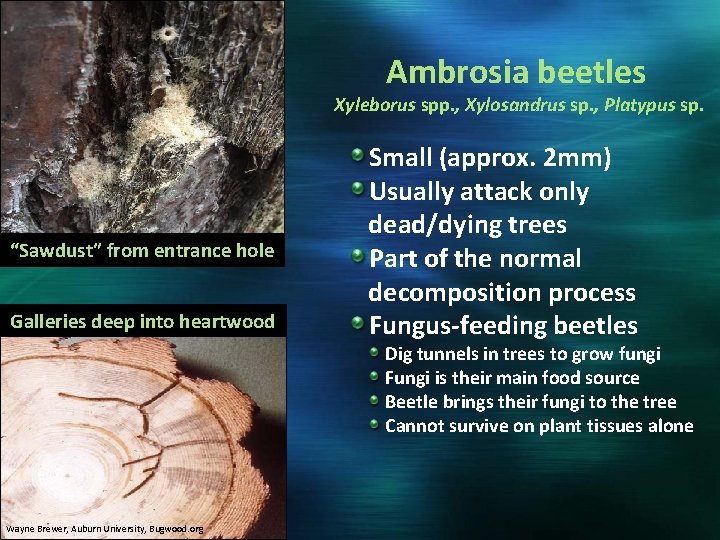
Ambrosia beetles Xyleborus spp. , Xylosandrus sp. , Platypus sp. “Sawdust” from entrance hole Galleries deep into heartwood Small (approx. 2 mm) Usually attack only dead/dying trees Part of the normal decomposition process Fungus-feeding beetles Dig tunnels in trees to grow fungi Fungi is their main food source Beetle brings their fungi to the tree Cannot survive on plant tissues alone Wayne Brewer, Auburn University, Bugwood. org
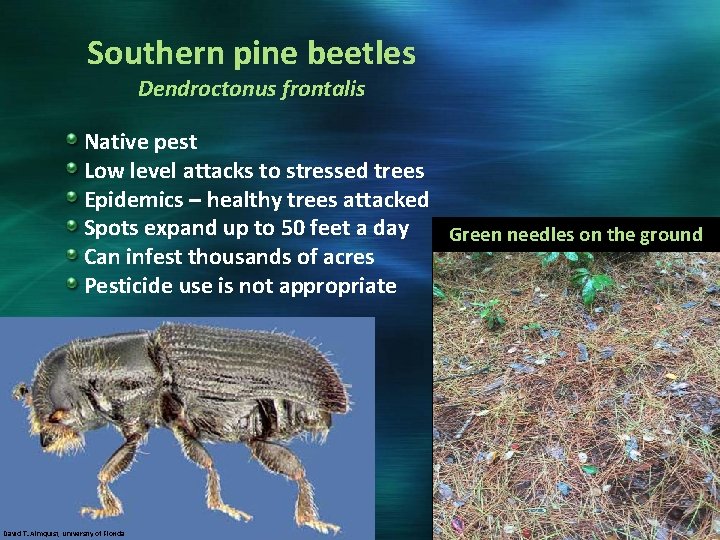
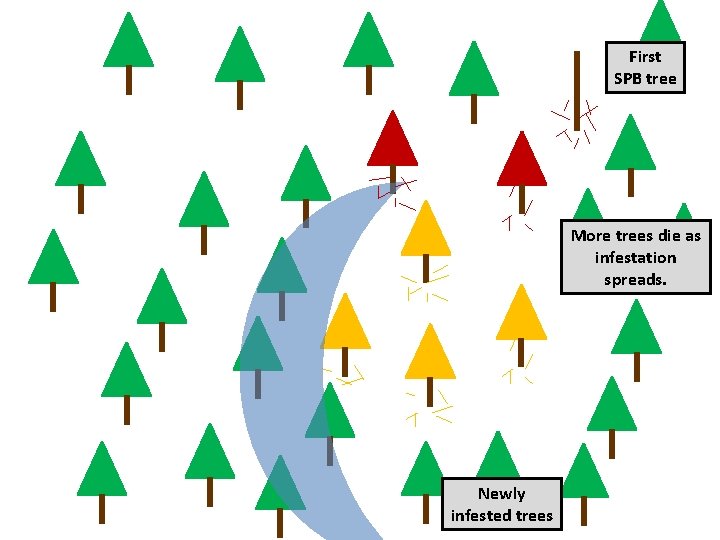
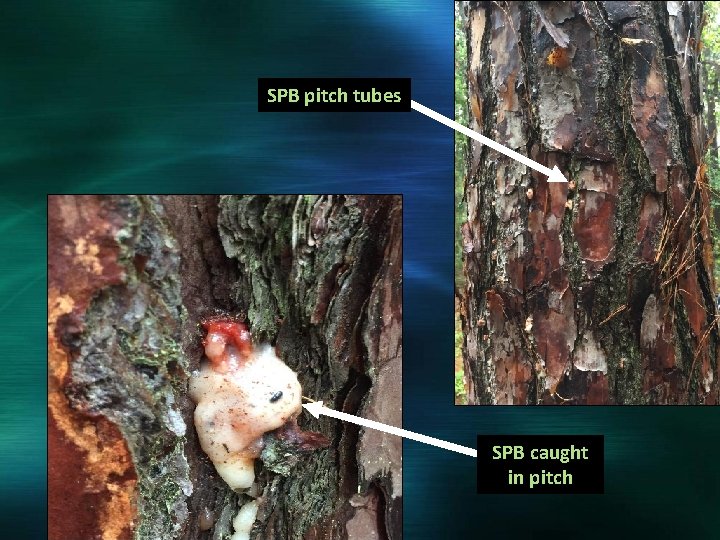
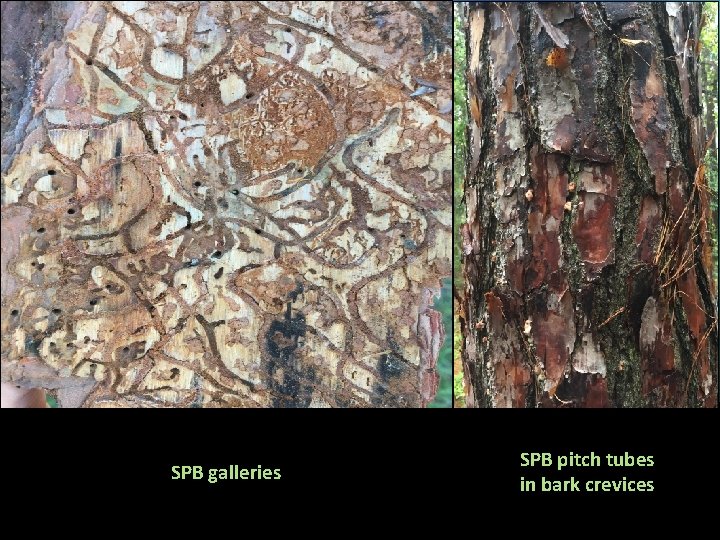
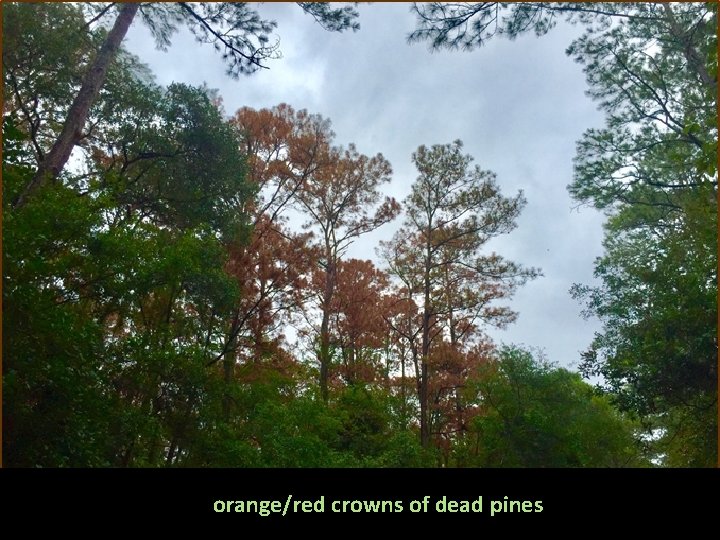
Southern pine beetles Dendroctonus frontalis Native pest Low level attacks to stressed trees Epidemics – healthy trees attacked Spots expand up to 50 feet a day Green needles on the ground Can infest thousands of acres Pesticide use is not appropriate David T. Almquist, University of Florida
First SPB tree More trees die as infestation spreads. Newly infested trees
SPB pitch tubes SPB caught in pitch
SPB galleries SPB pitch tubes in bark crevices
orange/red crowns of dead pines