Delivering effective clinical harm reviews Prof Andrew Chilton


- Slides: 24
Delivering effective clinical harm reviews Prof Andrew Chilton MD KGH FT Dr Sanjay Ghardia GP Corby CCG Ms Clare Smith Harm Coordinator KGH FT
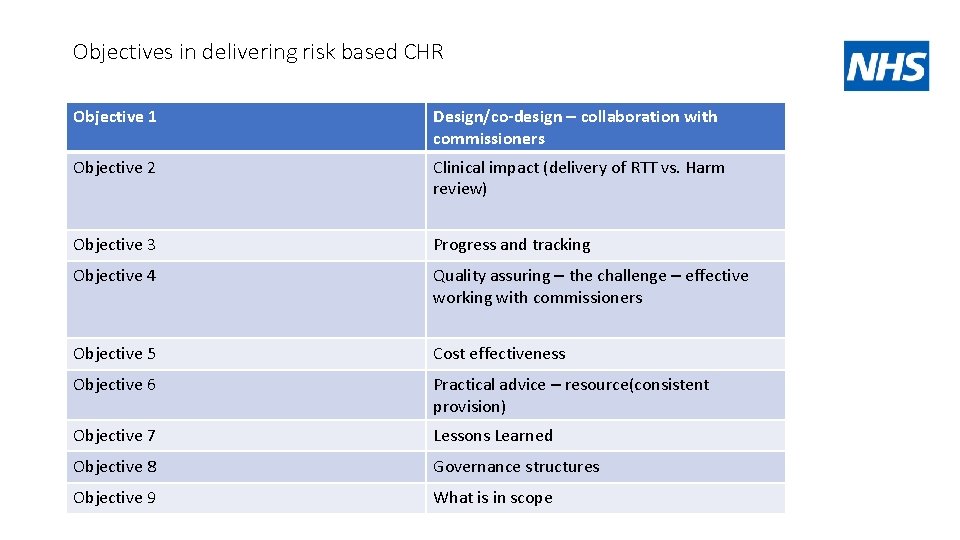
Objectives in delivering risk based CHR Objective 1 Design/co-design – collaboration with commissioners Objective 2 Clinical impact (delivery of RTT vs. Harm review) Objective 3 Progress and tracking Objective 4 Quality assuring – the challenge – effective working with commissioners Objective 5 Cost effectiveness Objective 6 Practical advice – resource(consistent provision) Objective 7 Lessons Learned Objective 8 Governance structures Objective 9 What is in scope
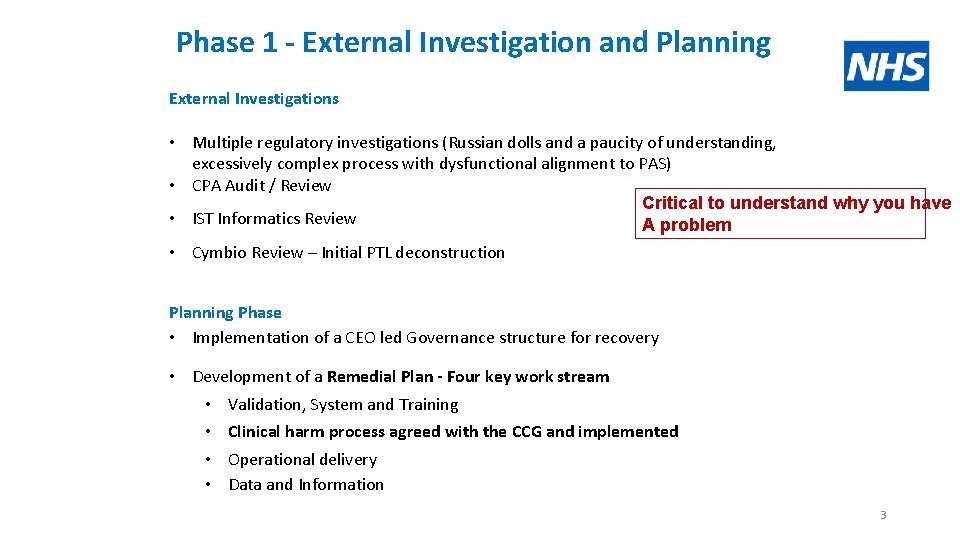
Phase 1 - External Investigation and Planning External Investigations • Multiple regulatory investigations (Russian dolls and a paucity of understanding, excessively complex process with dysfunctional alignment to PAS) • CPA Audit / Review Critical to understand why you have • IST Informatics Review A problem • Cymbio Review – Initial PTL deconstruction Planning Phase • Implementation of a CEO led Governance structure for recovery • Development of a Remedial Plan - Four key work stream • Validation, System and Training • Clinical harm process agreed with the CCG and implemented • Operational delivery • Data and Information 3
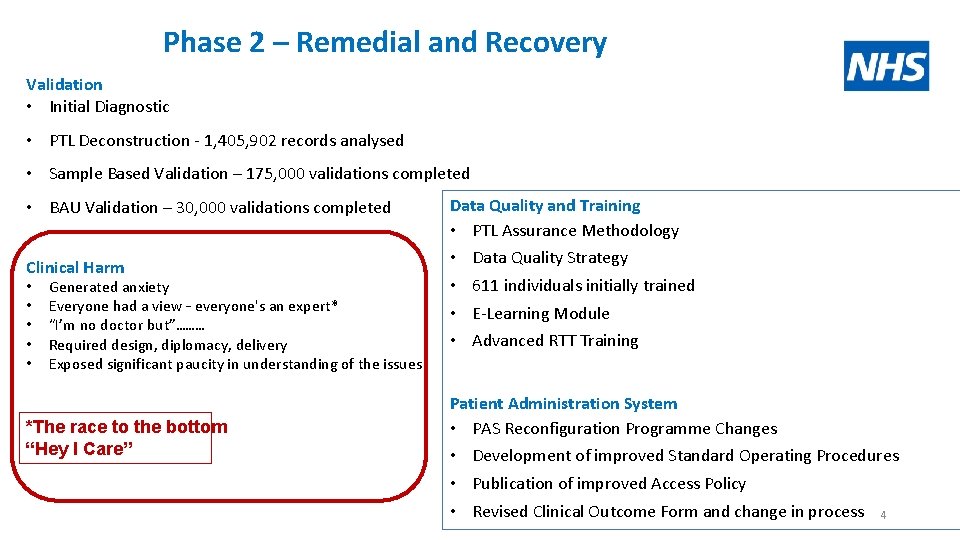
Phase 2 – Remedial and Recovery Validation • Initial Diagnostic • PTL Deconstruction - 1, 405, 902 records analysed • Sample Based Validation – 175, 000 validations completed • BAU Validation – 30, 000 validations completed Data Quality and Training • PTL Assurance Methodology Clinical Harm • • • Generated anxiety Everyone had a view – everyone's an expert* “I’m no doctor but”……… Required design, diplomacy, delivery Exposed significant paucity in understanding of the issues *The race to the bottom “Hey I Care” Data Quality Strategy 611 individuals initially trained E-Learning Module Advanced RTT Training Patient Administration System • PAS Reconfiguration Programme Changes • Development of improved Standard Operating Procedures • Publication of improved Access Policy • Revised Clinical Outcome Form and change in process 4
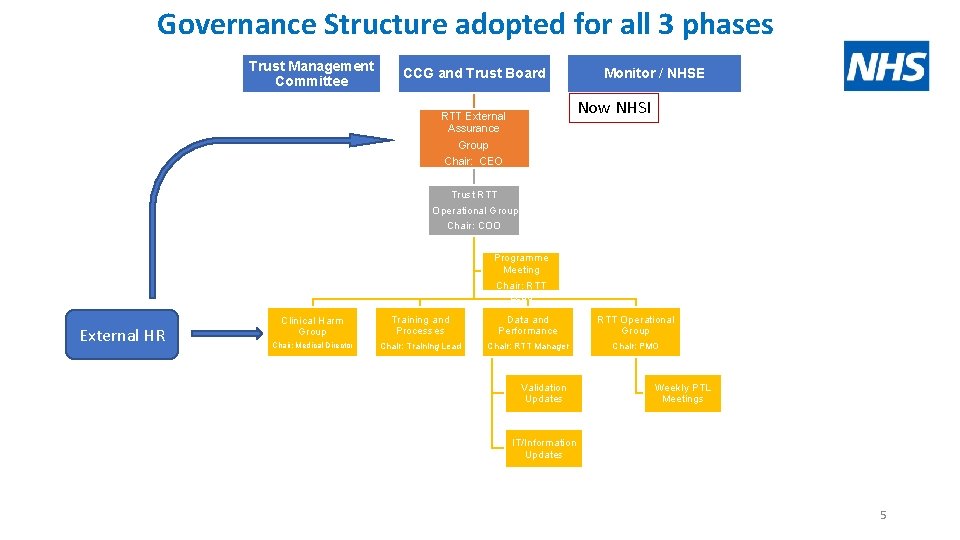
Governance Structure adopted for all 3 phases Trust Management Committee CCG and Trust Board Monitor / NHSE Now NHSI RTT External Assurance Group Chair: CEO Trust RTT Operational Group Chair: COO RTT Programme Meeting Chair: RTT Lead External HR Clinical Harm Group Training and Processes Data and Performance RTT Operational Group Chair: Medical Director Chair: Training Lead Chair: RTT Manager Chair: PMO Validation Updates Weekly PTL Meetings IT/Information Updates 5
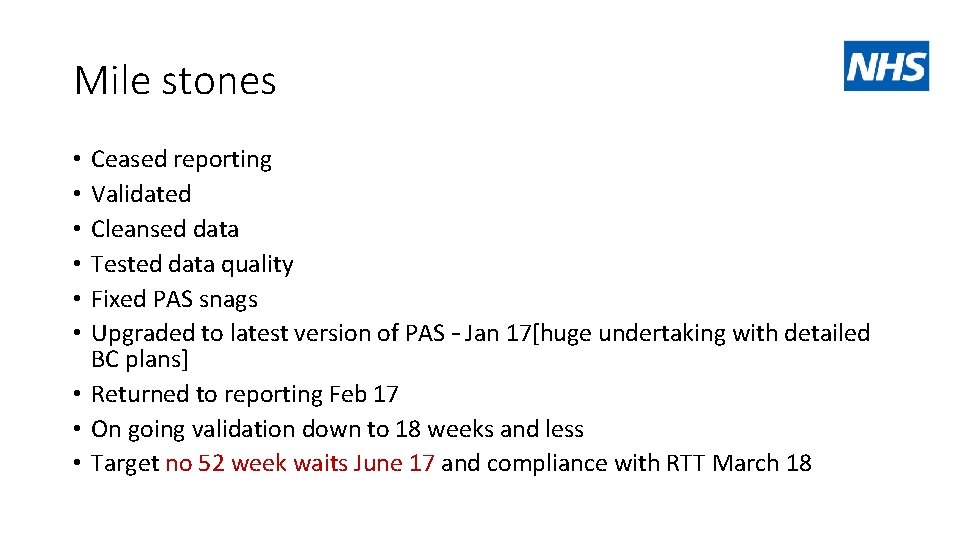
Mile stones Ceased reporting Validated Cleansed data Tested data quality Fixed PAS snags Upgraded to latest version of PAS – Jan 17[huge undertaking with detailed BC plans] • Returned to reporting Feb 17 • On going validation down to 18 weeks and less • Target no 52 week waits June 17 and compliance with RTT March 18 • • •
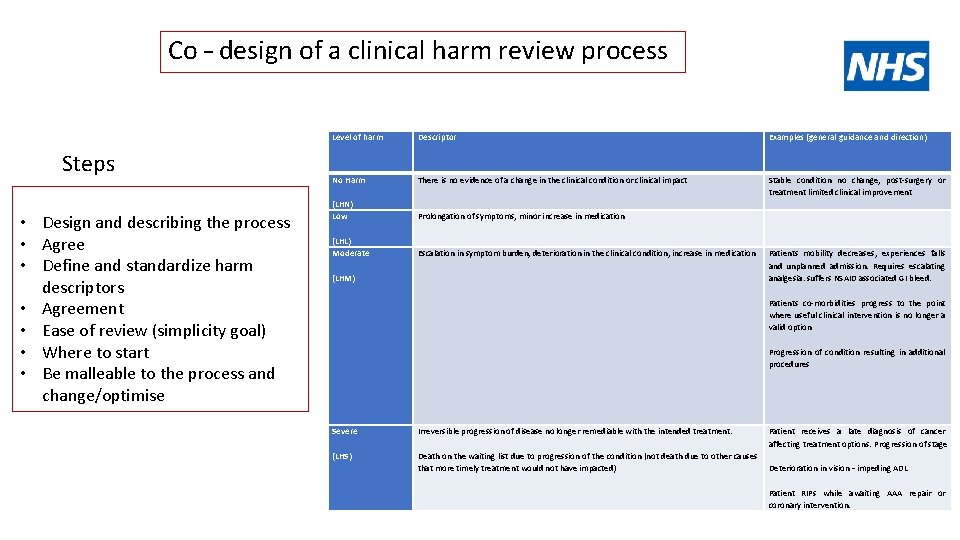
Co – design of a clinical harm review process Steps • Design and describing the process • Agree • Define and standardize harm descriptors • Agreement • Ease of review (simplicity goal) • Where to start • Be malleable to the process and change/optimise Level of harm Descriptor Examples (general guidance and direction) No Harm There is no evidence of a change in the clinical condition or clinical impact Stable condition no change, post-surgery or treatment limited clinical improvement (LHN) Low Prolongation of symptoms, minor increase in medication (LHL) Moderate Escalation in symptom burden, deterioration in the clinical condition, increase in medication Patients mobility decreases, experiences falls and unplanned admission. Requires escalating analgesia. suffers NSAID associated GI bleed. (LHM) Patients co-morbidities progress to the point where useful clinical intervention is no longer a valid option Progression of condition resulting in additional procedures Severe Irreversible progression of disease no longer remediable with the intended treatment. Patient receives a late diagnosis of cancer affecting treatment options. Progression of stage (LHS) Death on the waiting list due to progression of the condition (not death due to other causes that more timely treatment would not have impacted) Deterioration in vision – impeding ADL Patient RIPs while awaiting AAA repair or coronary intervention.
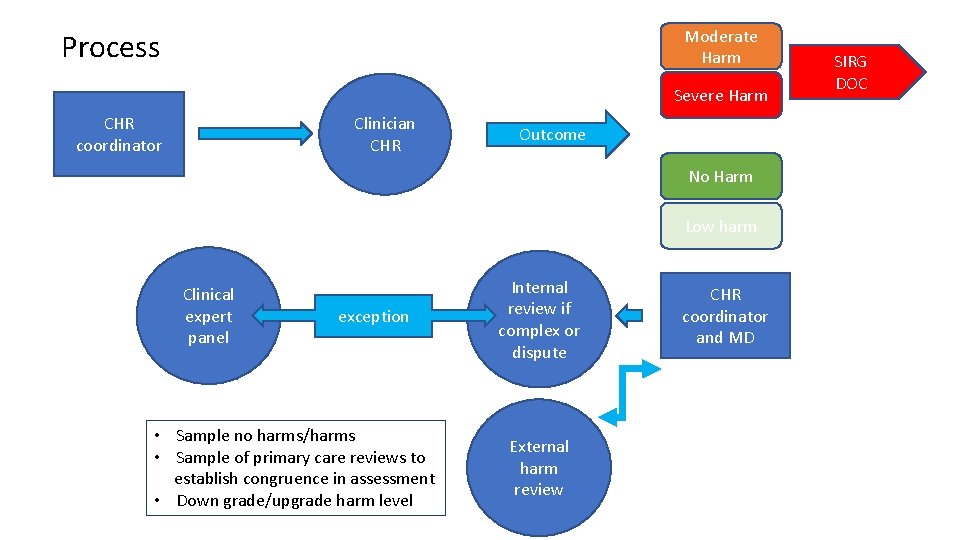
Moderate Harm Process Severe Harm CHR coordinator Clinician CHR Outcome No Harm Low harm Clinical expert panel exception • Sample no harms/harms • Sample of primary care reviews to establish congruence in assessment • Down grade/upgrade harm level Internal review if complex or dispute External harm review CHR coordinator and MD SIRG DOC
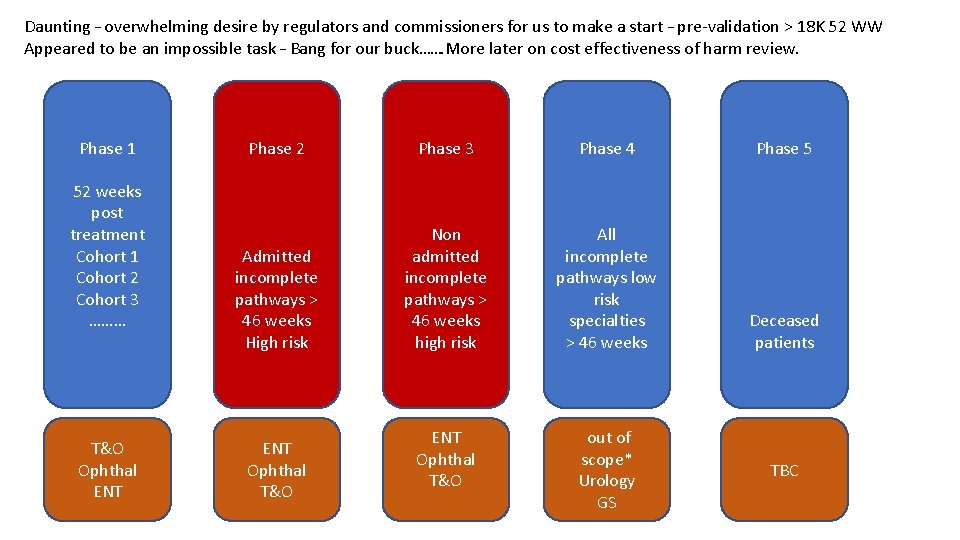
Daunting – overwhelming desire by regulators and commissioners for us to make a start – pre-validation > 18 K 52 WW Appeared to be an impossible task – Bang for our buck……. More later on cost effectiveness of harm review. Phase 1 52 weeks post treatment Cohort 1 Cohort 2 Cohort 3 ……… T&O Ophthal ENT Phase 2 Phase 3 Phase 4 Phase 5 Admitted incomplete pathways > 46 weeks High risk Non admitted incomplete pathways > 46 weeks high risk All incomplete pathways low risk specialties > 46 weeks Deceased patients ENT Ophthal T&O out of scope* Urology GS ENT Ophthal T&O TBC
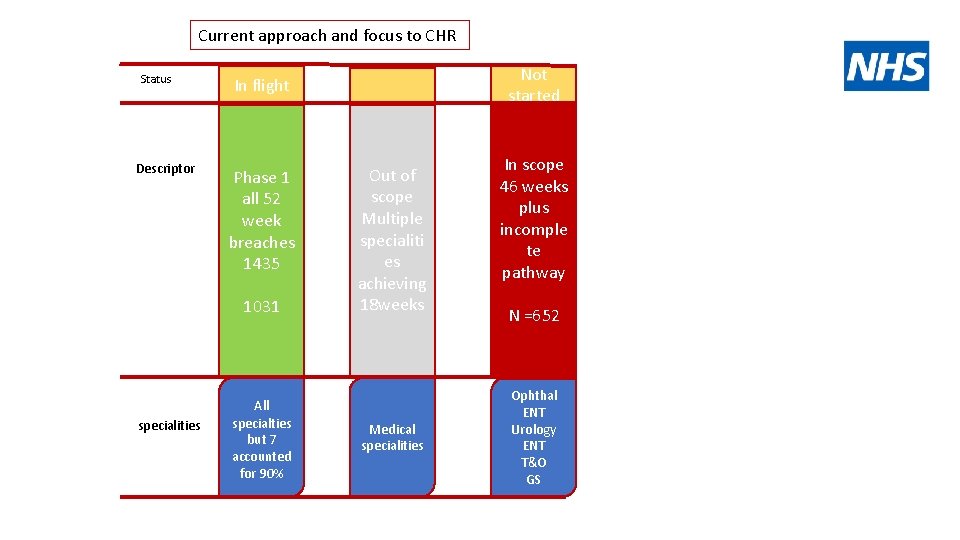
Current approach and focus to CHR Status Descriptor Phase 1 all 52 week breaches 1435 1031 specialities Not started In flight All specialties but 7 accounted for 90% Out of scope Multiple specialiti es achieving 18 weeks Medical specialities In scope 46 weeks plus incomple te pathway N =652 Ophthal ENT Urology ENT T&O GS
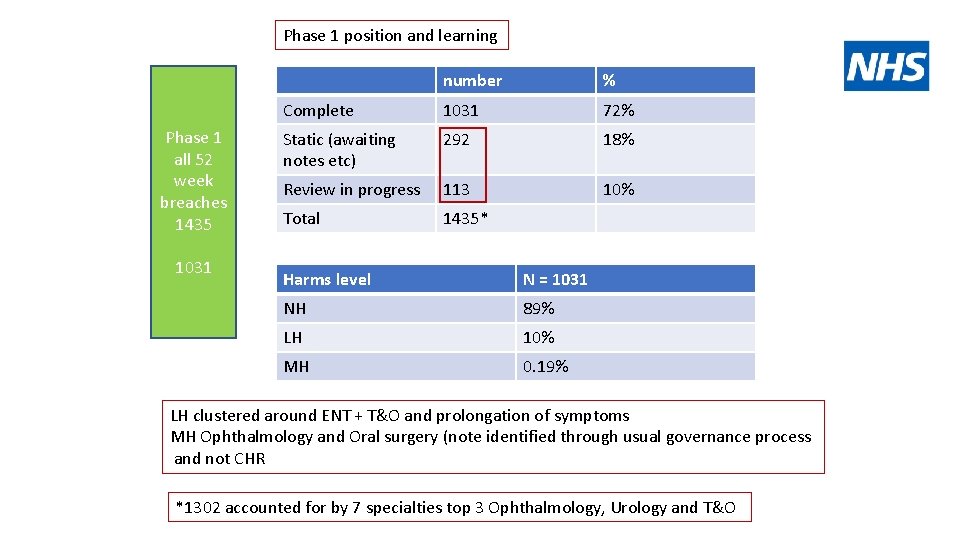
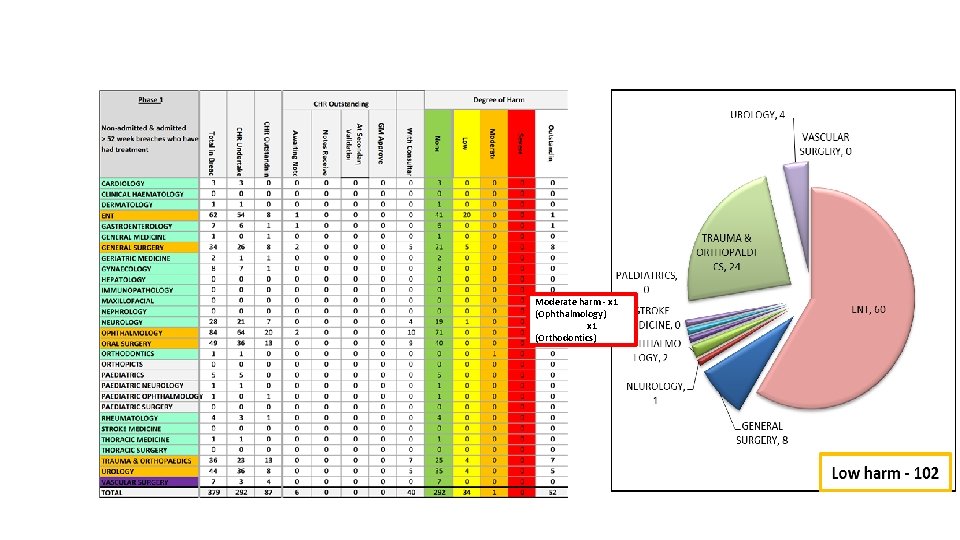
Phase 1 position and learning Phase 1 all 52 week breaches 1435 1031 number % Complete 1031 72% Static (awaiting notes etc) 292 18% Review in progress 113 10% Total 1435* Harms level N = 1031 NH 89% LH 10% MH 0. 19% LH clustered around ENT + T&O and prolongation of symptoms MH Ophthalmology and Oral surgery (note identified through usual governance process and not CHR *1302 accounted for by 7 specialties top 3 Ophthalmology, Urology and T&O
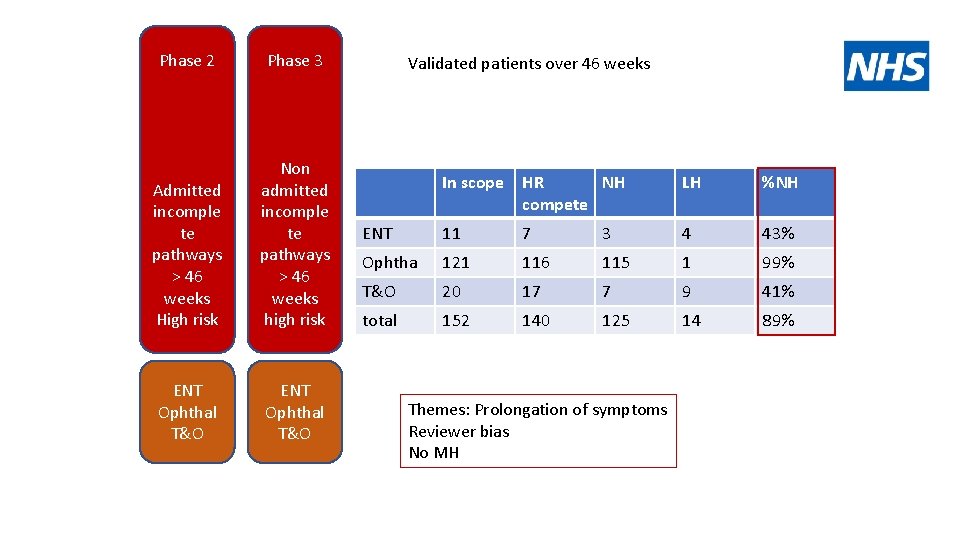
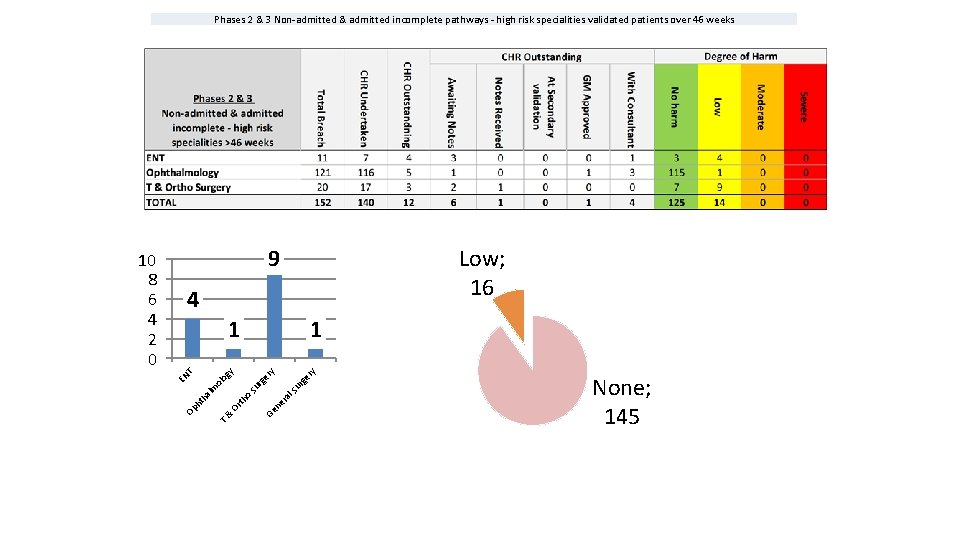
Phase 2 Phase 3 Admitted incomple te pathways > 46 weeks High risk Non admitted incomple te pathways > 46 weeks high risk ENT Ophthal T&O Validated patients over 46 weeks In scope HR NH compete LH %NH ENT 11 7 3 4 43% Ophtha 121 116 115 1 99% T&O 20 17 7 9 41% total 152 140 125 14 89% Themes: Prolongation of symptoms Reviewer bias No MH
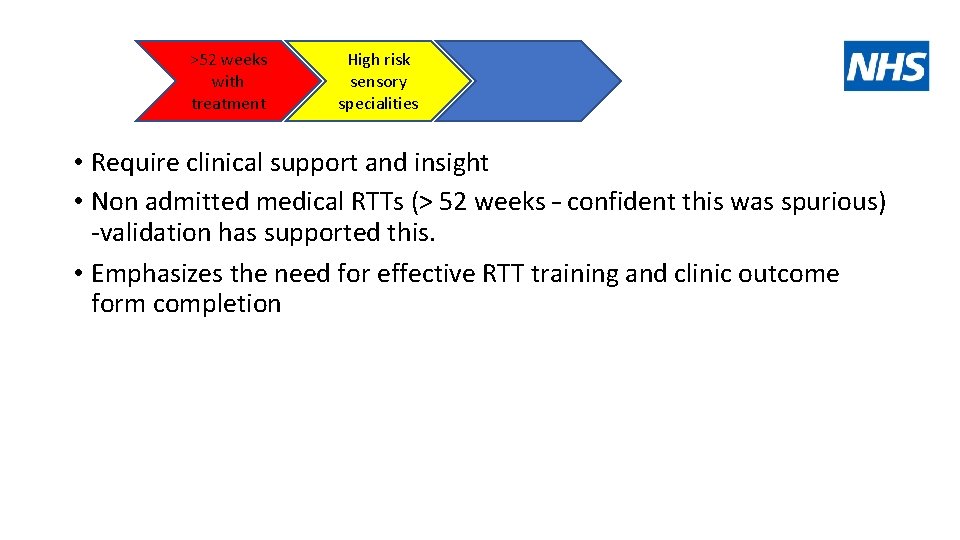
>52 weeks with treatment High risk sensory specialities • Require clinical support and insight • Non admitted medical RTTs (> 52 weeks – confident this was spurious) -validation has supported this. • Emphasizes the need for effective RTT training and clinic outcome form completion
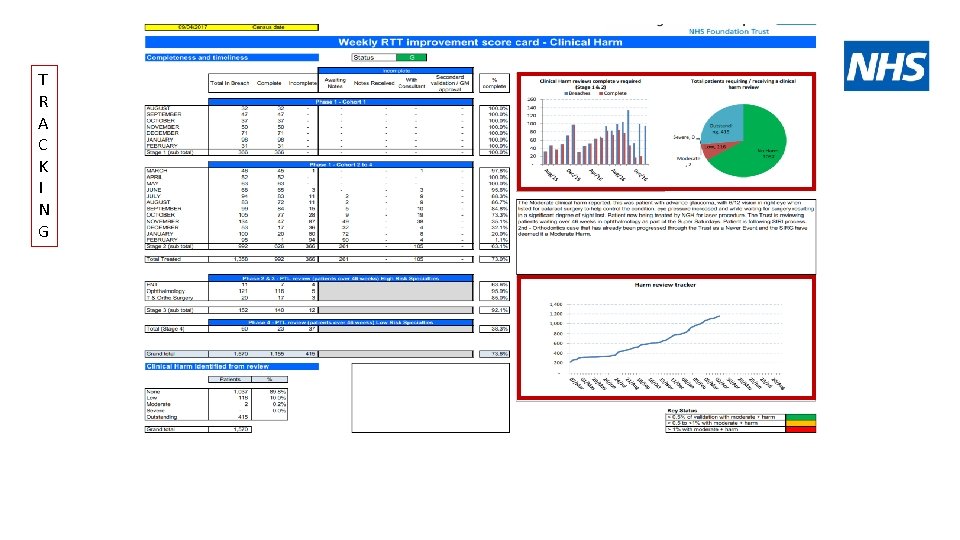
T R A C K I N G
Moderate harm - x 1 (Ophthalmology) x 1 (Orthodontics)
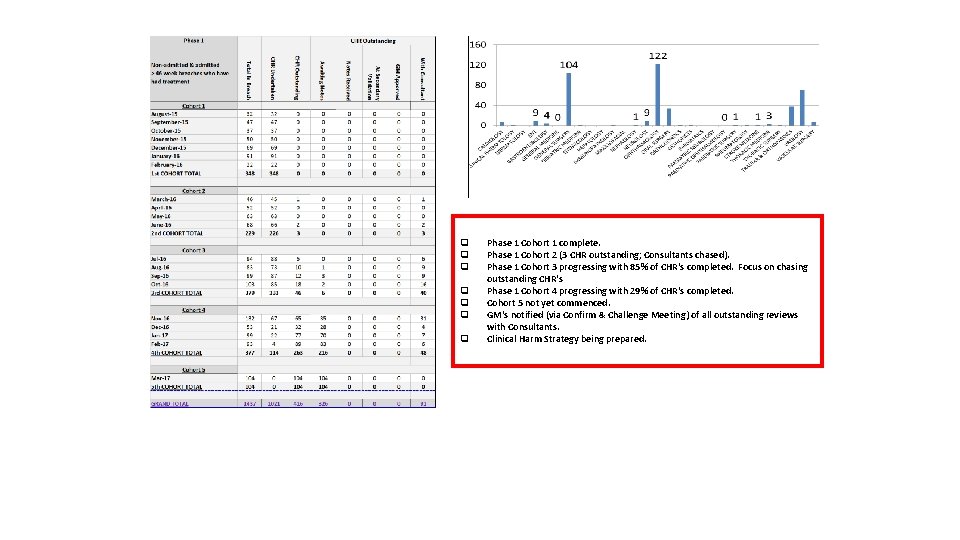
Phase 1 Cohort 1 complete. Phase 1 Cohort 2 (3 CHR outstanding; Consultants chased). Phase 1 Cohort 3 progressing with 85% of CHR's completed. Focus on chasing outstanding CHR's Phase 1 Cohort 4 progressing with 29% of CHR's completed. Cohort 5 not yet commenced. GM's notified (via Confirm & Challenge Meeting) of all outstanding reviews with Consultants. Clinical Harm Strategy being prepared.
Phases 2 & 3 Non-admitted & admitted incomplete pathways - high risk specialities validated patients over 46 weeks Low; 16 9 4 y er rg ne r al Su Su rg er y Ge T & O r th ha ht 1 o lm ol EN og T y 1 Op 10 8 6 4 2 0 None; 145
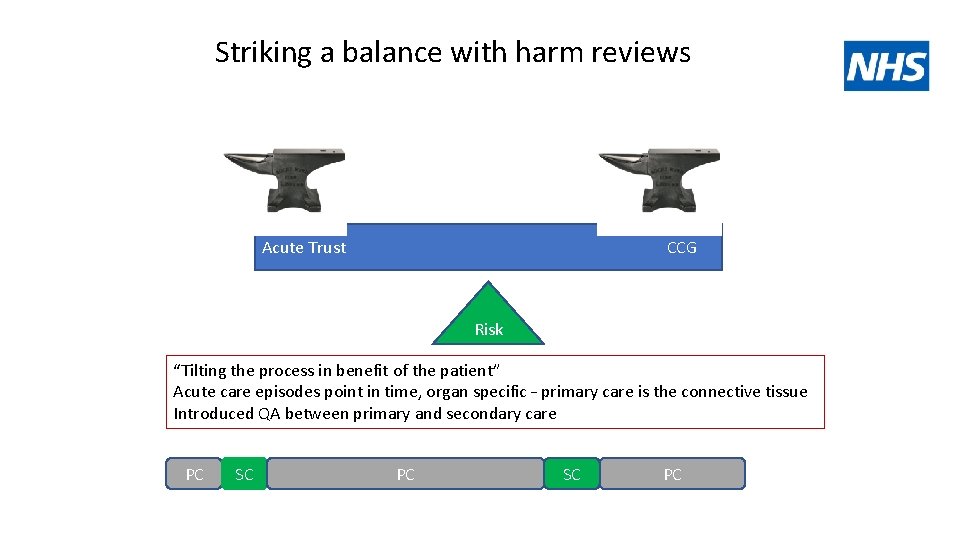
Striking a balance with harm reviews Acute Trust CCG Risk “Tilting the process in benefit of the patient” Acute care episodes point in time, organ specific – primary care is the connective tissue Introduced QA between primary and secondary care PC SC PC
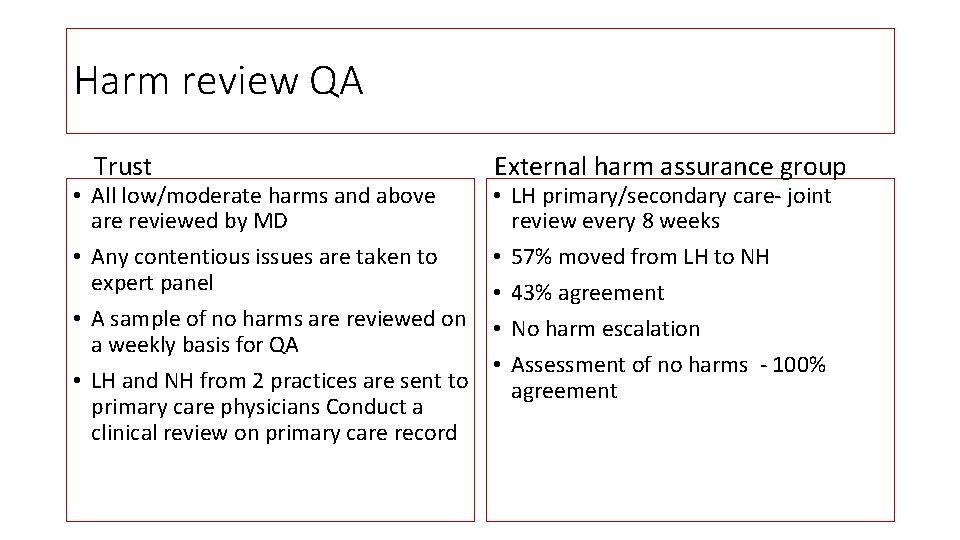
Harm review QA Trust External harm assurance group • All low/moderate harms and above are reviewed by MD • Any contentious issues are taken to expert panel • A sample of no harms are reviewed on a weekly basis for QA • LH and NH from 2 practices are sent to primary care physicians Conduct a clinical review on primary care record • LH primary/secondary care- joint review every 8 weeks • 57% moved from LH to NH • 43% agreement • No harm escalation • Assessment of no harms - 100% agreement
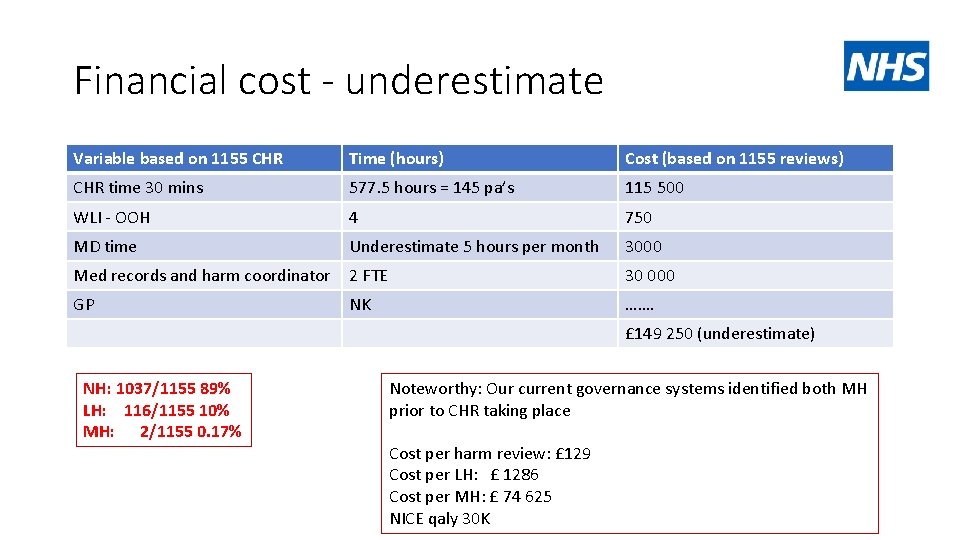
Financial cost - underestimate Variable based on 1155 CHR Time (hours) Cost (based on 1155 reviews) CHR time 30 mins 577. 5 hours = 145 pa’s 115 500 WLI - OOH 4 750 MD time Underestimate 5 hours per month 3000 Med records and harm coordinator 2 FTE 30 000 GP NK ……. £ 149 250 (underestimate) NH: 1037/1155 89% LH: 116/1155 10% MH: 2/1155 0. 17% Noteworthy: Our current governance systems identified both MH prior to CHR taking place Cost per harm review: £ 129 Cost per LH: £ 1286 Cost per MH: £ 74 625 NICE qaly 30 K
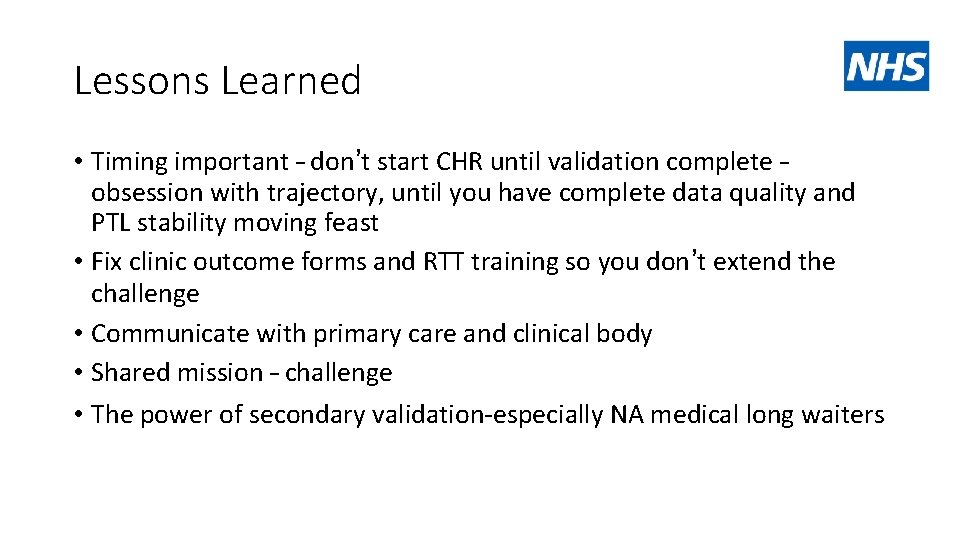
Lessons Learned • Timing important – don’t start CHR until validation complete – obsession with trajectory, until you have complete data quality and PTL stability moving feast • Fix clinic outcome forms and RTT training so you don’t extend the challenge • Communicate with primary care and clinical body • Shared mission – challenge • The power of secondary validation-especially NA medical long waiters