Dapagliflozin in Patients with Chronic Kidney Disease DAPACKD


- Slides: 6
Dapagliflozin in Patients with Chronic Kidney Disease DAPA-CKD Hiddo J. L. Heerspink, Bergur V. Stefansson, Glenn M. Chertow, Ricardo Correa. Rotter, Tom Greene, Fan Hou, Magnus Lindberg, John Mc. Murray, Peter Rossing, Roberto Toto, David Sjöström, Anna Maria Langkilde and David C. Wheeler; for the DAPA-CKD Investigators Source of funding: Astra. Zeneca
Disclosures • HJLH is a consultant for Abb. Vie, Astra. Zeneca, Bayer, Boehringer Ingelheim, Chinook, CSL Pharma, Gilead, Janssen, Merck, Mundi Pharma, Mitsubishi Tanabe, Novo Nordisk, and Retrophin. • He has received research support from Abbvie, Astra. Zeneca, Boehringer Ingelheim and Janssen
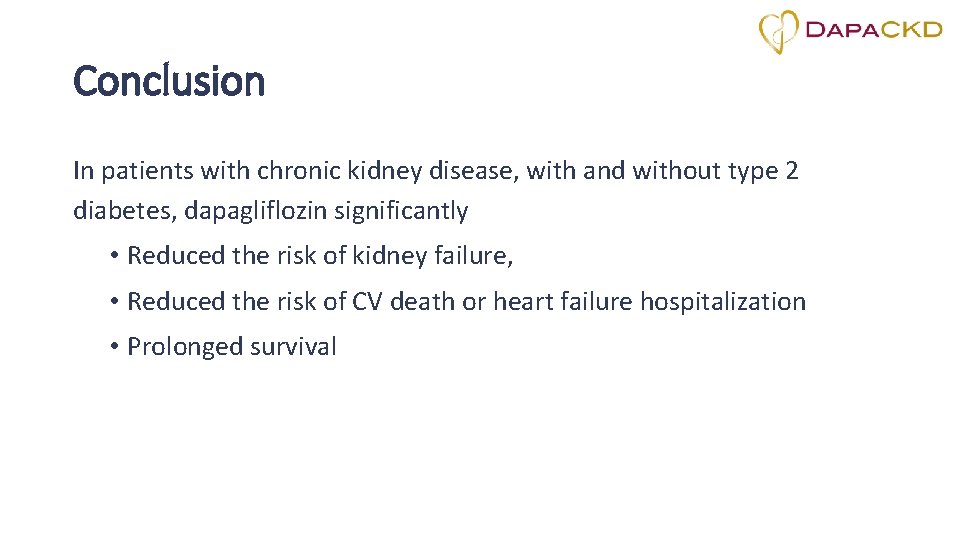
Conclusion In patients with chronic kidney disease, with and without type 2 diabetes, dapagliflozin significantly • Reduced the risk of kidney failure, • Reduced the risk of CV death or heart failure hospitalization • Prolonged survival
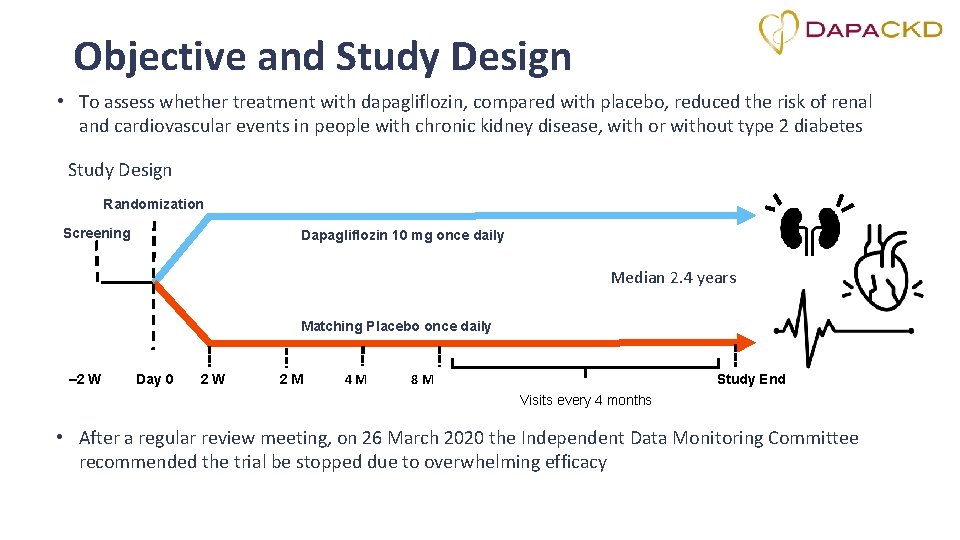
Objective and Study Design • To assess whether treatment with dapagliflozin, compared with placebo, reduced the risk of renal and cardiovascular events in people with chronic kidney disease, with or without type 2 diabetes Study Design Randomization Screening Dapagliflozin 10 mg once daily Median 2. 4 years Matching Placebo once daily – 2 W Day 0 2 W 2 M 4 M 8 M Study End Visits every 4 months • After a regular review meeting, on 26 March 2020 the Independent Data Monitoring Committee recommended the trial be stopped due to overwhelming efficacy
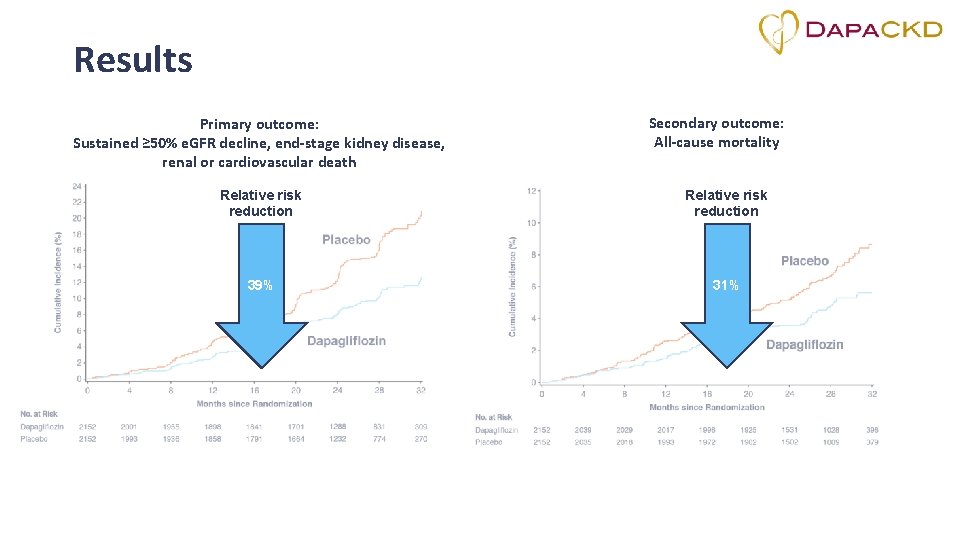
Results Primary outcome: Sustained ≥ 50% e. GFR decline, end-stage kidney disease, renal or cardiovascular death Secondary outcome: All-cause mortality Relative risk reduction 39% 31%
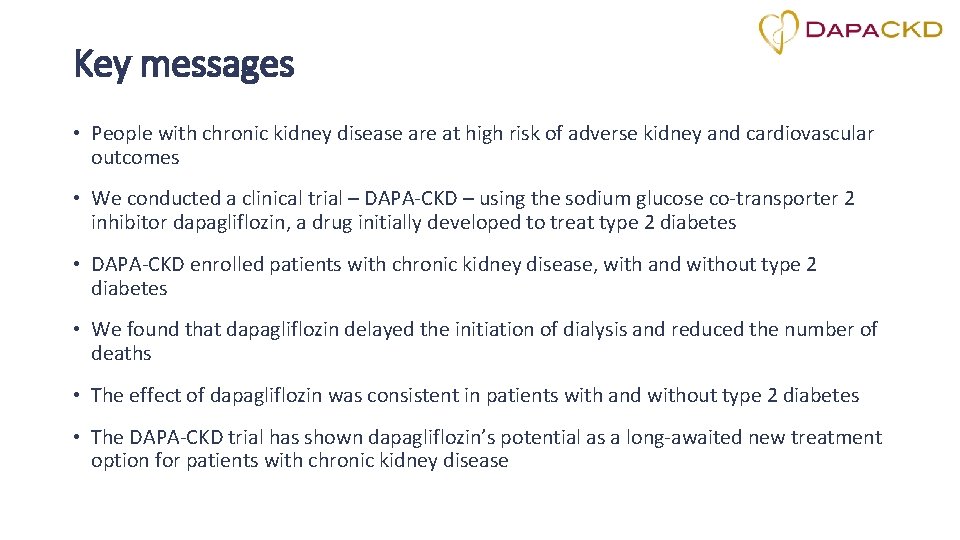
Key messages • People with chronic kidney disease are at high risk of adverse kidney and cardiovascular outcomes • We conducted a clinical trial – DAPA-CKD – using the sodium glucose co-transporter 2 inhibitor dapagliflozin, a drug initially developed to treat type 2 diabetes • DAPA-CKD enrolled patients with chronic kidney disease, with and without type 2 diabetes • We found that dapagliflozin delayed the initiation of dialysis and reduced the number of deaths • The effect of dapagliflozin was consistent in patients with and without type 2 diabetes • The DAPA-CKD trial has shown dapagliflozin’s potential as a long-awaited new treatment option for patients with chronic kidney disease