COURSE CODE NFE 413 COURSE TITLE FOOD PRESERVATION



- Slides: 24
COURSE CODE: NFE 413 COURSE TITLE: FOOD PRESERVATION &ENGINEERING. Course Instructor: Juwel Rana Lecturer Dept. of Nutrition & Food Engineering Daffodil International University. Mobile: 01761282959 E-mail: juwel. nfe@diu. edu. bd
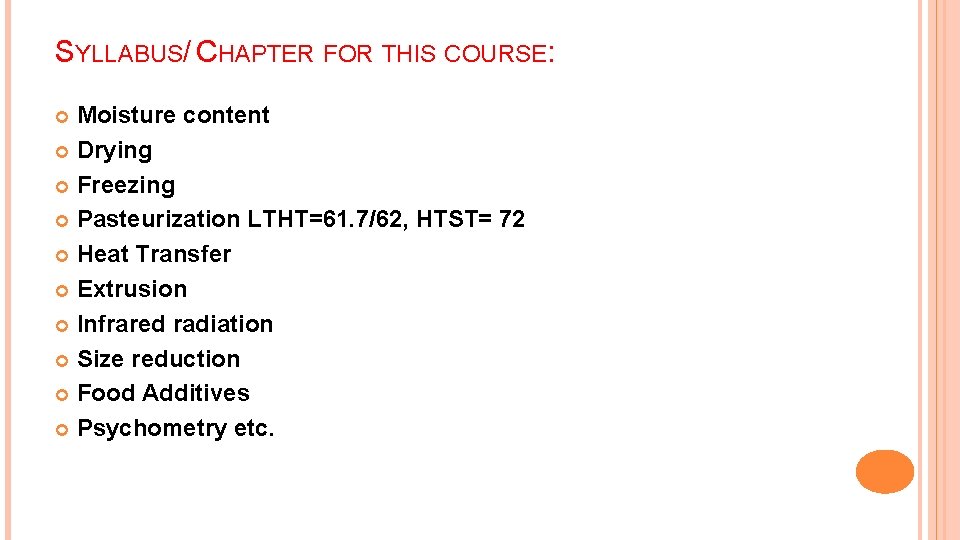
SYLLABUS/ CHAPTER FOR THIS COURSE: Moisture content Drying Freezing Pasteurization LTHT=61. 7/62, HTST= 72 Heat Transfer Extrusion Infrared radiation Size reduction Food Additives Psychometry etc.
WHY SHOULD WE LEARN THIS SUBJECT?
NFE 413: FOOD PRESERVATION AND ENGINEERING MOISTURE CONTENT: Juwel Rana Lecturer Dept. of Nutrition & Food Engineering Daffodil International University
LECTURE TOPICS: Moisture content MCwb & MCdb Relationship between MCwb & MCdb Importance Mathematical Problems
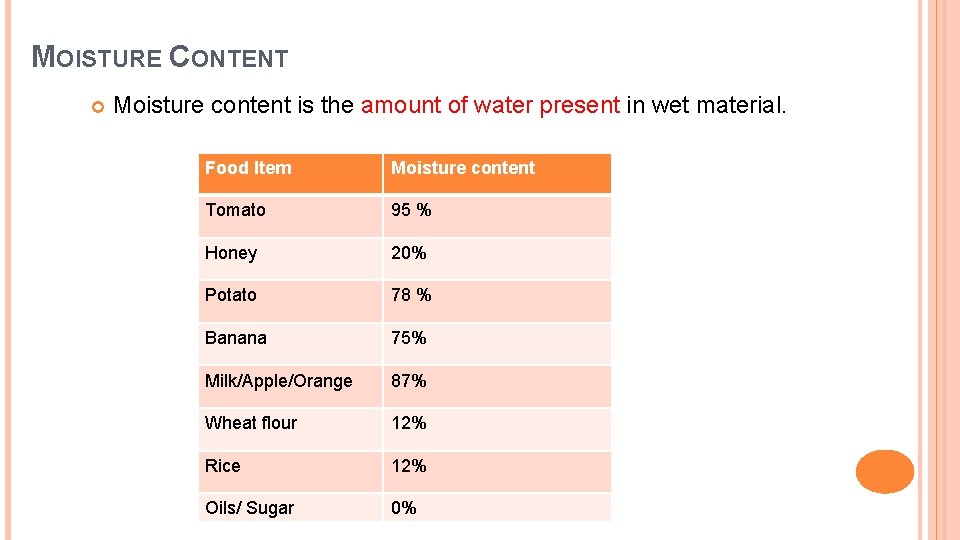
MOISTURE CONTENT Moisture content is the amount of water present in wet material. Food Item Moisture content Tomato 95 % Honey 20% Potato 78 % Banana 75% Milk/Apple/Orange 87% Wheat flour 12% Rice 12% Oils/ Sugar 0%
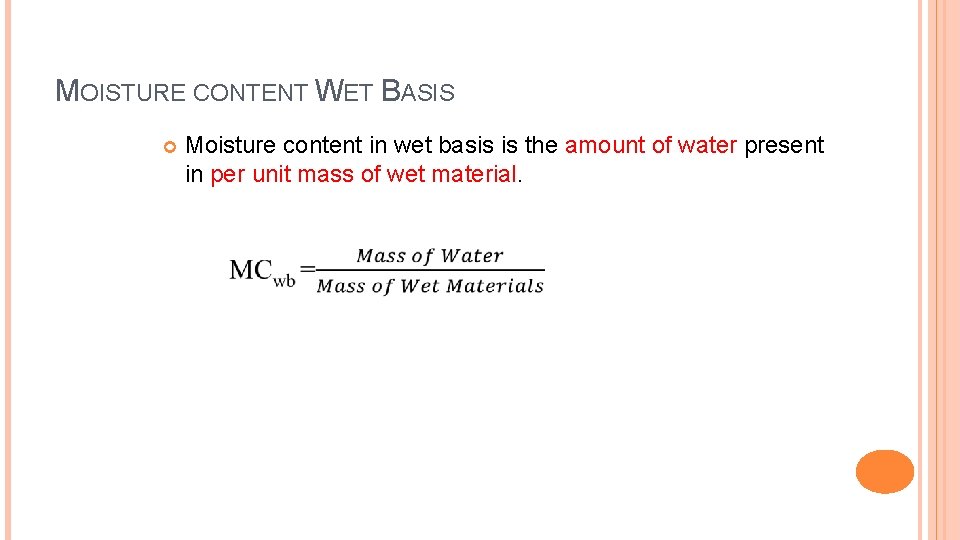
MOISTURE CONTENT WET BASIS Moisture content in wet basis is the amount of water present in per unit mass of wet material.
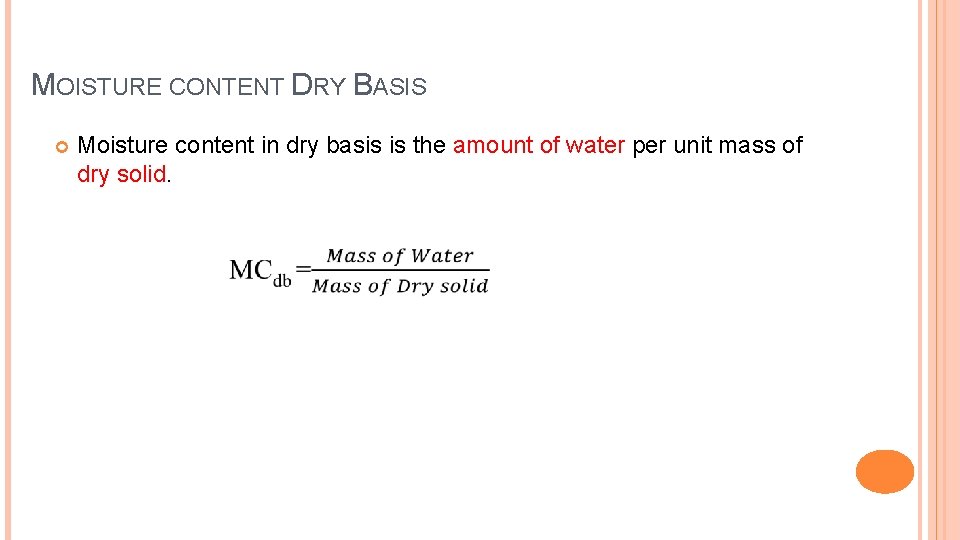
MOISTURE CONTENT DRY BASIS Moisture content in dry basis is the amount of water per unit mass of dry solid.
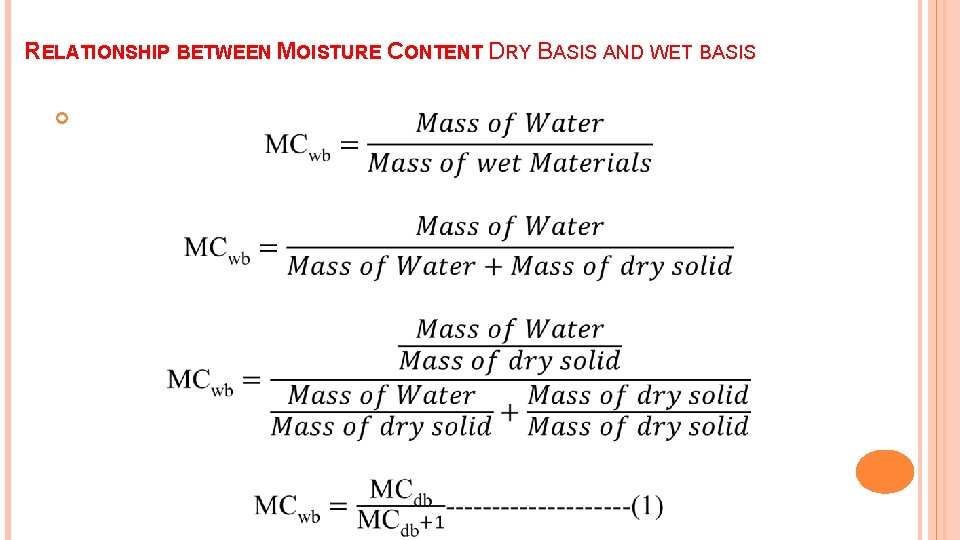
RELATIONSHIP BETWEEN MOISTURE CONTENT DRY BASIS AND WET BASIS
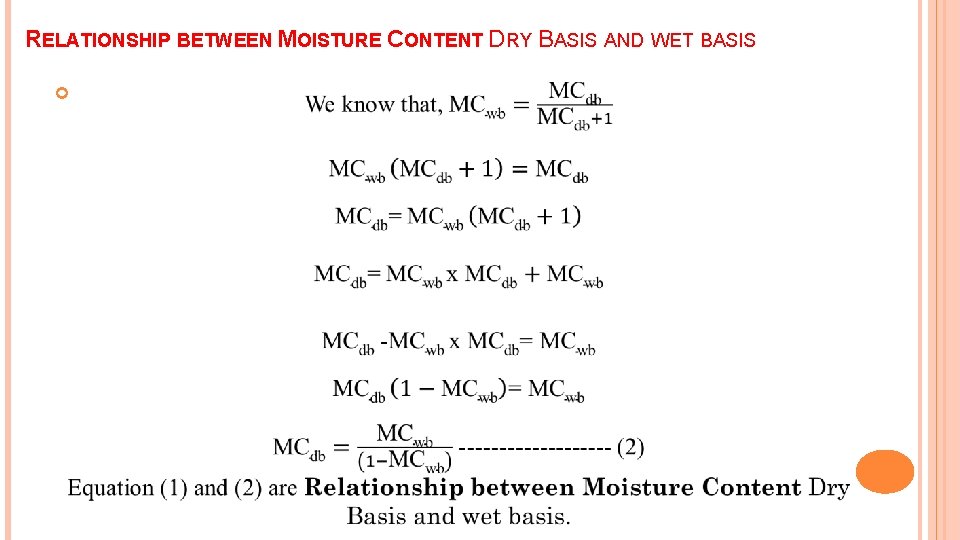
RELATIONSHIP BETWEEN MOISTURE CONTENT DRY BASIS AND WET BASIS
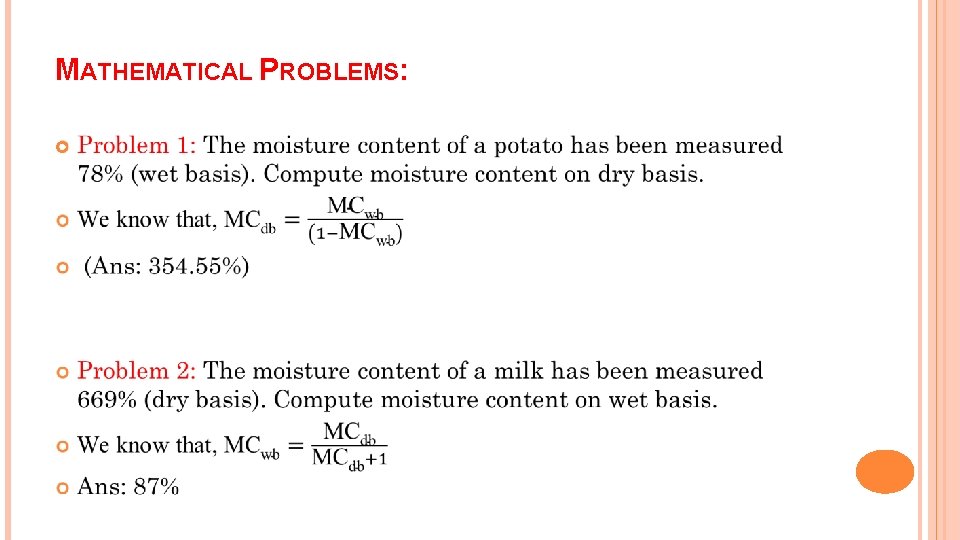
MATHEMATICAL PROBLEMS:
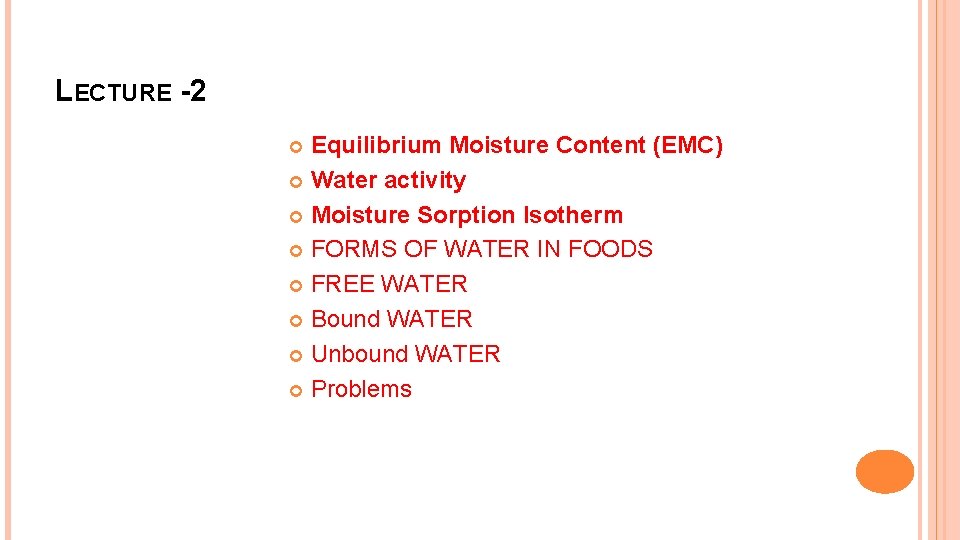
LECTURE -2 Equilibrium Moisture Content (EMC) Water activity Moisture Sorption Isotherm FORMS OF WATER IN FOODS FREE WATER Bound WATER Unbound WATER Problems
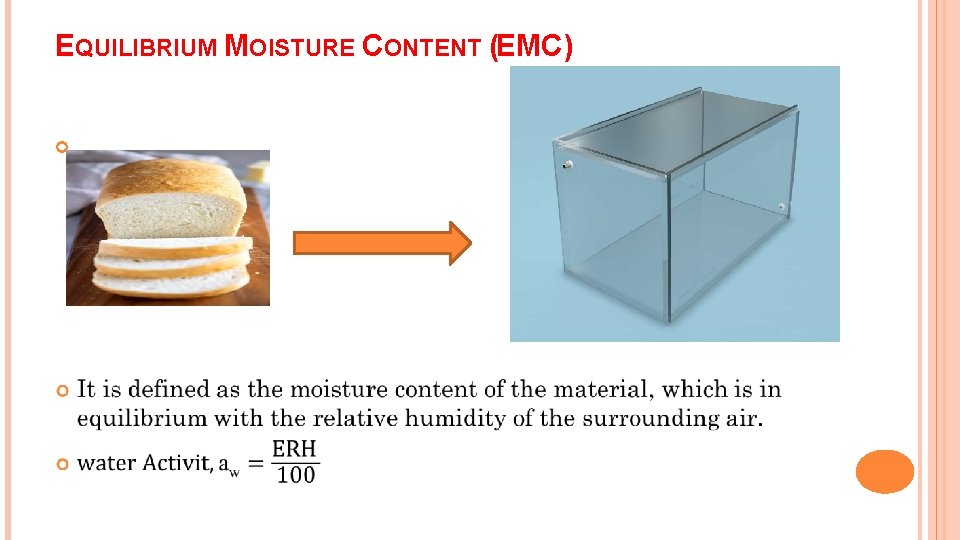
EQUILIBRIUM MOISTURE CONTENT (EMC)
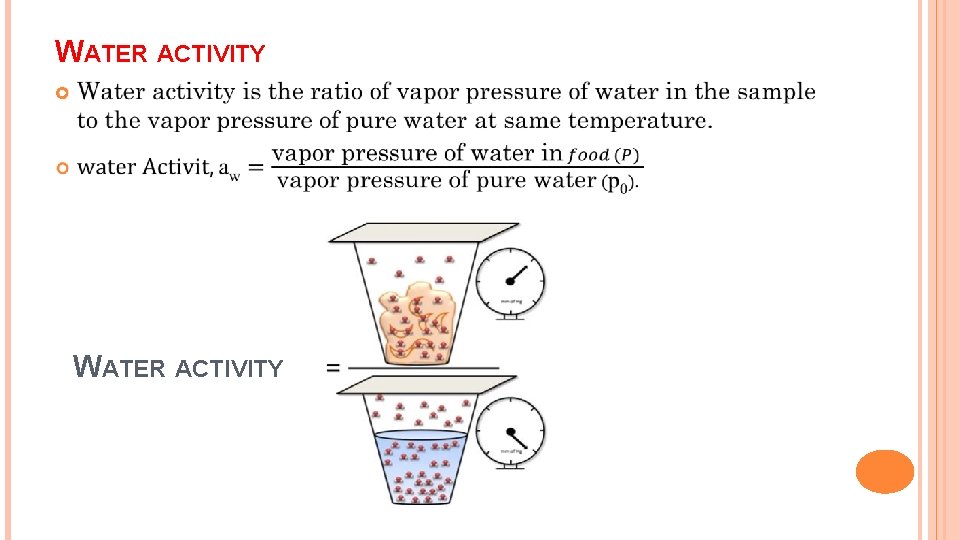
WATER ACTIVITY
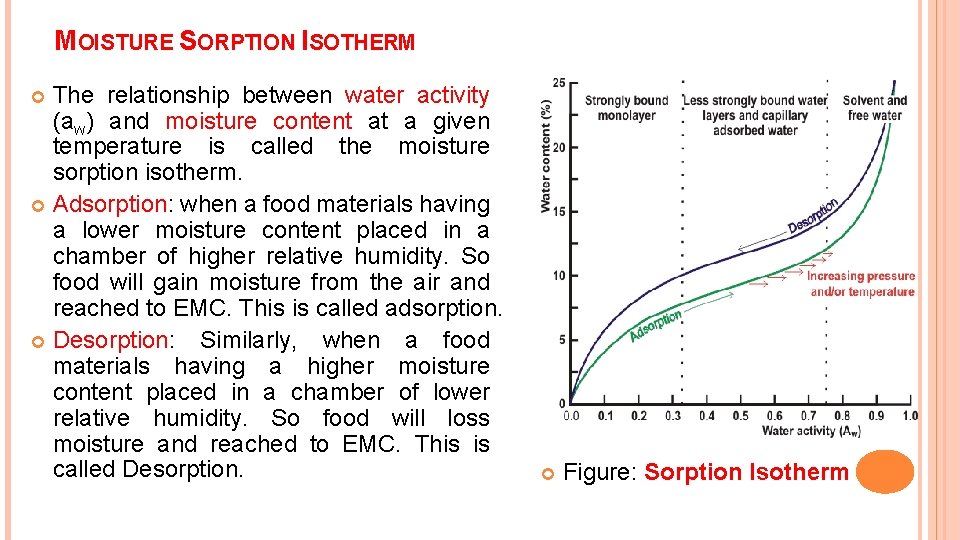
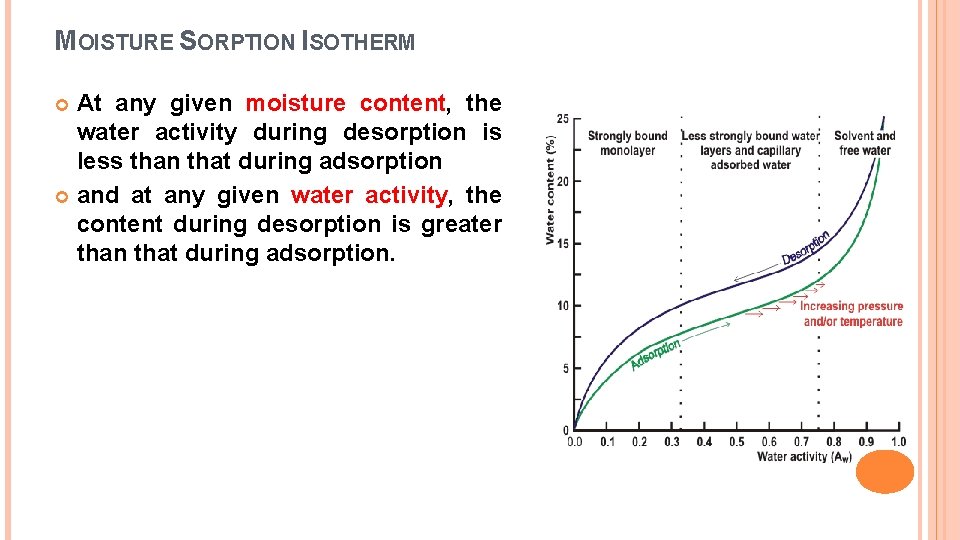
MOISTURE SORPTION ISOTHERM The relationship between water activity (aw) and moisture content at a given temperature is called the moisture sorption isotherm. Adsorption: when a food materials having a lower moisture content placed in a chamber of higher relative humidity. So food will gain moisture from the air and reached to EMC. This is called adsorption. Desorption: Similarly, when a food materials having a higher moisture content placed in a chamber of lower relative humidity. So food will loss moisture and reached to EMC. This is called Desorption. Figure: Sorption Isotherm
MOISTURE SORPTION ISOTHERM At any given moisture content, the water activity during desorption is less than that during adsorption and at any given water activity, the content during desorption is greater than that during adsorption.
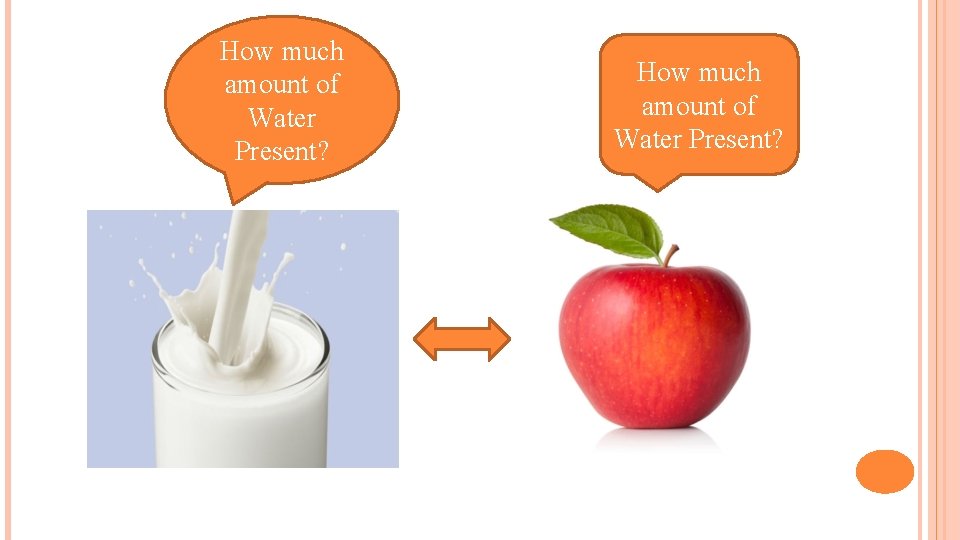
How much amount of Water Present?
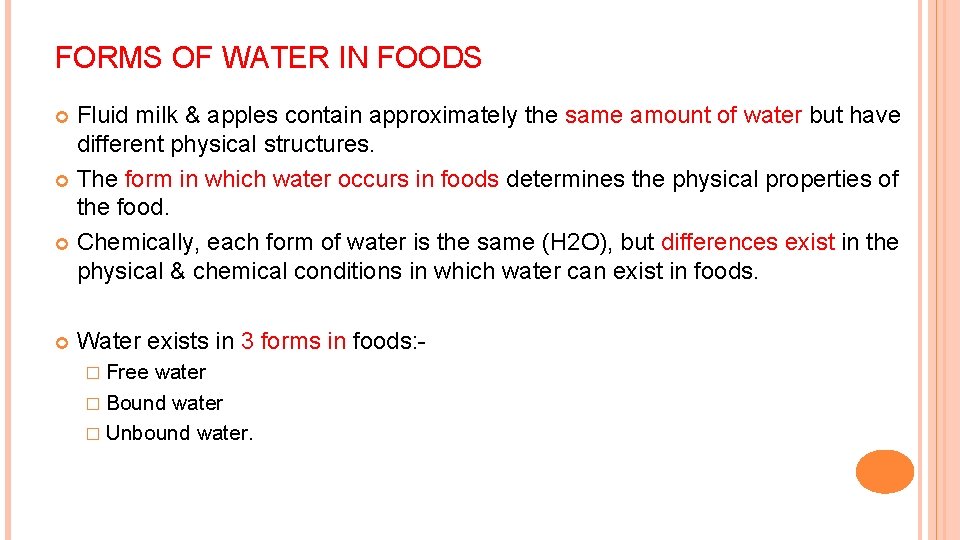
FORMS OF WATER IN FOODS Fluid milk & apples contain approximately the same amount of water but have different physical structures. The form in which water occurs in foods determines the physical properties of the food. Chemically, each form of water is the same (H 2 O), but differences exist in the physical & chemical conditions in which water can exist in foods. Water exists in 3 forms in foods: - � Free water � Bound water � Unbound water.
FREE WATER (TYPE III) Free water are those type of water which are loosely attach with the tissue and easily can be remove. Free moisture constitutes the major portion of water in plant and animal food tissues. Most water in foods is called free water. Free moisture is readily available for chemical reactions and the growth and activity of microorganisms. When all free moisture is removed, the moisture content is about 12 to 25% by weight and the water activity is lowed to 0. 8. Free water is lightly entrapped & therefore easily pressed from food. It acts as a dispersing agent & solvent & can be removed by drying foods. *(dispersing agent which improve the separation of particles and to prevent settling or clumping. )
BOUND WATER (TYPE I) Bound water are those type of water which are very tightly attach with the tissue and easily can not be removed. Bound water forms as a layer in direct contact with the food substance and is strongly bound to the carbonyl groups of proteins and the hydroxyl groups of sugar and starches. This corresponds to moisture content in the range of 0 to 0. 7% by weight and can be partially removed by dehydration. Bound water is the water that remains unfrozen at temperature below 0⁰C usually − 20⁰C. Also it is the amount of water in a food that is unavailable as a solvent. The amount of unfreezable water, based on protein content, vary from one food to another. For E. g. , About 8 -10 % of the total water in animal tissue is unavailable for ice formation. Egg white, egg yolk, meat & fish all contain approximately 0. 4 gm of unfreezable water/g of dry protein. Most fruits & vegetables contain less than 6% unfreezable water
UNBOUND MOISTURE (TYPE II) Unbound water are those type of water which are moderately attach with the tissue and more difficult to remove this type of water than free moisture. This water associates in layer through intermolecular hydrogen bonds around hydrophilic food molecules. i. e. the water is held tightly in cell walls or protoplasm & is held tightly to proteins. Multilayer water involves water that is H-bonded in water-solute and water-water clusters and water in micro-capilaries and takes the form of layers situated above the monolayer water and can be removed by drying. Partial removal of type II water eliminates the last possibility of microbial growth and greatly reduces most kind of chemical reactions. Complete removal of type II water leaves 3 to 7% of moisture level in the food and the water activity is about 0. 25.
MATHEMATICAL PROBLEMS: The moisture content of a product has been measured 70% (wet basis). Compute moisture content on dry basis. 2. What will be the water activity (aw) of a product, when equilibrium relative humidity is 45%? 3. How much moisture would you need to remove to dry 100 kg of wet product from 50% to 20% wet basis? 4. How much moisture would you need to remove to dry 180 kg of wet product from 35% to 15% wet basis? 5. Onions with 85% moisture content on wet basis is dried to a final moisture content of 10%. If we dry 100 kg of onions, what is the final weight of the product, and how much water is removed? 6. A bin holds 2000 kg of wet grain containing 500 kg of water. This grain is to be dried to final moisture content of 14% (wb). a. ) What are the initial and final moisture contents of the grain (wet basis and dry basis)? b. ) How much water is removed during drying? 1.