
COOKING METHODS Moist Heat Methods Most heat makes
- Slides: 17
COOKING METHODS Moist- Heat Methods ___________________________________ • Most heat makes less-tender cuts more tender • Long, slow cooking of moist heat will help develop the meat’s flavour • Includes; • _________________
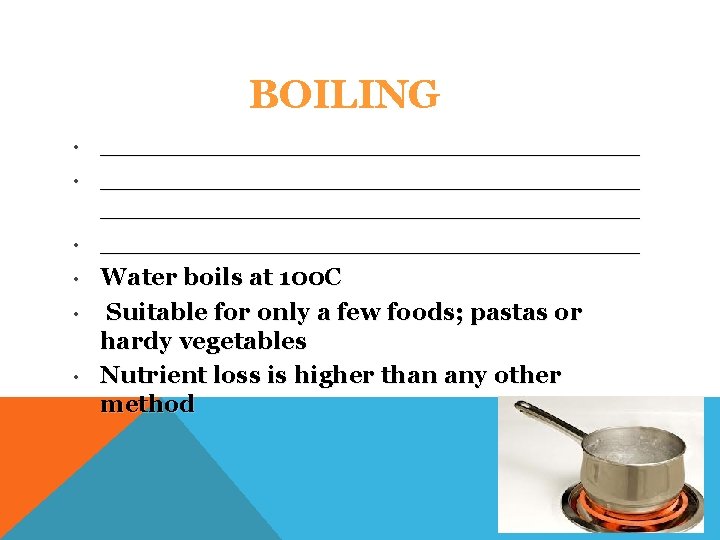
BOILING • • • ________________________________ Water boils at 100 C Suitable for only a few foods; pastas or hardy vegetables Nutrient loss is higher than any other method
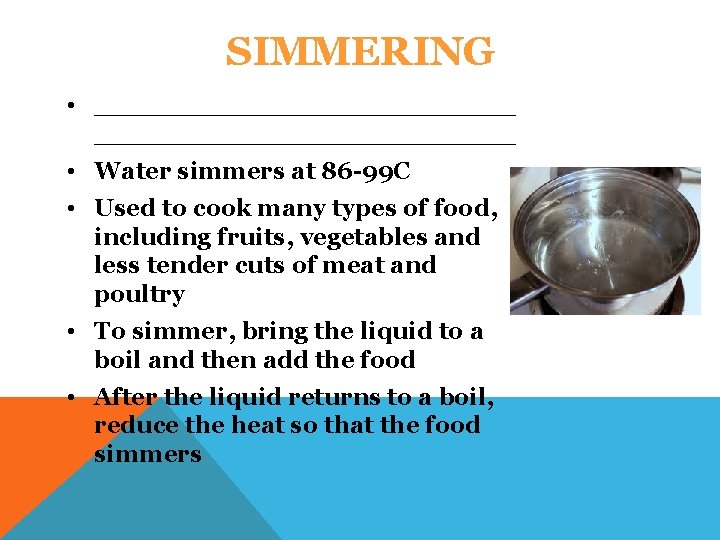
SIMMERING • _________________________ • Water simmers at 86 -99 C • Used to cook many types of food, including fruits, vegetables and less tender cuts of meat and poultry • To simmer, bring the liquid to a boil and then add the food • After the liquid returns to a boil, reduce the heat so that the food simmers
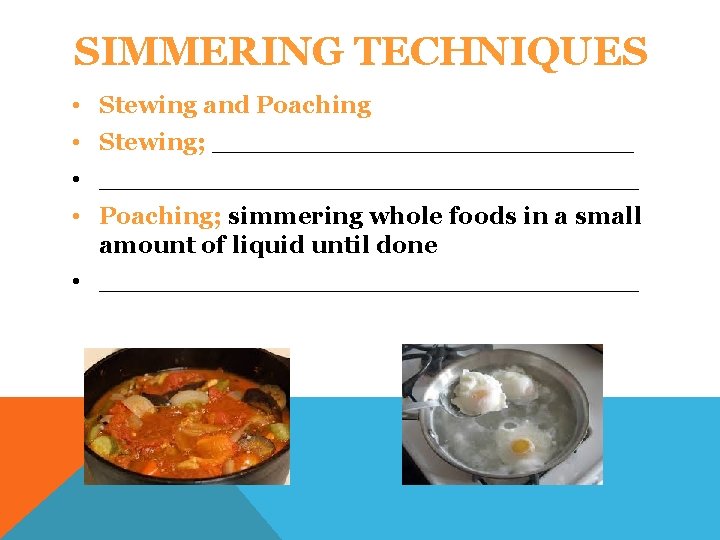
SIMMERING TECHNIQUES • Stewing and Poaching • Stewing; _____________ • ________________ • Poaching; simmering whole foods in a small amount of liquid until done • ________________
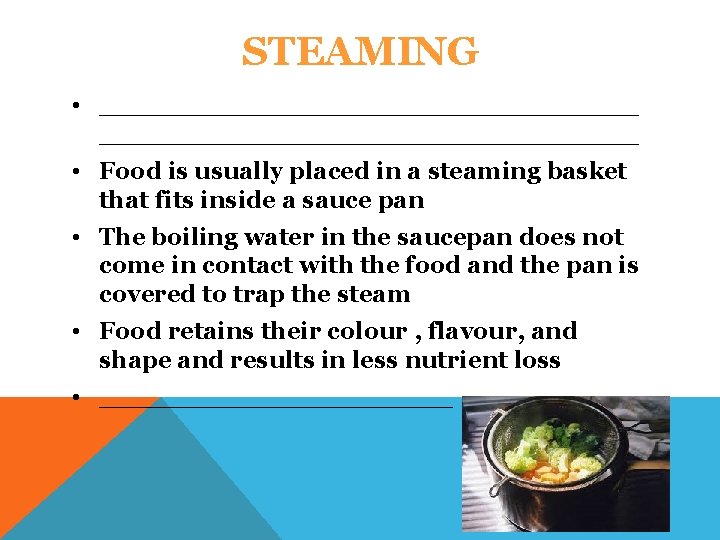
STEAMING • ________________________________ • Food is usually placed in a steaming basket that fits inside a sauce pan • The boiling water in the saucepan does not come in contact with the food and the pan is covered to trap the steam • Food retains their colour , flavour, and shape and results in less nutrient loss • ___________
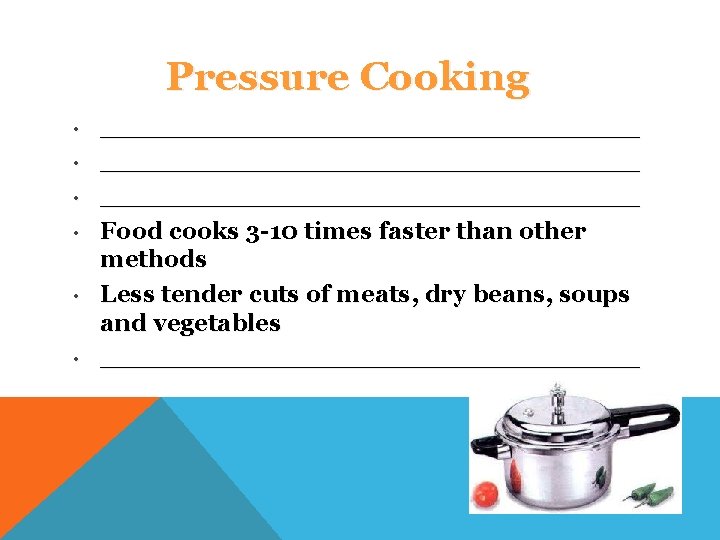
Pressure Cooking • • • ________________________________ Food cooks 3 -10 times faster than other methods Less tender cuts of meats, dry beans, soups and vegetables ________________
DRY –HEAT METHODS Dry-Heat Methods: ___________________________ Include: Ø Roasting/Baking Ø Broiling & Grilling Ø Pan-Broiling
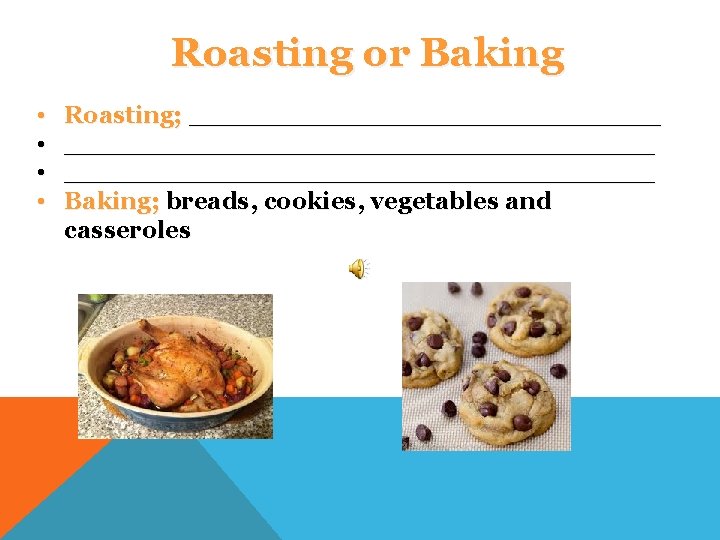
Roasting or Baking • • Roasting; ___________________________________ Baking; breads, cookies, vegetables and casseroles
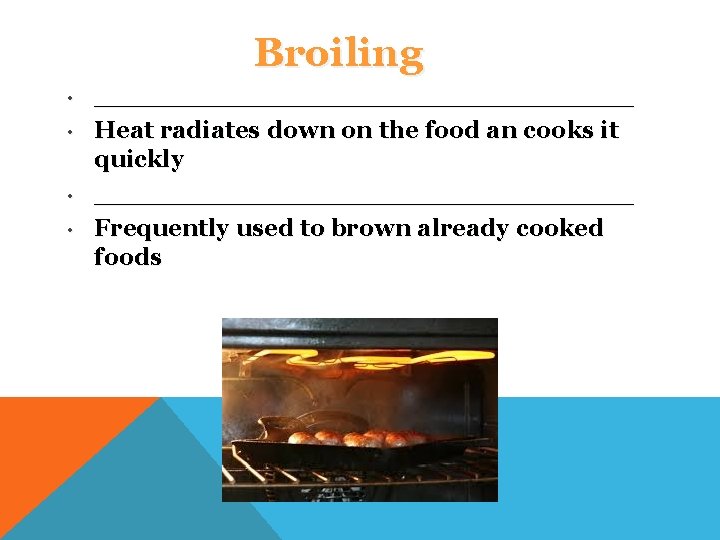
Broiling • • ________________ Heat radiates down on the food an cooks it quickly ________________ Frequently used to brown already cooked foods
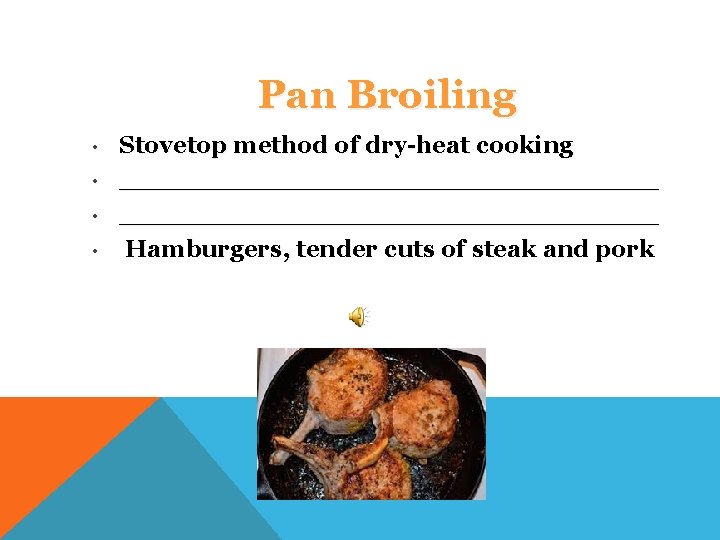
Pan Broiling • • Stovetop method of dry-heat cooking ________________________________ Hamburgers, tender cuts of steak and pork
FRYING • _________________________________ Frying methods include: • Sautéing • Pan-frying • Deep-fat frying
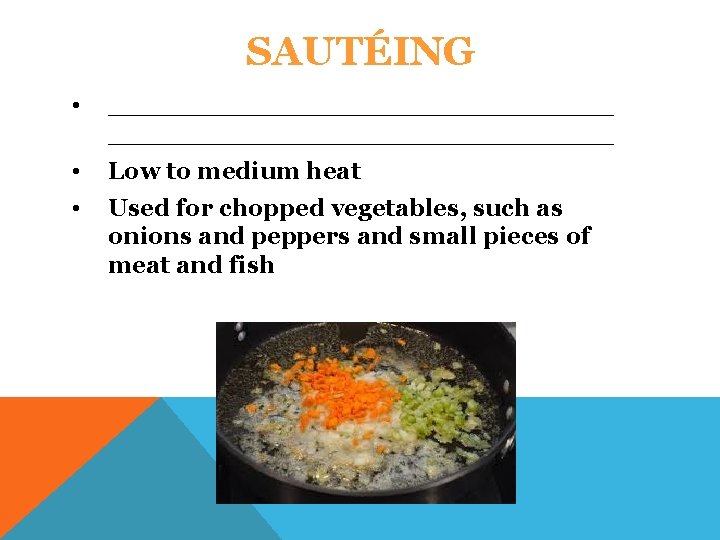
SAUTÉING • ______________________________ • Low to medium heat • Used for chopped vegetables, such as onions and peppers and small pieces of meat and fish
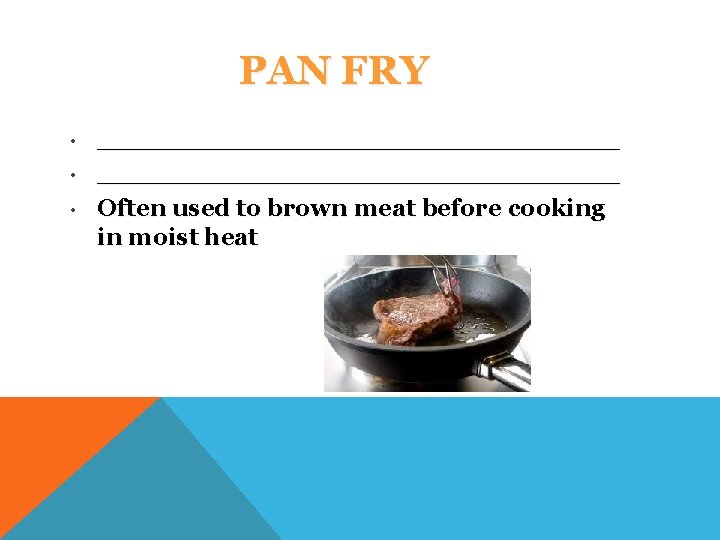
PAN FRY • • • _______________________________ Often used to brown meat before cooking in moist heat
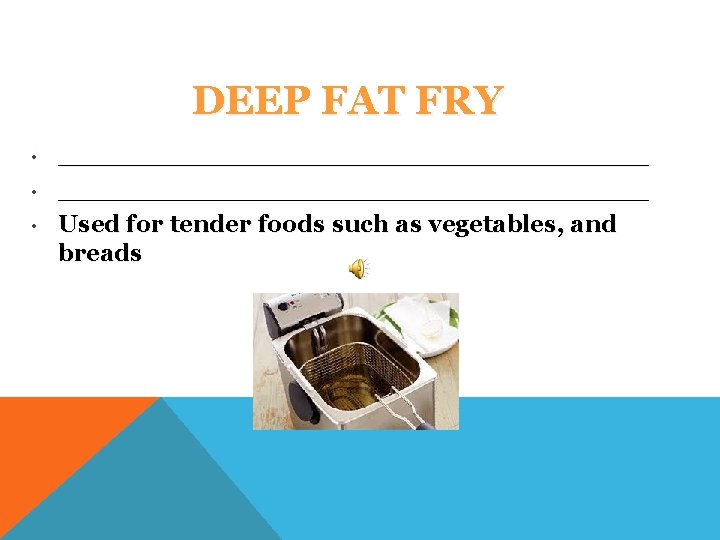
DEEP FAT FRY • • • ___________________________________ Used for tender foods such as vegetables, and breads
COMBINATION METHODS • Sometimes the best way to cook a food is by a combination of methods • ________________________________ • ________________
BRAISING • • • ______________________________ Often used for large, less tender cuts of meat and poultry Food is browned first on all sides, seasoned and simmered in an covered baking dish with a small amount of liquid
STIR FRY • • • Combines frying and moist heat cooking _____________________________ Food is stirred constantly to keep it from sticking • A small amount of liquid is added near the end of cooking time and covered to allow the food to steam briefly