Convergent Divergent Adaptive Radiation Gradual and Punctuated Coevolution

- Slides: 10
Convergent – Divergent Adaptive Radiation Gradual and Punctuated Coevolution
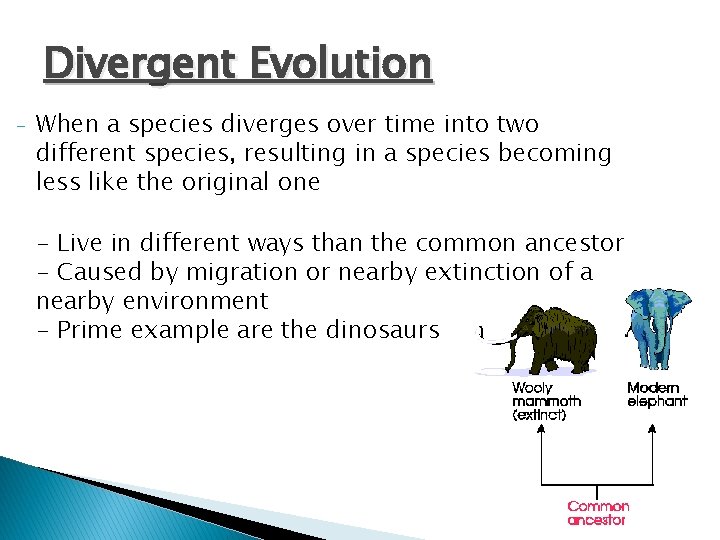
Divergent Evolution - When a species diverges over time into two different species, resulting in a species becoming less like the original one - Live in different ways than the common ancestor - Caused by migration or nearby extinction of a nearby environment - Prime example are the dinosaurs
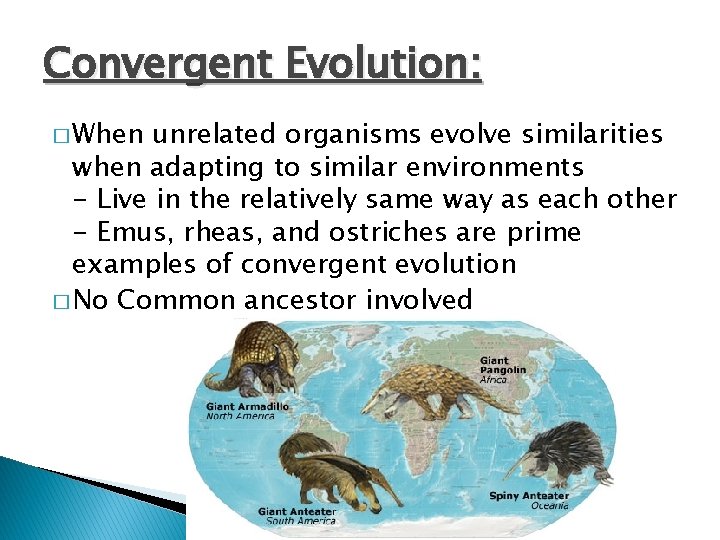
Convergent Evolution: � When unrelated organisms evolve similarities when adapting to similar environments - Live in the relatively same way as each other - Emus, rheas, and ostriches are prime examples of convergent evolution � No Common ancestor involved
Significance…. . � The importance of these types of evolution is generating variation, as well as species performing their niche in their environment. As every species has a role to play, these types of evolution ensure that these are carried out.
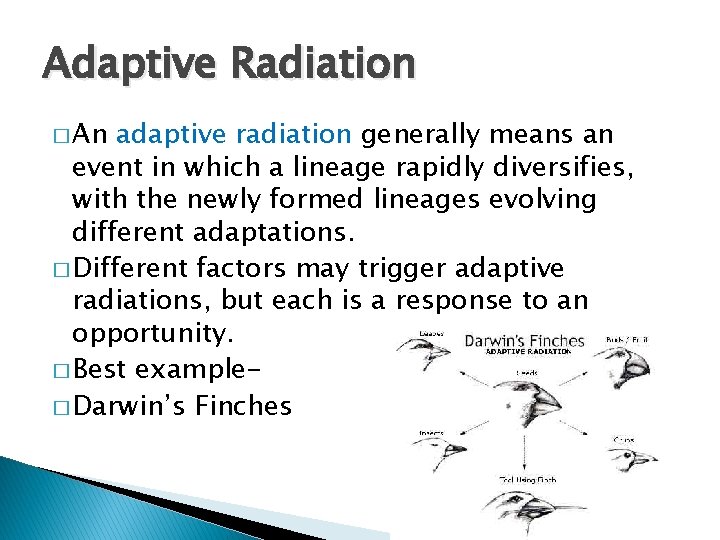
Adaptive Radiation � An adaptive radiation generally means an event in which a lineage rapidly diversifies, with the newly formed lineages evolving different adaptations. � Different factors may trigger adaptive radiations, but each is a response to an opportunity. � Best example� Darwin’s Finches
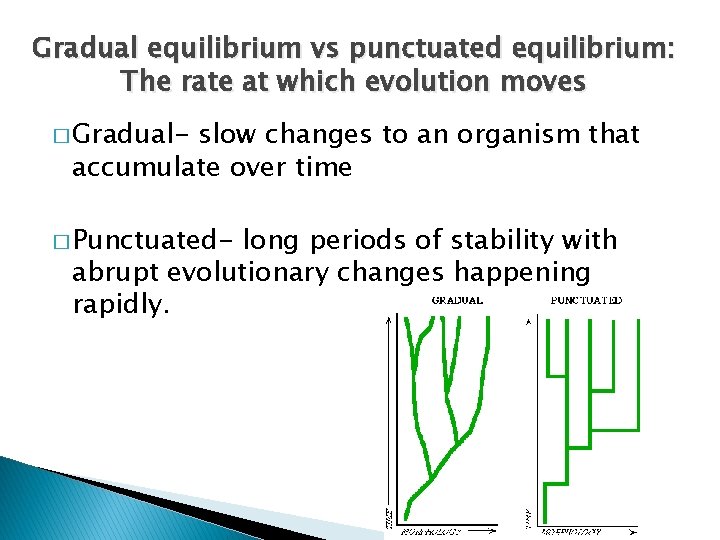
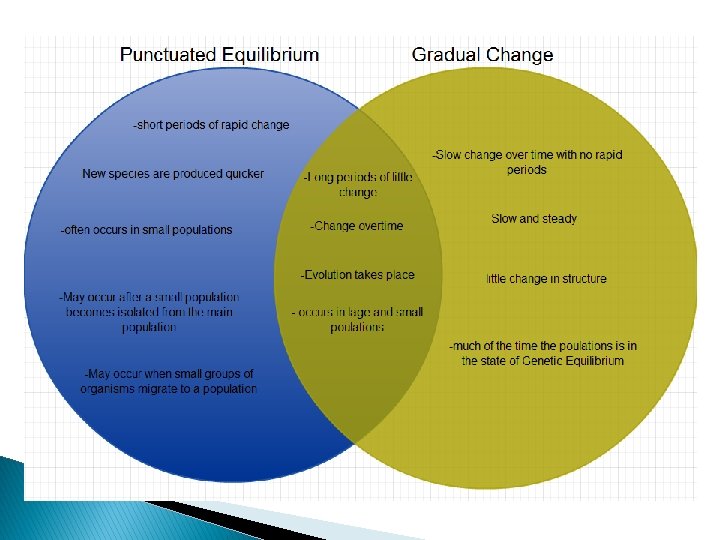
Gradual equilibrium vs punctuated equilibrium: The rate at which evolution moves � Gradual- slow changes to an organism that accumulate over time � Punctuated- long periods of stability with abrupt evolutionary changes happening rapidly.
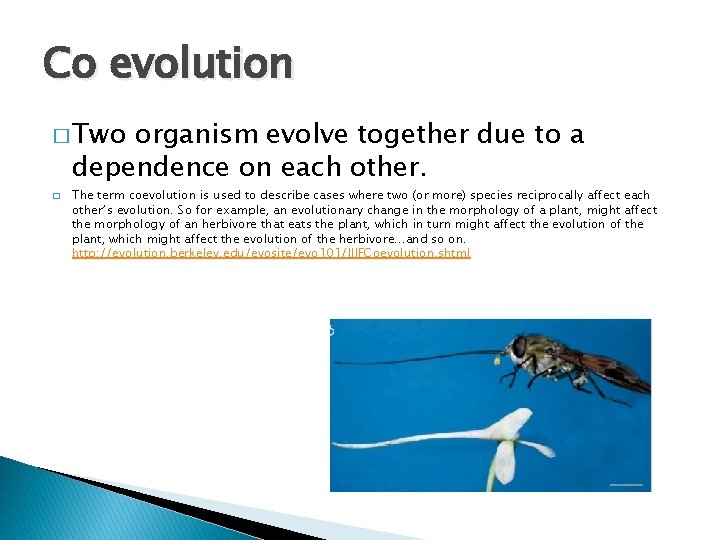
Co evolution � Two organism evolve together due to a dependence on each other. � The term coevolution is used to describe cases where two (or more) species reciprocally affect each other’s evolution. So for example, an evolutionary change in the morphology of a plant, might affect the morphology of an herbivore that eats the plant, which in turn might affect the evolution of the plant, which might affect the evolution of the herbivore. . . and so on. http: //evolution. berkeley. edu/evosite/evo 101/IIIFCoevolution. shtml
Just some extra slide…. .
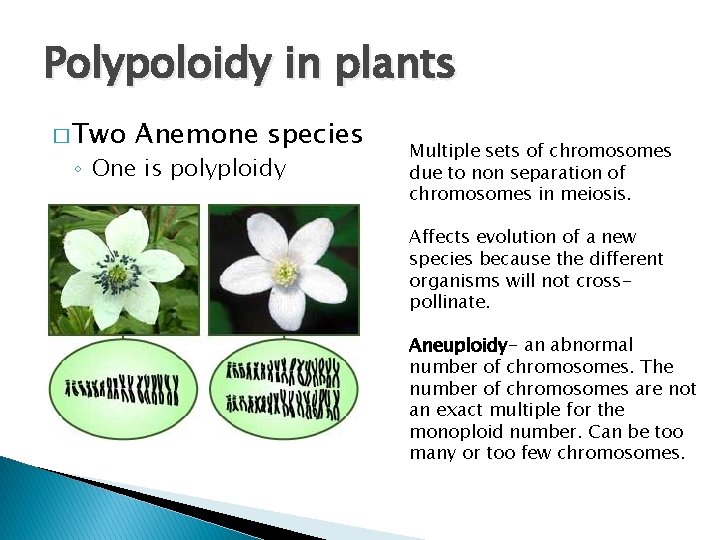
Polypoloidy in plants � Two Anemone species ◦ One is polyploidy Multiple sets of chromosomes due to non separation of chromosomes in meiosis. Affects evolution of a new species because the different organisms will not crosspollinate. Aneuploidy- an abnormal number of chromosomes. The number of chromosomes are not an exact multiple for the monoploid number. Can be too many or too few chromosomes.