CONTRASTIVE RHETORIC INTRODUCTION Definitions Contrastive rhetoric is an

- Slides: 11
CONTRASTIVE RHETORIC INTRODUCTION
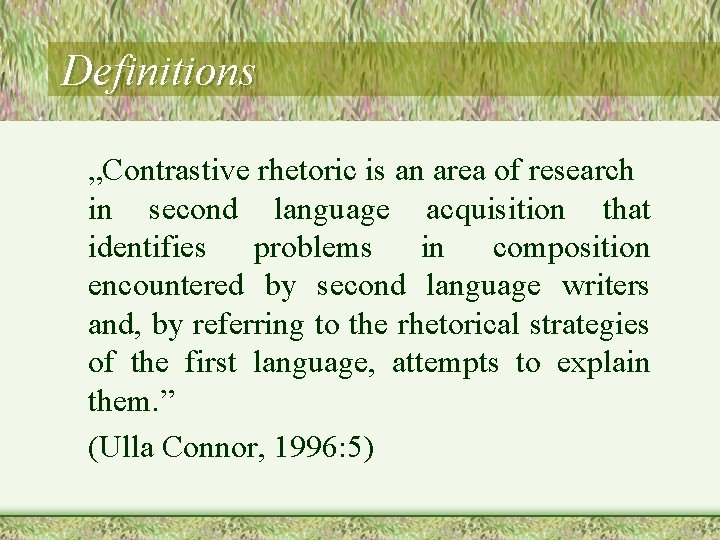
Definitions „Contrastive rhetoric is an area of research in second language acquisition that identifies problems in composition encountered by second language writers and, by referring to the rhetorical strategies of the first language, attempts to explain them. ” (Ulla Connor, 1996: 5)
„Contrastive rhetoric has its origins in notions of language structure, learning and use which are not strongly autonomous, and its goal is to describe ways in which written texts operate in larger cultural contexts. ” (Grabe & Kaplan, 1996: 5)
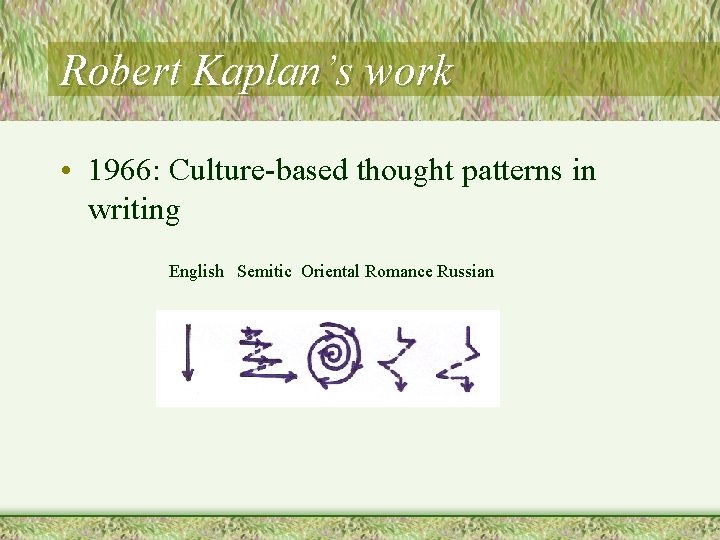
Robert Kaplan’s work • 1966: Culture-based thought patterns in writing English Semitic Oriental Romance Russian
Influences of the Kaplanean idea • L 1 in the way of logical thinking and linear discourse construction • Ethnocentric bias „whether the Japanese are capable of using logical arguments to the degree that other people are” (Hazen, 1986: 232) • Instructional focus: eliminating L 1 traditions, inculcating new L 2 patterns
Early research concerns: focus on differences • Reader/writer-friendly styles (Hinds, 1987) • Rhetorical organisation, discourse structure (Clyne, 1987; Connor, 1987) • Cohesion and coherence (Connor, 1984) • Method: discourse analysis
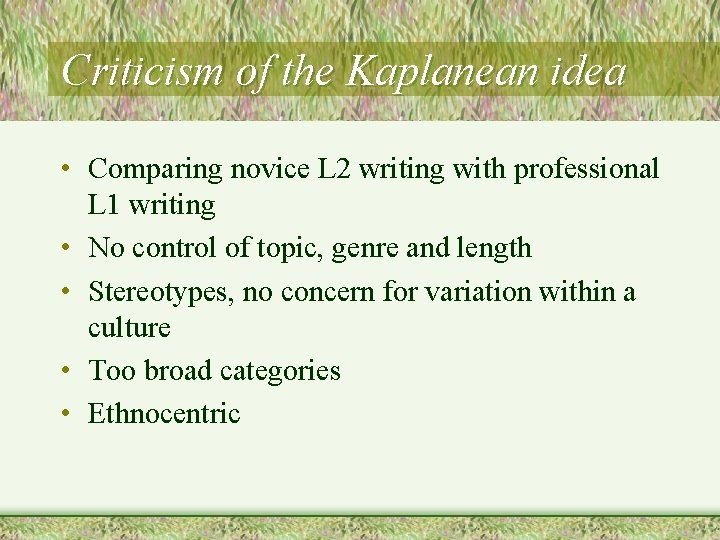
Criticism of the Kaplanean idea • Comparing novice L 2 writing with professional L 1 writing • No control of topic, genre and length • Stereotypes, no concern for variation within a culture • Too broad categories • Ethnocentric
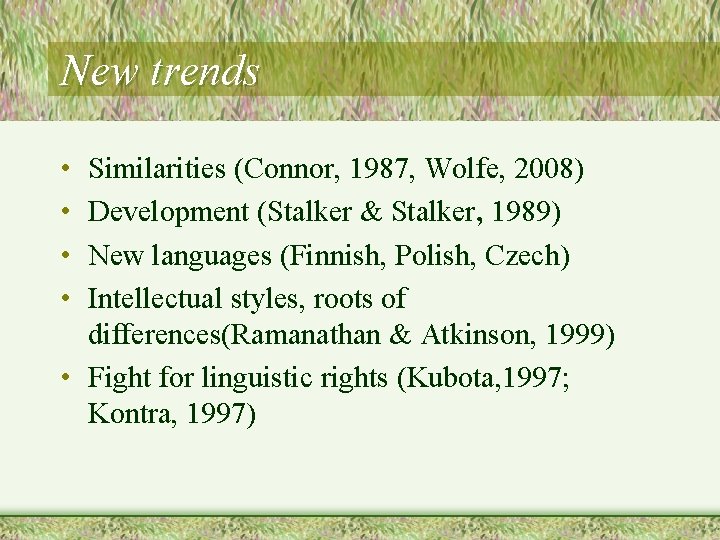
New trends • • Similarities (Connor, 1987, Wolfe, 2008) Development (Stalker & Stalker, 1989) New languages (Finnish, Polish, Czech) Intellectual styles, roots of differences(Ramanathan & Atkinson, 1999) • Fight for linguistic rights (Kubota, 1997; Kontra, 1997)
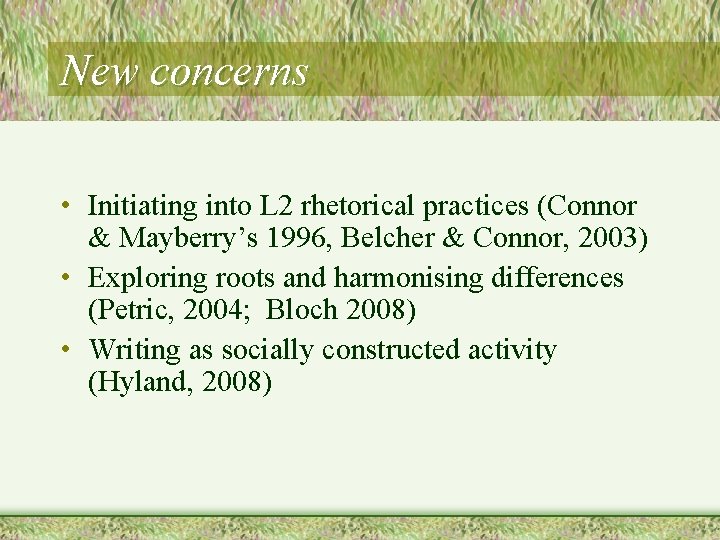
New concerns • Initiating into L 2 rhetorical practices (Connor & Mayberry’s 1996, Belcher & Connor, 2003) • Exploring roots and harmonising differences (Petric, 2004; Bloch 2008) • Writing as socially constructed activity (Hyland, 2008)
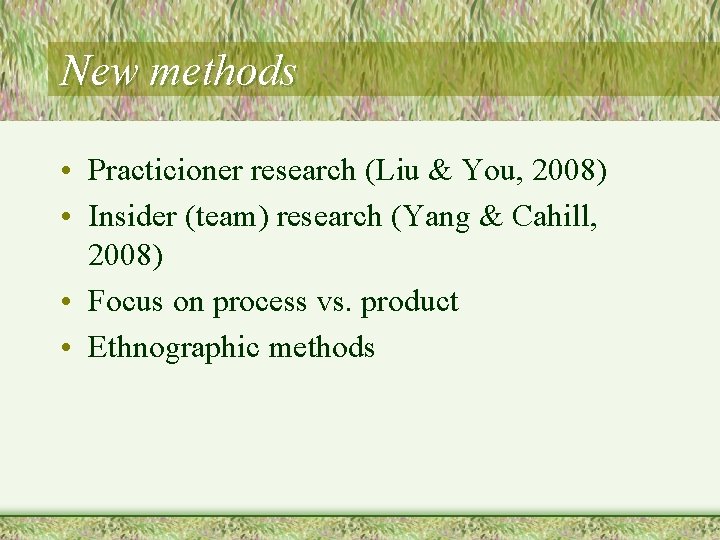
New methods • Practicioner research (Liu & You, 2008) • Insider (team) research (Yang & Cahill, 2008) • Focus on process vs. product • Ethnographic methods
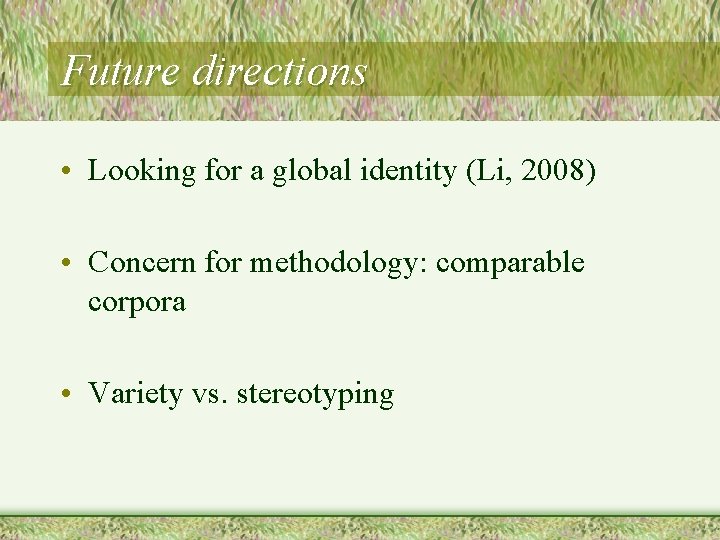
Future directions • Looking for a global identity (Li, 2008) • Concern for methodology: comparable corpora • Variety vs. stereotyping