Continental Drift and Plate Tectonics notes pt 2


- Slides: 22
Continental Drift and Plate Tectonics (notes pt. 2)
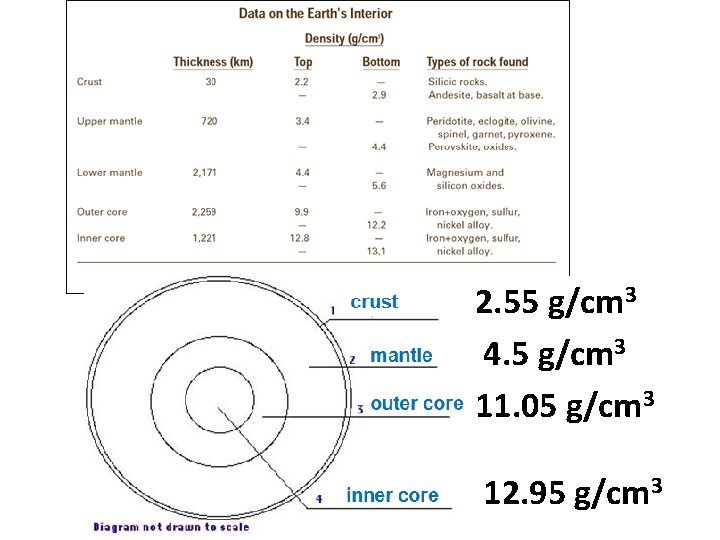
2. 55 g/cm 3 4. 5 g/cm 3 11. 05 g/cm 3 x 12. 95 g/cm 3 x x
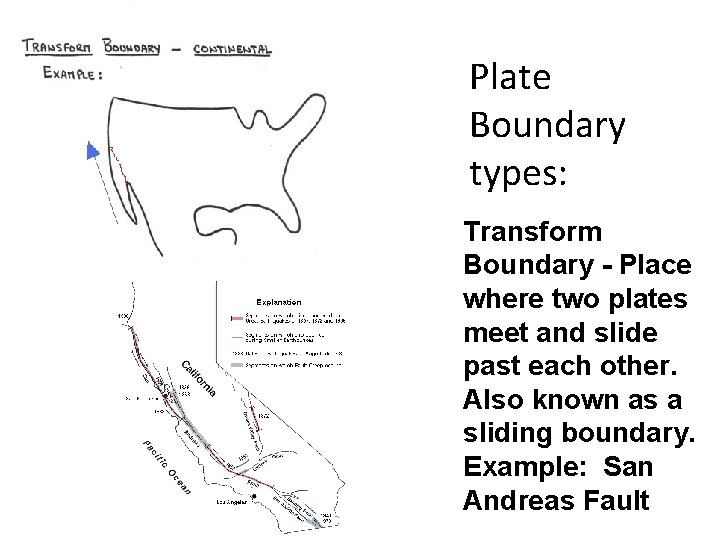
Plate Boundary types: Transform Boundary - Place where two plates meet and slide past each other. Also known as a sliding boundary. Example: San Andreas Fault
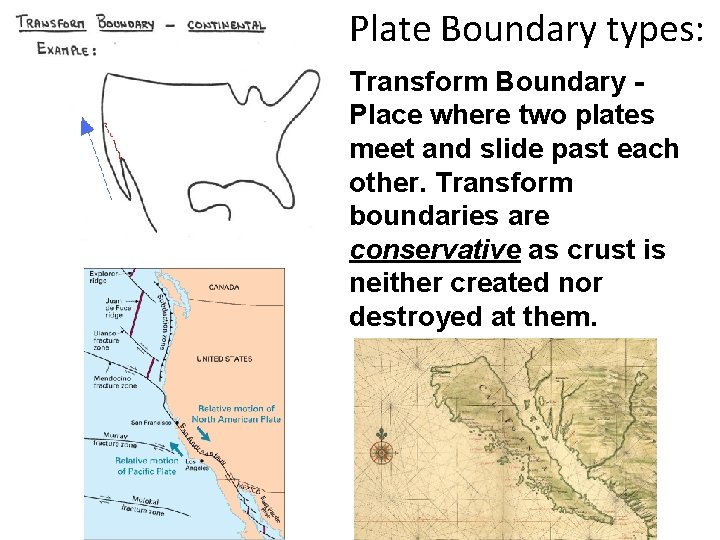
Plate Boundary types: Transform Boundary Place where two plates meet and slide past each other. Transform boundaries are conservative as crust is neither created nor destroyed at them.
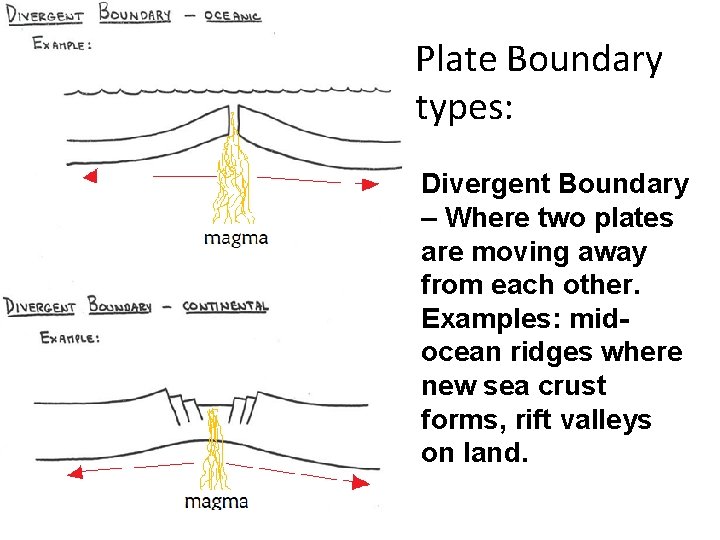
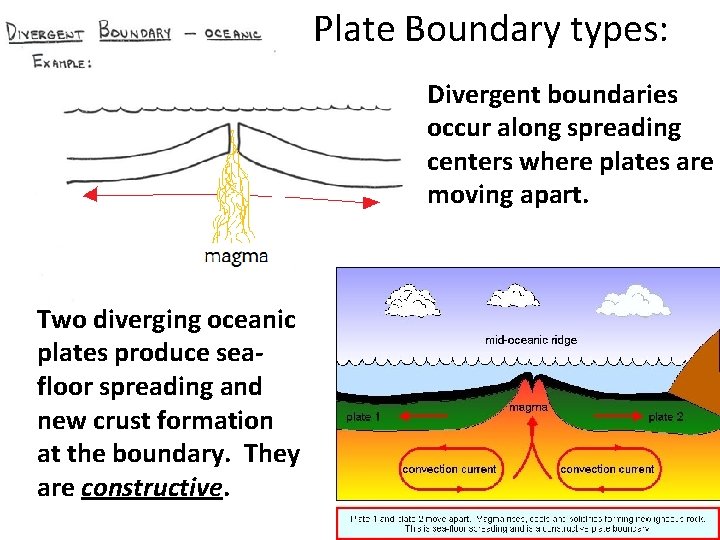
Plate Boundary types: Divergent Boundary – Where two plates are moving away from each other. Examples: midocean ridges where new sea crust forms, rift valleys on land.
Plate Boundary types: Divergent boundaries occur along spreading centers where plates are moving apart. Two diverging oceanic plates produce seafloor spreading and new crust formation at the boundary. They are constructive.
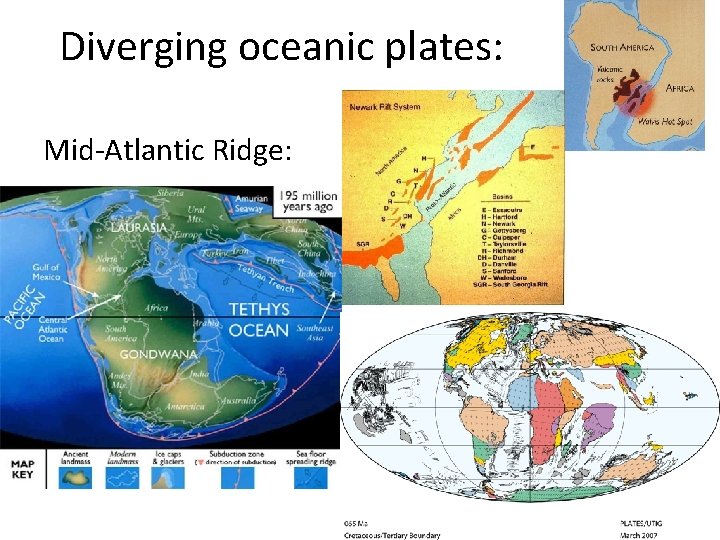
Diverging oceanic plates: Mid-Atlantic Ridge:
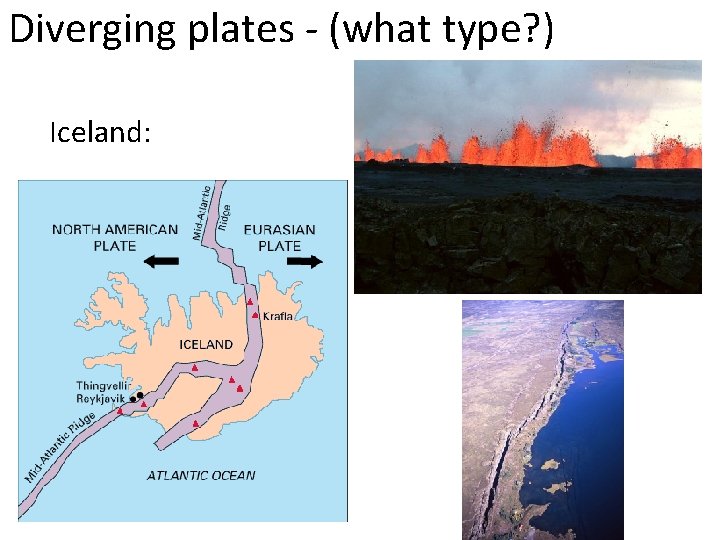
Diverging plates - (what type? ) Iceland:
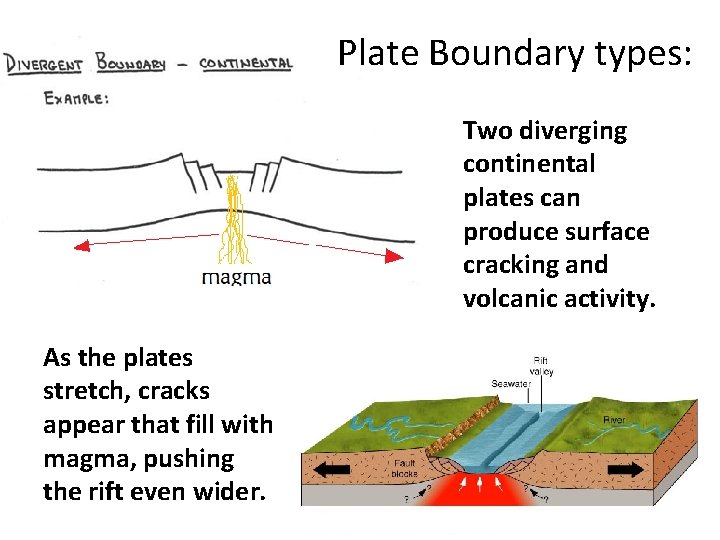
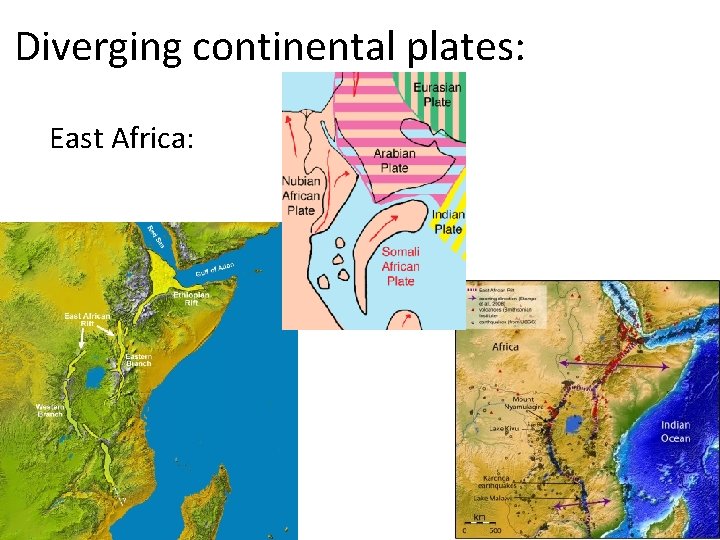
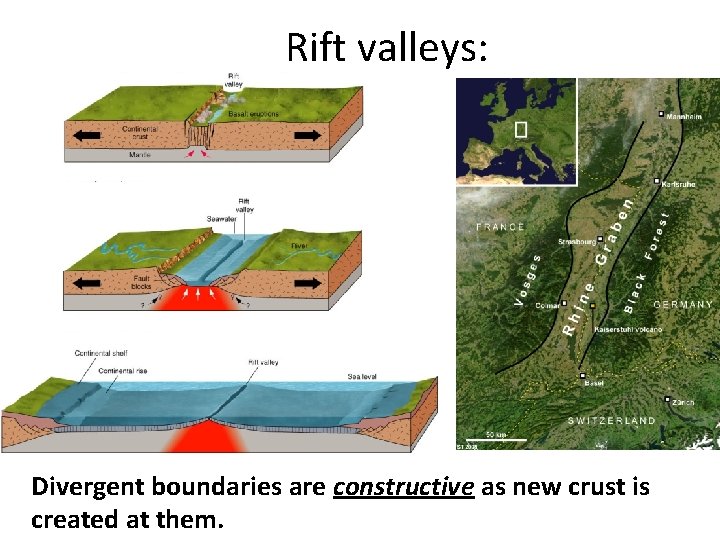
Plate Boundary types: Two diverging continental plates can produce surface cracking and volcanic activity. As the plates stretch, cracks appear that fill with magma, pushing the rift even wider.
Diverging continental plates: East Africa:
Rift valleys: Divergent boundaries are constructive as new crust is created at them.
Plate Tectonics (notes pt. 3)
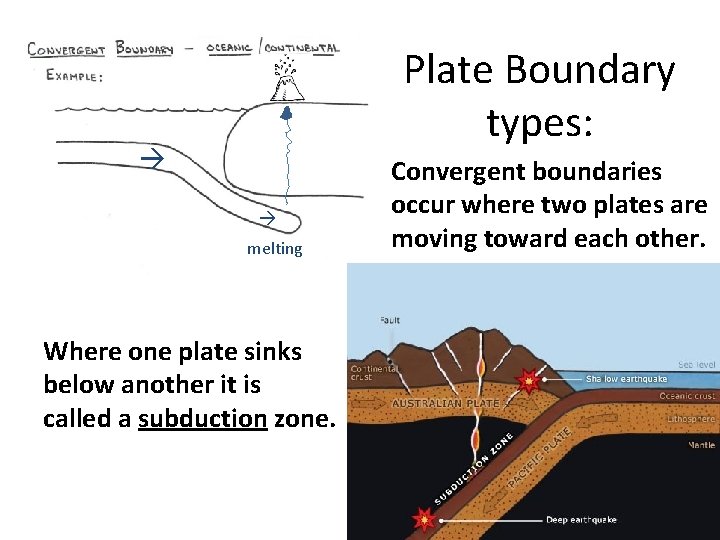
Plate Boundary types: melting Where one plate sinks below another it is called a subduction zone. Convergent boundaries occur where two plates are moving toward each other.
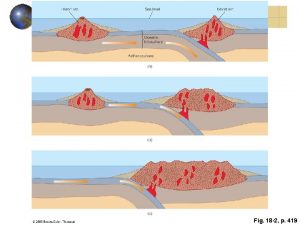
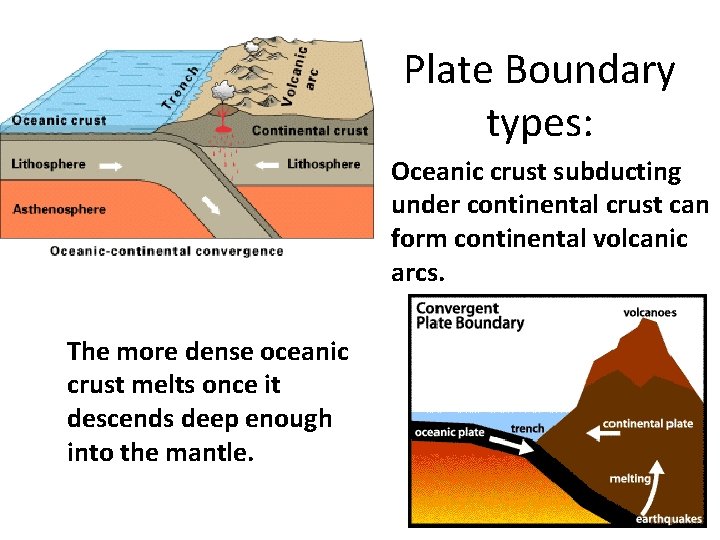
Plate Boundary types: Oceanic crust subducting under continental crust can form continental volcanic arcs. The more dense oceanic crust melts once it descends deep enough into the mantle.
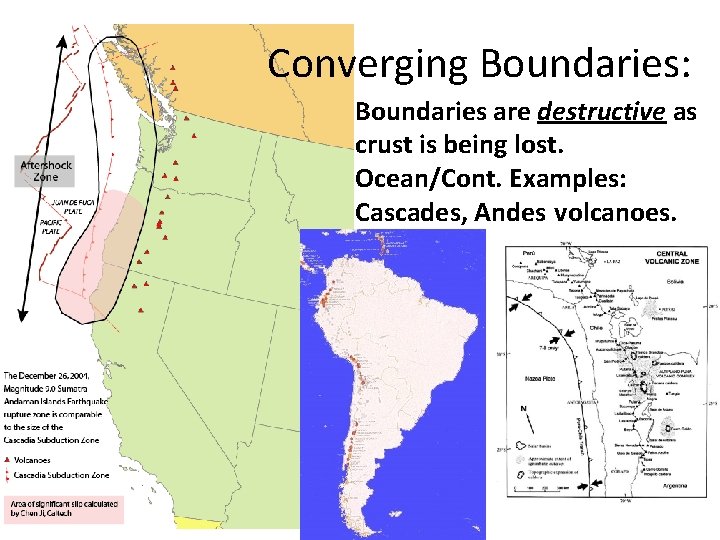
Converging Boundaries: Boundaries are destructive as crust is being lost. Ocean/Cont. Examples: Cascades, Andes volcanoes.
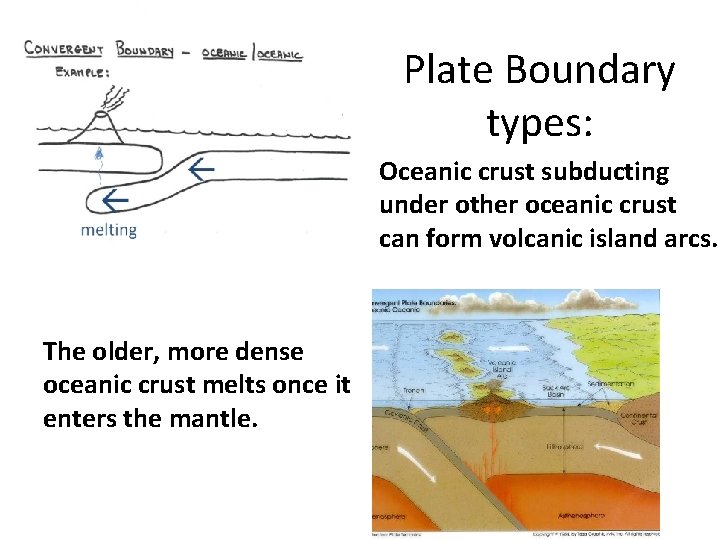
Plate Boundary types: Oceanic crust subducting under other oceanic crust can form volcanic island arcs. The older, more dense oceanic crust melts once it enters the mantle.
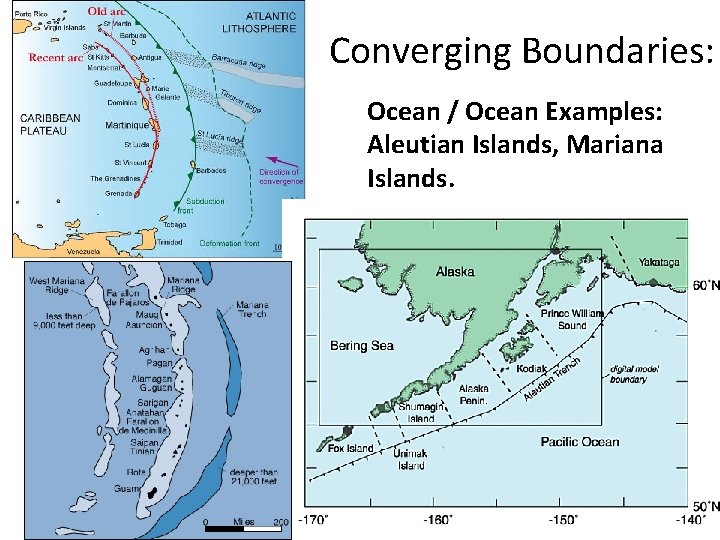
Converging Boundaries: Ocean / Ocean Examples: Aleutian Islands, Mariana Islands.
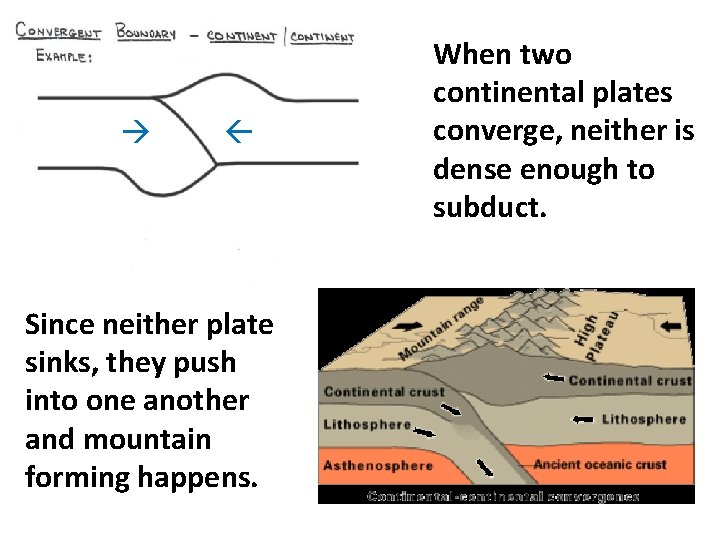
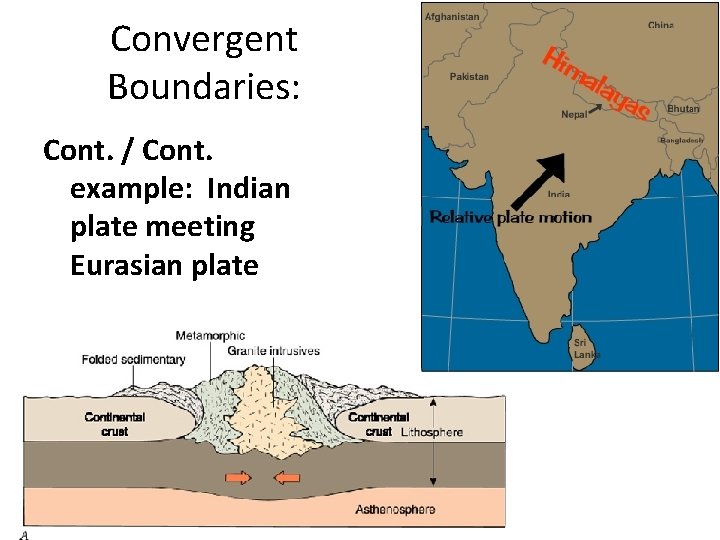
Since neither plate sinks, they push into one another and mountain forming happens. When two continental plates converge, neither is dense enough to subduct.
Convergent Boundaries: Cont. / Cont. example: Indian plate meeting Eurasian plate
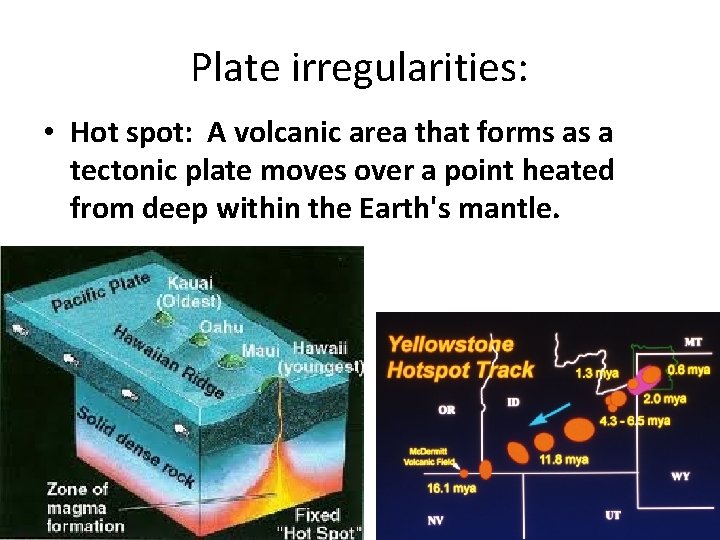
Plate irregularities: • Hot spot: A volcanic area that forms as a tectonic plate moves over a point heated from deep within the Earth's mantle.
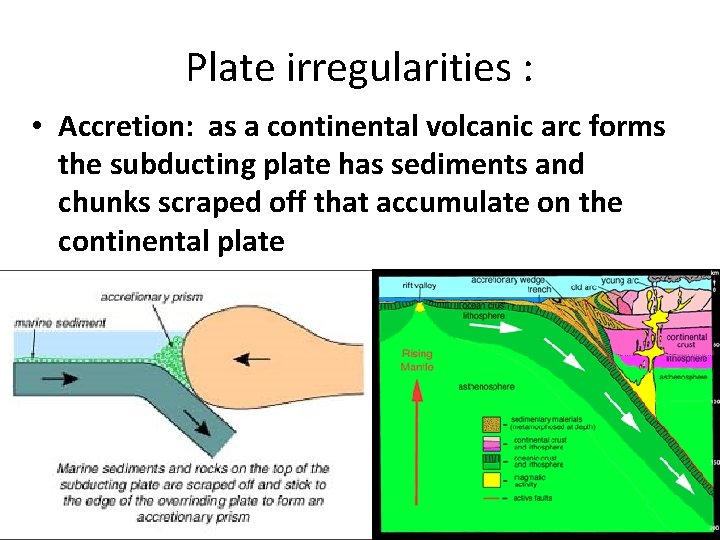
Plate irregularities : • Accretion: as a continental volcanic arc forms the subducting plate has sediments and chunks scraped off that accumulate on the continental plate
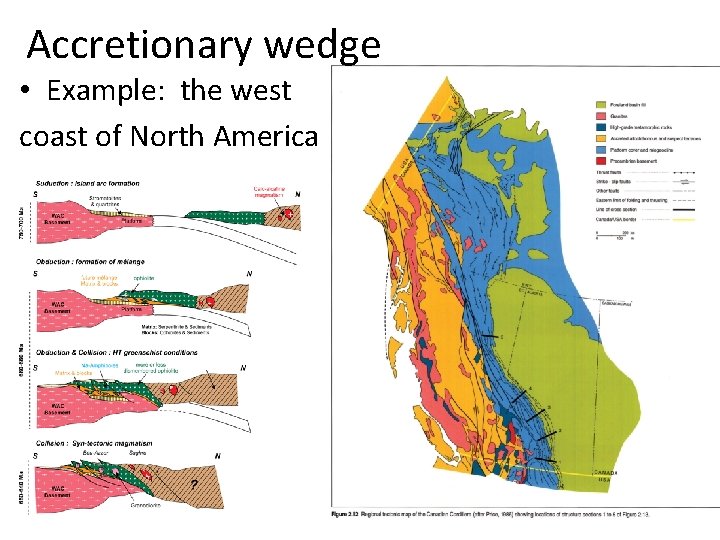
Accretionary wedge • Example: the west coast of North America