Competitive Dive Starts Safe Water Entry School Swimming


- Slides: 10
Competitive Dive Starts Safe Water Entry School Swimming Carnivals HIGH SCHOOL SLIDE 1
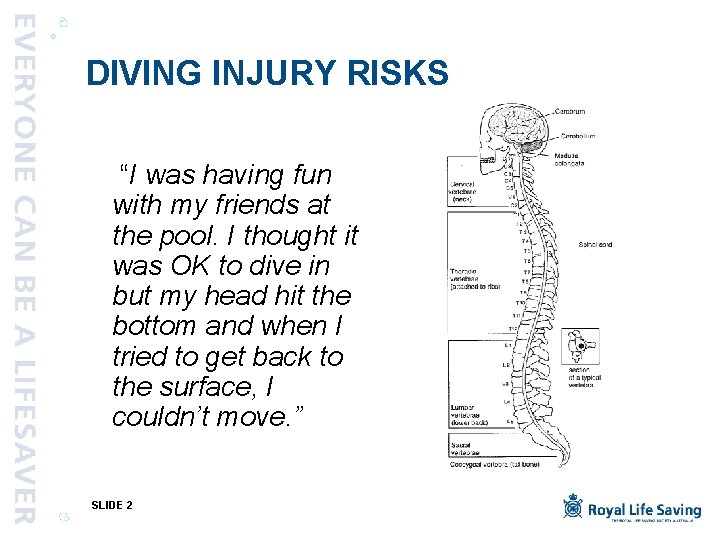
DIVING INJURY RISKS “I was having fun with my friends at the pool. I thought it was OK to dive in but my head hit the bottom and when I tried to get back to the surface, I couldn’t move. ” SLIDE 2
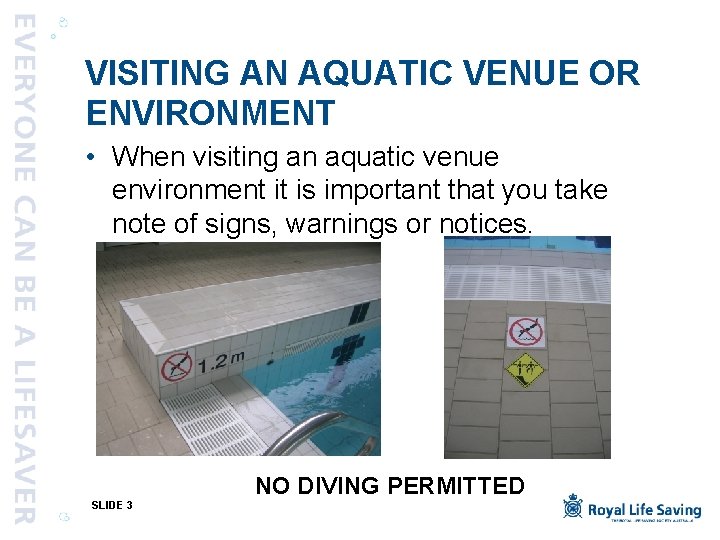
VISITING AN AQUATIC VENUE OR ENVIRONMENT • When visiting an aquatic venue environment it is important that you take note of signs, warnings or notices. NO DIVING PERMITTED SLIDE 3
TYPES OF INJURIES • The majority of water related spinal cord injuries result into diving into shallow water. Permanent paralysis is the most common result • Other diving injuries can include: – Broken teeth – Scalp injuries – Facial fractures. SLIDE 4
HOW DOES A DIVING INJURY HAPPEN? • The swimmer performs a head first entry that is too deep for the water conditions with little or no protection for the head and neck • The swimmers head comes to a sudden stop but the body continues moving • This can cause the vertebrae in the neck to dislocate or fracture, which can also damage the fragile spinal cord. SLIDE 5
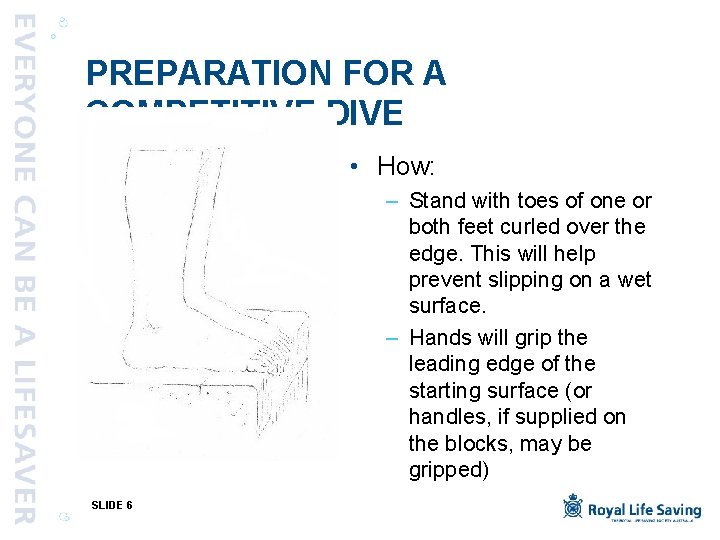
PREPARATION FOR A COMPETITIVE DIVE • How: – Stand with toes of one or both feet curled over the edge. This will help prevent slipping on a wet surface. – Hands will grip the leading edge of the starting surface (or handles, if supplied on the blocks, may be gripped) SLIDE 6
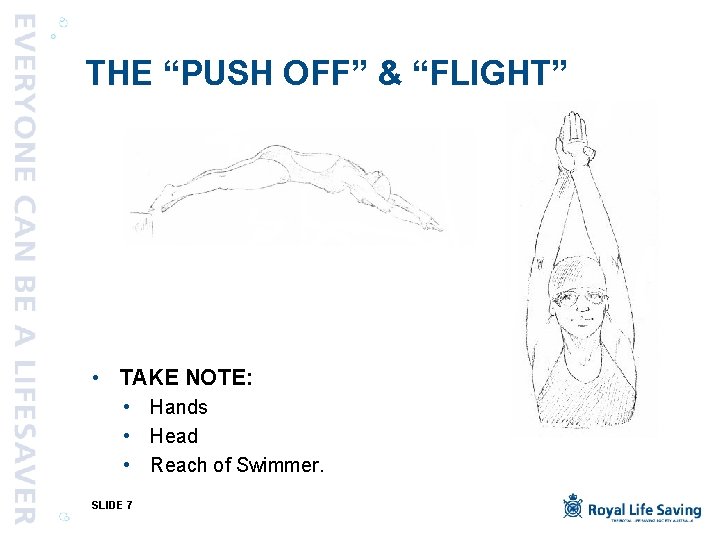
THE “PUSH OFF” & “FLIGHT” • TAKE NOTE: • Hands • Head • Reach of Swimmer. SLIDE 7
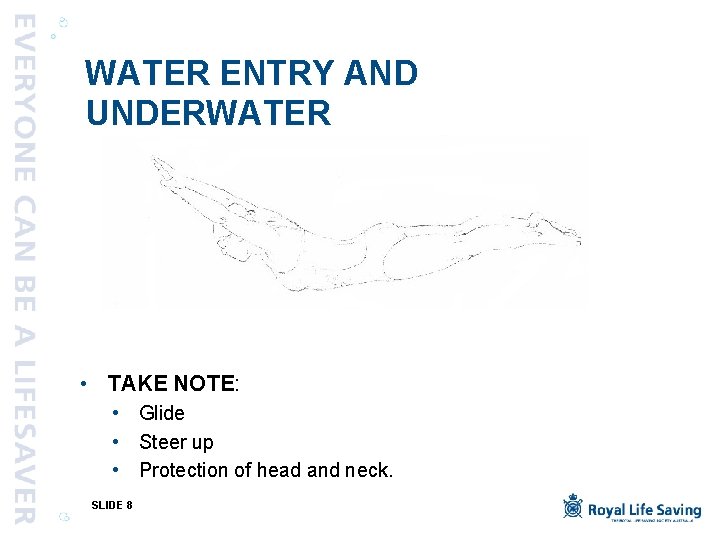
WATER ENTRY AND UNDERWATER • TAKE NOTE: • Glide • Steer up • Protection of head and neck. SLIDE 8
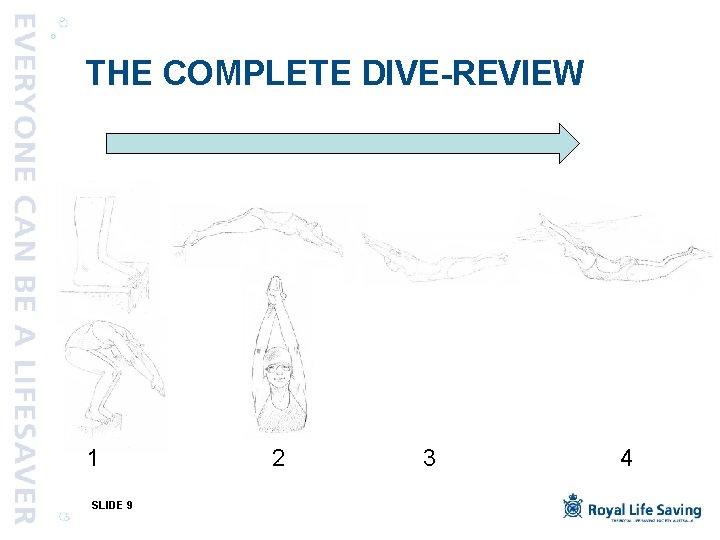
THE COMPLETE DIVE-REVIEW 1 SLIDE 9 2 3 4
SUMMARY • REMEMBER: – Take note of any signage (depth and diving related) – When ever diving: LOCK HANDS, LOCK HEAD & STEER UP! Enjoy the carnival events safely. SLIDE 10