COMMEDIA DELLARTE Improvisational Italian Renaissance Professional Comedic Theatre


- Slides: 28
COMMEDIA DELL’ARTE • Improvisational Italian Renaissance Professional Comedic Theatre
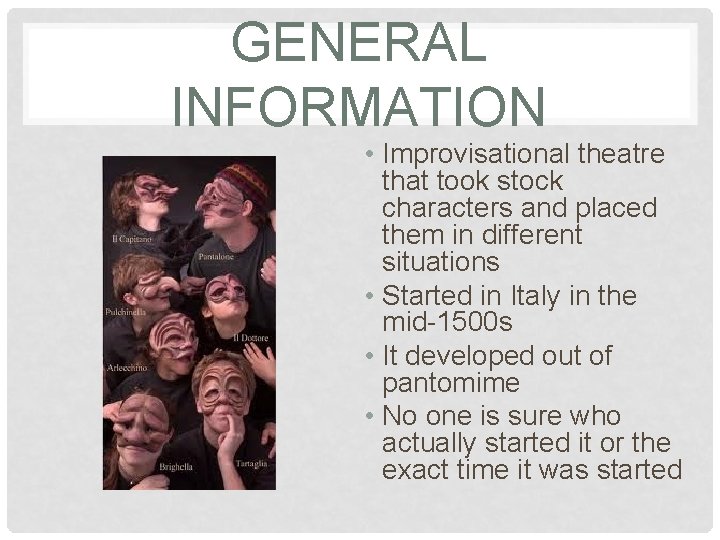
GENERAL INFORMATION • Improvisational theatre that took stock characters and placed them in different situations • Started in Italy in the mid-1500 s • It developed out of pantomime • No one is sure who actually started it or the exact time it was started
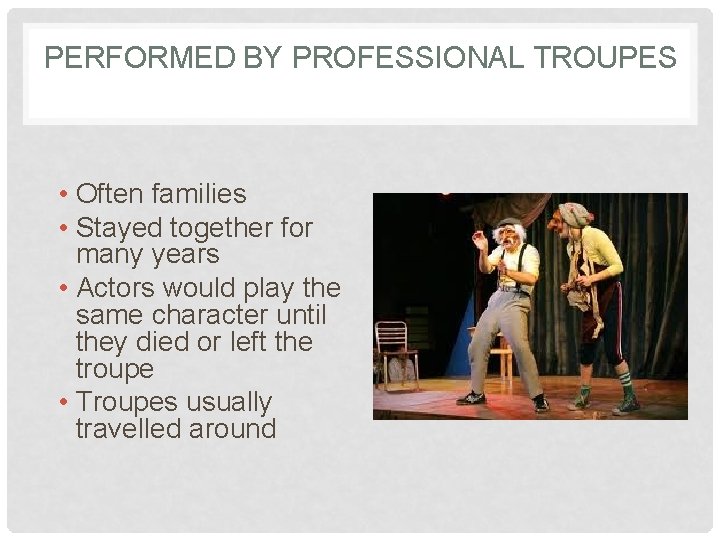
PERFORMED BY PROFESSIONAL TROUPES • Often families • Stayed together for many years • Actors would play the same character until they died or left the troupe • Troupes usually travelled around
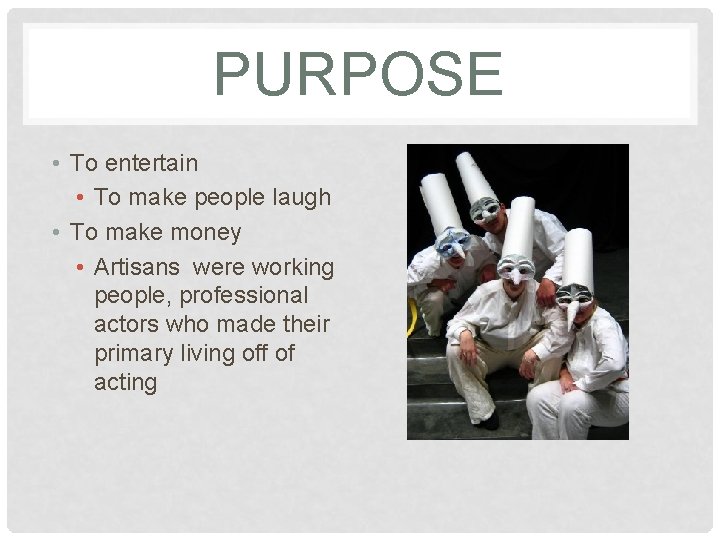
PURPOSE • To entertain • To make people laugh • To make money • Artisans were working people, professional actors who made their primary living off of acting
CONNECTION TO SOCIETY • Was geared toward the common people and the developing middle class • Made fun of the upper class primarily, but the lowest class was made fun of as well • Never made fun of the church because they were in Italy and the Roman Catholic church still controlled most of everything • Created to be a distraction from wars and poverty and other negative things that plagued their lives • Made fun of their enemies especially the Spanish
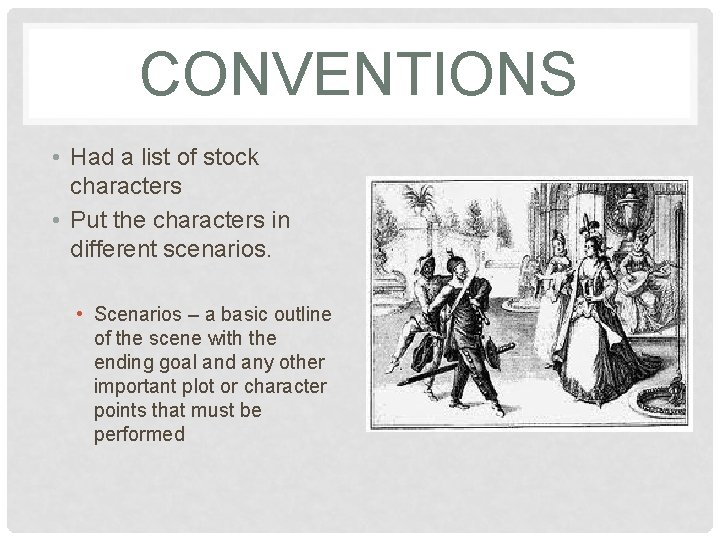
CONVENTIONS • Had a list of stock characters • Put the characters in different scenarios. • Scenarios – a basic outline of the scene with the ending goal and any other important plot or character points that must be performed
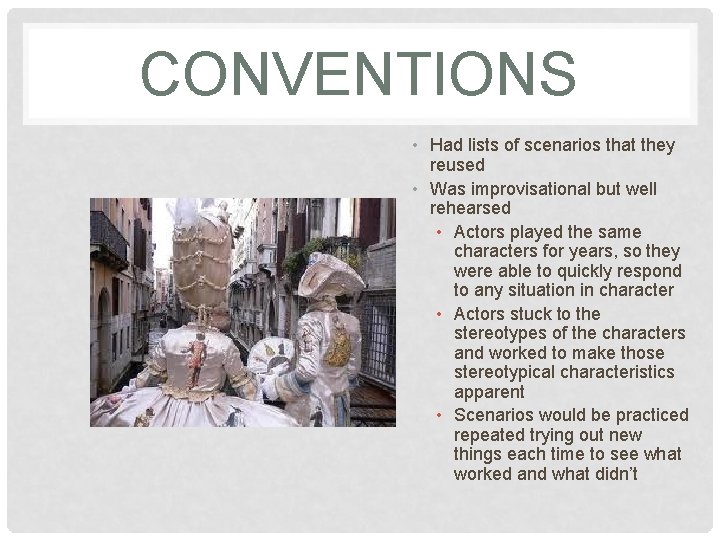
CONVENTIONS • Had lists of scenarios that they reused • Was improvisational but well rehearsed • Actors played the same characters for years, so they were able to quickly respond to any situation in character • Actors stuck to the stereotypes of the characters and worked to make those stereotypical characteristics apparent • Scenarios would be practiced repeated trying out new things each time to see what worked and what didn’t
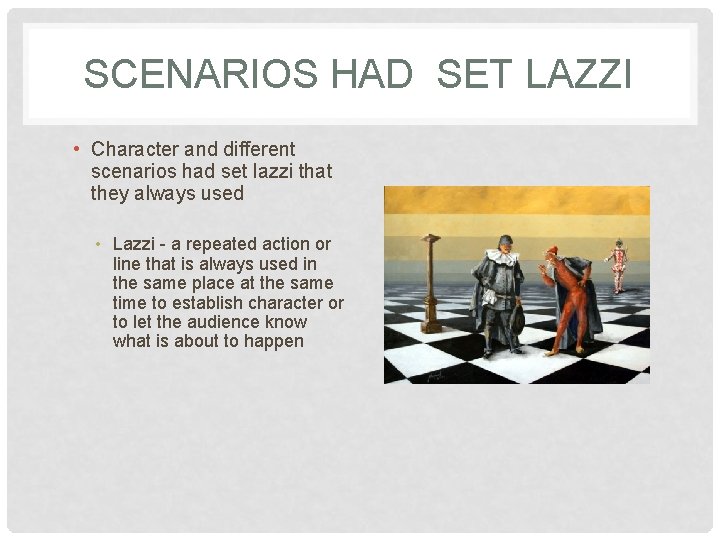
SCENARIOS HAD SET LAZZI • Character and different scenarios had set lazzi that they always used • Lazzi - a repeated action or line that is always used in the same place at the same time to establish character or to let the audience know what is about to happen
CONVENTIONS • Audience always knew exactly what was going on even if the character did not • Most of the characters talked directly to the audience and some even interacted with them • Characters posed whenever entering and exiting the stage to get applause and establish relationship with audience • Actors were usually paid through donations made by audience members • Plays were performed in the markets and city streets
CONVENTIONS • Used music as well as other forms of entertainment to keep the interest of the audience • Had no sets and just a few props • When it first started they did not even use a stage, but over time stages were use but still no sets, so they used dialogue and entrance points to establish change in location • All props were representative of a character
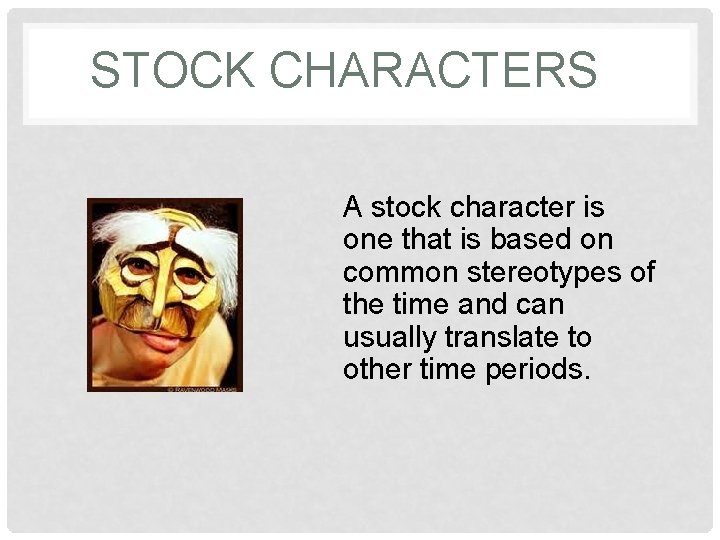
STOCK CHARACTERS A stock character is one that is based on common stereotypes of the time and can usually translate to other time periods.
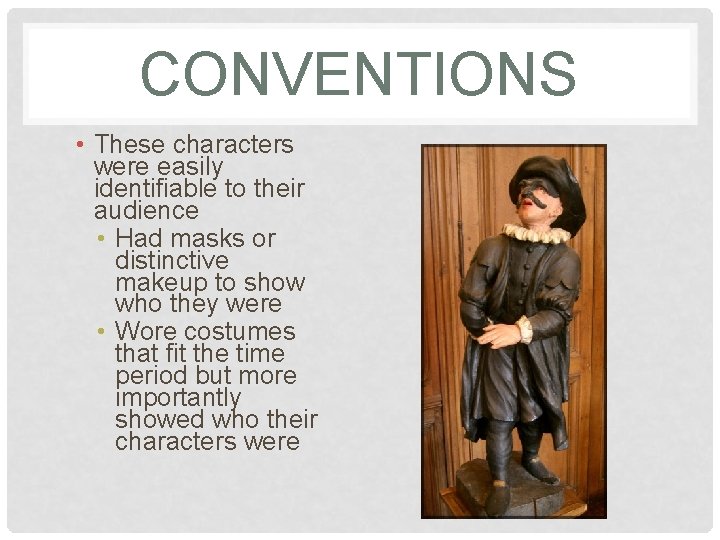
CONVENTIONS • These characters were easily identifiable to their audience • Had masks or distinctive makeup to show who they were • Wore costumes that fit the time period but more importantly showed who their characters were
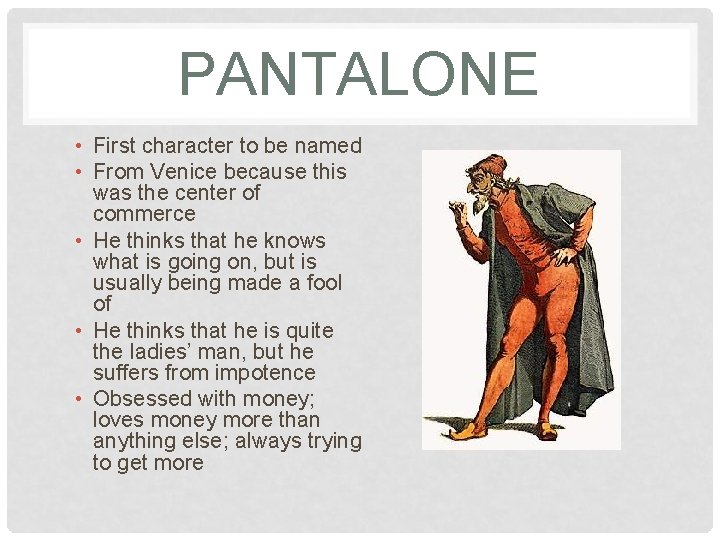
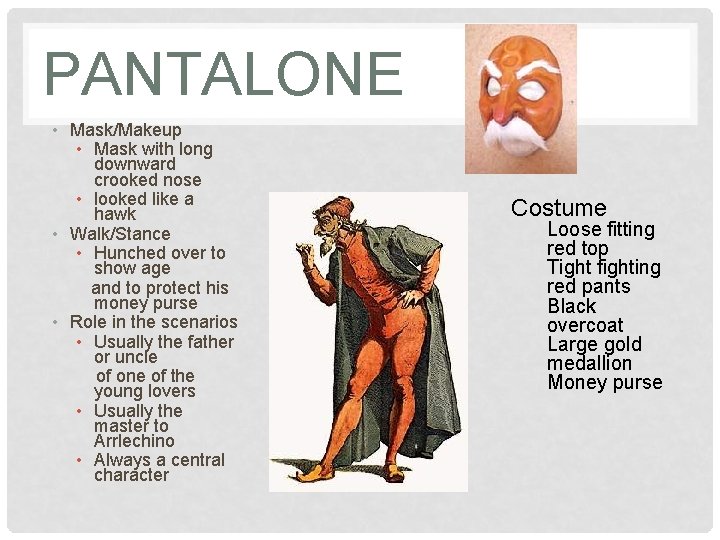
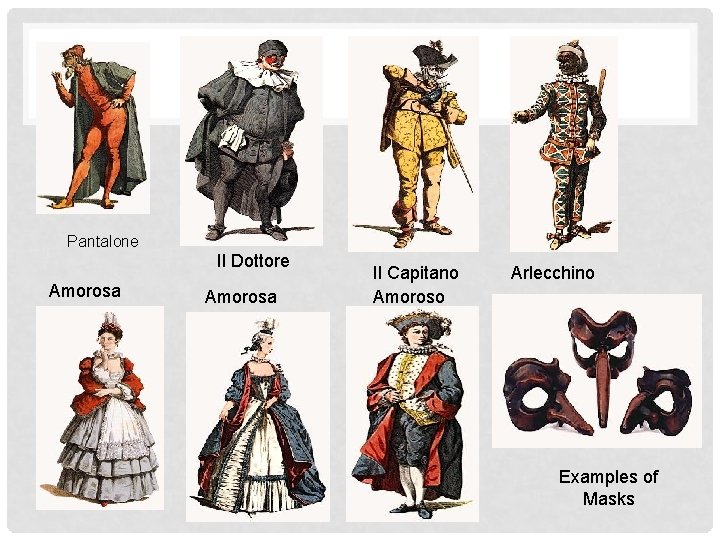
PANTALONE • First character to be named • From Venice because this was the center of commerce • He thinks that he knows what is going on, but is usually being made a fool of • He thinks that he is quite the ladies’ man, but he suffers from impotence • Obsessed with money; loves money more than anything else; always trying to get more
PANTALONE • Mask/Makeup • Mask with long downward crooked nose • looked like a hawk • Walk/Stance • Hunched over to show age and to protect his money purse • Role in the scenarios • Usually the father or uncle of one of the young lovers • Usually the master to Arrlechino • Always a central character Costume Loose fitting red top Tight fighting red pants Black overcoat Large gold medallion Money purse
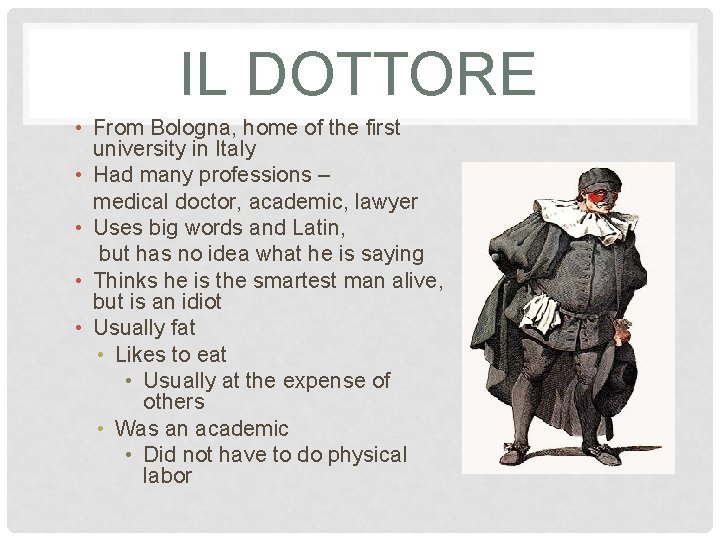
IL DOTTORE • From Bologna, home of the first university in Italy • Had many professions – medical doctor, academic, lawyer • Uses big words and Latin, but has no idea what he is saying • Thinks he is the smartest man alive, but is an idiot • Usually fat • Likes to eat • Usually at the expense of others • Was an academic • Did not have to do physical labor
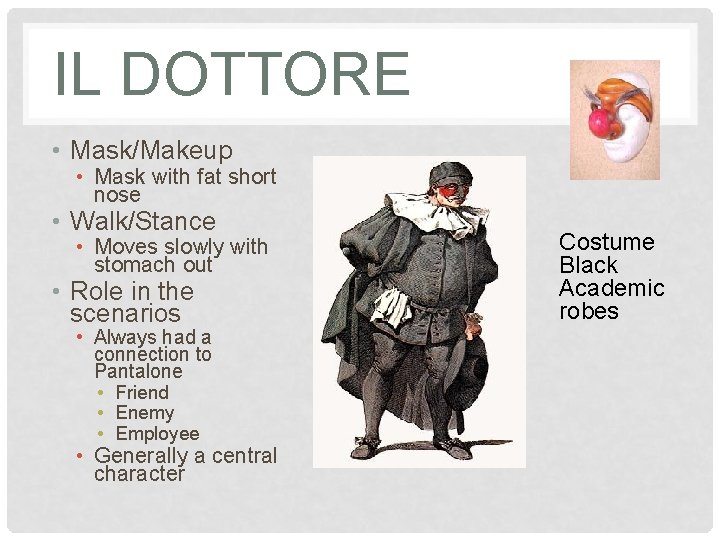
IL DOTTORE • Mask/Makeup • Mask with fat short nose • Walk/Stance • Moves slowly with stomach out • Role in the scenarios • Always had a connection to Pantalone • Friend • Enemy • Employee • Generally a central character Costume Black Academic robes
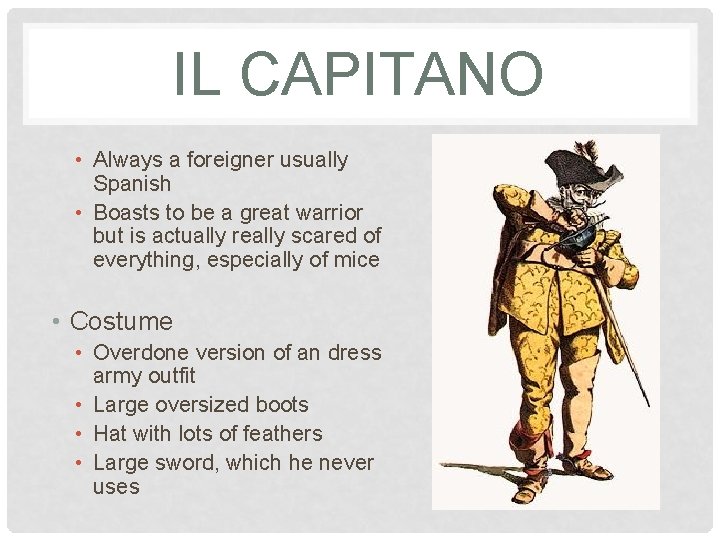
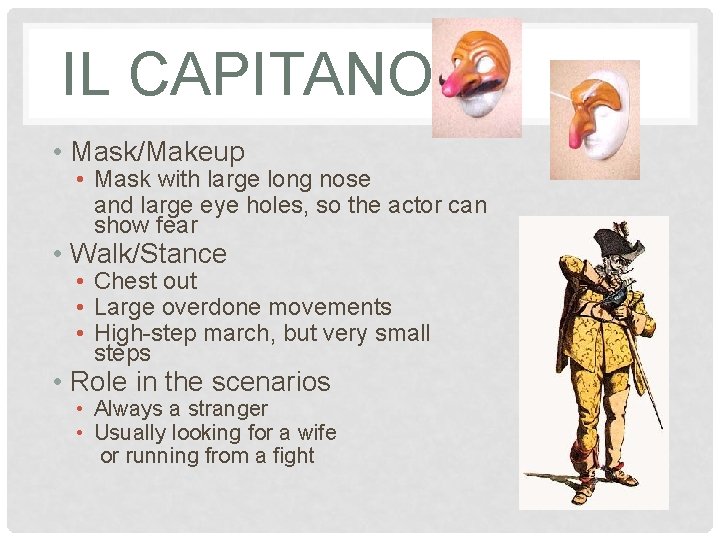
IL CAPITANO • Always a foreigner usually Spanish • Boasts to be a great warrior but is actually really scared of everything, especially of mice • Costume • Overdone version of an dress army outfit • Large oversized boots • Hat with lots of feathers • Large sword, which he never uses
IL CAPITANO • Mask/Makeup • Mask with large long nose and large eye holes, so the actor can show fear • Walk/Stance • Chest out • Large overdone movements • High-step march, but very small steps • Role in the scenarios • Always a stranger • Usually looking for a wife or running from a fight
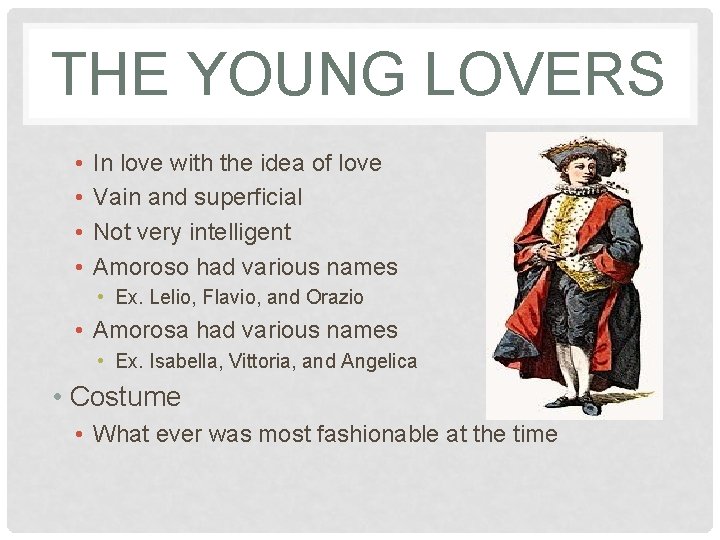
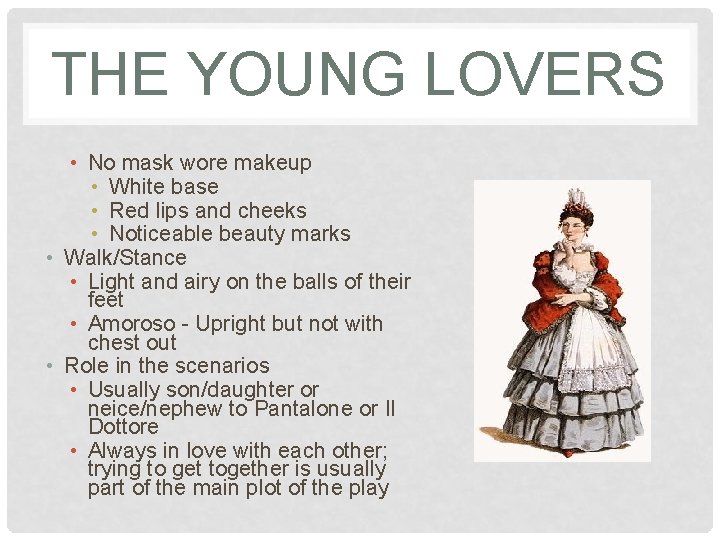
THE YOUNG LOVERS • • In love with the idea of love Vain and superficial Not very intelligent Amoroso had various names • Ex. Lelio, Flavio, and Orazio • Amorosa had various names • Ex. Isabella, Vittoria, and Angelica • Costume • What ever was most fashionable at the time
THE YOUNG LOVERS • No mask wore makeup • White base • Red lips and cheeks • Noticeable beauty marks • Walk/Stance • Light and airy on the balls of their feet • Amoroso - Upright but not with chest out • Role in the scenarios • Usually son/daughter or neice/nephew to Pantalone or Il Dottore • Always in love with each other; trying to get together is usually part of the main plot of the play
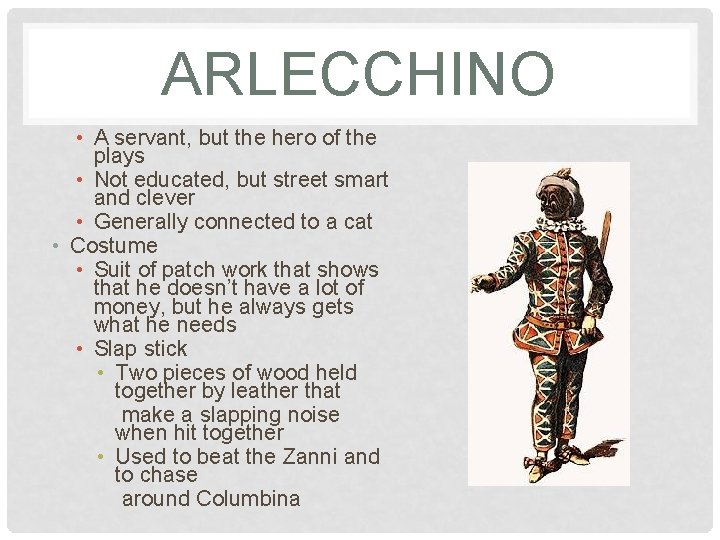
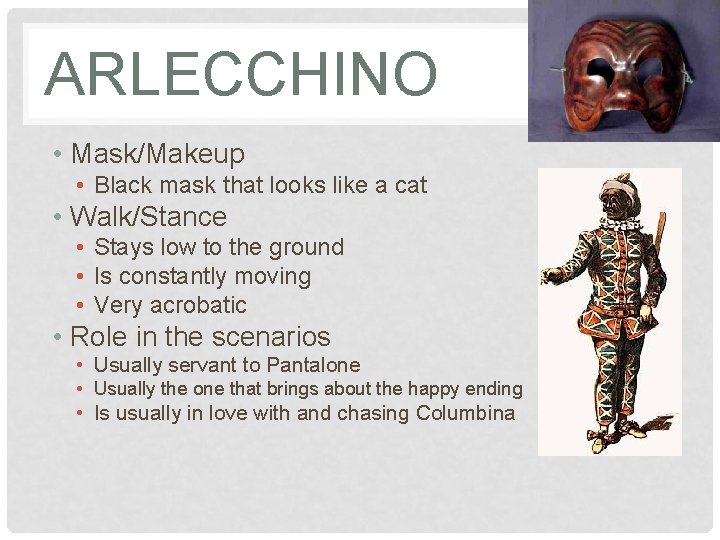
ARLECCHINO • A servant, but the hero of the plays • Not educated, but street smart and clever • Generally connected to a cat • Costume • Suit of patch work that shows that he doesn’t have a lot of money, but he always gets what he needs • Slap stick • Two pieces of wood held together by leather that make a slapping noise when hit together • Used to beat the Zanni and to chase around Columbina
ARLECCHINO • Mask/Makeup • Black mask that looks like a cat • Walk/Stance • Stays low to the ground • Is constantly moving • Very acrobatic • Role in the scenarios • Usually servant to Pantalone • Usually the one that brings about the happy ending • Is usually in love with and chasing Columbina
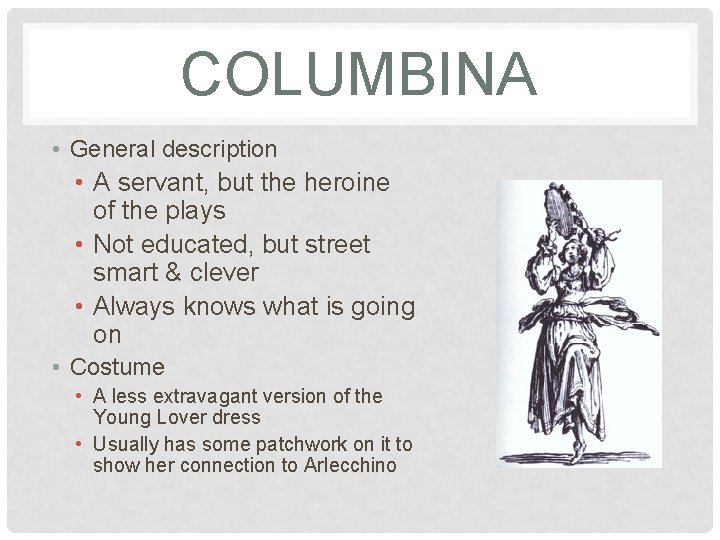
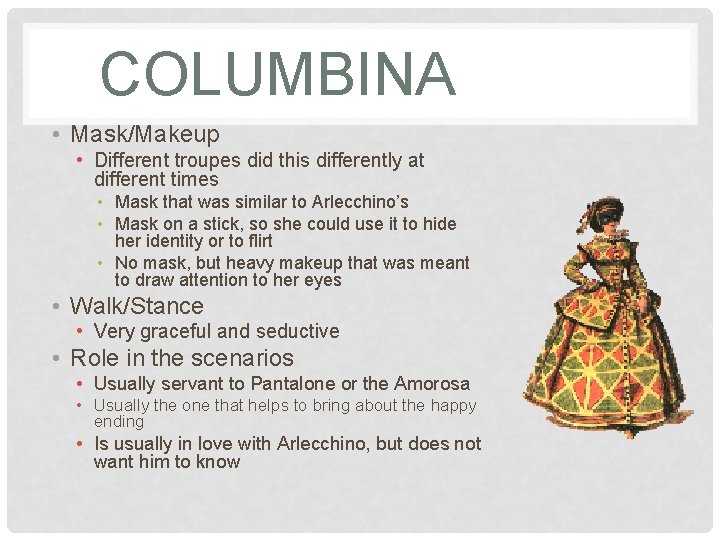
COLUMBINA • General description • A servant, but the heroine of the plays • Not educated, but street smart & clever • Always knows what is going on • Costume • A less extravagant version of the Young Lover dress • Usually has some patchwork on it to show her connection to Arlecchino
COLUMBINA • Mask/Makeup • Different troupes did this differently at different times • Mask that was similar to Arlecchino’s • Mask on a stick, so she could use it to hide her identity or to flirt • No mask, but heavy makeup that was meant to draw attention to her eyes • Walk/Stance • Very graceful and seductive • Role in the scenarios • Usually servant to Pantalone or the Amorosa • Usually the one that helps to bring about the happy ending • Is usually in love with Arlecchino, but does not want him to know
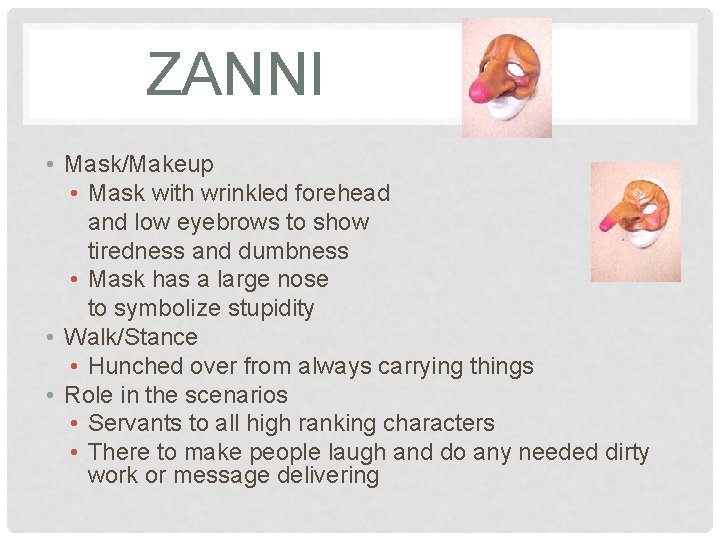
ZANNI • Refers to any low level servant • Obsessed with eating and sleeping • Will do anything for food including taking it from the audience • Will fall asleep randomly • Costume • Loose white shirt and pants, originally made out of flour cloth
ZANNI • Mask/Makeup • Mask with wrinkled forehead and low eyebrows to show tiredness and dumbness • Mask has a large nose to symbolize stupidity • Walk/Stance • Hunched over from always carrying things • Role in the scenarios • Servants to all high ranking characters • There to make people laugh and do any needed dirty work or message delivering
Pantalone Il Dottore Amorosa Il Capitano Amoroso Arlecchino Examples of Masks
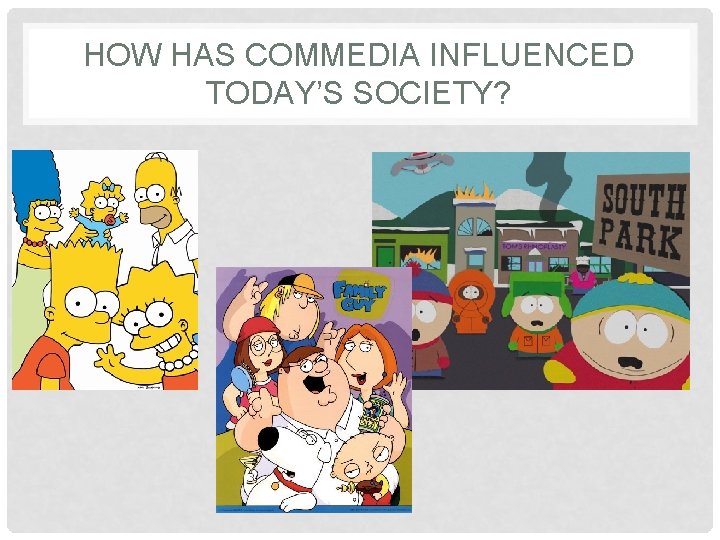
HOW HAS COMMEDIA INFLUENCED TODAY’S SOCIETY?