Cities of Vesuvius Pompeii and Herculaneum Streetscapes of


- Slides: 6
Cities of Vesuvius – Pompeii and Herculaneum Streetscapes of Pompeii and Herculaneum Mr Scully HSC Ancient History
Outcomes for this Lesson �Describe the streetscape of Pompeii and Herculaneum.
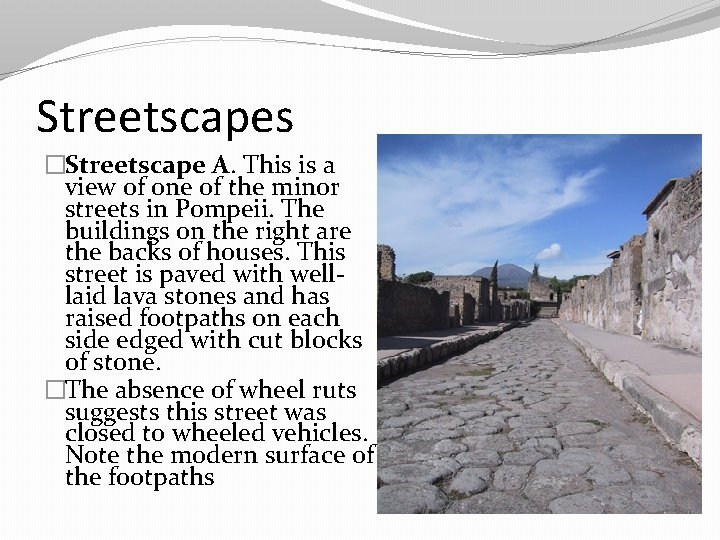
Streetscapes �Streetscape A. This is a view of one of the minor streets in Pompeii. The buildings on the right are the backs of houses. This street is paved with welllaid lava stones and has raised footpaths on each side edged with cut blocks of stone. �The absence of wheel ruts suggests this street was closed to wheeled vehicles. Note the modern surface of the footpaths
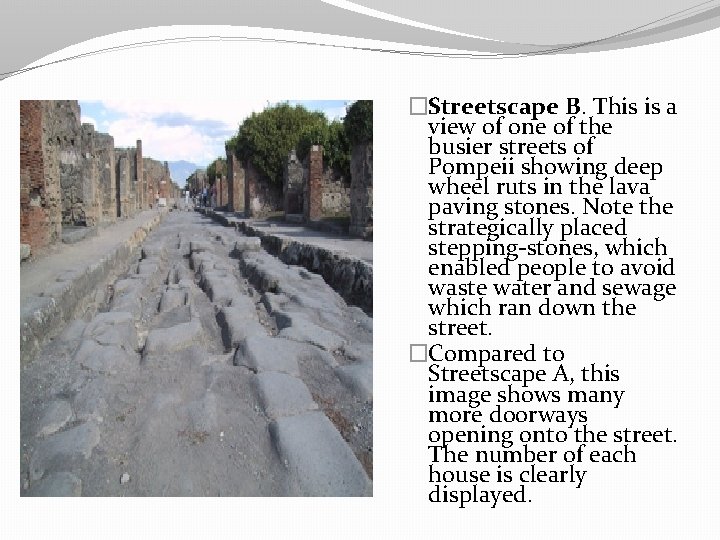
�Streetscape B. This is a view of one of the busier streets of Pompeii showing deep wheel ruts in the lava paving stones. Note the strategically placed stepping-stones, which enabled people to avoid waste water and sewage which ran down the street. �Compared to Streetscape A, this image shows many more doorways opening onto the street. The number of each house is clearly displayed.
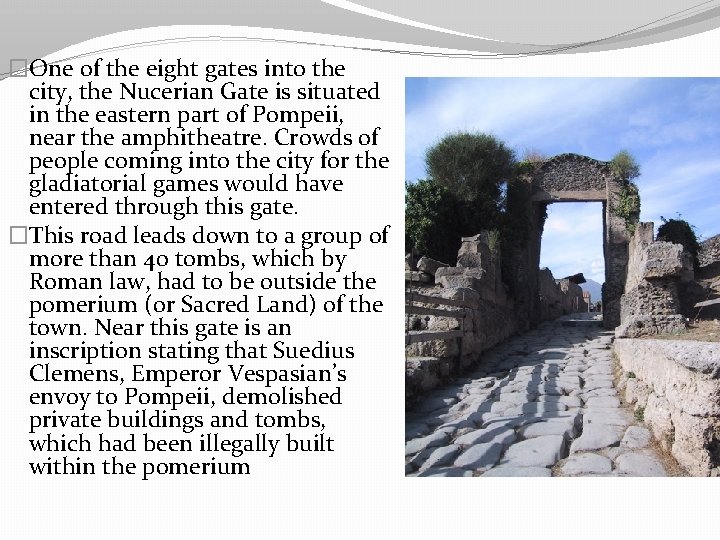
�One of the eight gates into the city, the Nucerian Gate is situated in the eastern part of Pompeii, near the amphitheatre. Crowds of people coming into the city for the gladiatorial games would have entered through this gate. �This road leads down to a group of more than 40 tombs, which by Roman law, had to be outside the pomerium (or Sacred Land) of the town. Near this gate is an inscription stating that Suedius Clemens, Emperor Vespasian’s envoy to Pompeii, demolished private buildings and tombs, which had been illegally built within the pomerium
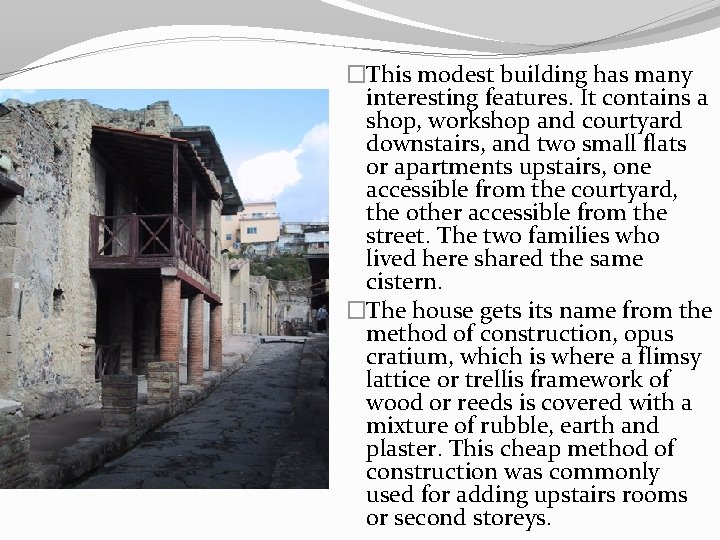
�This modest building has many interesting features. It contains a shop, workshop and courtyard downstairs, and two small flats or apartments upstairs, one accessible from the courtyard, the other accessible from the street. The two families who lived here shared the same cistern. �The house gets its name from the method of construction, opus cratium, which is where a flimsy lattice or trellis framework of wood or reeds is covered with a mixture of rubble, earth and plaster. This cheap method of construction was commonly used for adding upstairs rooms or second storeys.