Characters 101 Types of Characters Hero protagonist main
- Slides: 11
Characters 101
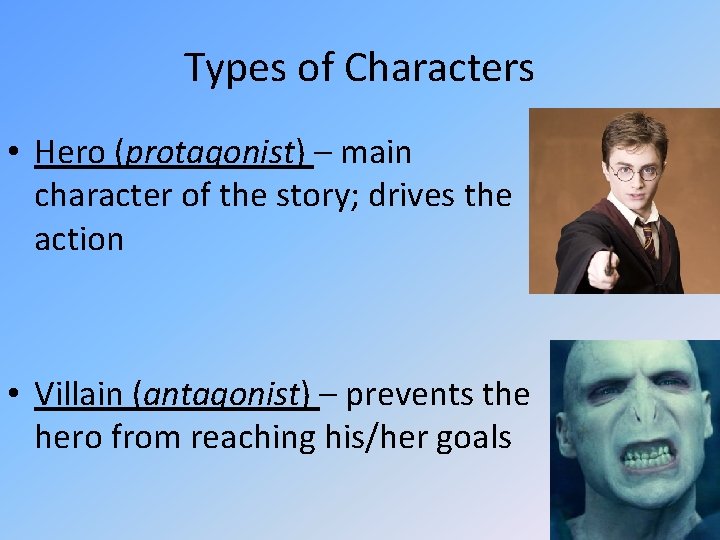
Types of Characters • Hero (protagonist) – main character of the story; drives the action • Villain (antagonist) – prevents the hero from reaching his/her goals
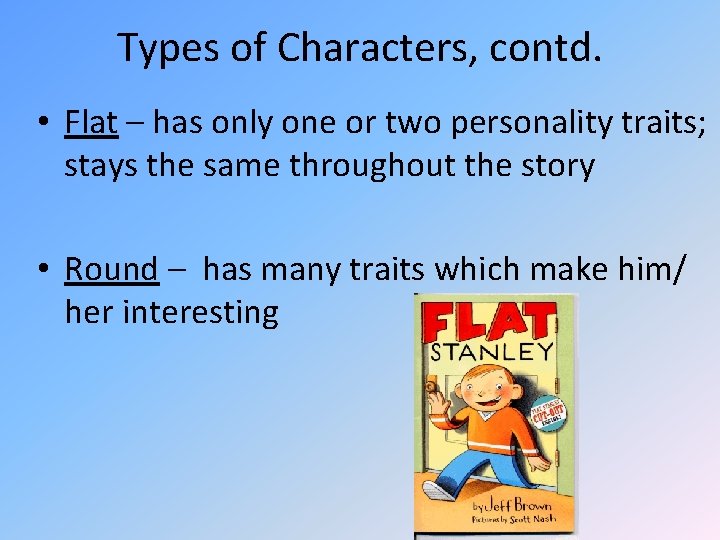
Types of Characters, contd. • Flat – has only one or two personality traits; stays the same throughout the story • Round – has many traits which make him/ her interesting
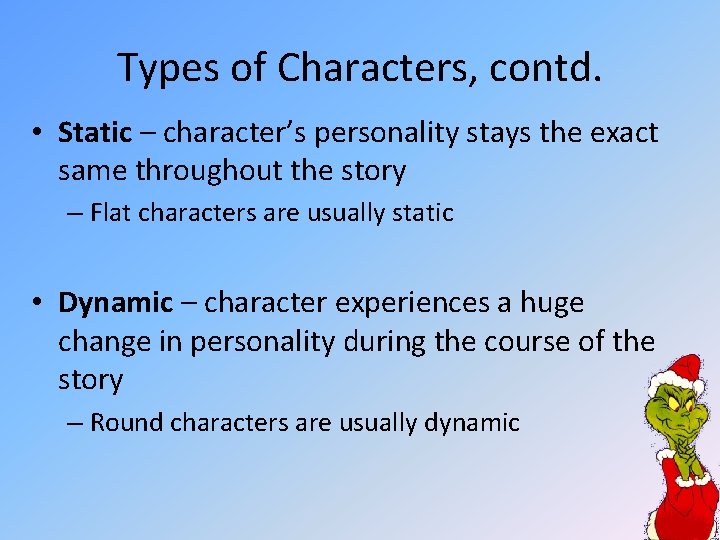
Types of Characters, contd. • Static – character’s personality stays the exact same throughout the story – Flat characters are usually static • Dynamic – character experiences a huge change in personality during the course of the story – Round characters are usually dynamic
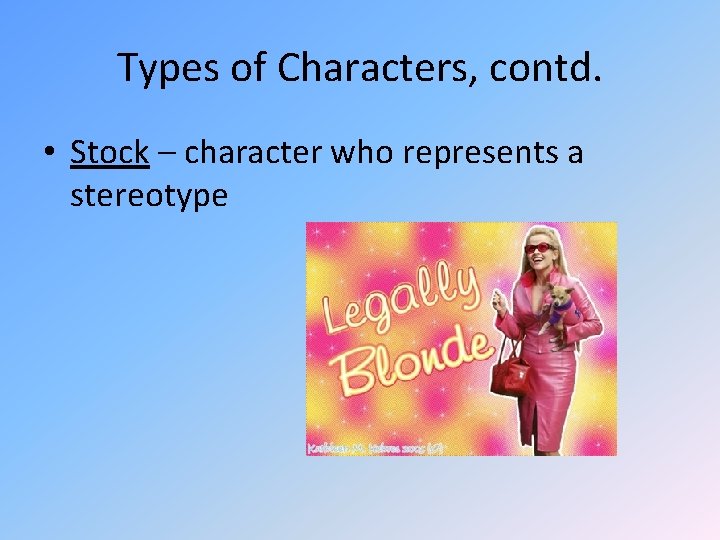
Types of Characters, contd. • Stock – character who represents a stereotype
Describe a Character! 1. Think of a character from a story or movie. 2. Turn to your shoulder partner. 3. Describe your character using as much detail as possible. 4. Identify whether your chosen character is: Protagonist/Antagonist? Flat/Round? Dynamic/Static?
Two Types of Characterization • Direct – author describes a character’s traits (ex. physical appearance) • Indirect – personality described through actions, speech, thoughts, and interactions with other characters
Methods of Indirect Characterization • S – speech; what the character says • T – thoughts; what the character thinks • E – effect on others; how the character interacts with others • A – actions; what the character does • L – looks; what the character looks like
BRAIN BREAK!
Partner Practice with STEAL 1. Find your Princeton partner. 2. Use the textbook to complete the STEAL handout for Travis. - Include page numbers for each example - Explain what each example reveals about the character. Example: “We don’t belong in the Past. ” (pg. 42). This shows Travis understands the consequences of changing the future.
Summarizer: 3 -2 -1 Exit Ticket • On the half sheet provided, write down: – 3 things you learned today – 2 examples of indirect characterization – 1 question you still have about characterization.