Characteristics of the Hungarian Folk Tales Historical and

- Slides: 17
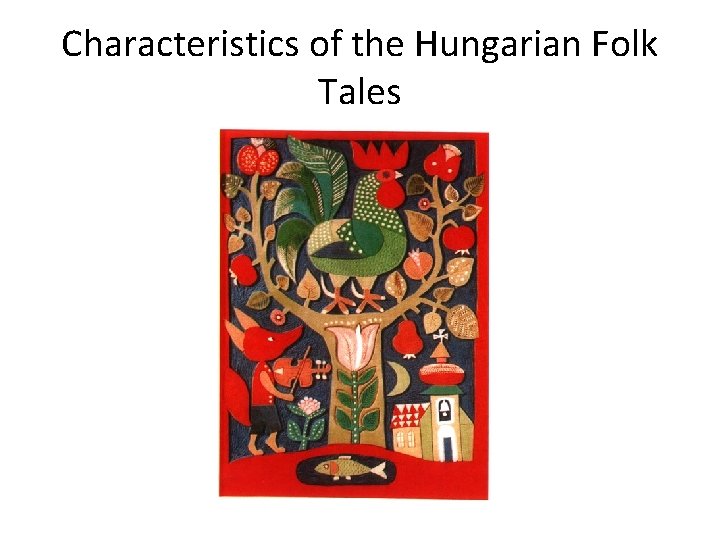
Characteristics of the Hungarian Folk Tales
Historical and Cultural Background Before the Conquest (896 A. D. ) • Finno-Ugric in origin • inseparably amalgamated with Turkish tribes • influence of the Inner Asian, Caucasian, Iranian cultures
Historical and Cultural Background After the conquest: • the Magyars settled in the Carpathian Basin • contact with Ancient Slavic and Byzantine cultures • King Saint Stephen (the first king of Hungary): coronation in 1000 A. D. , • Hungary became a Christian Kingdom, part of the Western culture
Historical and Cultural Background Results: • Hungary became one of the sensitive focal points connecting different cultures between East and West • complexity of the history of Hungarian culture • Hungarian culture became a unifier, a synthesizer of many contradictory elements. • multi-layered nature of Hungarian folk tales
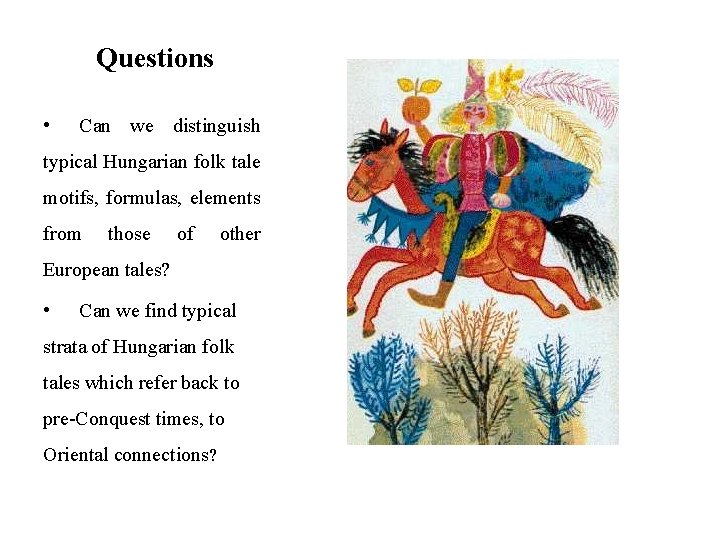
Questions • Can we distinguish typical Hungarian folk tale motifs, formulas, elements from those of other European tales? • Can we find typical strata of Hungarian folk tales which refer back to pre-Conquest times, to Oriental connections?
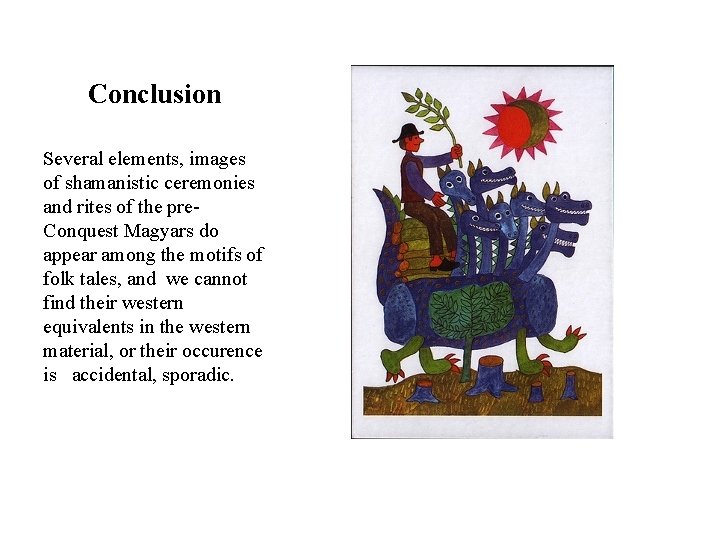
Conclusion Several elements, images of shamanistic ceremonies and rites of the pre. Conquest Magyars do appear among the motifs of folk tales, and we cannot find their western equivalents in the western material, or their occurence is accidental, sporadic.
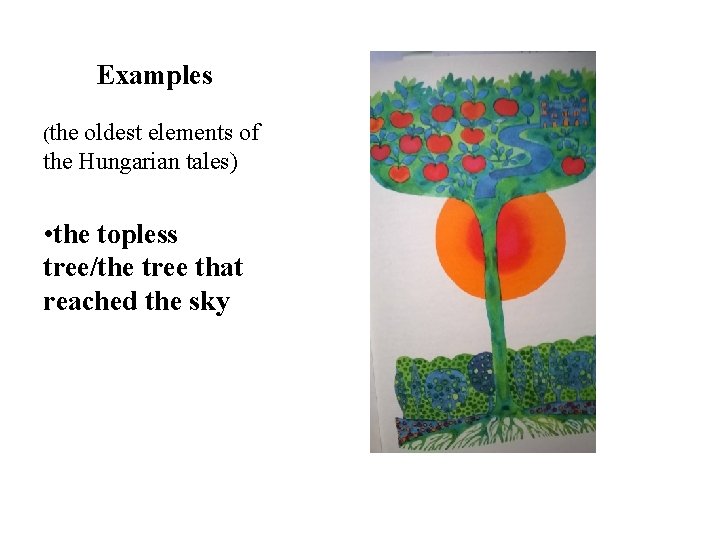
Examples (the oldest elements of the Hungarian tales) • the topless tree/the tree that reached the sky
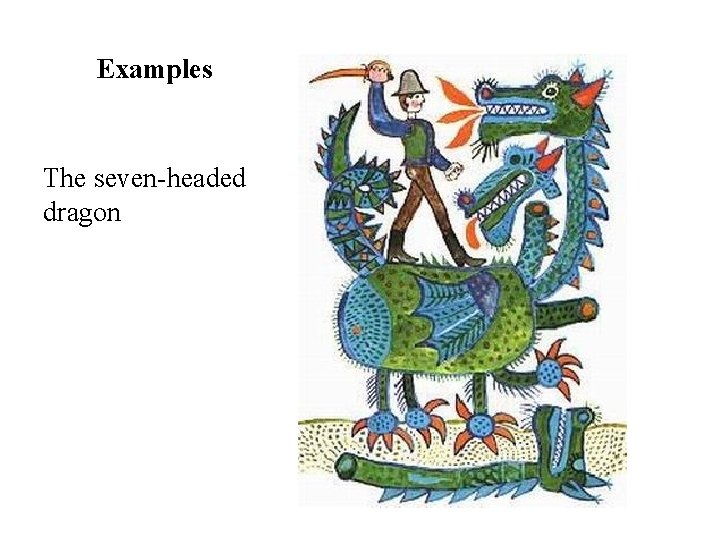
Examples The seven-headed dragon
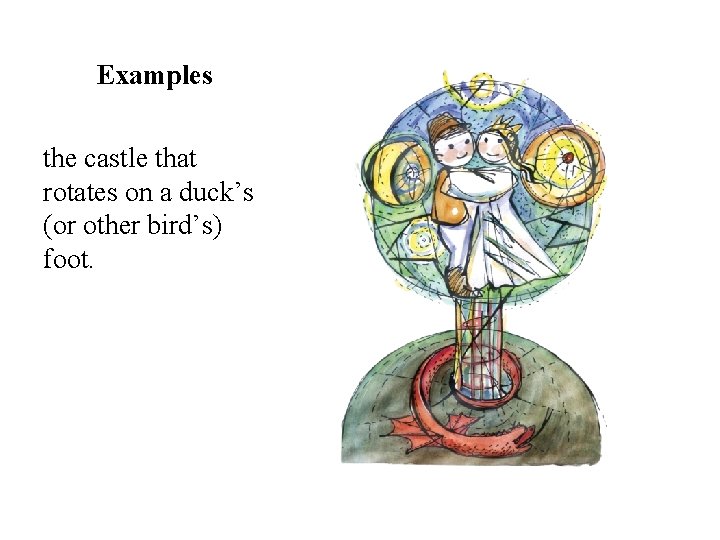
Examples the castle that rotates on a duck’s (or other bird’s) foot.
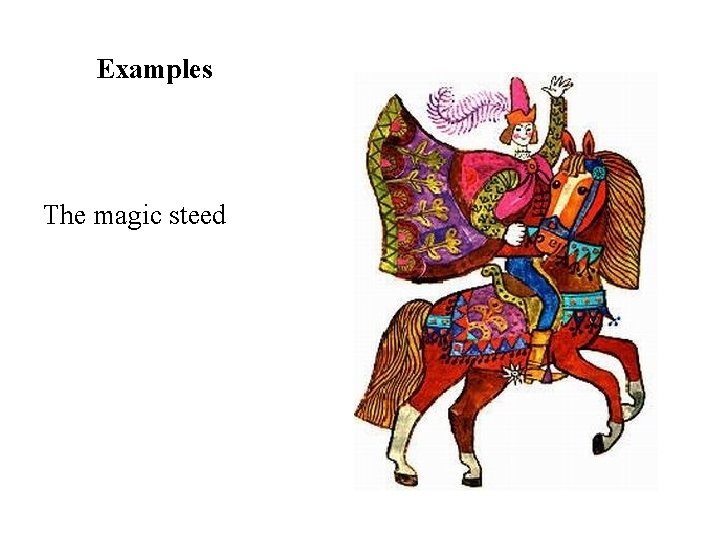
Examples The magic steed
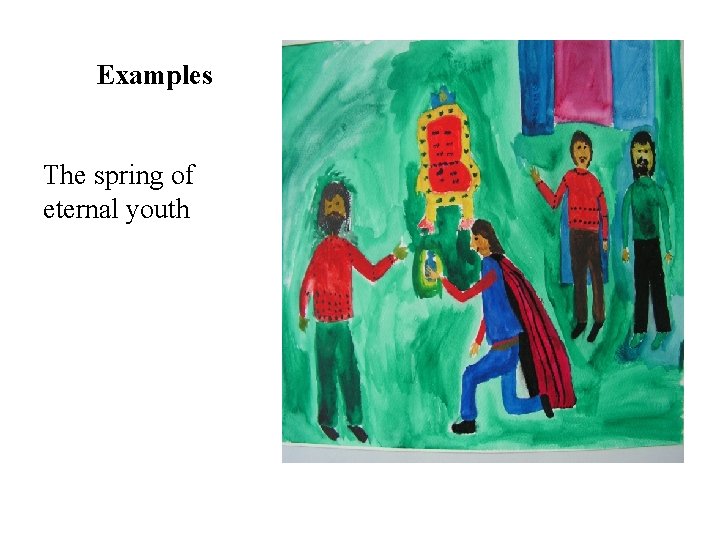
Examples The spring of eternal youth
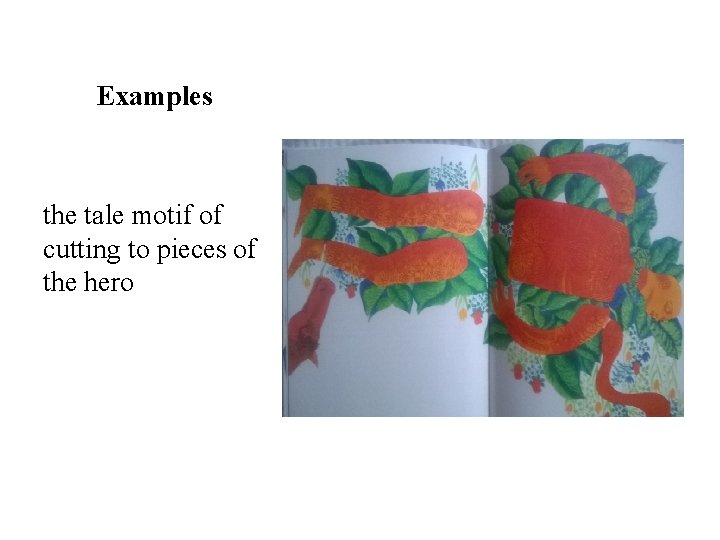
Examples the tale motif of cutting to pieces of the hero
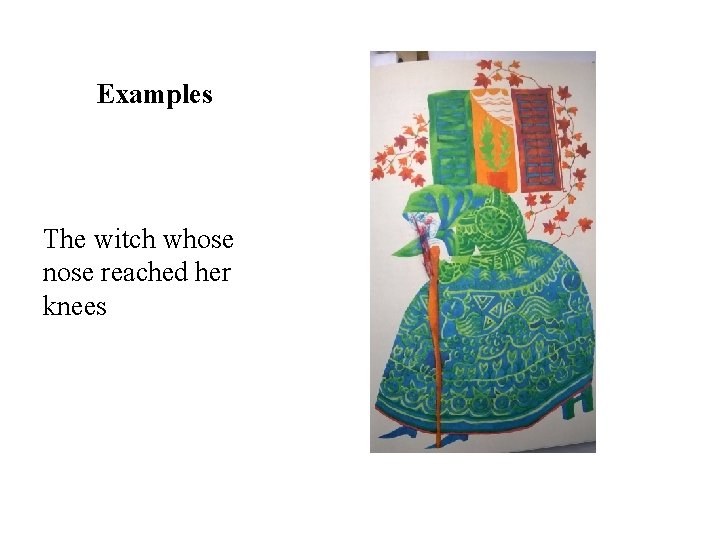
Examples The witch whose nose reached her knees
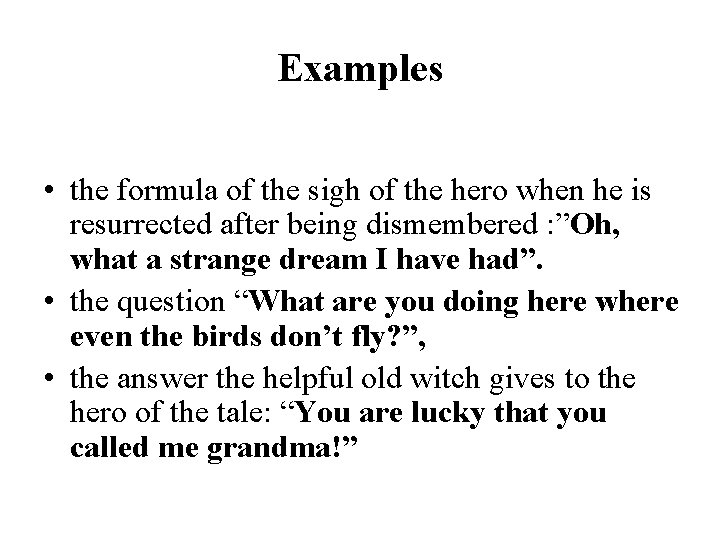
Examples • the formula of the sigh of the hero when he is resurrected after being dismembered : ”Oh, what a strange dream I have had”. • the question “What are you doing here where even the birds don’t fly? ”, • the answer the helpful old witch gives to the hero of the tale: “You are lucky that you called me grandma!”
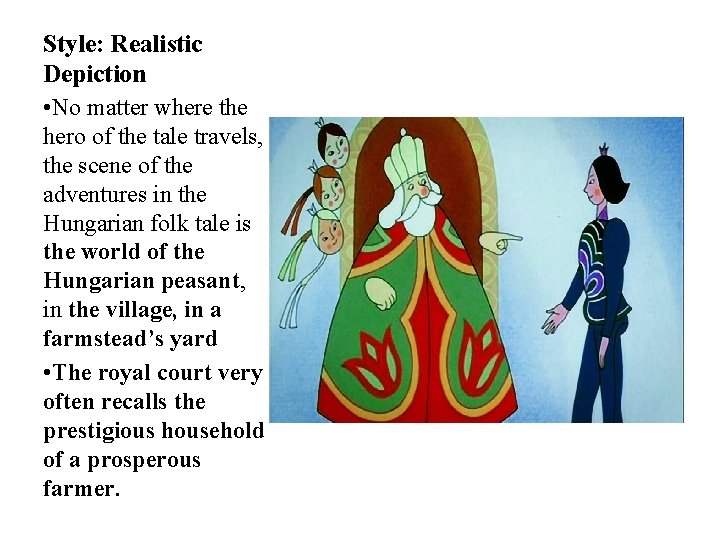
Style: Realistic Depiction • No matter where the hero of the tale travels, the scene of the adventures in the Hungarian folk tale is the world of the Hungarian peasant, in the village, in a farmstead’s yard • The royal court very often recalls the prestigious household of a prosperous farmer.
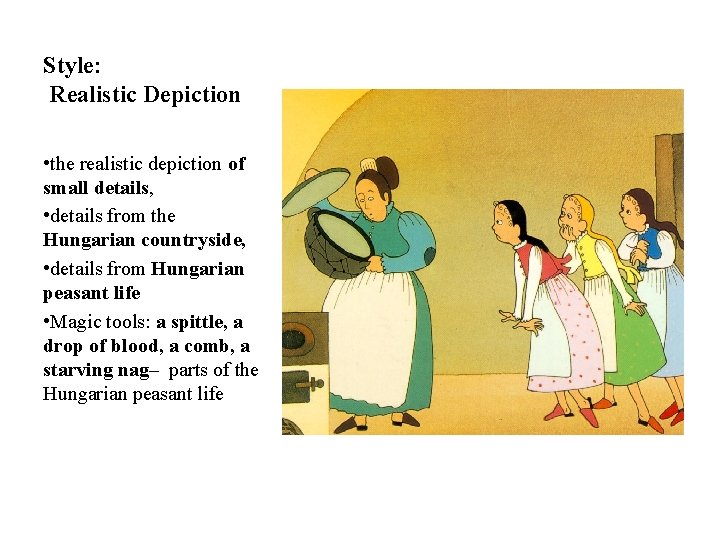
Style: Realistic Depiction • the realistic depiction of small details, • details from the Hungarian countryside, • details from Hungarian peasant life • Magic tools: a spittle, a drop of blood, a comb, a starving nag– parts of the Hungarian peasant life
Thank you for your attention