Chapter 8 Taoism World Religions A Voyage of



- Slides: 11
Chapter 8: Taoism World Religions: A Voyage of Discovery DOC ID #: TX 003945
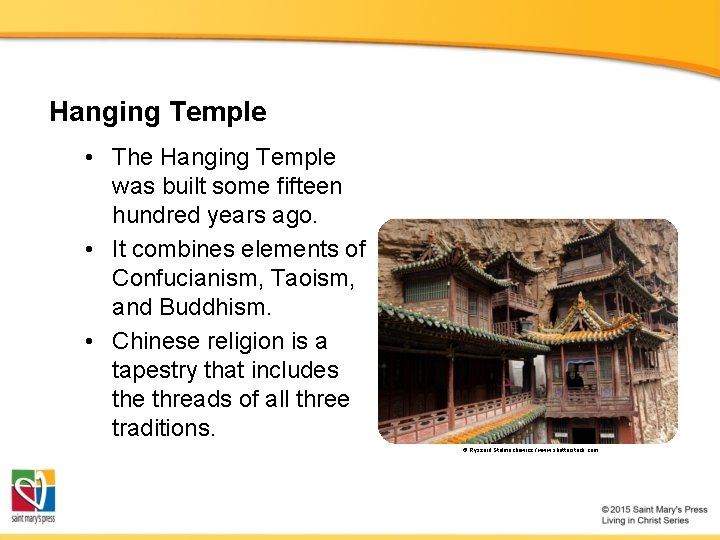
Hanging Temple • The Hanging Temple was built some fifteen hundred years ago. • It combines elements of Confucianism, Taoism, and Buddhism. • Chinese religion is a tapestry that includes the threads of all three traditions. © Ryszard Stelmachowicz / www. shutterstock. com
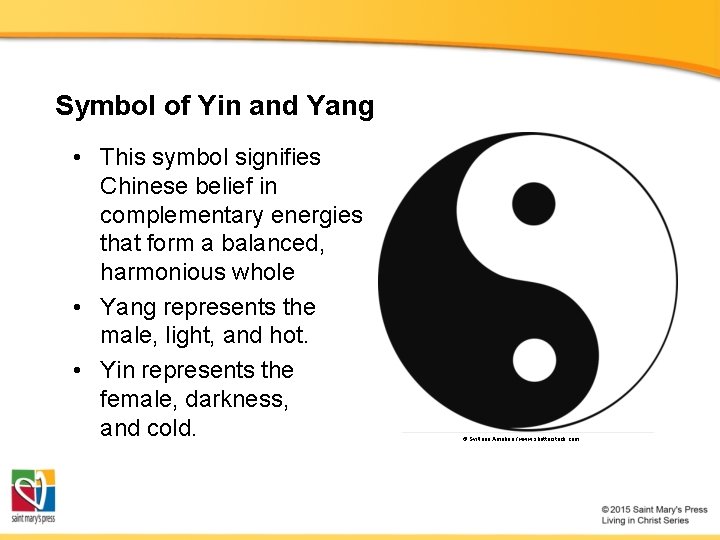
Symbol of Yin and Yang • This symbol signifies Chinese belief in complementary energies that form a balanced, harmonious whole • Yang represents the male, light, and hot. • Yin represents the female, darkness, and cold. © Svitlana Amelina / www. shutterstock. com
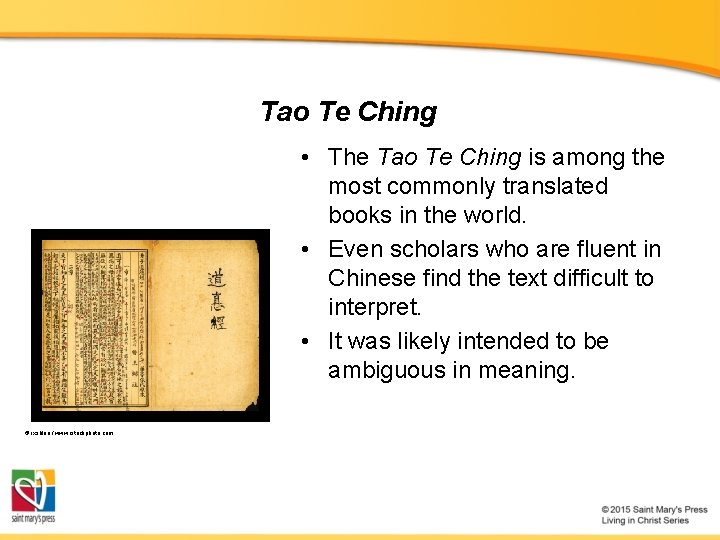
Tao Te Ching • The Tao Te Ching is among the most commonly translated books in the world. • Even scholars who are fluent in Chinese find the text difficult to interpret. • It was likely intended to be ambiguous in meaning. © ixsblue / www. istockphoto. com
The River • Taoist texts draw on the symbolism of water to convey essential teachings. • The river demonstrates wu-wei, “nonaction. ” • The natural tendency of the water is to settle into rather than to fight against the natural course of the river. © aspen rock / www. shutterstock. com
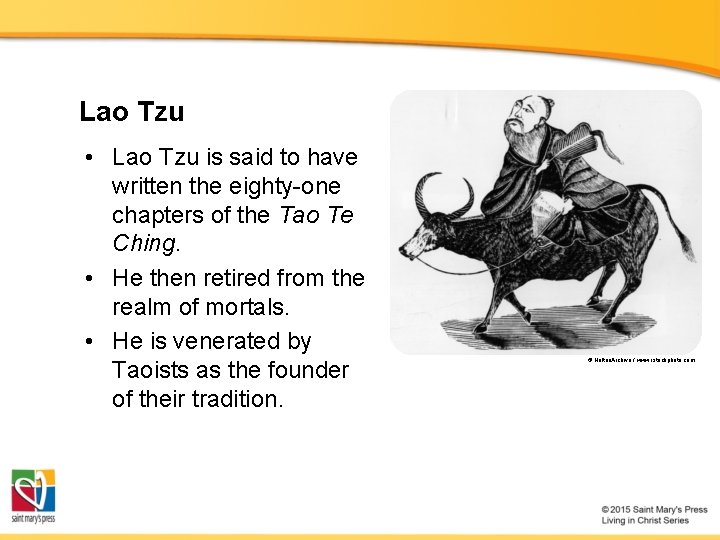
Lao Tzu • Lao Tzu is said to have written the eighty-one chapters of the Tao Te Ching. • He then retired from the realm of mortals. • He is venerated by Taoists as the founder of their tradition. © Hulton. Archive / www. istockphoto. com
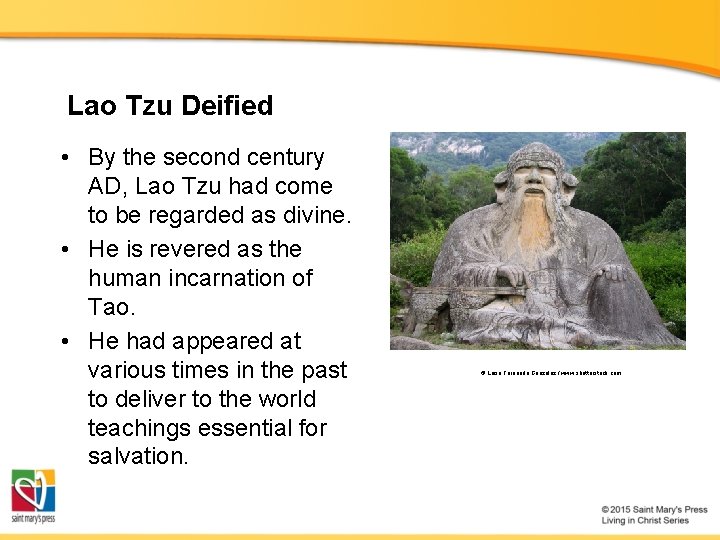
Lao Tzu Deified • By the second century AD, Lao Tzu had come to be regarded as divine. • He is revered as the human incarnation of Tao. • He had appeared at various times in the past to deliver to the world teachings essential for salvation. © Luisa Fernanda Gonzalez / www. shutterstock. com
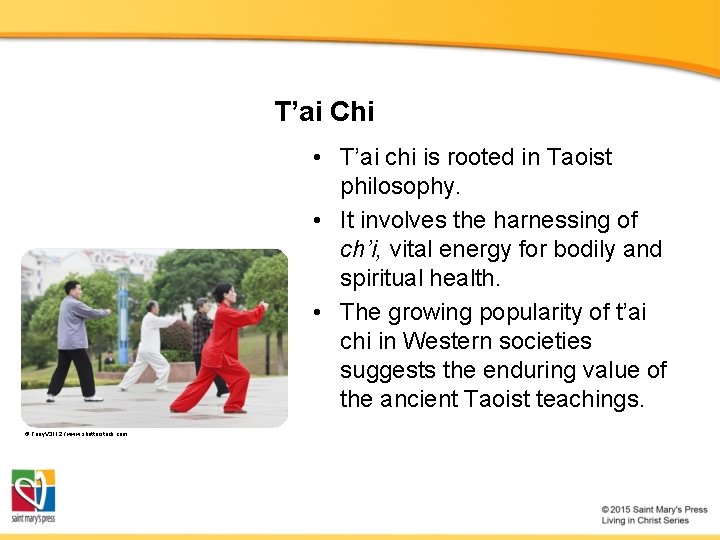
T’ai Chi • T’ai chi is rooted in Taoist philosophy. • It involves the harnessing of ch’i, vital energy for bodily and spiritual health. • The growing popularity of t’ai chi in Western societies suggests the enduring value of the ancient Taoist teachings. © Tony. V 3112 / www. shutterstock. com
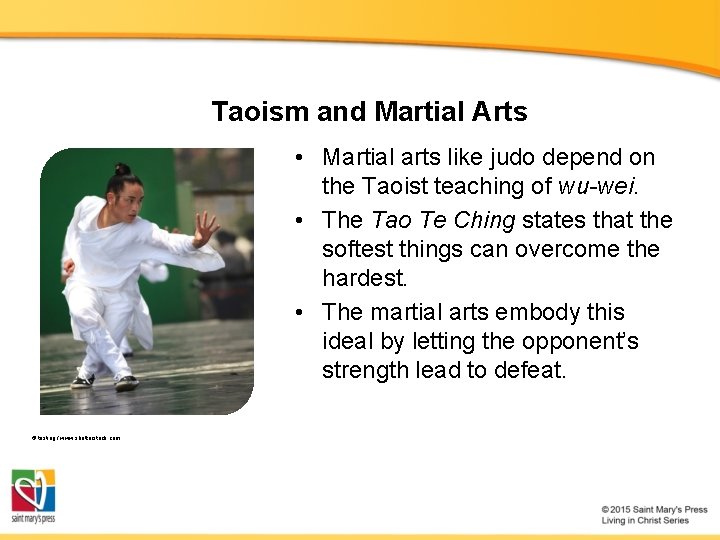
Taoism and Martial Arts • Martial arts like judo depend on the Taoist teaching of wu-wei. • The Tao Te Ching states that the softest things can overcome the hardest. • The martial arts embody this ideal by letting the opponent’s strength lead to defeat. © testing / www. shutterstock. com
Taoism and Chinese Landscape Painting • Chinese landscape paintings illustrate Taoist influence in their depiction of balance and tranquility in nature. • Like calligraphy, the painting is done with brush and ink. • It is most commonly done on paper or silk. © i. Bird / www. shutterstock. com
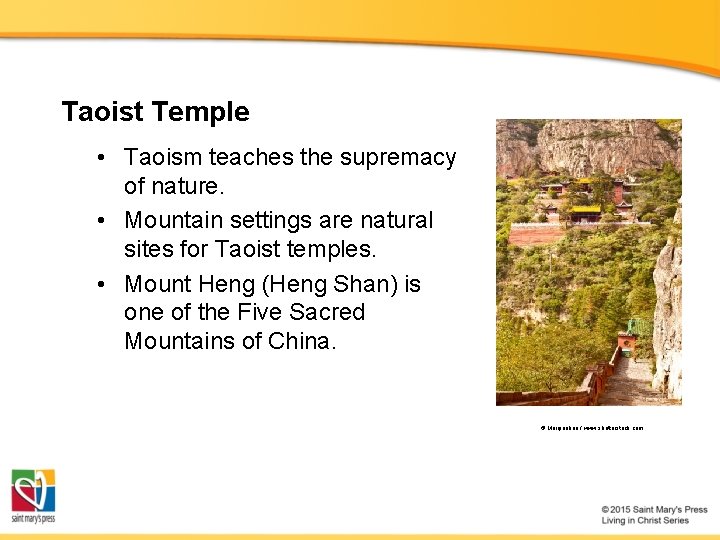
Taoist Temple • Taoism teaches the supremacy of nature. • Mountain settings are natural sites for Taoist temples. • Mount Heng (Heng Shan) is one of the Five Sacred Mountains of China. © Meiqianbao / www. shutterstock. com