Chapter 8 Information Gathering and Processing in Retailing
- Slides: 28
Chapter 8 Information Gathering and Processing in Retailing RETAIL MANAGEMENT: A STRATEGIC APPROACH, 9 th Edition BERMAN EVANS
Chapter Objectives 1. To discuss how information flows in a retail distribution channel 2. To show why retailers should avoid strategies based on inadequate information 3. To look at the retail information system, its components, and recent advances 4. To describe the marketing research process 8 -2
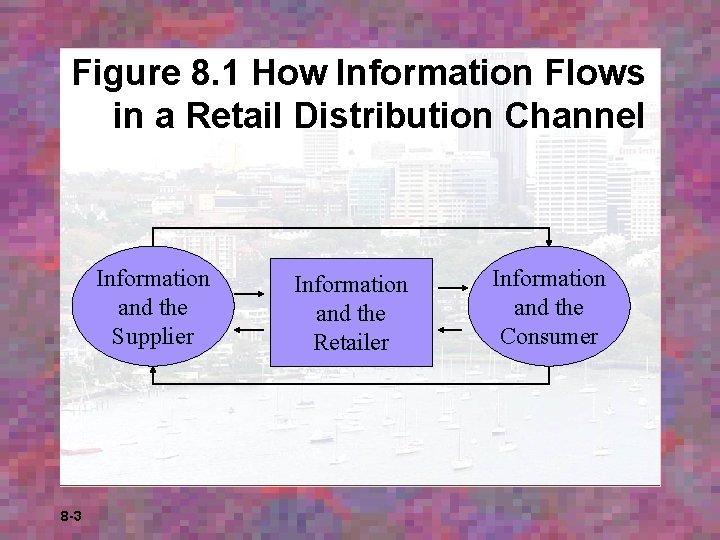
Figure 8. 1 How Information Flows in a Retail Distribution Channel Information and the Supplier 8 -3 Information and the Retailer Information and the Consumer
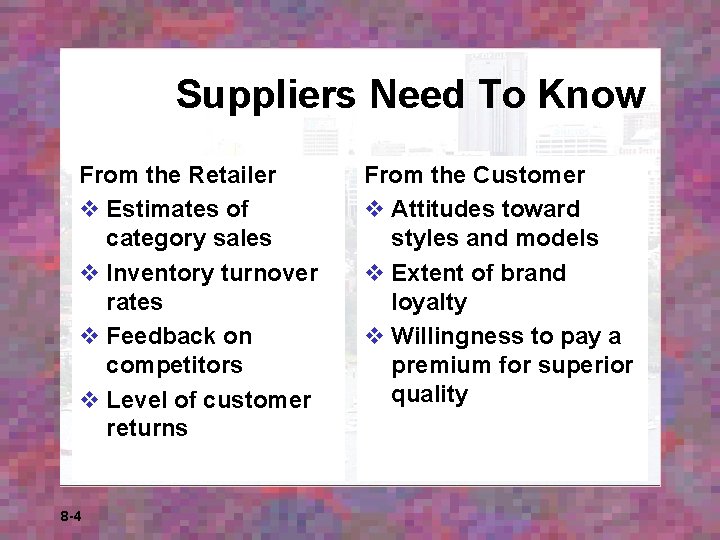
Suppliers Need To Know From the Retailer v Estimates of category sales v Inventory turnover rates v Feedback on competitors v Level of customer returns 8 -4 From the Customer v Attitudes toward styles and models v Extent of brand loyalty v Willingness to pay a premium for superior quality
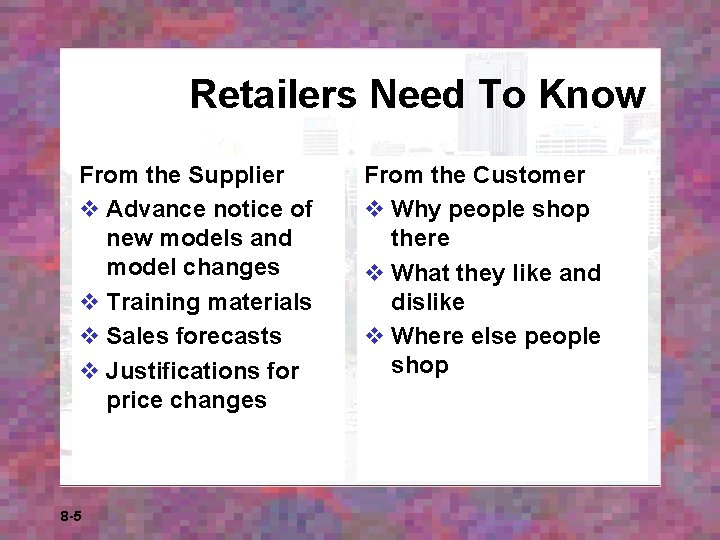
Retailers Need To Know From the Supplier v Advance notice of new models and model changes v Training materials v Sales forecasts v Justifications for price changes 8 -5 From the Customer v Why people shop there v What they like and dislike v Where else people shop
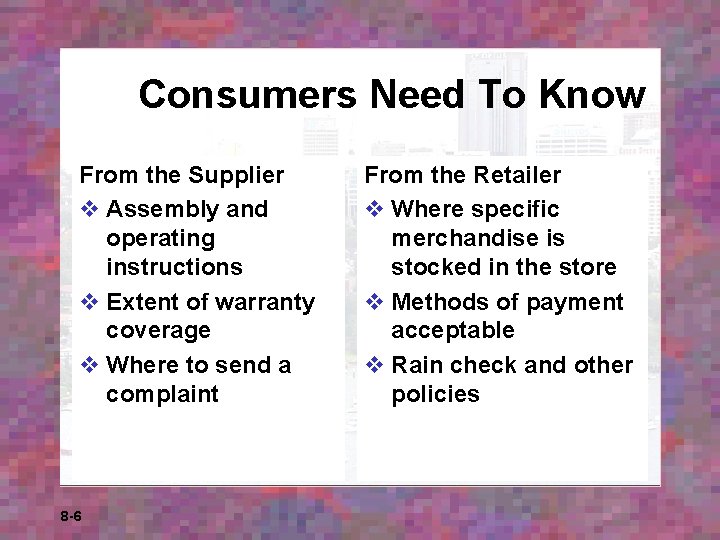
Consumers Need To Know From the Supplier v Assembly and operating instructions v Extent of warranty coverage v Where to send a complaint 8 -6 From the Retailer v Where specific merchandise is stocked in the store v Methods of payment acceptable v Rain check and other policies
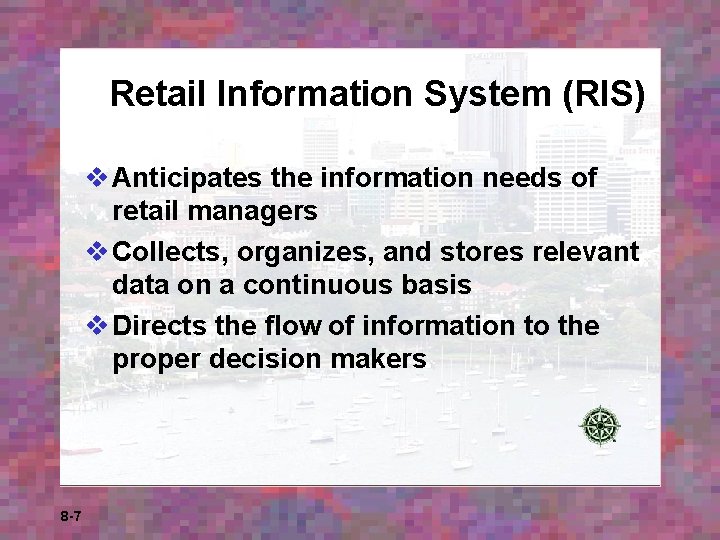
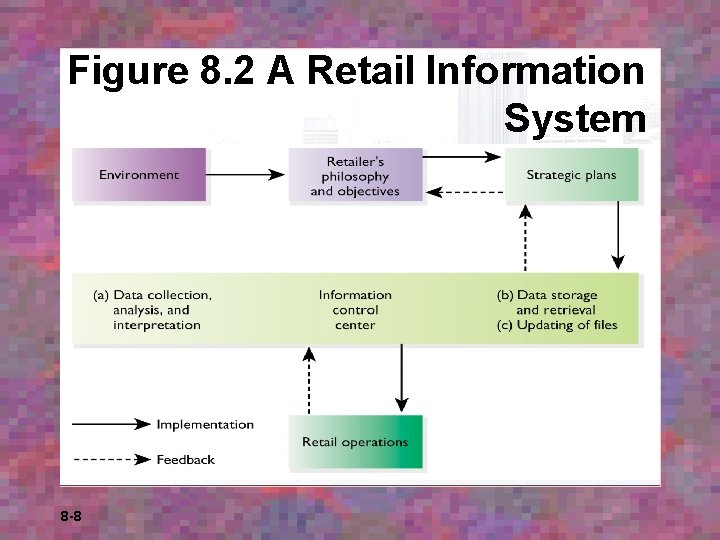
Retail Information System (RIS) v Anticipates the information needs of retail managers v Collects, organizes, and stores relevant data on a continuous basis v Directs the flow of information to the proper decision makers 8 -7
Figure 8. 2 A Retail Information System 8 -8
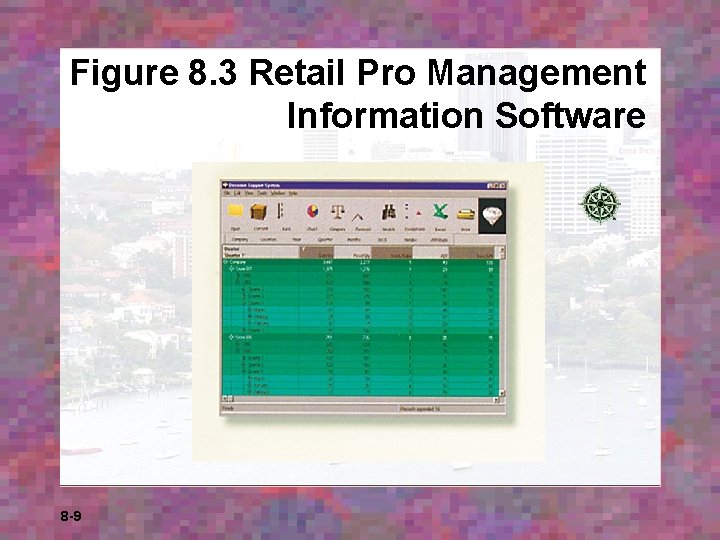
Figure 8. 3 Retail Pro Management Information Software 8 -9
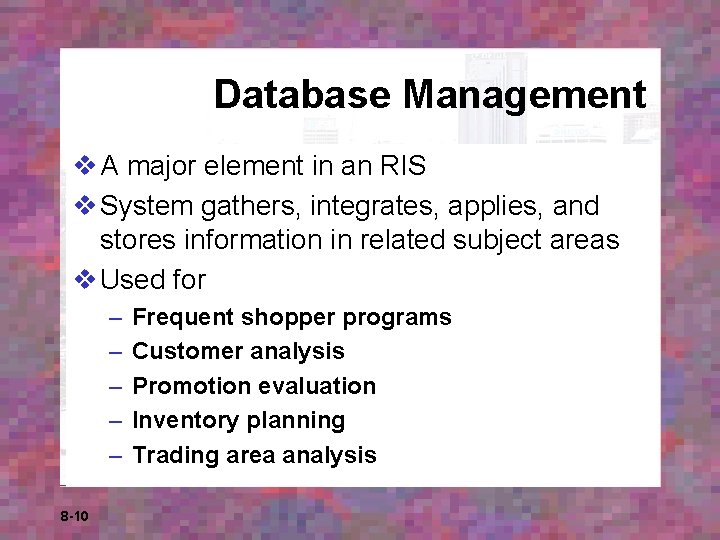
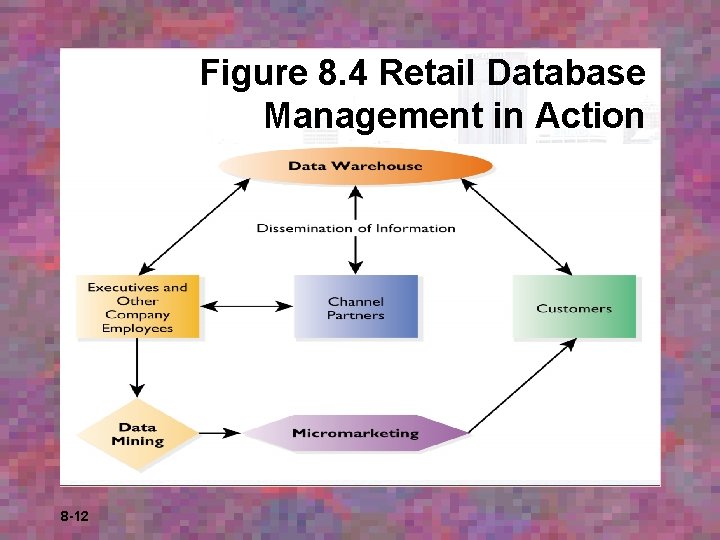
Database Management v A major element in an RIS v System gathers, integrates, applies, and stores information in related subject areas v Used for – – – 8 -10 Frequent shopper programs Customer analysis Promotion evaluation Inventory planning Trading area analysis
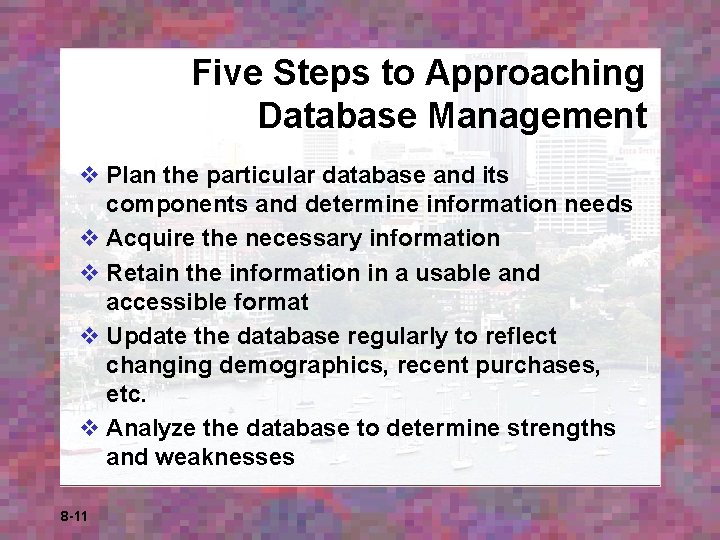
Five Steps to Approaching Database Management v Plan the particular database and its components and determine information needs v Acquire the necessary information v Retain the information in a usable and accessible format v Update the database regularly to reflect changing demographics, recent purchases, etc. v Analyze the database to determine strengths and weaknesses 8 -11
Figure 8. 4 Retail Database Management in Action 8 -12
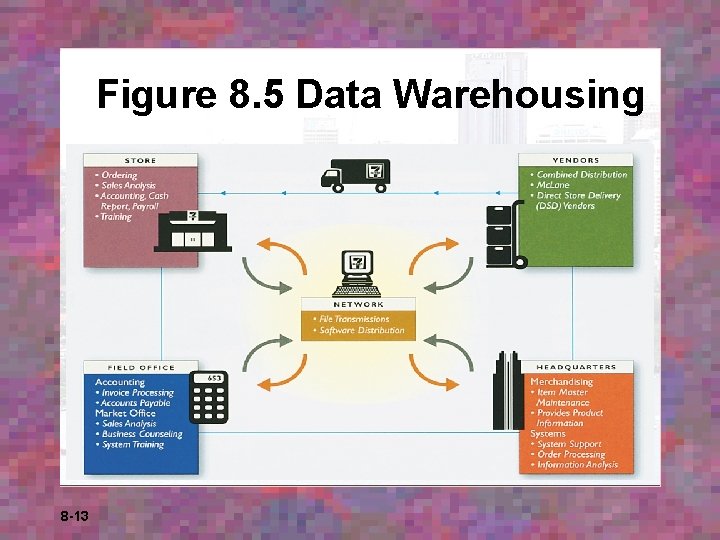
Figure 8. 5 Data Warehousing 8 -13
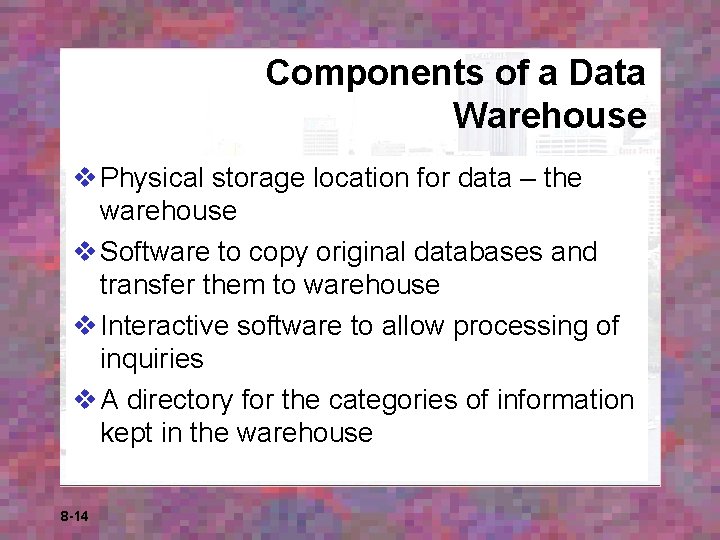
Components of a Data Warehouse v Physical storage location for data – the warehouse v Software to copy original databases and transfer them to warehouse v Interactive software to allow processing of inquiries v A directory for the categories of information kept in the warehouse 8 -14
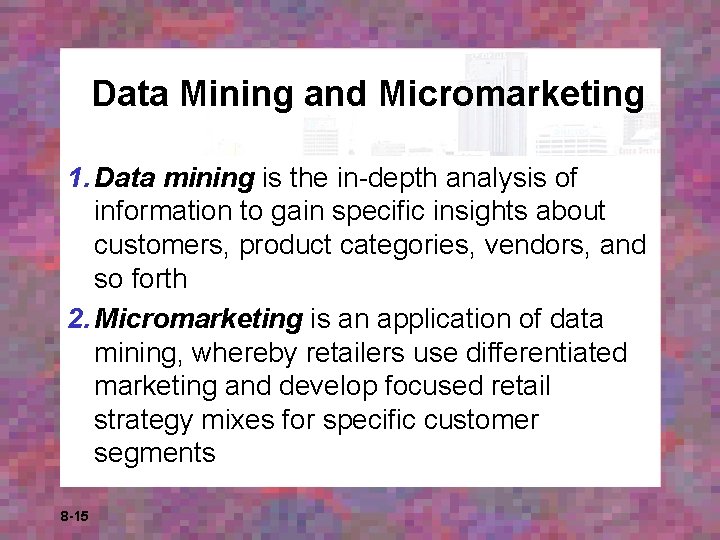
Data Mining and Micromarketing 1. Data mining is the in-depth analysis of information to gain specific insights about customers, product categories, vendors, and so forth 2. Micromarketing is an application of data mining, whereby retailers use differentiated marketing and develop focused retail strategy mixes for specific customer segments 8 -15
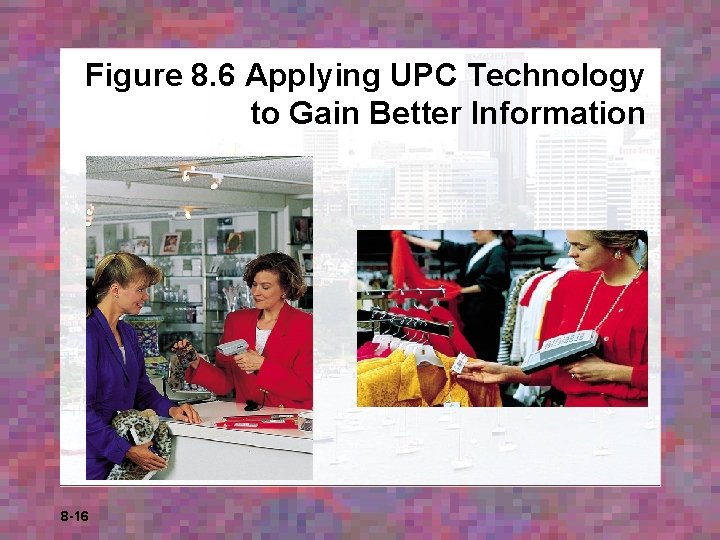
Figure 8. 6 Applying UPC Technology to Gain Better Information 8 -16
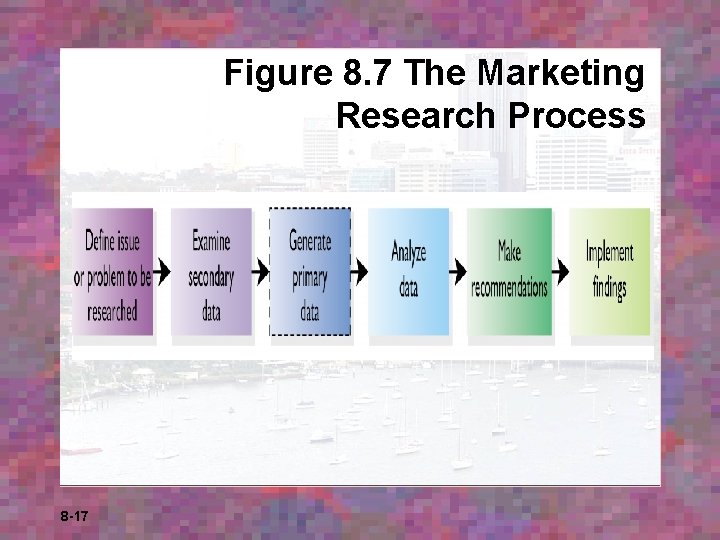
Figure 8. 7 The Marketing Research Process 8 -17
The collection and analysis of information relating to specific issues or problems facing a retailer 8 -18 Marketing Research in Retailing
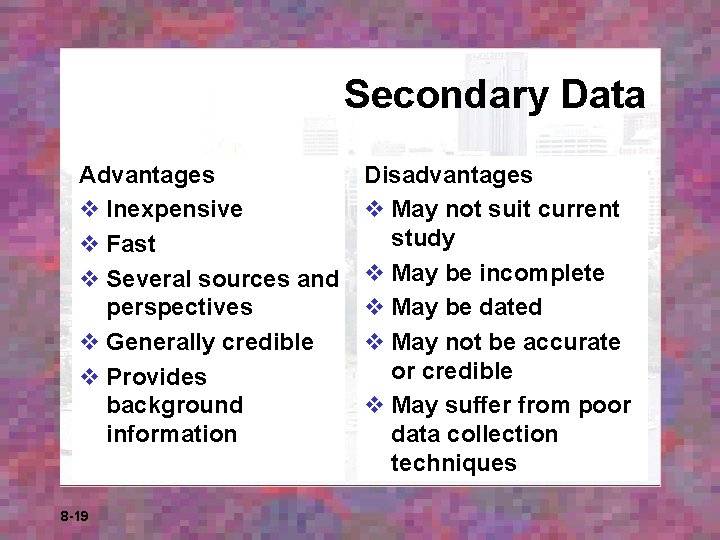
Secondary Data Advantages v Inexpensive v Fast v Several sources and perspectives v Generally credible v Provides background information 8 -19 Disadvantages v May not suit current study v May be incomplete v May be dated v May not be accurate or credible v May suffer from poor data collection techniques
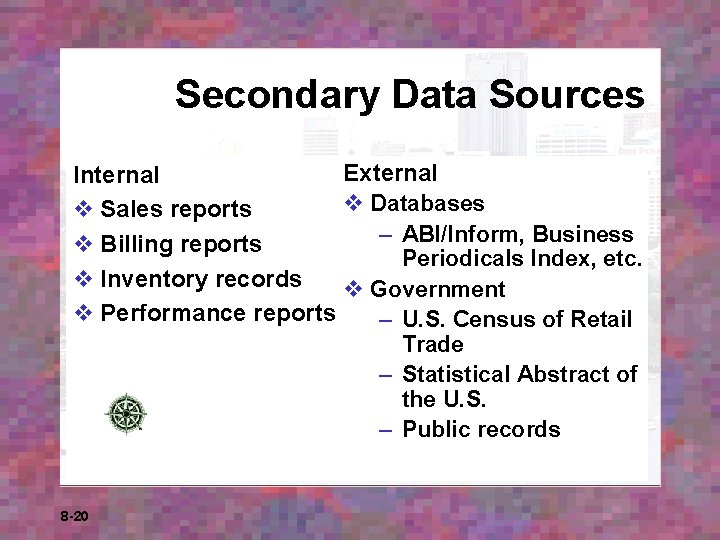
Secondary Data Sources External Internal v Databases v Sales reports – ABI/Inform, Business v Billing reports Periodicals Index, etc. v Inventory records v Government v Performance reports – U. S. Census of Retail Trade – Statistical Abstract of the U. S. – Public records 8 -20
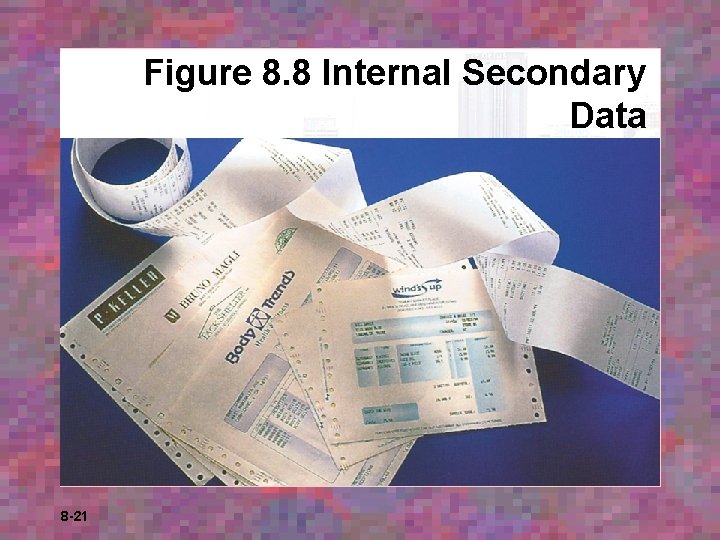
Figure 8. 8 Internal Secondary Data 8 -21
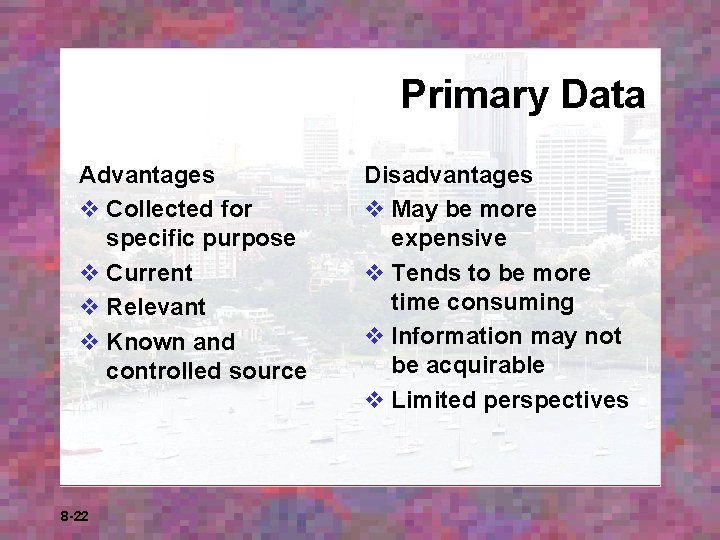
Primary Data Advantages v Collected for specific purpose v Current v Relevant v Known and controlled source 8 -22 Disadvantages v May be more expensive v Tends to be more time consuming v Information may not be acquirable v Limited perspectives
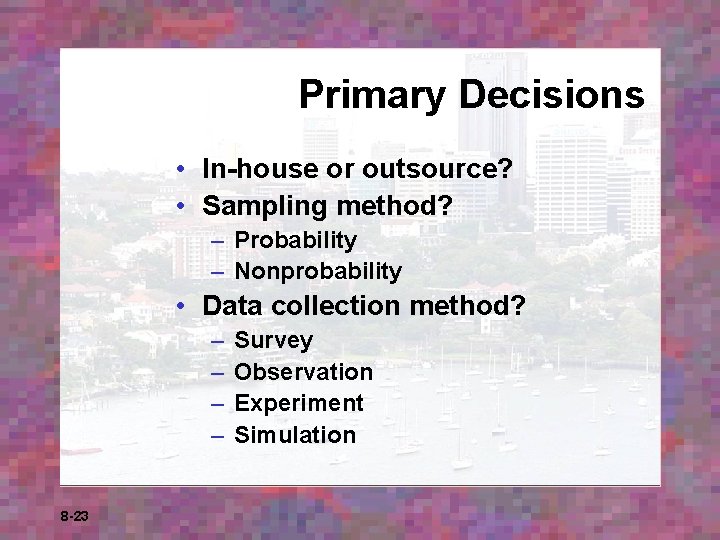
Primary Decisions • In-house or outsource? • Sampling method? – Probability – Nonprobability • Data collection method? – – 8 -23 Survey Observation Experiment Simulation
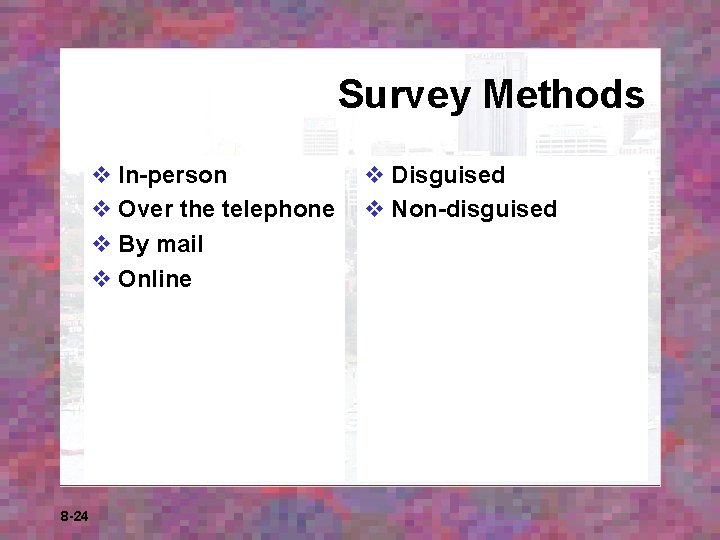
Survey Methods v In-person v Over the telephone v By mail v Online 8 -24 v Disguised v Non-disguised
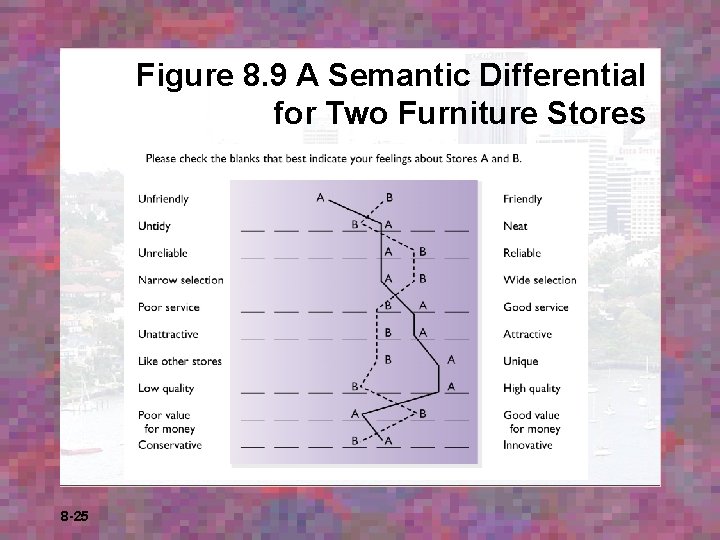
Figure 8. 9 A Semantic Differential for Two Furniture Stores 8 -25
Mystery Shoppers v Retailers hire people to pose as customers and observe operations from sales presentations to how well displays are maintained to service calls 8 -26
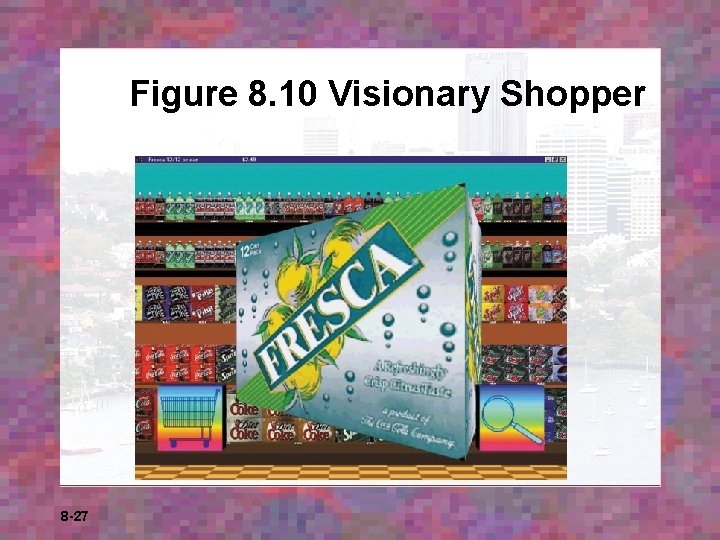
Figure 8. 10 Visionary Shopper 8 -27
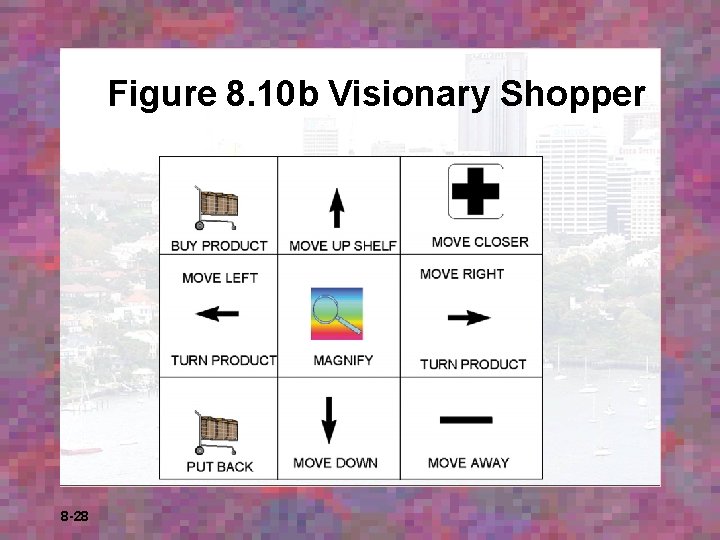
Figure 8. 10 b Visionary Shopper 8 -28