Chapter 5 Lesson 1 Dealing with Anxiety and


- Slides: 29
Chapter #5 Lesson 1 Dealing with Anxiety and Depression
Bellwork � List some things that could cause you to feel anxious. � List things that could cause someone to feel depressed. � What is the difference between being anxious and being depressed?
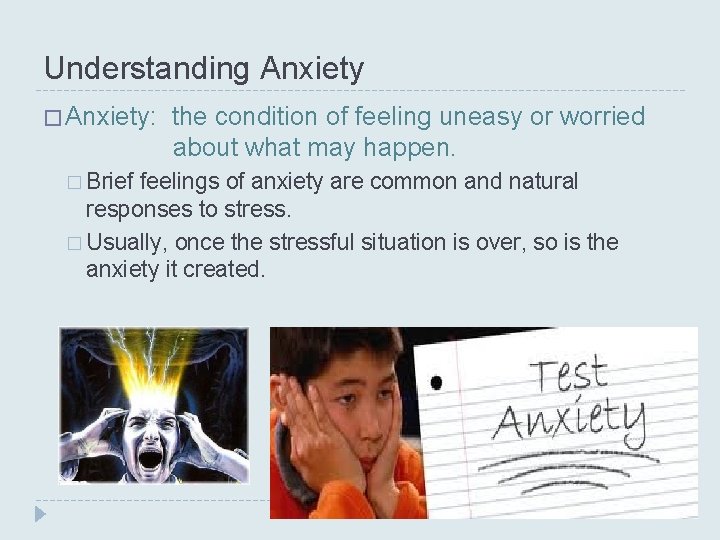
Understanding Anxiety � Anxiety: the condition of feeling uneasy or worried about what may happen. � Brief feelings of anxiety are common and natural responses to stress. � Usually, once the stressful situation is over, so is the anxiety it created.
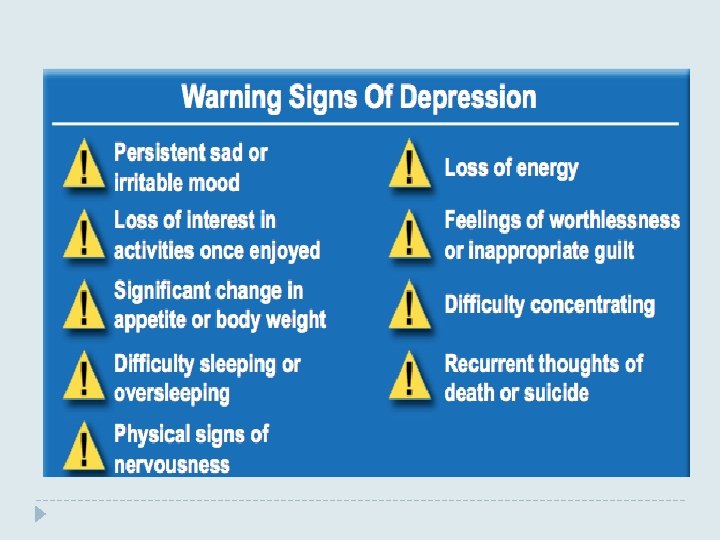
Understanding Depression: is a prolonged feeling of helplessness, hopelessness, and sadness. 15 -20 % teens are diagnosed with depression – 2 x as high in Girls than in Boys Apathy: lack of strong feeling, interest, or concern.
TRUE or FALSE Depression is treatable? ?
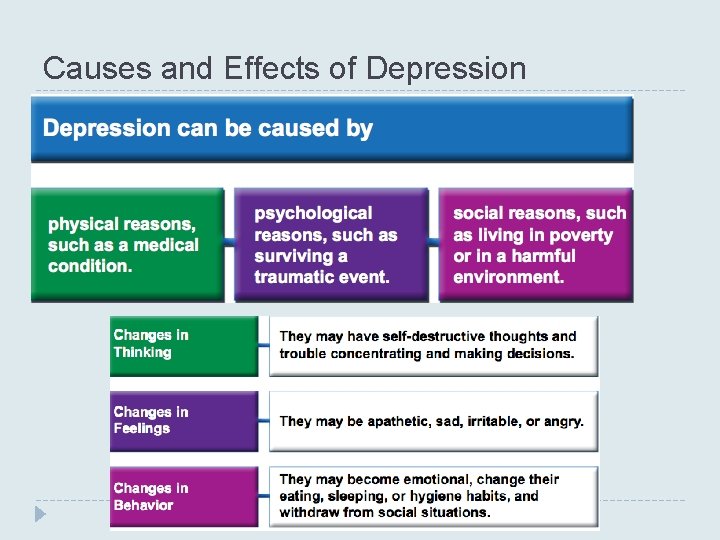
Causes and Effects of Depression
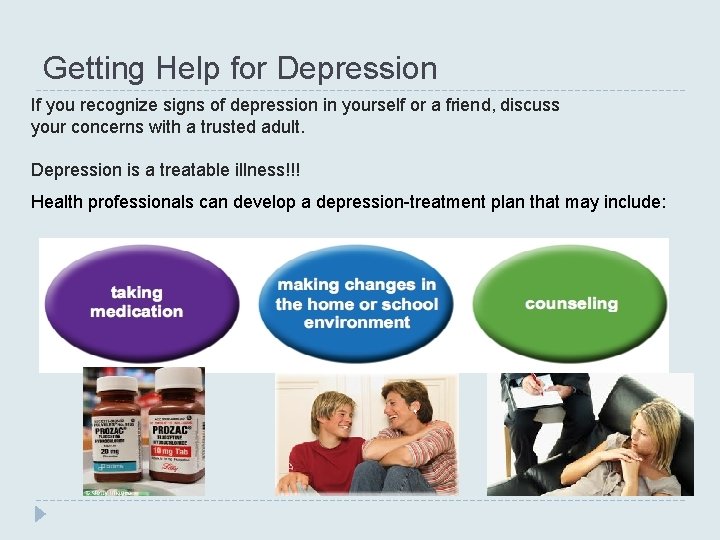
Getting Help for Depression If you recognize signs of depression in yourself or a friend, discuss your concerns with a trusted adult. Depression is a treatable illness!!! Health professionals can develop a depression-treatment plan that may include:
Chapter #5 Lesson 2 Mental Disorders
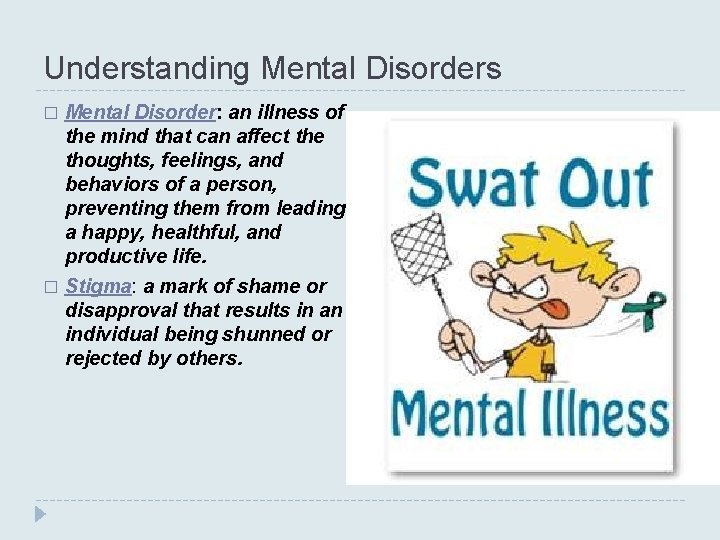
Understanding Mental Disorders Mental Disorder: an illness of the mind that can affect the thoughts, feelings, and behaviors of a person, preventing them from leading a happy, healthful, and productive life. � Stigma: a mark of shame or disapproval that results in an individual being shunned or rejected by others. �
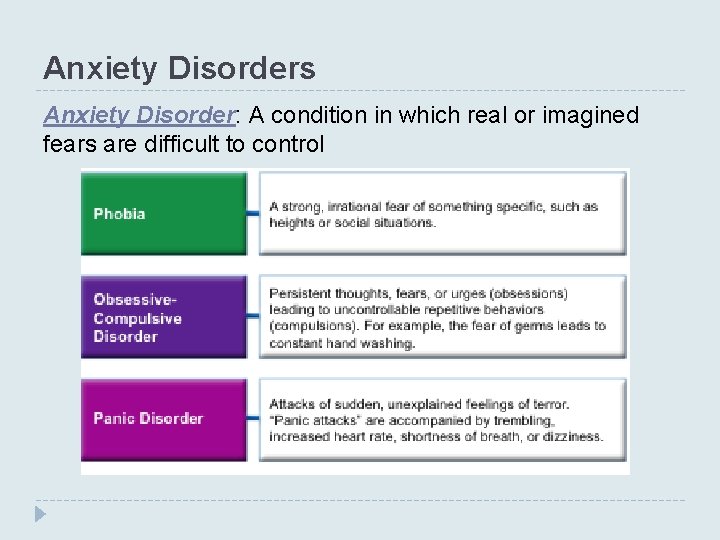
Anxiety Disorders Anxiety Disorder: A condition in which real or imagined fears are difficult to control
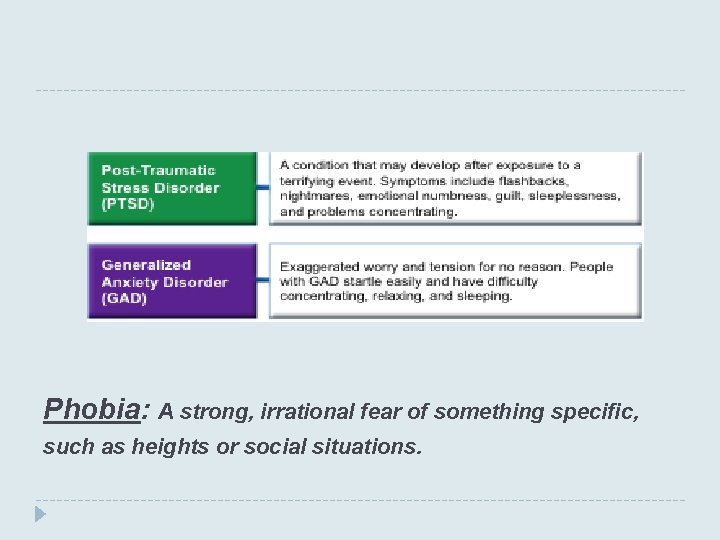
Phobia: A strong, irrational fear of something specific, such as heights or social situations.
Obsessive Compulsive Disorder Persistent thoughts, fears, or urges (obsessions) leading to uncontrollable repetitive behaviors (compulsions). For example, the fear of germs leads to constant hand washing.
Post Traumatic Stress Disorder A condition that may develop after exposure to a terrifying event. Symptoms include flashbacks, nightmares, emotional numbness, guilt, sleeplessness, and problems concentrating.
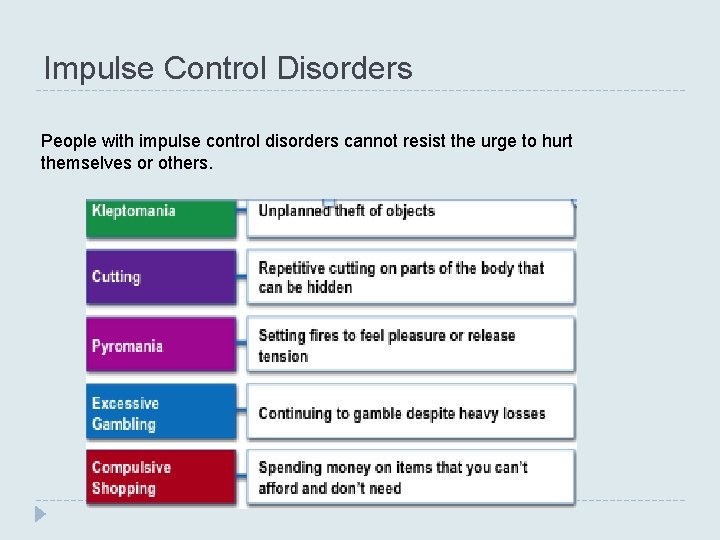
Impulse Control Disorders People with impulse control disorders cannot resist the urge to hurt themselves or others.
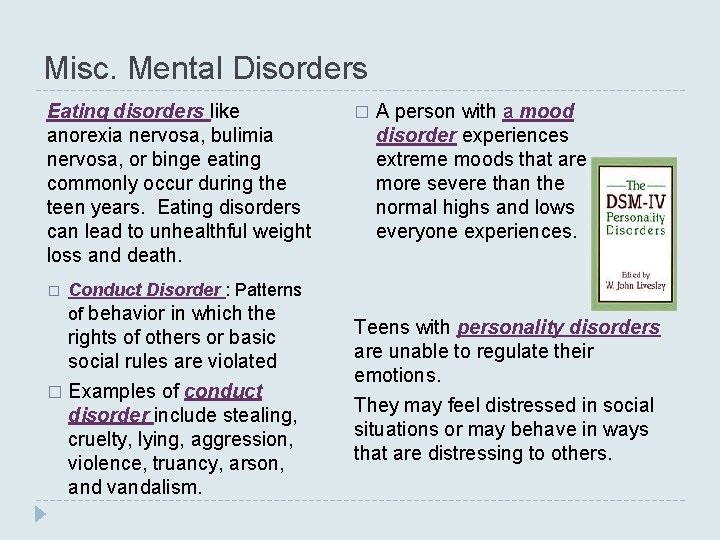
Misc. Mental Disorders Eating disorders like anorexia nervosa, bulimia nervosa, or binge eating commonly occur during the teen years. Eating disorders can lead to unhealthful weight loss and death. � Conduct Disorder : Patterns of behavior in which the rights of others or basic social rules are violated � Examples of conduct disorder include stealing, cruelty, lying, aggression, violence, truancy, arson, and vandalism. � A person with a mood disorder experiences extreme moods that are more severe than the normal highs and lows everyone experiences. Teens with personality disorders are unable to regulate their emotions. They may feel distressed in social situations or may behave in ways that are distressing to others.
Bipolar Disorder or manic-depressive disorder is marked by extreme mood changes , energy levels , and behavior.
Schizophrenia : Schizophrenia is a mental disorder in which a person loses contact with reality. Symptoms include unpredictable behavior, delusions, hallucinations, and thought disorders.
Chapter #5 Lesson 3 Suicide Prevention
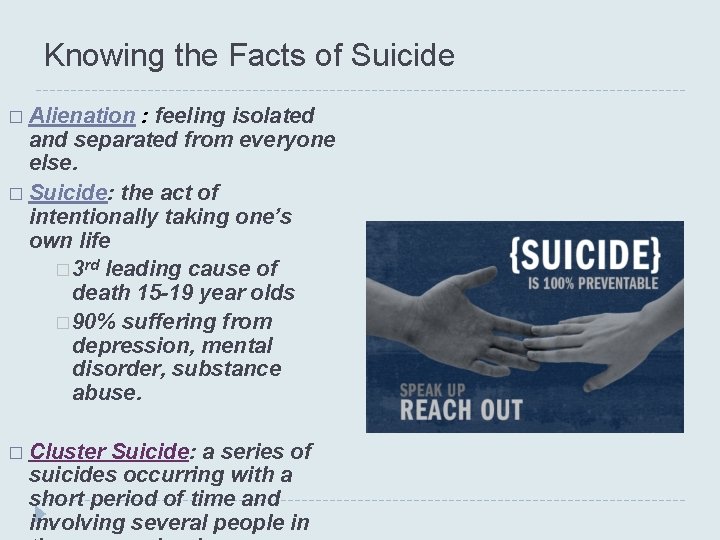
Knowing the Facts of Suicide � Alienation : feeling isolated and separated from everyone else. � Suicide: the act of intentionally taking one’s own life � 3 rd leading cause of death 15 -19 year olds � 90% suffering from depression, mental disorder, substance abuse. � Cluster Suicide: a series of suicides occurring with a short period of time and involving several people in
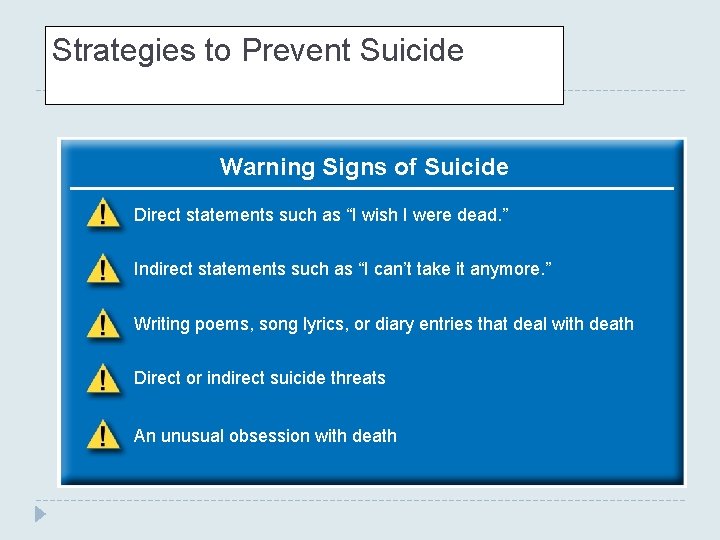
Strategies to Prevent Suicide Warning Signs of Suicide Direct statements such as “I wish I were dead. ” Indirect statements such as “I can’t take it anymore. ” Writing poems, song lyrics, or diary entries that deal with death Direct or indirect suicide threats An unusual obsession with death
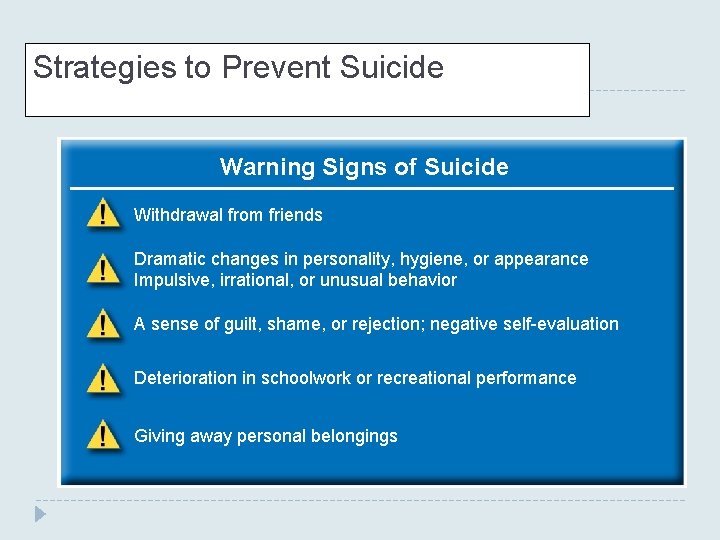
Strategies to Prevent Suicide Warning Signs of Suicide Withdrawal from friends Dramatic changes in personality, hygiene, or appearance Impulsive, irrational, or unusual behavior A sense of guilt, shame, or rejection; negative self-evaluation Deterioration in schoolwork or recreational performance Giving away personal belongings
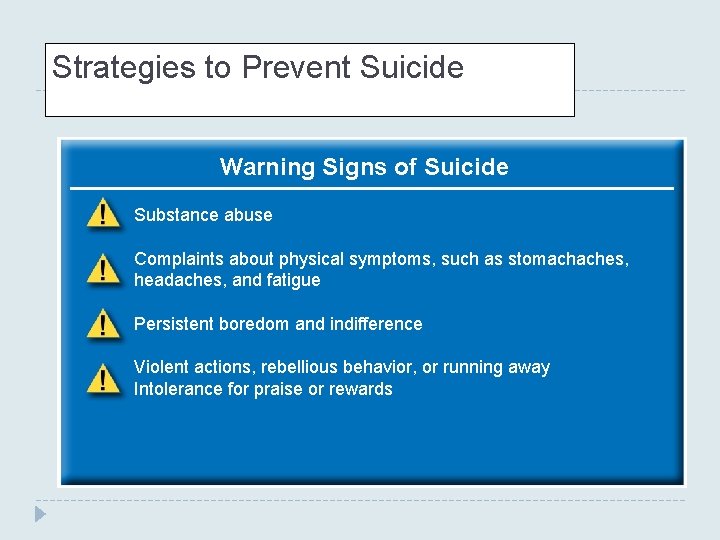
Strategies to Prevent Suicide Warning Signs of Suicide Substance abuse Complaints about physical symptoms, such as stomachaches, headaches, and fatigue Persistent boredom and indifference Violent actions, rebellious behavior, or running away Intolerance for praise or rewards
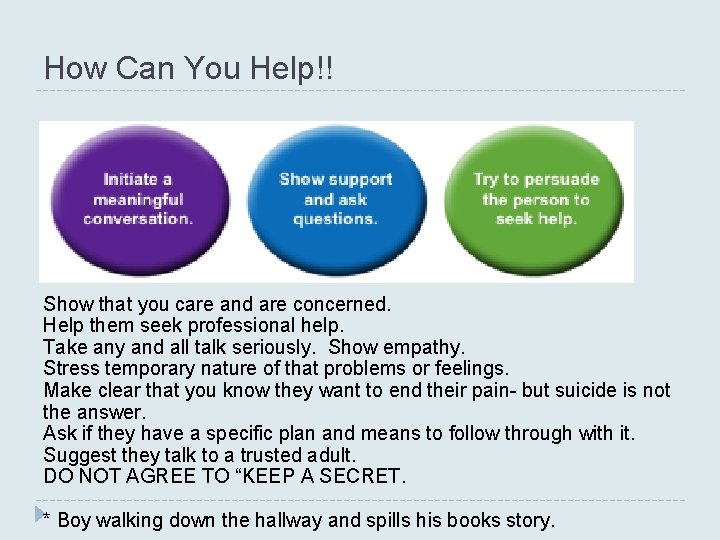
How Can You Help!! Show that you care and are concerned. Help them seek professional help. Take any and all talk seriously. Show empathy. Stress temporary nature of that problems or feelings. Make clear that you know they want to end their pain- but suicide is not the answer. Ask if they have a specific plan and means to follow through with it. Suggest they talk to a trusted adult. DO NOT AGREE TO “KEEP A SECRET. * Boy walking down the hallway and spills his books story.
Chapter #5 Lesson 4 Getting Help
When Help is Needed Feeling trapped or worrying all the time Feelings that affect sleep, eating habits, schoolwork, job performance, or relationships Becoming involved with alcohol or other drugs Becoming increasingly aggressive, violent, or reckless
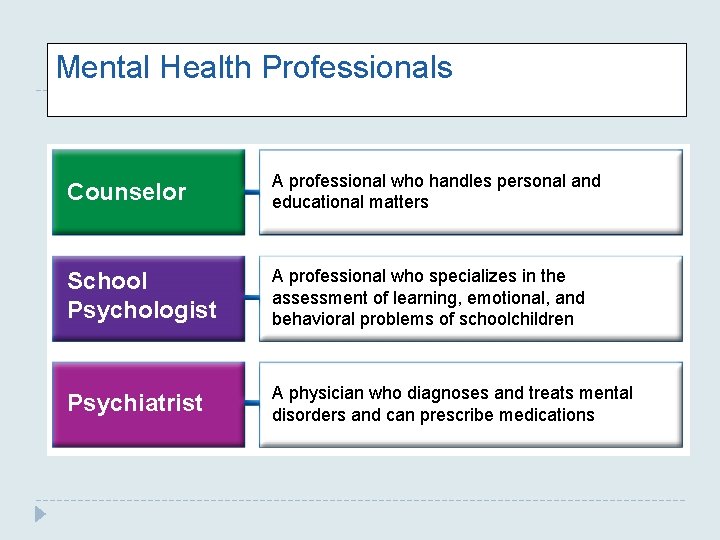
Mental Health Professionals Counselor A professional who handles personal and educational matters School Psychologist A professional who specializes in the assessment of learning, emotional, and behavioral problems of schoolchildren Psychiatrist A physician who diagnoses and treats mental disorders and can prescribe medications
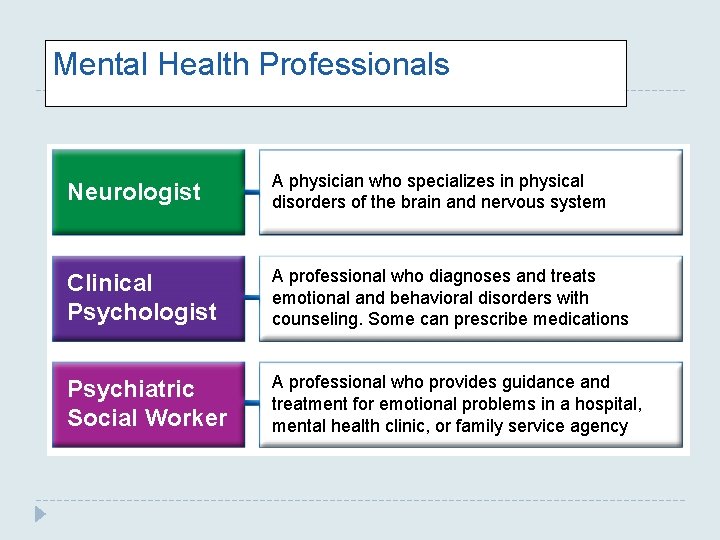
Mental Health Professionals Neurologist A physician who specializes in physical disorders of the brain and nervous system Clinical Psychologist A professional who diagnoses and treats emotional and behavioral disorders with counseling. Some can prescribe medications Psychiatric Social Worker A professional who provides guidance and treatment for emotional problems in a hospital, mental health clinic, or family service agency
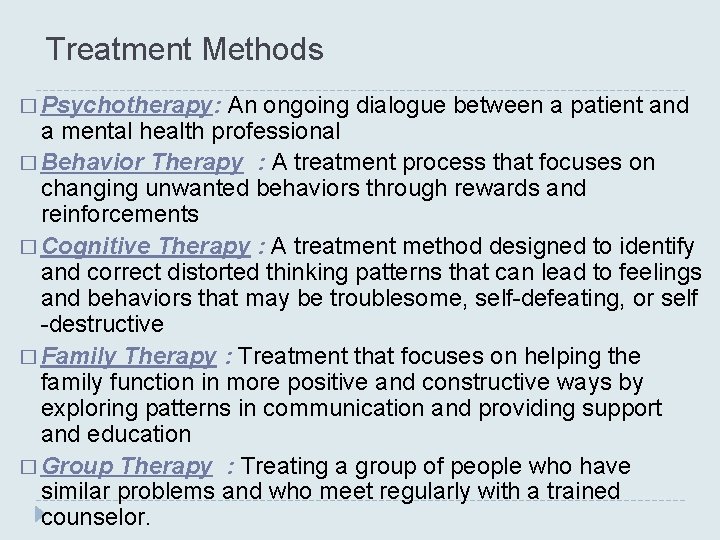
Treatment Methods � Psychotherapy: An ongoing dialogue between a patient and a mental health professional � Behavior Therapy : A treatment process that focuses on changing unwanted behaviors through rewards and reinforcements � Cognitive Therapy : A treatment method designed to identify and correct distorted thinking patterns that can lead to feelings and behaviors that may be troublesome, self-defeating, or self -destructive � Family Therapy : Treatment that focuses on helping the family function in more positive and constructive ways by exploring patterns in communication and providing support and education � Group Therapy : Treating a group of people who have similar problems and who meet regularly with a trained counselor.