Chapter 30 Nursing Care of Patients with Upper
- Slides: 18
Chapter 30 Nursing Care of Patients with Upper Respiratory Disorders
Epistaxis § Most common cause dry, cracked, mucous membranes § Trauma- nose picking, forceful blowing § Hypertension-increased pressure on fragile capillaries § Hemophilia- reduced clotting ability § Medications- aspirin, anticoagulants
Therapeutic Interventions § Positioning- lean forward § Direct Pressure § Ice § Nasal Packing § Nasal Balloon Catheter § Vasoconstrictive Agent § Electrocauterizing
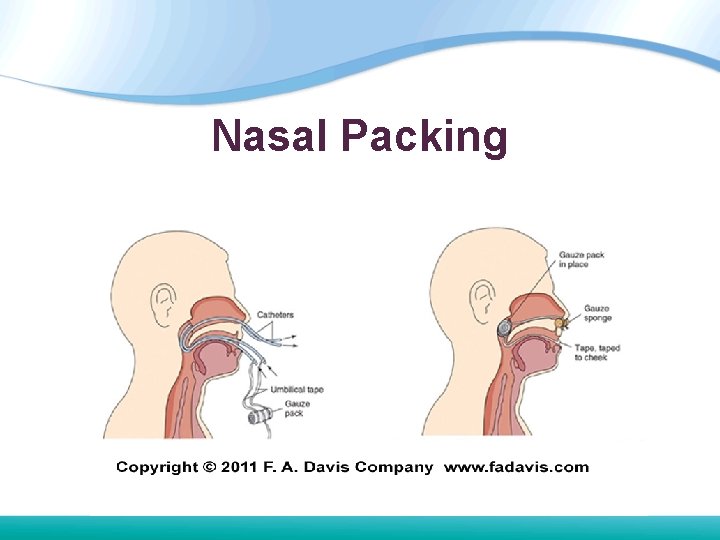
Nasal Packing
Nasal Polyps § Usually Benign § Occur More Often with Allergies § Treatment § Control Allergies § Surgery § Avoid Aspirin Post-op
Deviated Septum § Symptoms § Stuffy Nose § Blocked Sinus Drainage § Headaches § Treatment § Nasoseptoplasty
Nursing Care Post Nasoseptoplasty § Monitor Vital Signs/Bleeding § Report Excess Swallowing- excess bleeding § Monitor Dressing- nasal packing/mustache § Teach § Avoid sneezing, coughing, or straining § Avoid Aspirin
Sinusitis § Inflammation of Sinus Mucosa § Bacterial § Allergic § Signs and Symptoms § Pain Over Affected Sinus § Fever § Nasal Discharge
Therapeutic Interventions § Saline Irrigation Corticosteroids § Decongestants § Hot Packs § Acetaminophen/ Ibuprofen § § § Humidification Oral Fluids Positioning Antibiotics Surgical Drainage
Infectious Disorders § § Rhinitis Pharyngitis Laryngitis Tonsillitis
Prevention of Influenza § Yearly Vaccination § At-risk Individuals § Health-care Workers § Handwashing § Avoidance of Infected People
Influenza § Signs and Symptoms § § § § Fever Chills Myalgia Sore Throat Cough Malaise Headache § Therapeutic Interventions § § § Acetaminophen Avoid Aspirin Antiviral Agents Rest Fluids
New Viruses § § Bird Flu SARS Swine Flu (H 1 N 1) West Nile
Nursing Diagnoses: Upper Respiratory Infection § Impaired Comfort § Hyperthermia § Risk for Infection: Transmission to Others
Cancer of the Larynx § Pathophysiology § Primary Tumor of Mucosal Epithelium § Metastasizes to Lungs, Liver, Lymph Nodes § Etiology § Associated with Smoking, Alcohol § More Common in Men
Signs and Symptoms § § § Hoarseness Change in Voice Pain Dyspnea Dx: Laryngoscopy, CT MRI § Cough § Dysphagia § Airway Obstruction
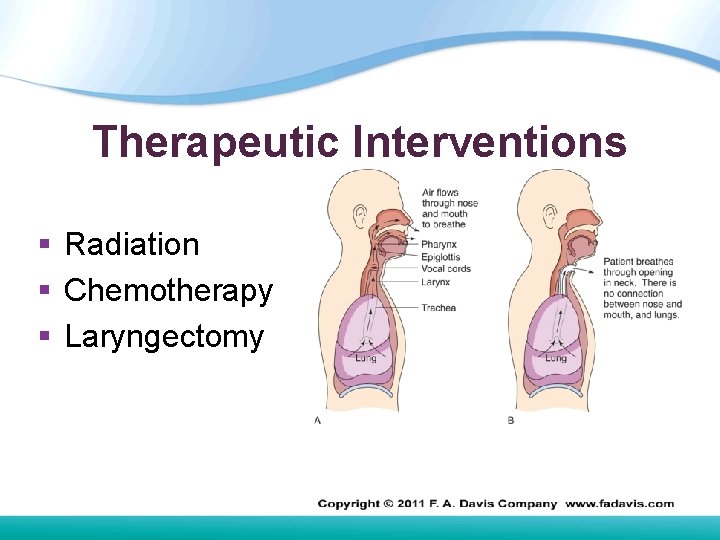
Therapeutic Interventions § Radiation § Chemotherapy § Laryngectomy
Postoperative Nursing Diagnoses § § § § Ineffective Airway Clearance Acute Pain Impaired Verbal Communication Imbalanced Nutrition Impaired Swallowing Grieving Disturbed Body Image