CHAPTER 3 Tools of Normative Analysis Mc GrawHillIrwin

- Slides: 20
CHAPTER 3 Tools of Normative Analysis Mc. Graw-Hill/Irwin Copyright © 2010 by the Mc. Graw-Hill Companies, Inc. All rights reserved.
Welfare Economics • Welfare Economics – branch of economic theory concerned with the social desirability of alternative economic states 3 -2
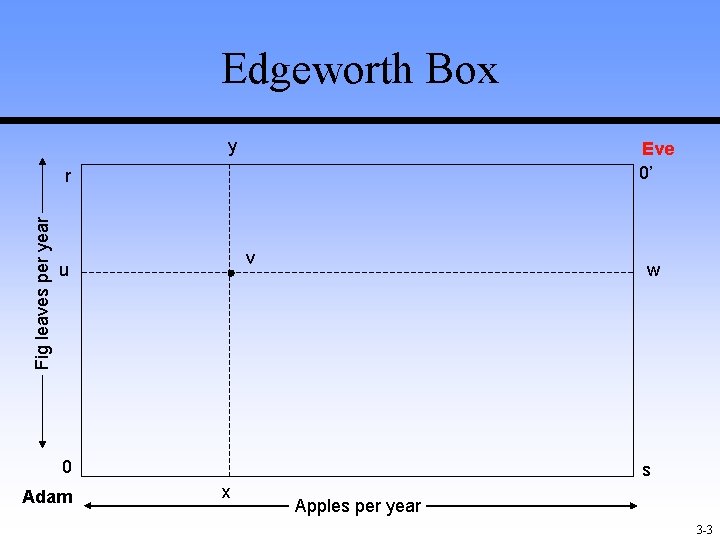
Edgeworth Box y Eve 0’ Fig leaves per year r v u w 0 Adam s x Apples per year 3 -3
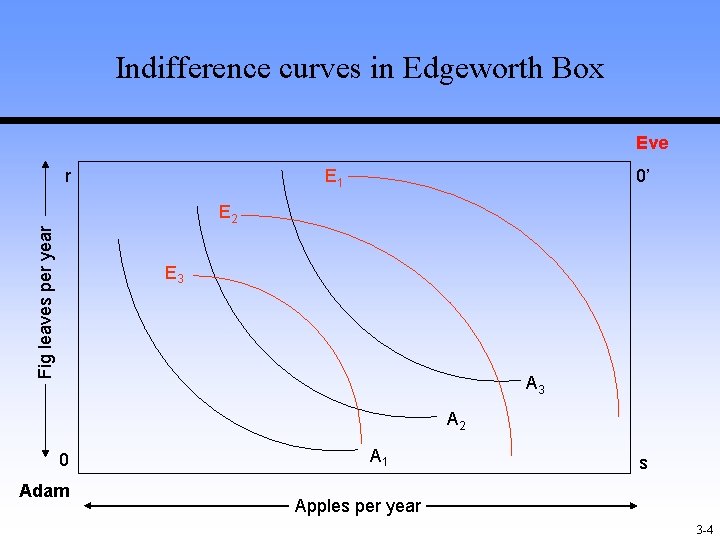
Indifference curves in Edgeworth Box Eve r 0’ E 1 Fig leaves per year E 2 E 3 A 2 0 Adam A 1 s Apples per year 3 -4
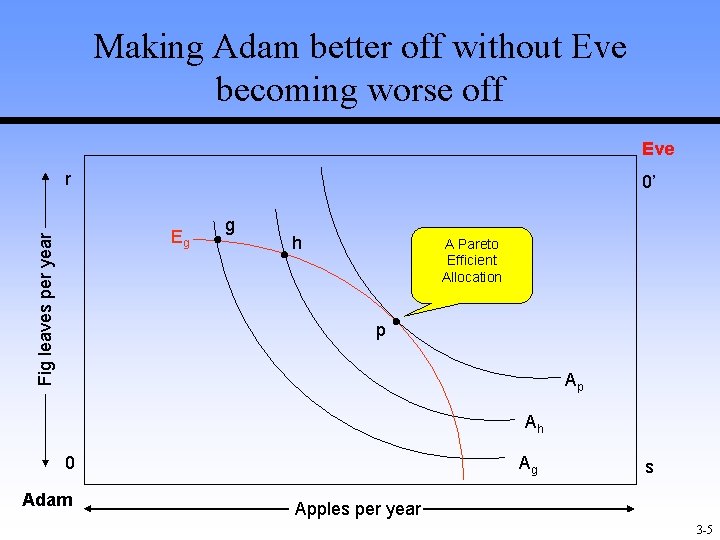
Making Adam better off without Eve becoming worse off Eve r 0’ Fig leaves per year Eg g h A Pareto Efficient Allocation p Ap Ah Ag 0 Adam s Apples per year 3 -5
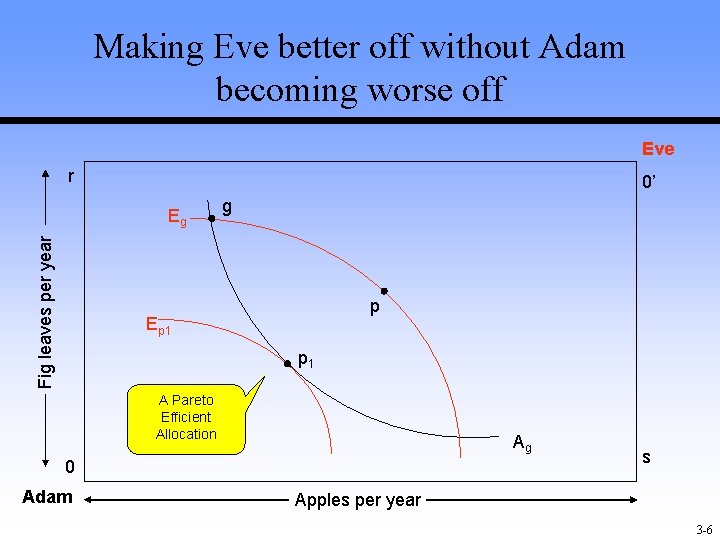
Making Eve better off without Adam becoming worse off Eve r 0’ Fig leaves per year Eg g p Ep 1 A Pareto Efficient Allocation Ag 0 Adam s Apples per year 3 -6
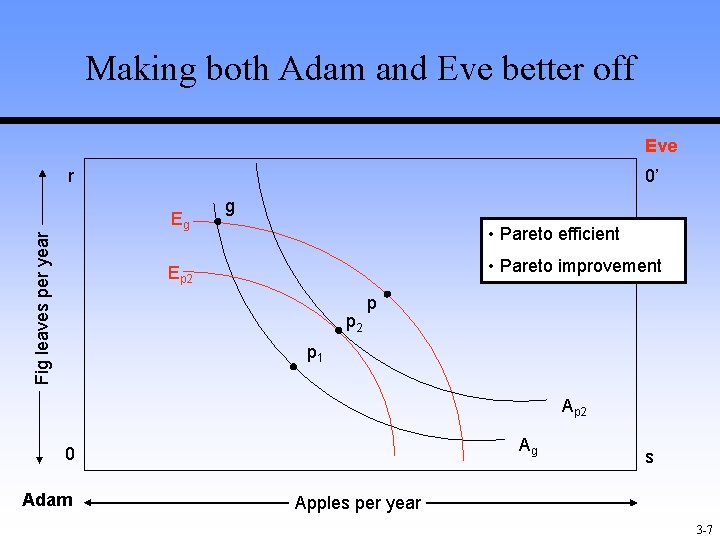
Making both Adam and Eve better off Eve r 0’ Fig leaves per year Eg g • Pareto efficient • Pareto improvement Ep 2 p p 1 Ap 2 Ag 0 Adam s Apples per year 3 -7
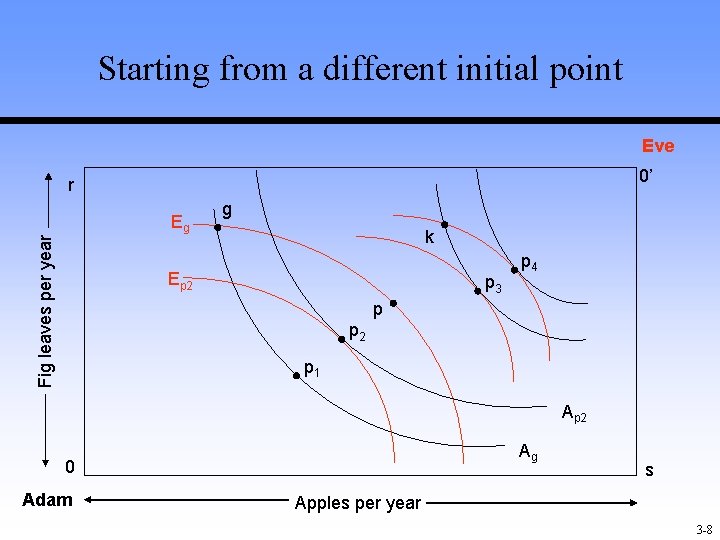
Starting from a different initial point Eve 0’ r Fig leaves per year Eg g k Ep 2 p 3 p 4 p p 2 p 1 Ap 2 Ag 0 Adam s Apples per year 3 -8
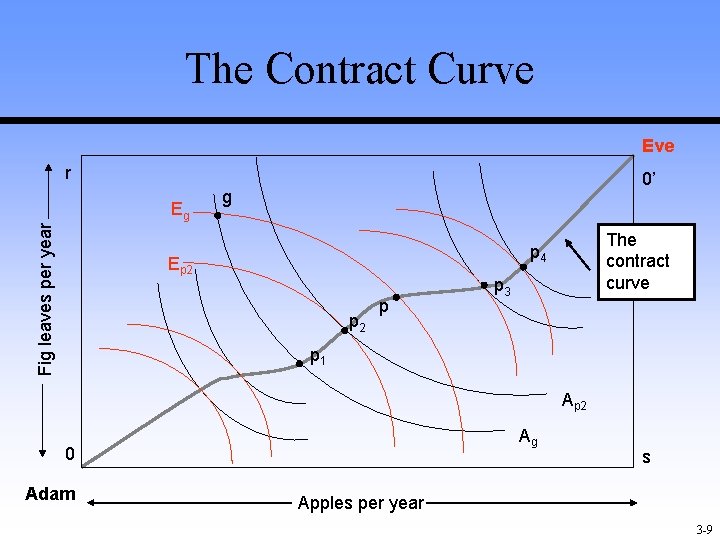
The Contract Curve Eve r Fig leaves per year Eg 0’ g The contract curve p 4 Ep 2 p p 3 p 1 Ap 2 Ag 0 Adam s Apples per year 3 -9
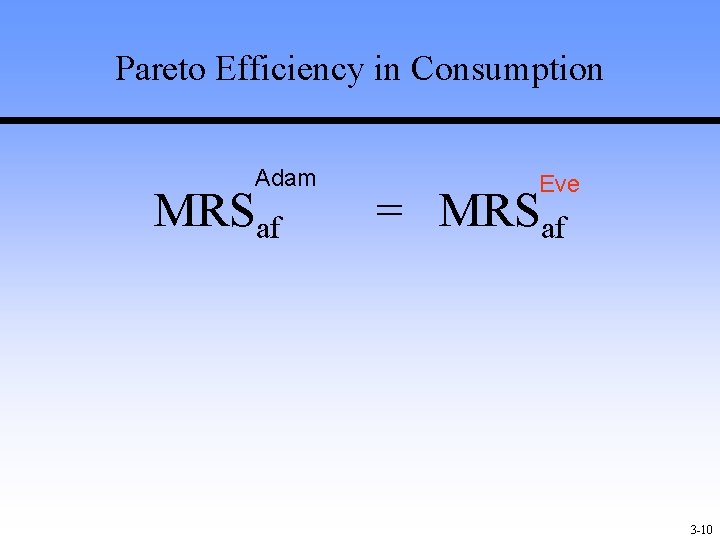
Pareto Efficiency in Consumption Adam MRSaf Eve = MRSaf 3 -10
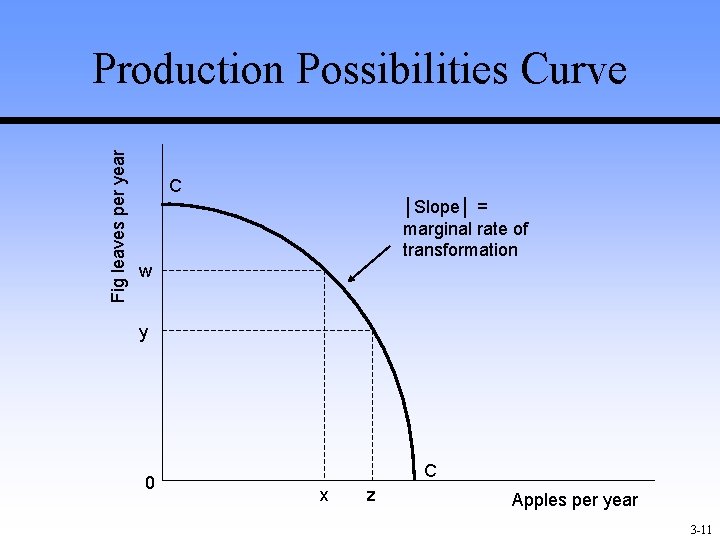
Fig leaves per year Production Possibilities Curve C │Slope│ = marginal rate of transformation w y 0 C x z Apples per year 3 -11
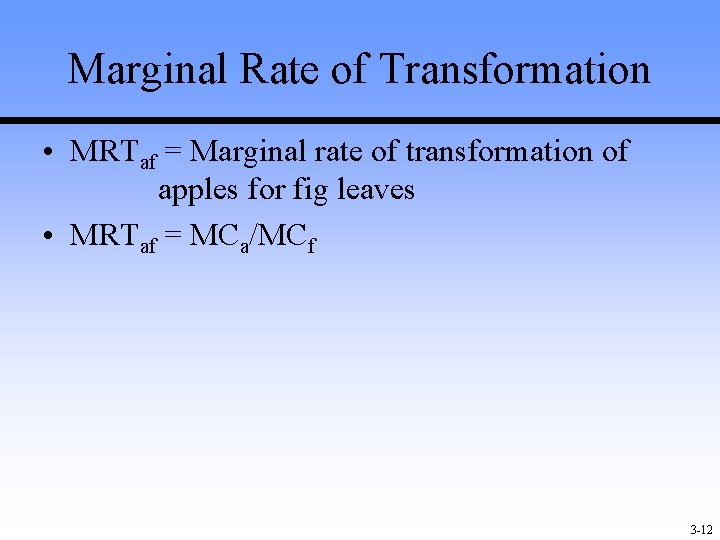
Marginal Rate of Transformation • MRTaf = Marginal rate of transformation of apples for fig leaves • MRTaf = MCa/MCf 3 -12
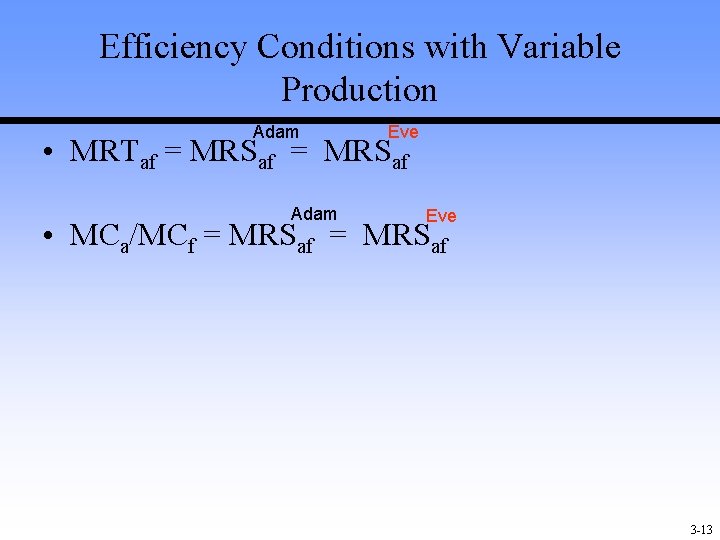
Efficiency Conditions with Variable Production Adam Eve • MRTaf = MRSaf Adam Eve • MCa/MCf = MRSaf 3 -13
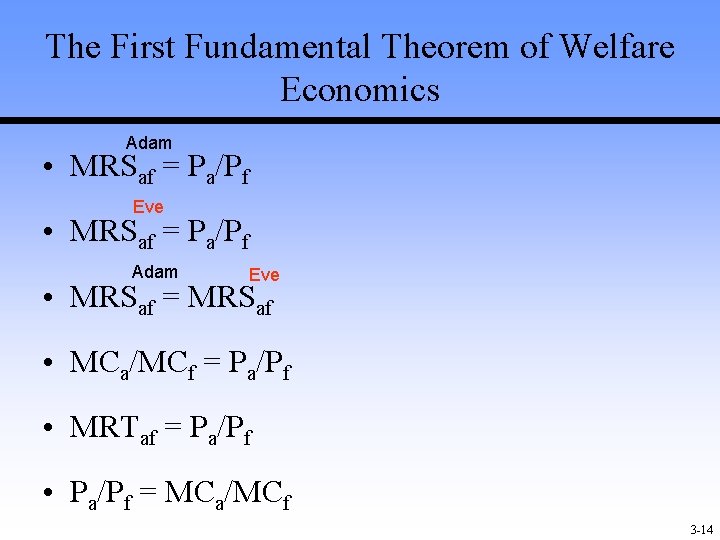
The First Fundamental Theorem of Welfare Economics Adam • MRSaf = Pa/Pf Eve • MRSaf = Pa/Pf Adam Eve • MRSaf = MRSaf • MCa/MCf = Pa/Pf • MRTaf = Pa/Pf • Pa/Pf = MCa/MCf 3 -14
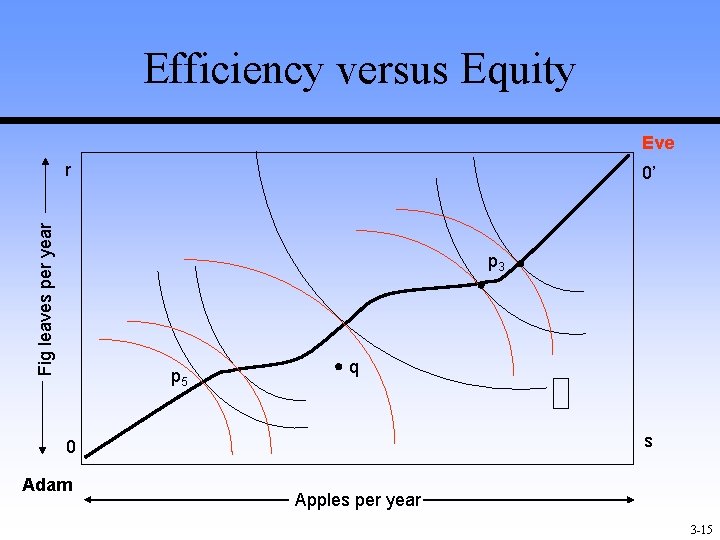
Efficiency versus Equity Eve Fig leaves per year r 0’ p 3 p 5 q s 0 Adam Apples per year 3 -15
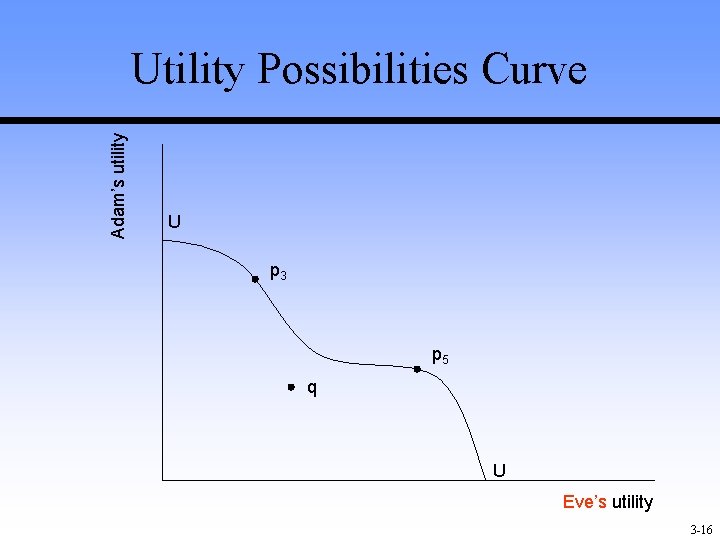
Adam’s utility Utility Possibilities Curve U p 3 p 5 q U Eve’s utility 3 -16
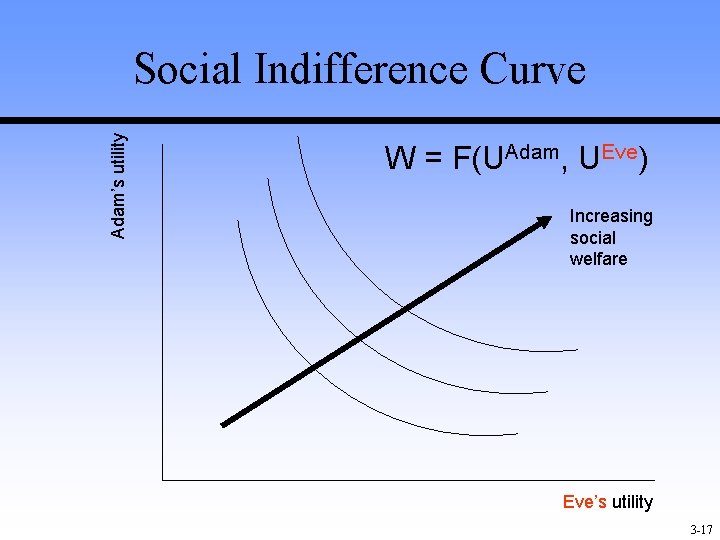
Adam’s utility Social Indifference Curve W = F(UAdam, UEve) Increasing social welfare Eve’s utility 3 -17
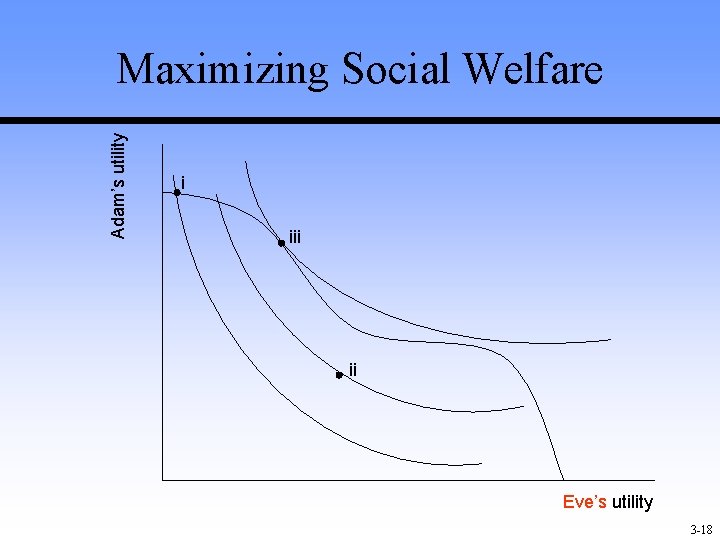
Adam’s utility Maximizing Social Welfare i ii Eve’s utility 3 -18
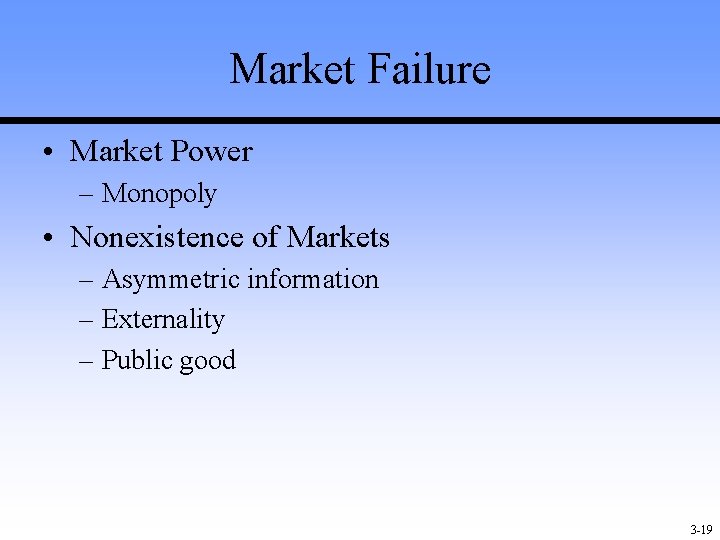
Market Failure • Market Power – Monopoly • Nonexistence of Markets – Asymmetric information – Externality – Public good 3 -19
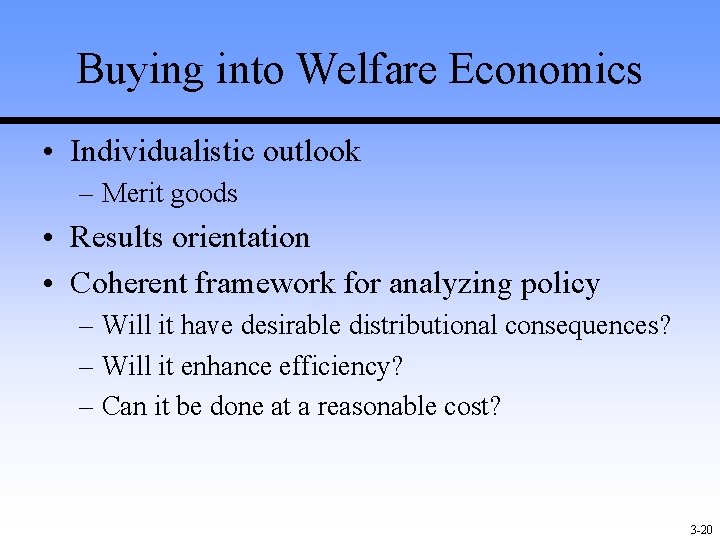
Buying into Welfare Economics • Individualistic outlook – Merit goods • Results orientation • Coherent framework for analyzing policy – Will it have desirable distributional consequences? – Will it enhance efficiency? – Can it be done at a reasonable cost? 3 -20