Chapter 18 Visual Merchandising and Display Section 18

- Slides: 20
Chapter 18 Visual Merchandising and Display • Section 18. 1 Display Features • Section 18. 2 Artistic Design
Artistic Design Objectives List the five steps in creating a display Explain how artistic elements function in display design Describe the importance of display maintenance Marketing Essentials Chapter 18, Section 18. 2
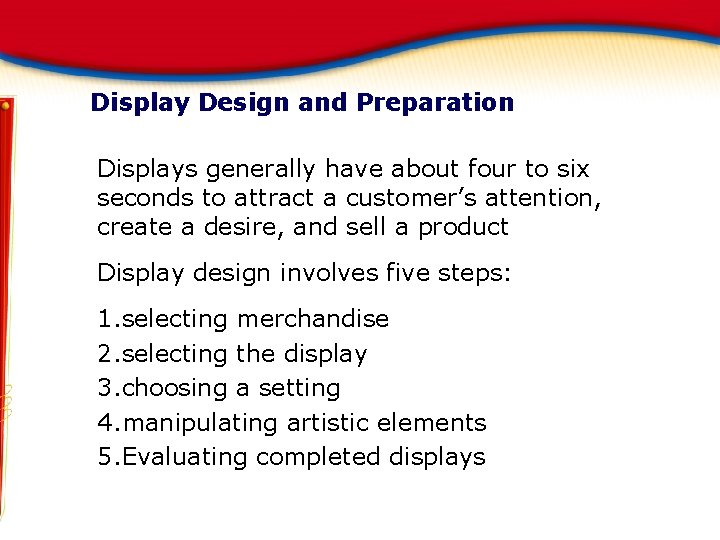
Display Design and Preparation Displays generally have about four to six seconds to attract a customer’s attention, create a desire, and sell a product Display design involves five steps: 1. selecting merchandise 2. selecting the display 3. choosing a setting 4. manipulating artistic elements 5. Evaluating completed displays
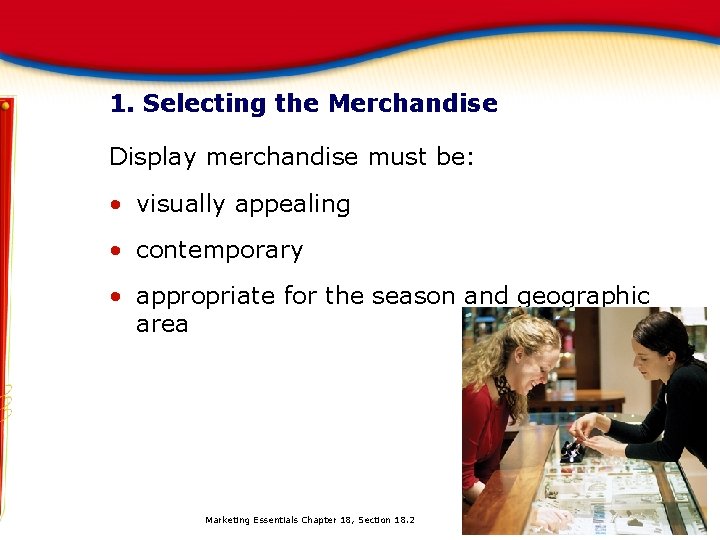
1. Selecting the Merchandise Display merchandise must be: • visually appealing • contemporary • appropriate for the season and geographic area Marketing Essentials Chapter 18, Section 18. 2
2. Selecting the Display The merchandise selected to display determines how it will be displayed as a: • One item display , showing a single item • Similar-product display : showing one kind of item from different brands • Related-merchandise display , grouping items that can be used together • Cross-mix display: a variety of different merchandise displayed together
3. Choosing a Display Setting A display setting used depends on the image it wants to project. Settings can be: 1. Realistic– depicts a room or recognizable locale Props like tables, chairs, plants, riser books, dishes etc provide details (restaurant, park etc. ) 2. Semi-realistic– a room or recognizable locale but leaves details to the imagination 3. Abstract– does not imitate nor try to imitate a reality – focus on form and color versus actual objects
4. Manipulating Artistic Elements The artistic elements of a display include: • Line, color, and shape • Direction and texture • Proportion and balance • Motion and lighting Marketing Essentials Chapter 18, Section 18. 2
Lines Created to direct the viewer’s attention: • Straight lines = stiffness and control • Curving lines = suggest freedom & movement • Diagonal lines = gives impression of action • Vertical lines = offer height and dignity • Horizontal lines = convey confidence
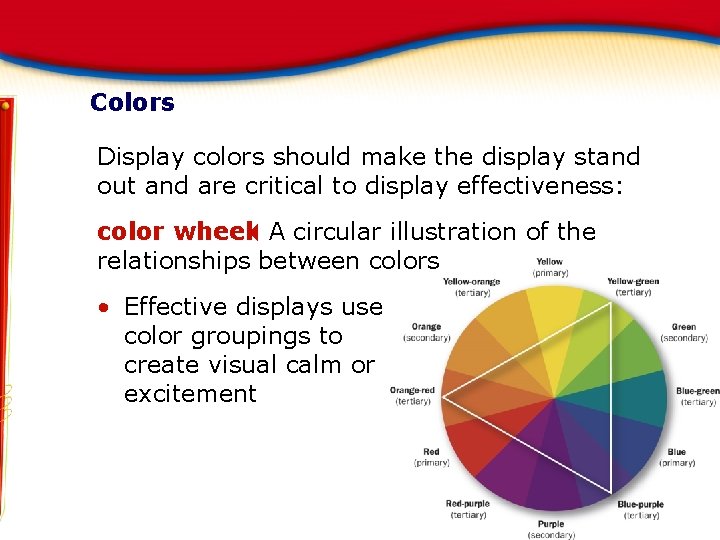
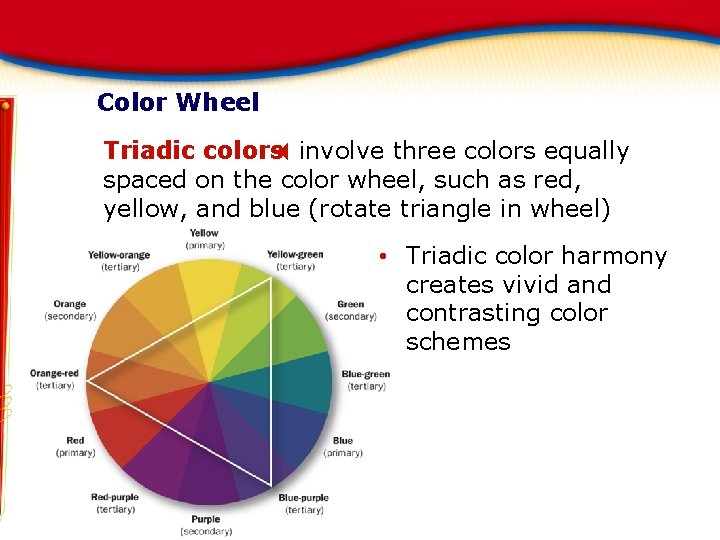
Colors Display colors should make the display stand out and are critical to display effectiveness: color wheel. X A circular illustration of the relationships between colors • Effective displays use color groupings to create visual calm or excitement
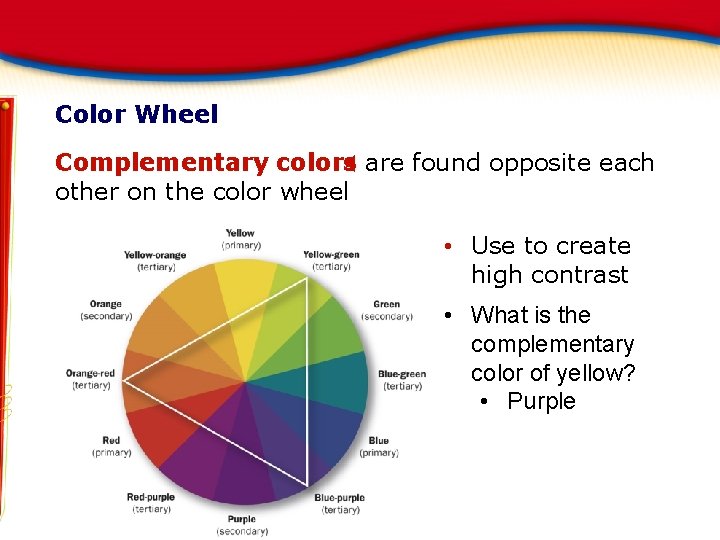
Color Wheel Complementary colors X are found opposite each other on the color wheel • Use to create high contrast • What is the complementary color of yellow? • Purple Marketing Essentials Chapter 18, Section 18. 2
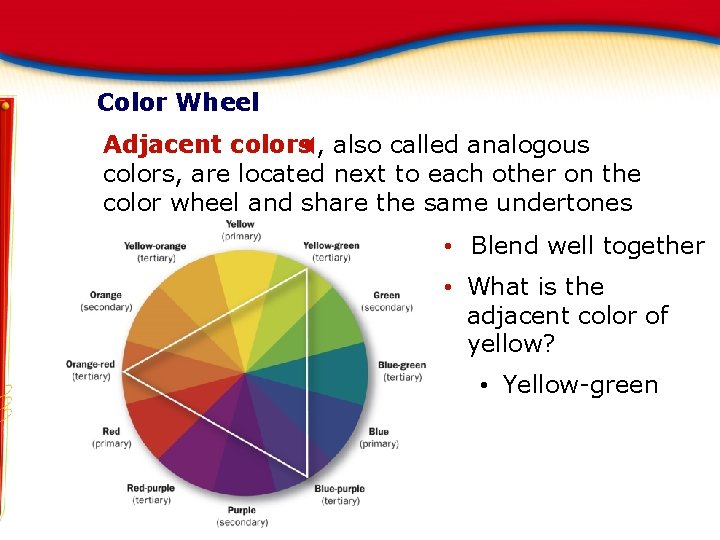
Color Wheel Adjacent colors. X, also called analogous colors, are located next to each other on the color wheel and share the same undertones • Blend well together • What is the adjacent color of yellow? • Yellow-green Marketing Essentials Chapter 18, Section 18. 2
Color Wheel Triadic colors. X involve three colors equally spaced on the color wheel, such as red, yellow, and blue (rotate triangle in wheel) • Triadic color harmony creates vivid and contrasting color schemes
Direction Effective displays have a focal point: an area in the display that attracts attention first, above all else (should be the merchandise)
Proportion. X refers to the relationship between and among objects in a display • Props, graphics, and signs should be in proportion • Too many props detracts from merchandise. Marketing Essentials Chapter 18, Section 18. 2
Balance Formal balance. X in a display happens when items of similar size are grouped together, or they are placed in opposite positions to balance one another out Informalbalance– occurs when small items are grouped with a large item (placed together) Marketing Essentials Chapter 18, Section 18. 2
Motion is playing an increasingly important role in display design. • Animation can be achieved through the use of motorized fixtures, props, and mannequins • Should be used sparingly Marketing Essentials Chapter 18, Section 18. 2
Proper Lighting Proper lighting is critical to attractive displays • recommended lighting be two to five times stronger than a store’s general lighting • Colored lighting can create dramatic effects Marketing Essentials Chapter 18, Section 18. 2
5. Evaluating Completed Displays Be sure to ask questions about your displays, such as: Do they enhance the store’s image? Was a theme creatively applied? Were the color and signage appropriate? Was the result pleasing?
Display Maintenance Displays need to be maintained and eventually dismantled • Most businesses check displays daily • Maintenance includes: • Restock merchandise around displays daily • Fix damage, displacements, or missing items • Dust and clean area often • Poor maintenance can create a negative image of the store and merchandise Marketing Essentials Chapter 18, Section 18. 2
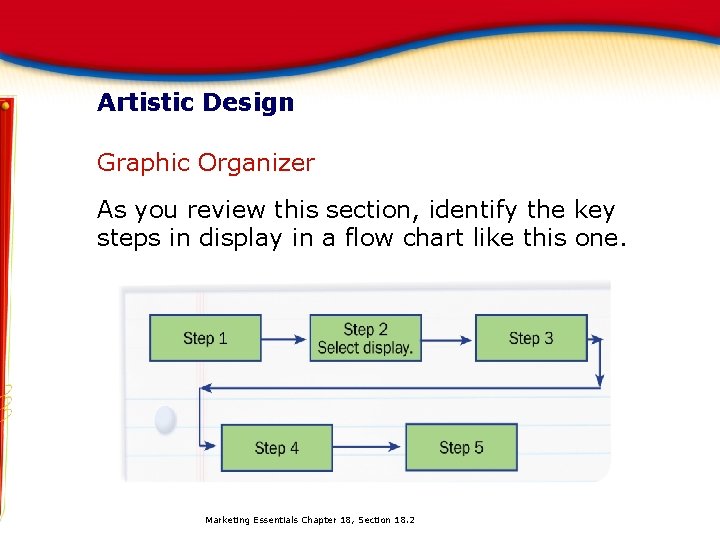
Artistic Design Graphic Organizer As you review this section, identify the key steps in display in a flow chart like this one. Marketing Essentials Chapter 18, Section 18. 2