Chapter 16 ShortTerm Financing Order Placed Order Received
- Slides: 15
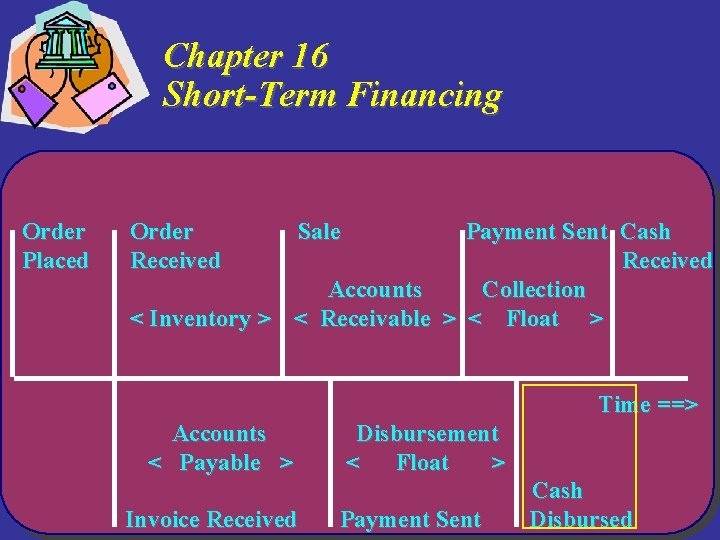
Chapter 16 Short-Term Financing Order Placed Order Received Sale Payment Sent Cash Received Accounts Collection < Inventory > < Receivable > < Float > Time ==> Accounts < Payable > Invoice Received Disbursement < Float > Cash Payment Sent Disbursed Copyright 2005 by Thomson Learning, Inc.
Learning Objectives v Formulate a short-term financing strategy. v Choose the appropriate financing instrument. v Compute the effective cost of financing. Copyright 2005 by Thomson Learning, Inc.
Financing and the Cash Flow Timeline v A deficit cash position may result from the interaction of inefficient or inappropriate working capital policies v Management should first evaluate its working capital policies to ensure the most efficient stream of cash flow from operations v Once this is done, then a short-term financing strategy should be developed Copyright 2005 by Thomson Learning, Inc.
Financing Strategies v Aggressive strategy v Conservative strategy v Moderate strategy Copyright 2005 by Thomson Learning, Inc.
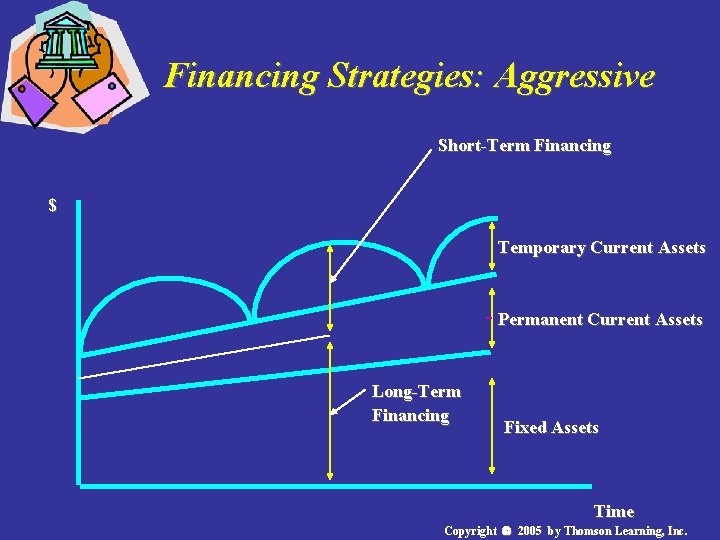
Financing Strategies: Aggressive Short-Term Financing $ Temporary Current Assets Permanent Current Assets Long-Term Financing Fixed Assets Time Copyright 2005 by Thomson Learning, Inc.
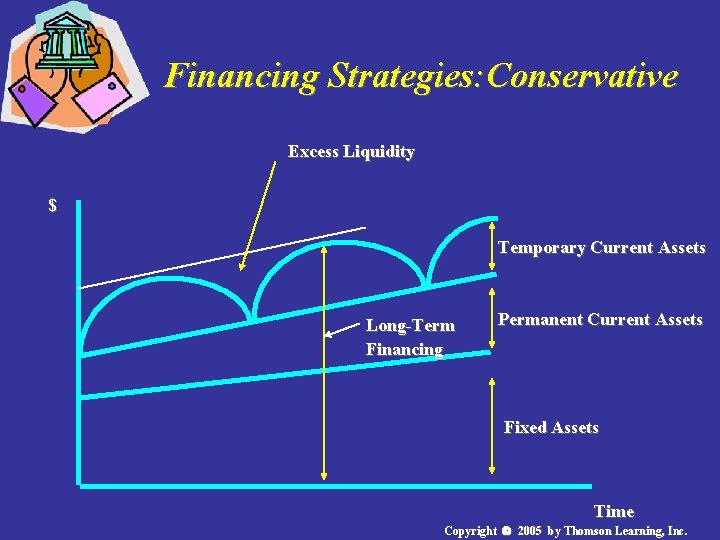
Financing Strategies: Conservative Excess Liquidity $ Temporary Current Assets Long-Term Financing Permanent Current Assets Fixed Assets Time Copyright 2005 by Thomson Learning, Inc.
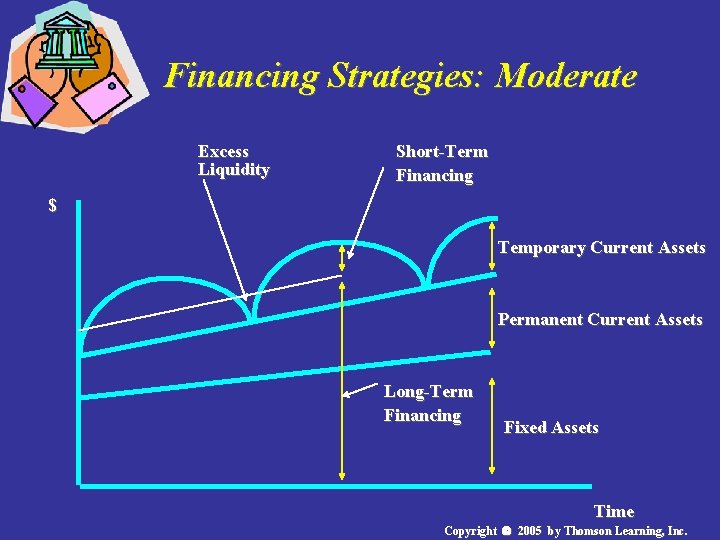
Financing Strategies: Moderate Excess Liquidity Short-Term Financing $ Temporary Current Assets Permanent Current Assets Long-Term Financing Fixed Assets Time Copyright 2005 by Thomson Learning, Inc.
Financing Alternatives v Role of the Internet v Credit lines v Letter of credit v Banker’s acceptance v Reverse repurchase agreement v Commercial paper Copyright 2005 by Thomson Learning, Inc.
Asset Based Loans v Receivable financing – Pledging – Factoring v Inventory financing – Floating lien – Trust receipts – Warehouse receipts Copyright 2005 by Thomson Learning, Inc.
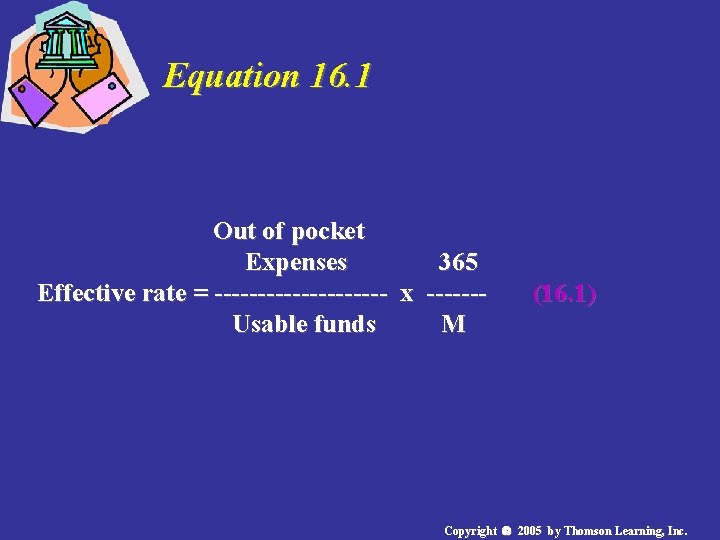
Effective Cost v Equation 16. 1 v Commercial paper v Credit Line Copyright 2005 by Thomson Learning, Inc.
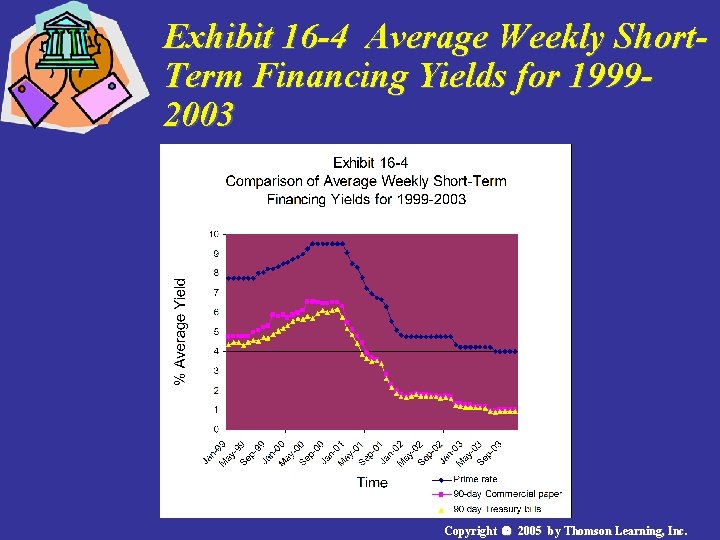
Exhibit 16 -4 Average Weekly Short. Term Financing Yields for 19992003 Copyright 2005 by Thomson Learning, Inc.
Equation 16. 1 Out of pocket Expenses 365 Effective rate = ---------- x ------Usable funds M (16. 1) Copyright 2005 by Thomson Learning, Inc.
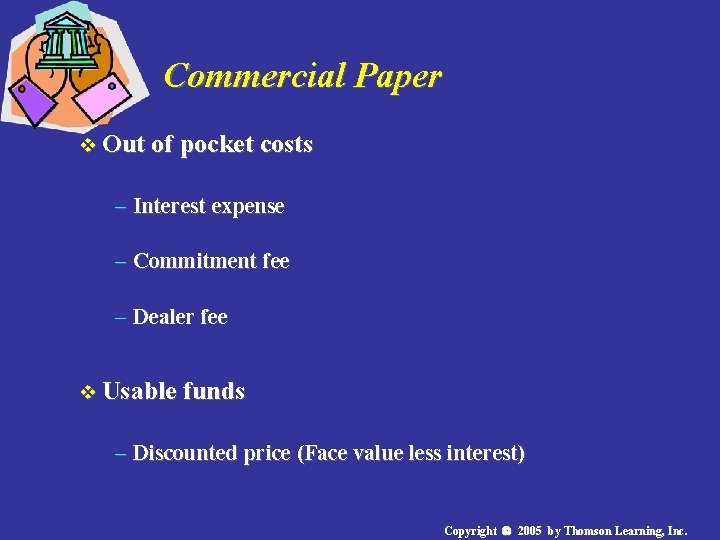
Commercial Paper v Out of pocket costs – Interest expense – Commitment fee – Dealer fee v Usable funds – Discounted price (Face value less interest) Copyright 2005 by Thomson Learning, Inc.
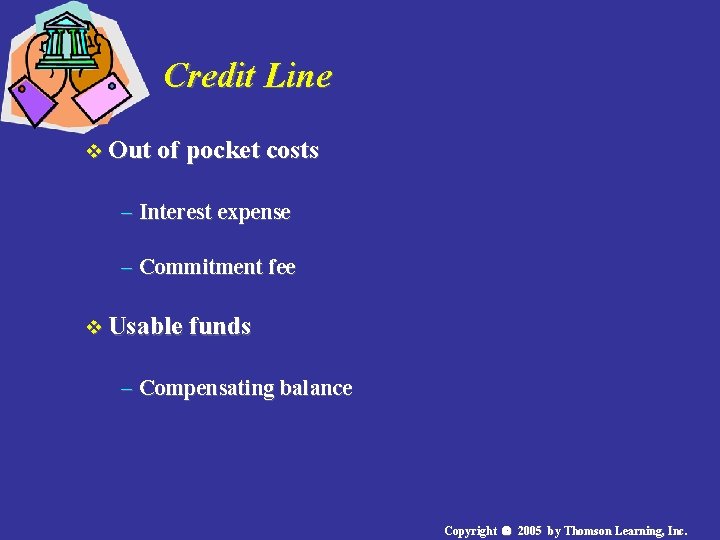
Credit Line v Out of pocket costs – Interest expense – Commitment fee v Usable funds – Compensating balance Copyright 2005 by Thomson Learning, Inc.
Summary v Short-term financing alternatives in this chapter differ from spontaneous financing sources such as payables and accruals. v The chapter began with a discussion of financing three financing strategies. v Then discussion focused on the major forms of short-term financing available. v The chapter concluded with a discussion of calculating the effective cost of financing with commercial paper and credit lines. Copyright 2005 by Thomson Learning, Inc.