
Chapter 10 To Examine Types of Locations To


- Slides: 18
Chapter 10
• To Examine Types of Locations • To Note Location Decisions • To Describe One-Hundred Percent Location • To Discuss Criteria for Retail Location Evaluation • To Contrast Alternative Terms of Occupancy
• Isolated Store • Unplanned Business District • Planned Shopping Center
• • No Competition Low Rental Costs Flexibility Visibility Facility Adaptation Parking Cost Reductions, Lower Prices
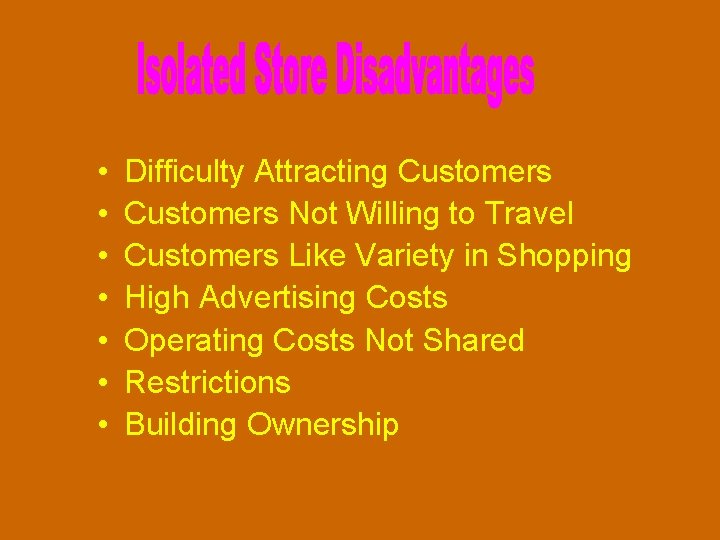
• • Difficulty Attracting Customers Not Willing to Travel Customers Like Variety in Shopping High Advertising Costs Operating Costs Not Shared Restrictions Building Ownership
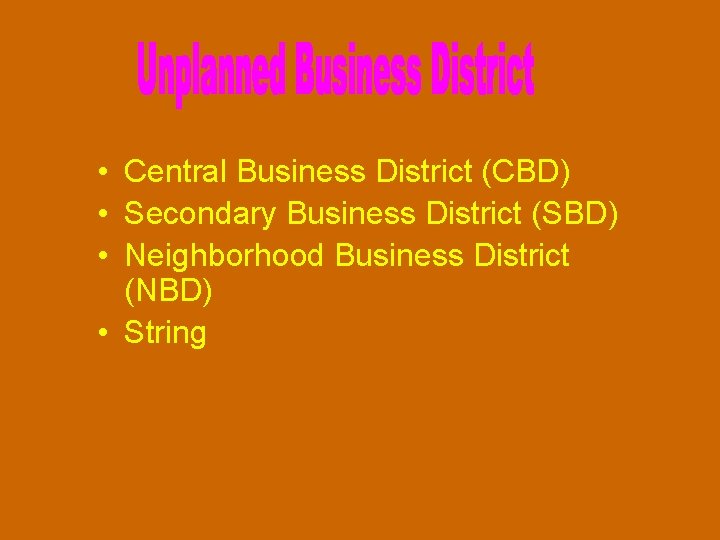
• Central Business District (CBD) • Secondary Business District (SBD) • Neighborhood Business District (NBD) • String
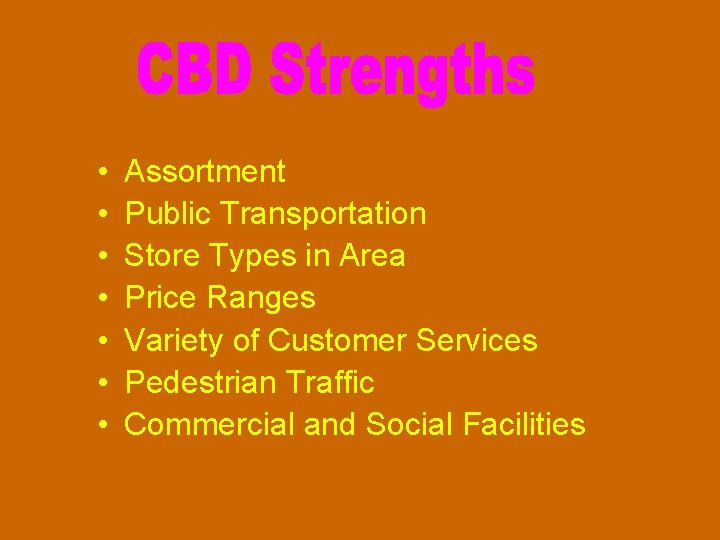
• • Assortment Public Transportation Store Types in Area Price Ranges Variety of Customer Services Pedestrian Traffic Commercial and Social Facilities
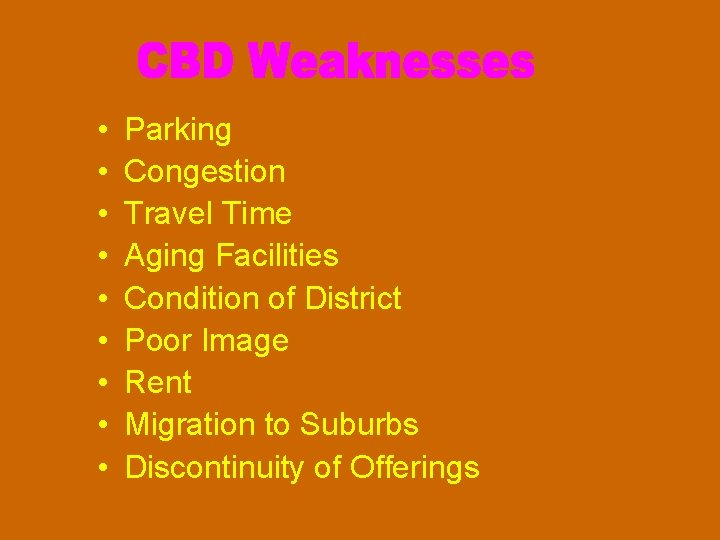
• • • Parking Congestion Travel Time Aging Facilities Condition of District Poor Image Rent Migration to Suburbs Discontinuity of Offerings
• Regional Shopping Center – Megamall • Community Shopping Center – Power Center • Neighborhood Shopping Center
• • • Balanced Tenancy Suburban Population One-Stop Shopping Common Areas Image Pedestrian Traffic Parking and Traffic Rent and Taxes Theft Rates
• • • Regulations Rent Restrictions Competitive Environment Fees Number of Malls Consumer Boredom Aging Facilities Major Retailer Domination
• Renovation and Expansion • Consumer Interest and Enthusiasm – Megamalls – Power Centers • • Broaden Retail Mix Opening Up Malls Build Brand Loyalty Frequent Shopper Programs
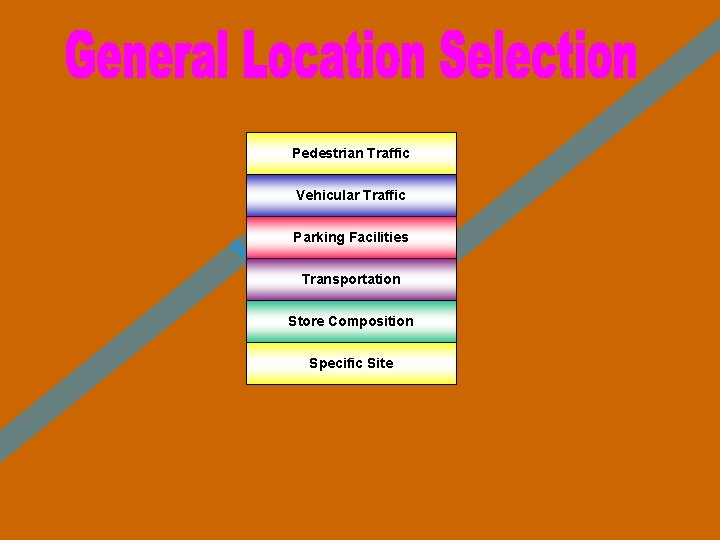
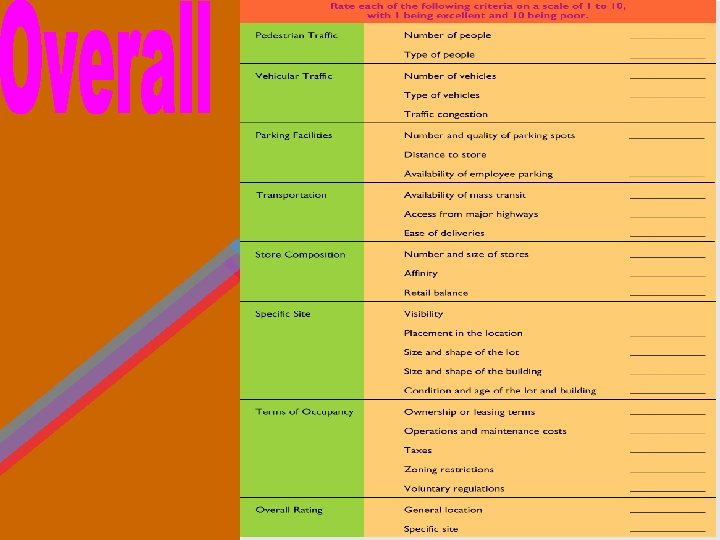
Pedestrian Traffic Vehicular Traffic Parking Facilities Transportation Store Composition Specific Site
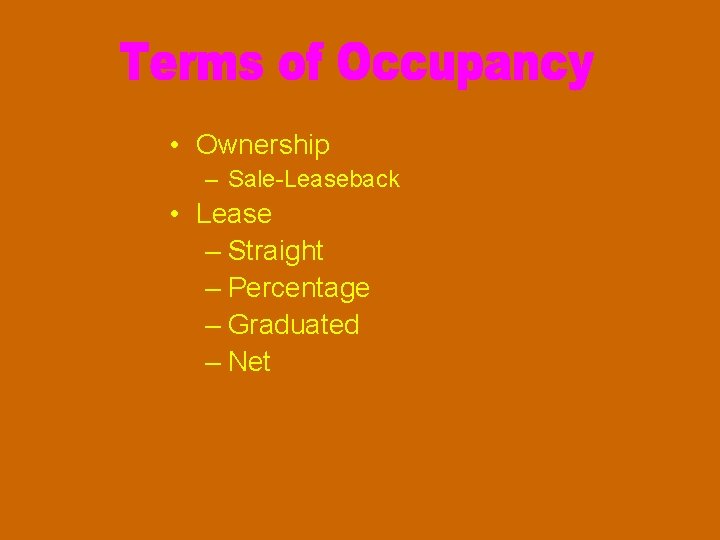
• Ownership – Sale-Leaseback • Lease – Straight – Percentage – Graduated – Net
• Zoning Considerations • Voluntary Considerations
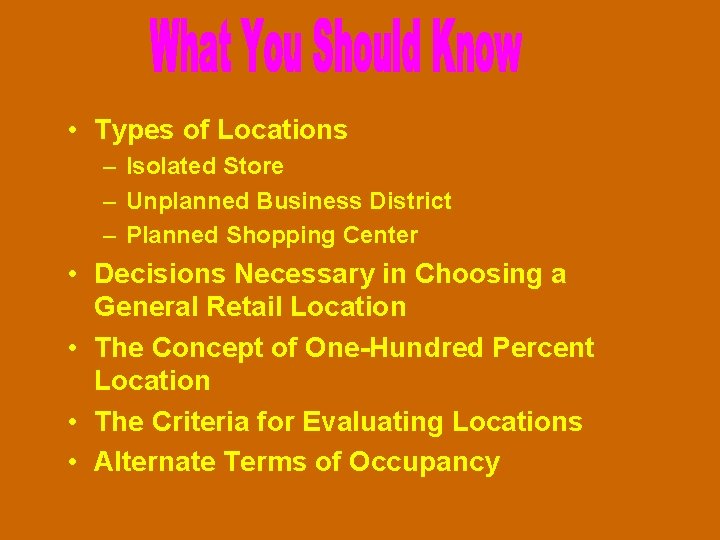
• Types of Locations – Isolated Store – Unplanned Business District – Planned Shopping Center • Decisions Necessary in Choosing a General Retail Location • The Concept of One-Hundred Percent Location • The Criteria for Evaluating Locations • Alternate Terms of Occupancy
? s n tio Q s e u Questions? Qu ? s n o esti