Ch 14 Weathering and Erosion HSESS 3 1
- Slides: 13
Ch 14 Weathering and Erosion HS-ESS 3 -1 – Construct an explanation based on evidence for how the availability of natural resources, occurrence of natural hazards, and changes in climate have influenced human activity.
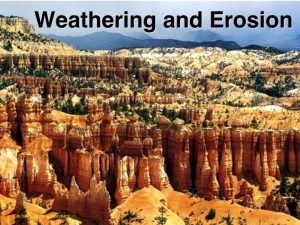
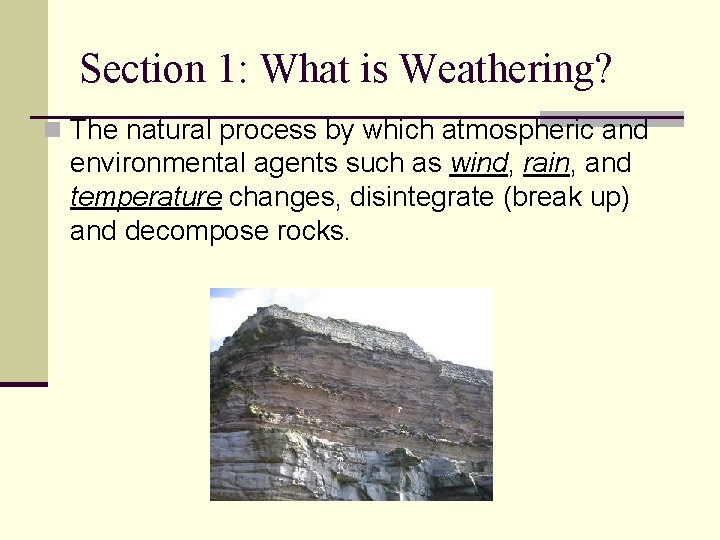
Section 1: What is Weathering? n The natural process by which atmospheric and environmental agents such as wind, rain, and temperature changes, disintegrate (break up) and decompose rocks.
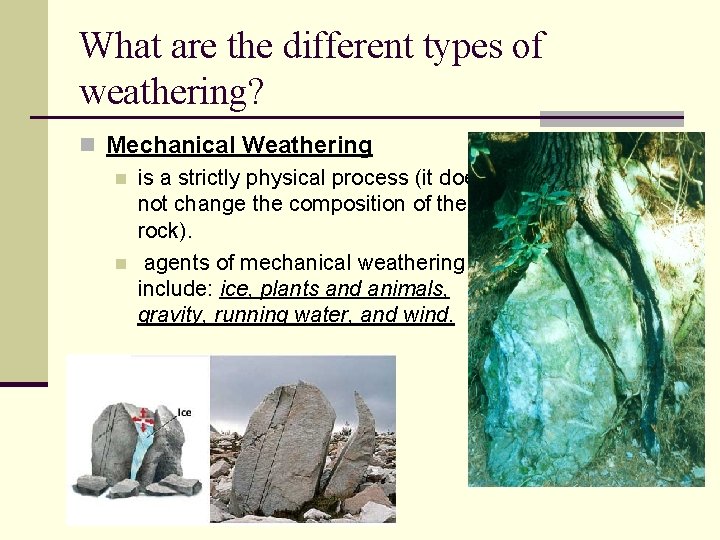
What are the different types of weathering? n Mechanical Weathering n is a strictly physical process (it does not change the composition of the rock). n agents of mechanical weathering include: ice, plants and animals, gravity, running water, and wind.
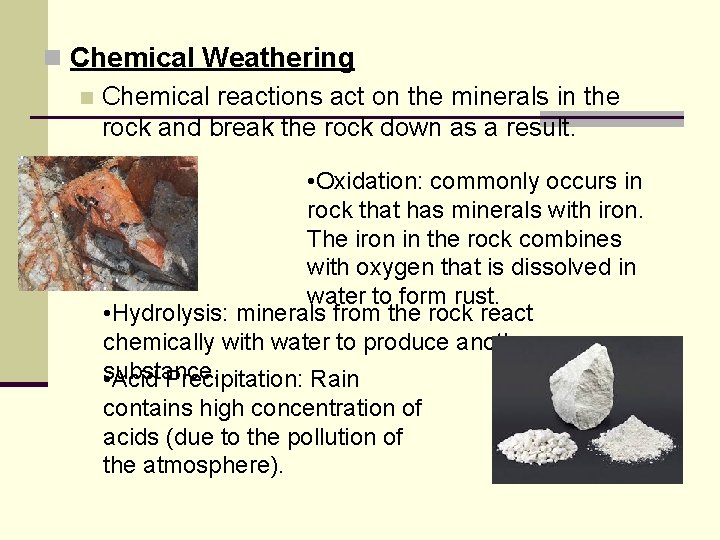
n Chemical Weathering n Chemical reactions act on the minerals in the rock and break the rock down as a result. • Oxidation: commonly occurs in rock that has minerals with iron. The iron in the rock combines with oxygen that is dissolved in water to form rust. • Hydrolysis: minerals from the rock react chemically with water to produce another • substance. Acid Precipitation: Rain contains high concentration of acids (due to the pollution of the atmosphere).
Section 2: Rates of Weathering n The process of mechanical and chemical weathering generally work very slowly. n Differential Weathering – the process by which softer, less weather resistant rocks wear away at a faster rate than harder, more weather resistant rocks do. n The rate at which rock weathers depends on a number of factors, include rock composition, climate, and topography.
How does rock composition affect the rate of weathering? n The rate at which rocks weather depend mostly on the material that holds the sediment grains together. n Some of the rocks that are strongly cemented together can resist weathering longer than other rocks.
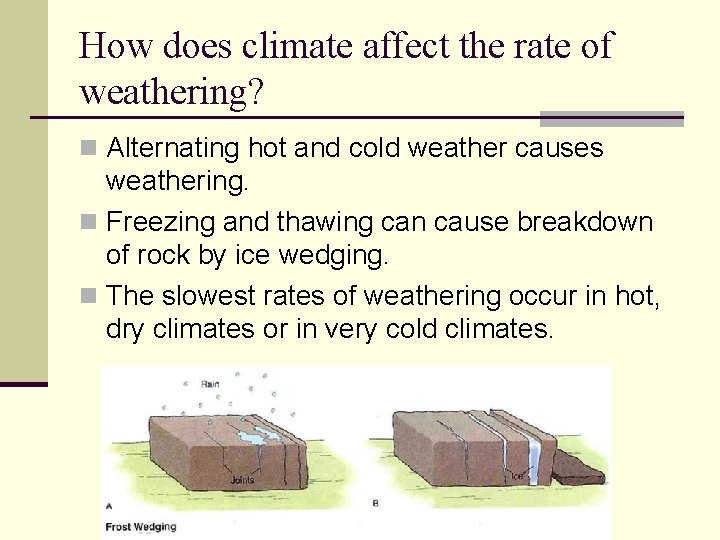
How does climate affect the rate of weathering? n Alternating hot and cold weather causes weathering. n Freezing and thawing can cause breakdown of rock by ice wedging. n The slowest rates of weathering occur in hot, dry climates or in very cold climates.
How does topography affect the rate of weathering? n Because temperatures are generally cold at high elevations, ice wedging is more common. n On steep slopes, such as mountainsides, weathered rock fragments are pulled downhill by gravity and washed out by heavy rains.
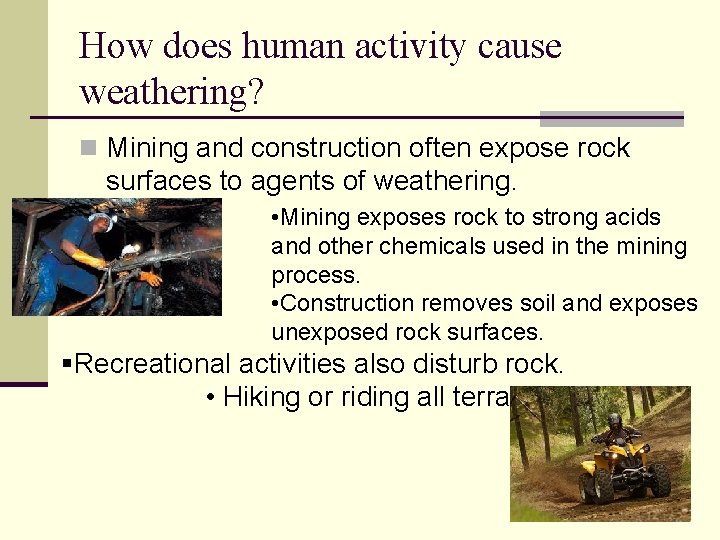
How does human activity cause weathering? n Mining and construction often expose rock surfaces to agents of weathering. • Mining exposes rock to strong acids and other chemicals used in the mining process. • Construction removes soil and exposes unexposed rock surfaces. §Recreational activities also disturb rock. • Hiking or riding all terrain vehicles.
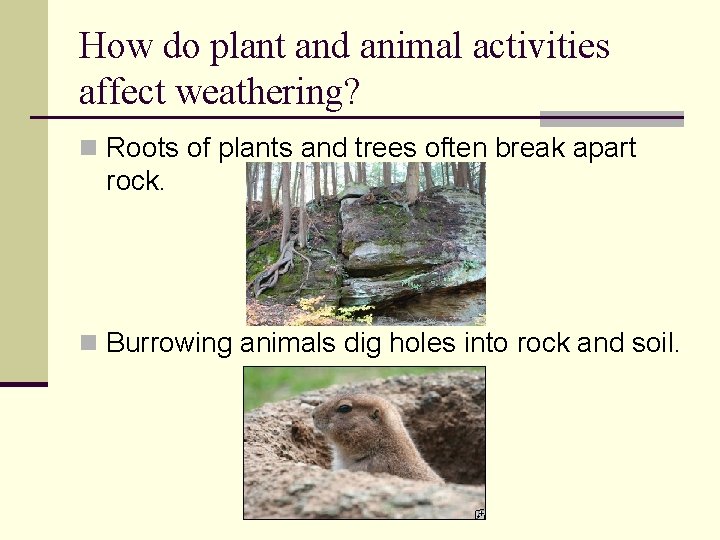
How do plant and animal activities affect weathering? n Roots of plants and trees often break apart rock. n Burrowing animals dig holes into rock and soil.
How does soil form? n Soil is a complex mixture of minerals, water, gases, and the remains of dead organisms. n The uppermost layer of rock fragments weather to form a layer of very fine particles which make up the soil. n Soil composition refers to the material of which it is made.
What is erosion? n The process by which the products of weathering are transported is called erosion. n Farming and ranching practices increase soil erosion. n Clearing plants and animal overgrazing destroys the groundcover and increases the rate of erosion.
What are the results of soil erosion? n Reduces the fertility of the soil. n Impairs crop productivity. n Can lead to water pollution. n Triggers landslides and mudflows.