Calculus Finding Limits Analytically 1 3 part 2

- Slides: 23
Calculus Finding Limits Analytically 1. 3 part 2 Calculus 1
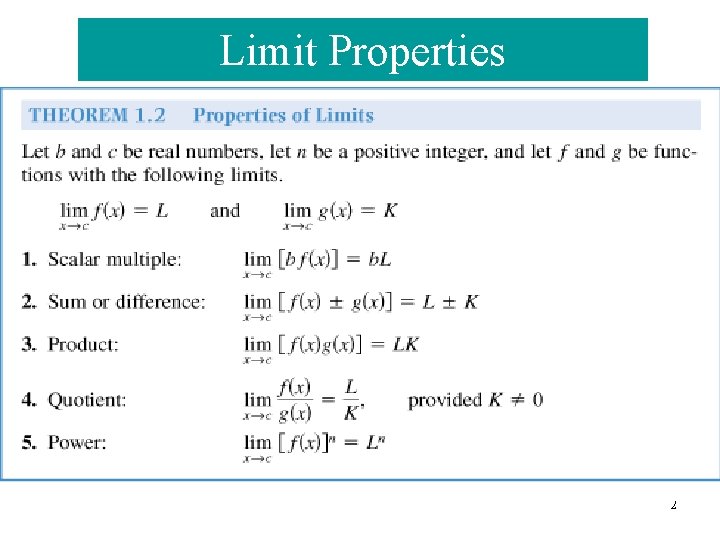
Limit Properties 2
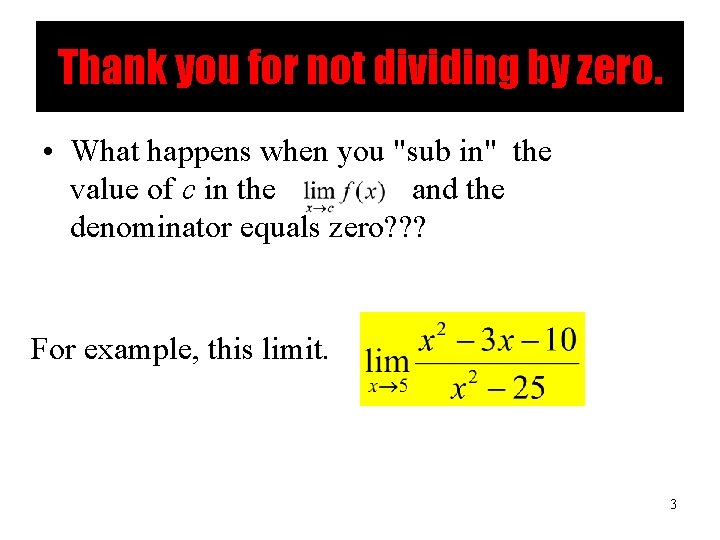
Thank you for not dividing by zero. • What happens when you "sub in" the value of c in the and the denominator equals zero? ? ? For example, this limit. 3
New Techniques to find Limits 1. Dividing out 2. Rationalizing the numerator 3. Special cases 4
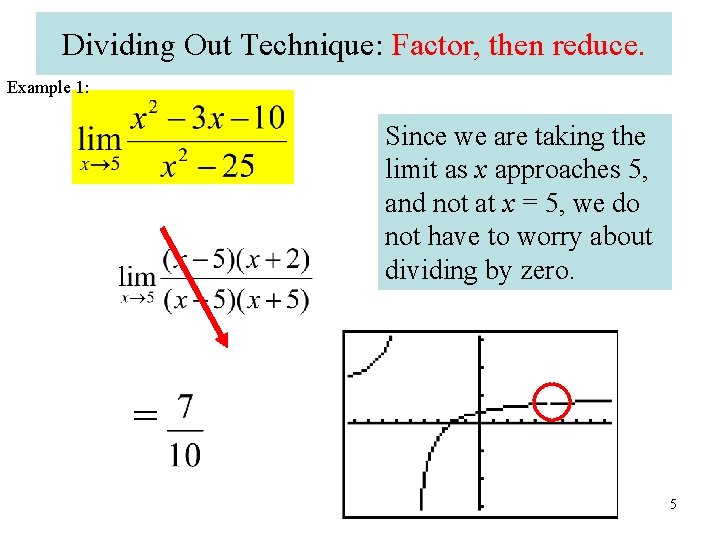
Dividing Out Technique: Factor, then reduce. Example 1: Since we are taking the limit as x approaches 5, and not at x = 5, we do not have to worry about dividing by zero. = 5
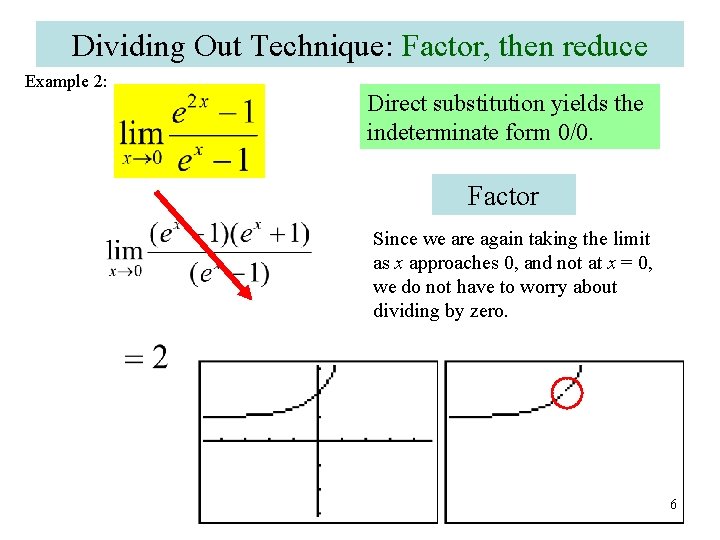
Dividing Out Technique: Factor, then reduce Example 2: Direct substitution yields the indeterminate form 0/0. Factor Since we are again taking the limit as x approaches 0, and not at x = 0, we do not have to worry about dividing by zero. 6
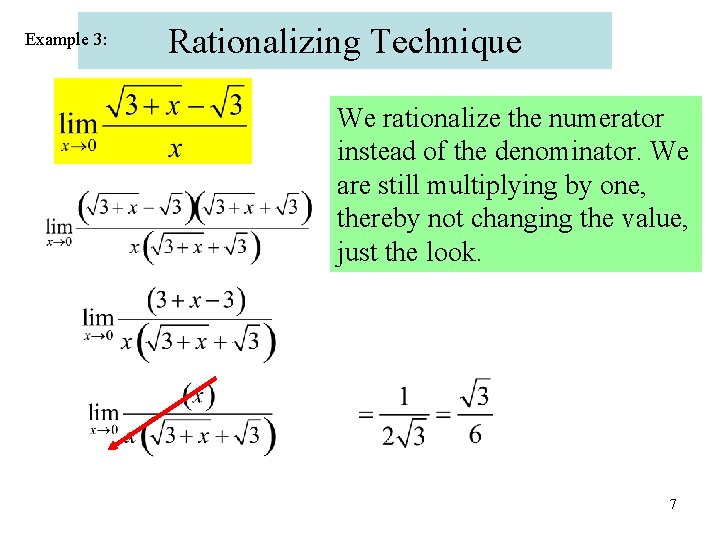
Example 3: Rationalizing Technique We rationalize the numerator instead of the denominator. We are still multiplying by one, thereby not changing the value, just the look. 7
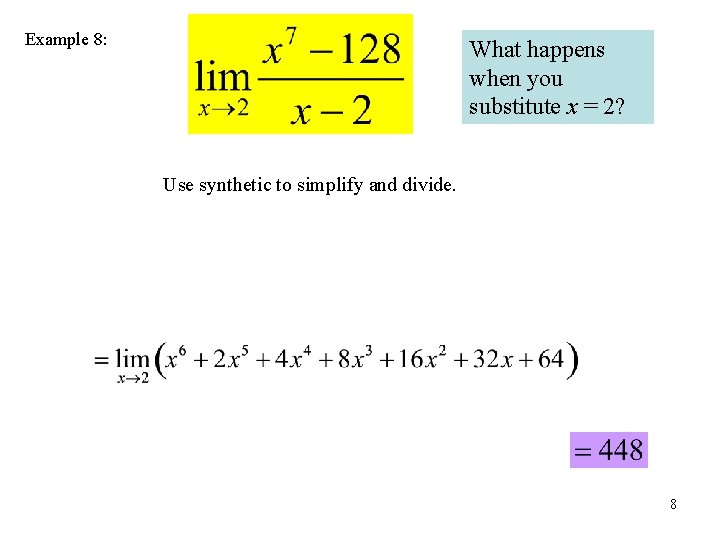
Example 8: What happens when you substitute x = 2? Use synthetic to simplify and divide. 8
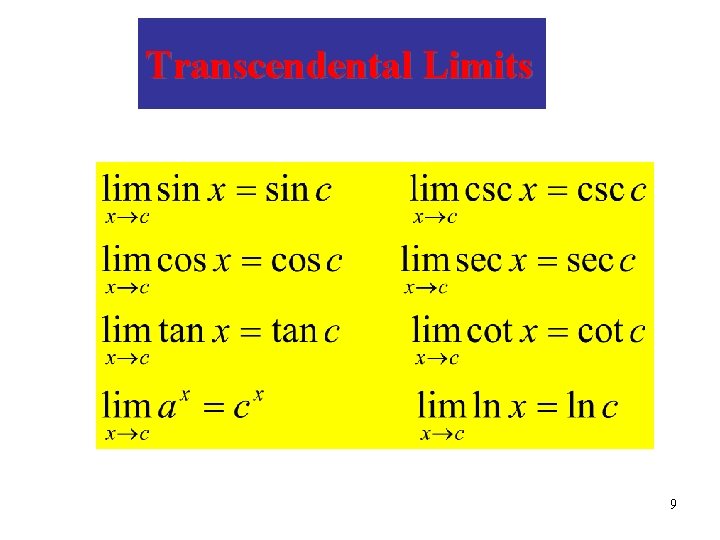
Transcendental Limits 9
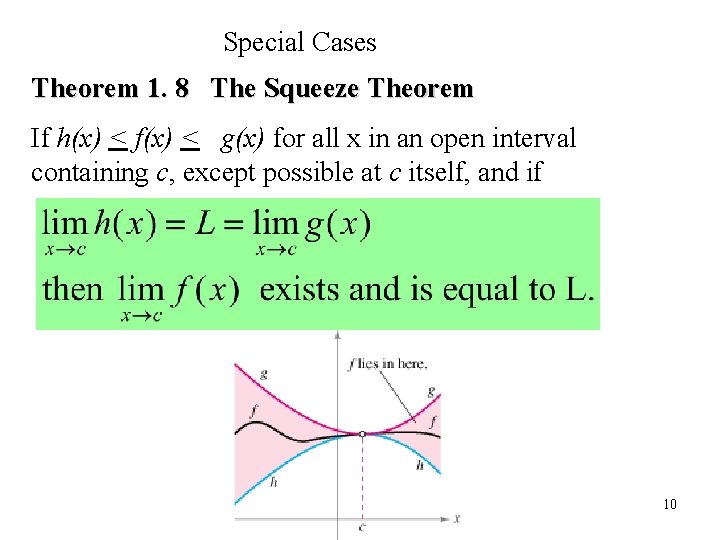
Special Cases Theorem 1. 8 The Squeeze Theorem If h(x) < f(x) < g(x) for all x in an open interval containing c, except possible at c itself, and if 10
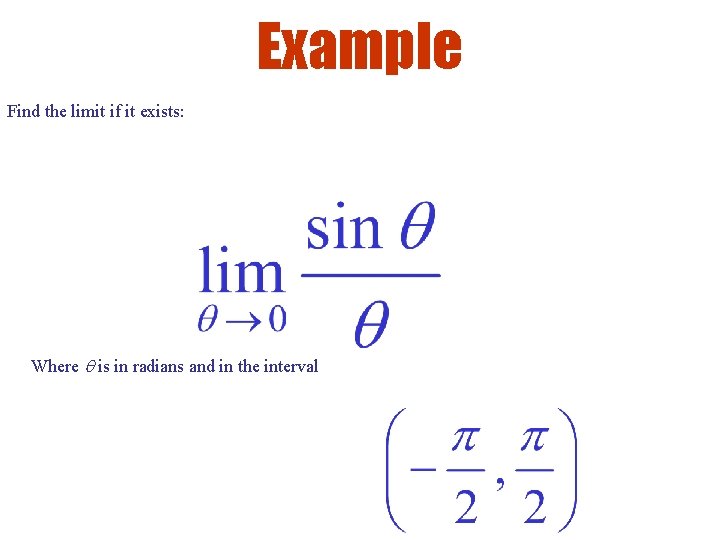
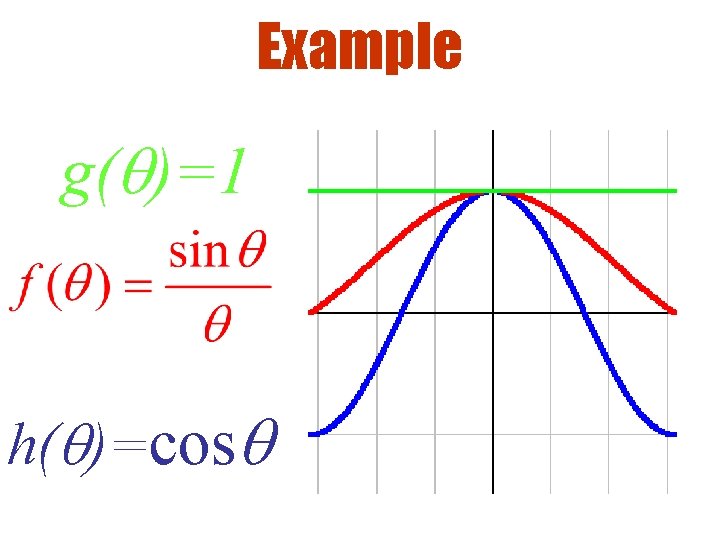
Example Find the limit if it exists: Where is in radians and in the interval
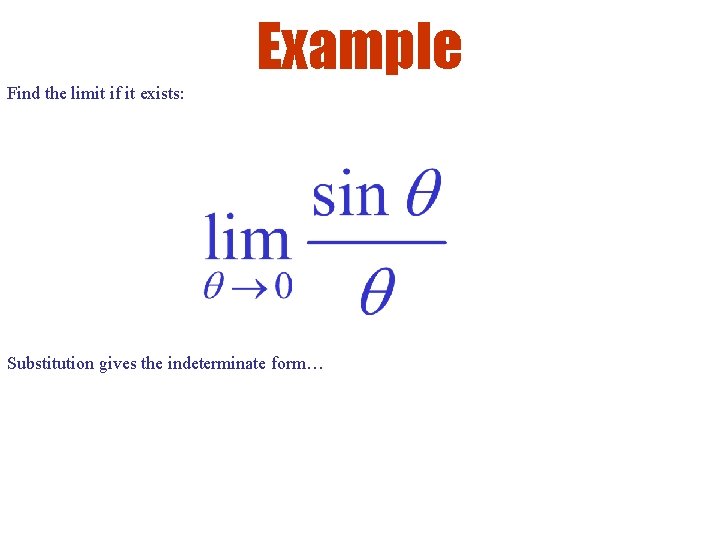
Example Find the limit if it exists: Substitution gives the indeterminate form…
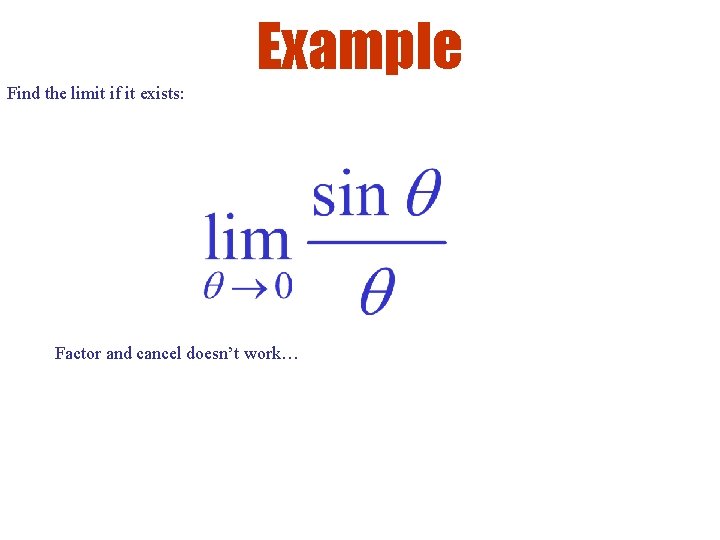
Example Find the limit if it exists: Factor and cancel doesn’t work…
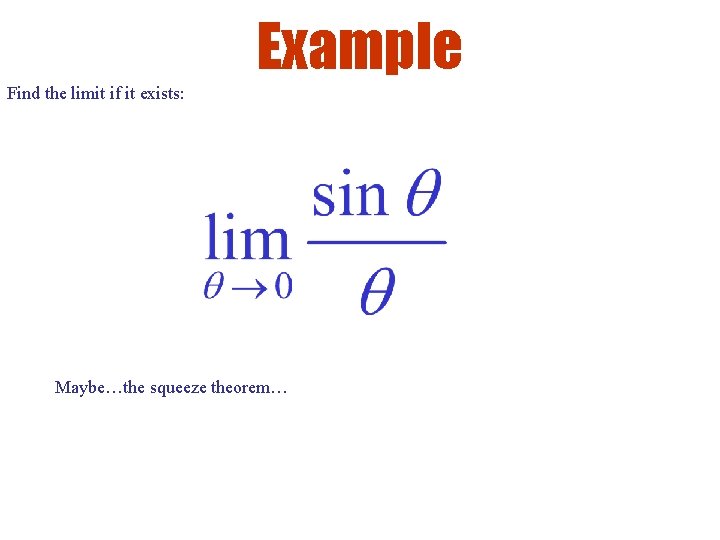
Example Find the limit if it exists: Maybe…the squeeze theorem…
Example g( )=1 h( )=cos
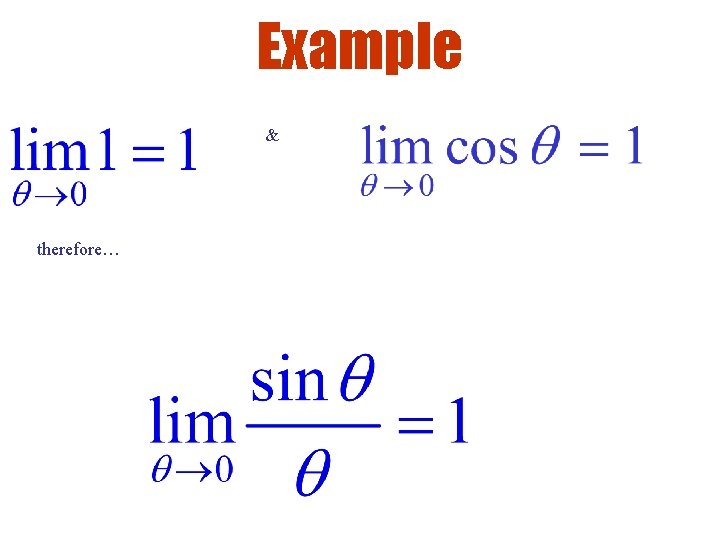
Example & therefore…
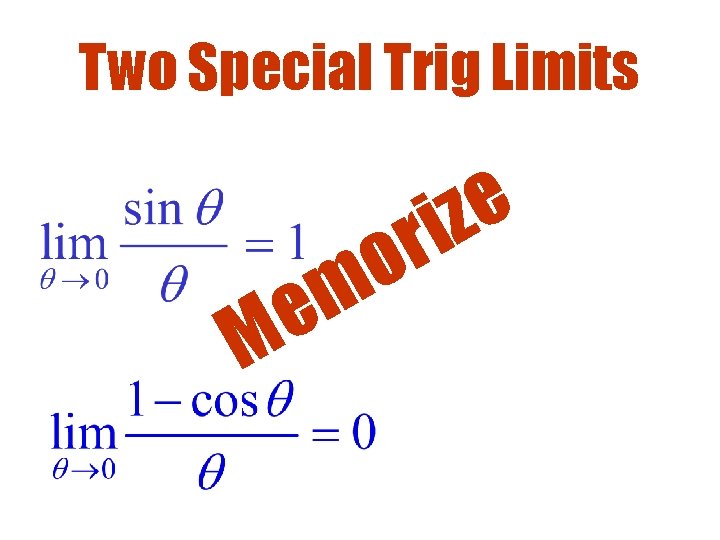
Two Special Trig Limits o m e M e z i r
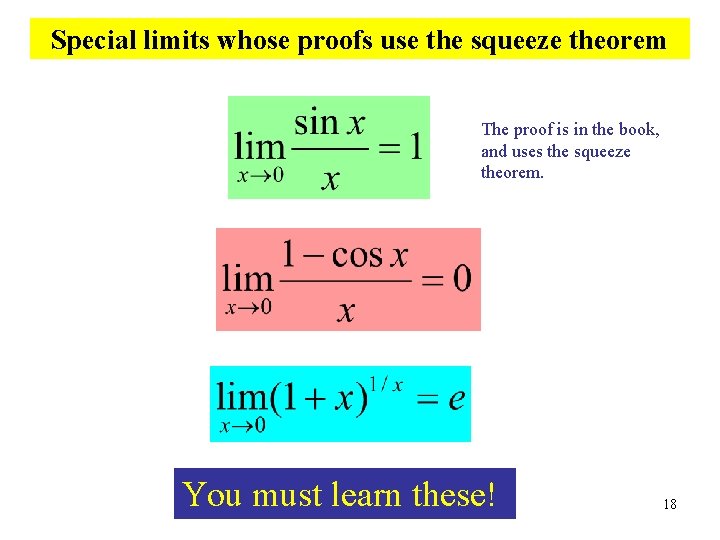
Special limits whose proofs use the squeeze theorem The proof is in the book, and uses the squeeze theorem. You must learn these! 18
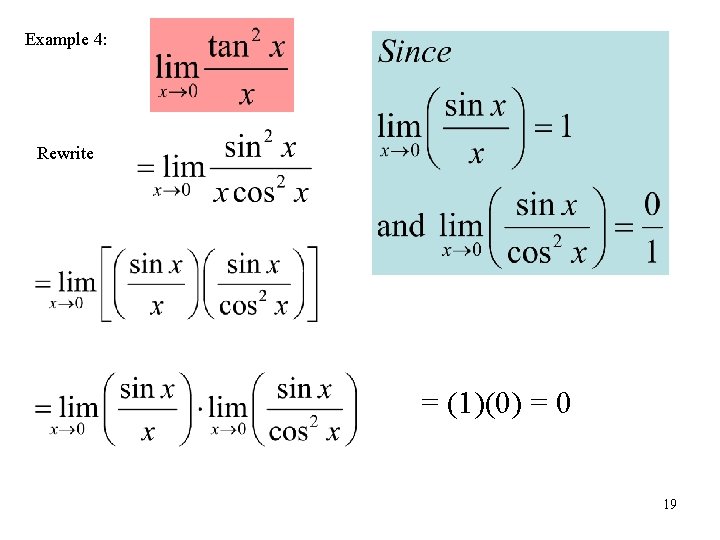
Example 4: Rewrite = (1)(0) = 0 19
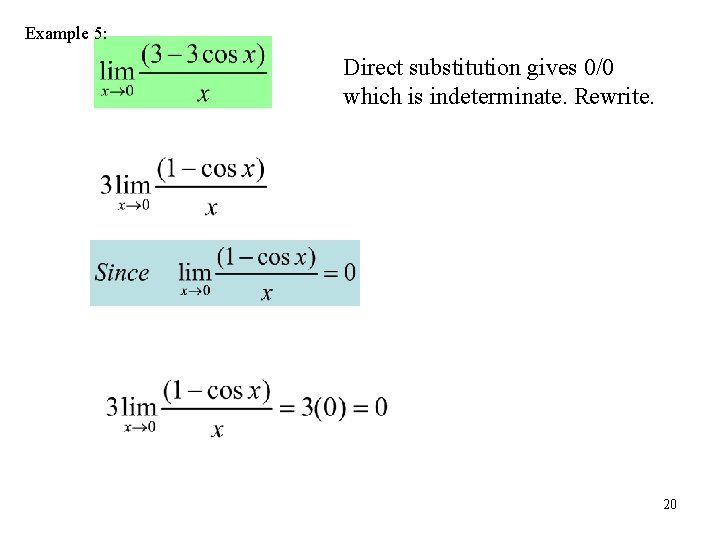
Example 5: Direct substitution gives 0/0 which is indeterminate. Rewrite. 20
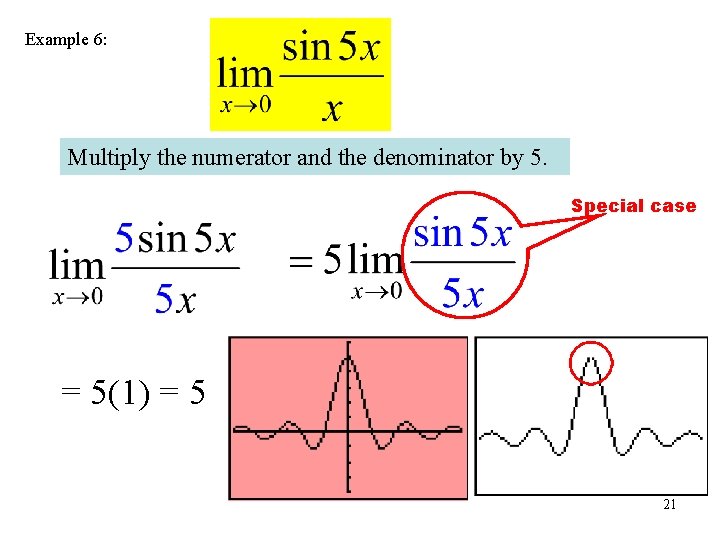
Example 6: Multiply the numerator and the denominator by 5. Special case = 5(1) = 5 21
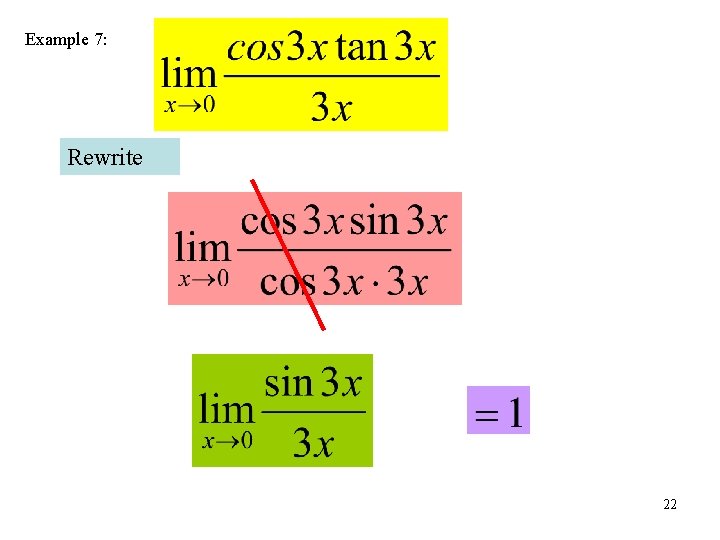
Example 7: Rewrite 22
Sometimes you have to be creative when determining which method to use and rely upon all previous mathematics. 23