Ashok K Goel Professor of Computer Science and
- Slides: 9
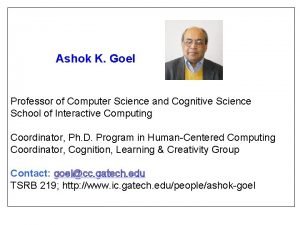
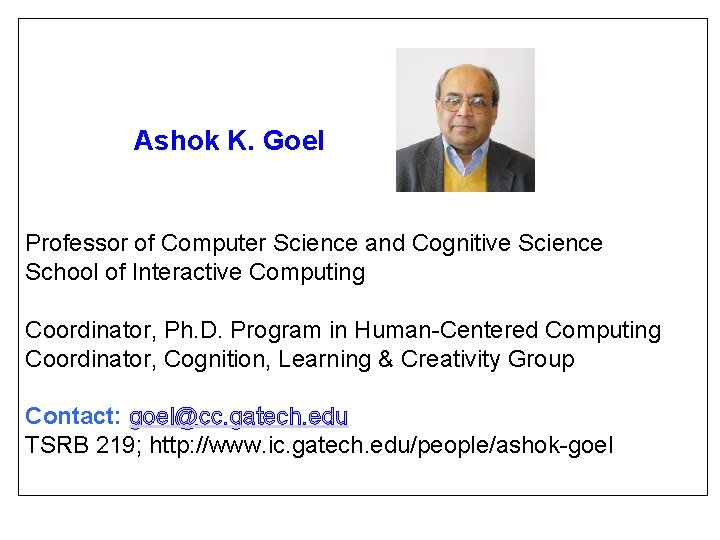
Ashok K. Goel Professor of Computer Science and Cognitive Science School of Interactive Computing Coordinator, Ph. D. Program in Human-Centered Computing Coordinator, Cognition, Learning & Creativity Group Contact: goel@cc. gatech. edu TSRB 219; http: //www. ic. gatech. edu/people/ashok-goel
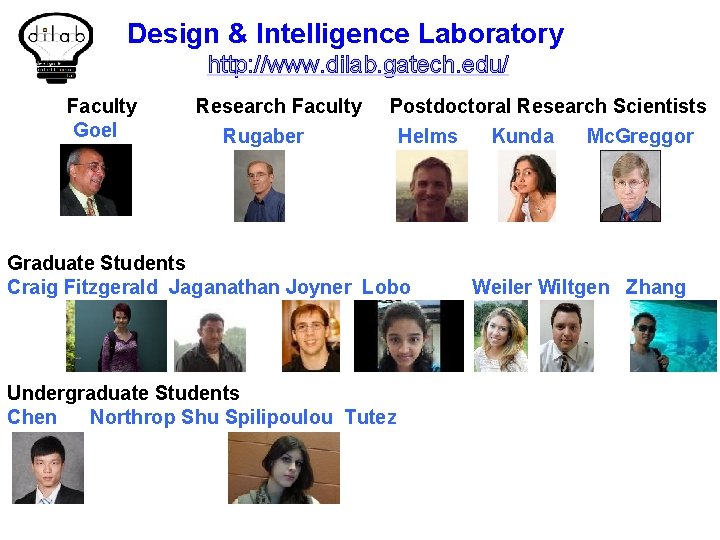
Design & Intelligence Laboratory http: //www. dilab. gatech. edu/ Faculty Goel Research Faculty Rugaber Postdoctoral Research Scientists Helms Kunda Mc. Greggor Graduate Students Craig Fitzgerald Jaganathan Joyner Lobo Undergraduate Students Chen Northrop Shu Spilipoulou Tutez Weiler Wiltgen Zhang
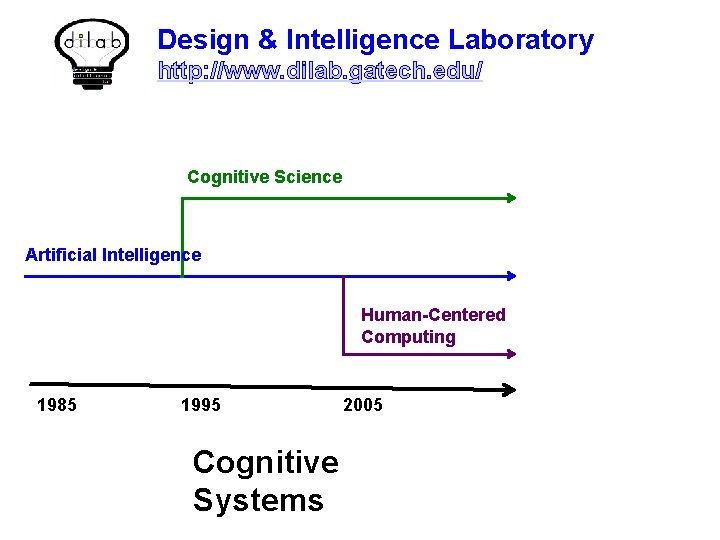
Design & Intelligence Laboratory http: //www. dilab. gatech. edu/ Cognitive Science Artificial Intelligence Human-Centered Computing 1985 1995 Cognitive Systems 2005
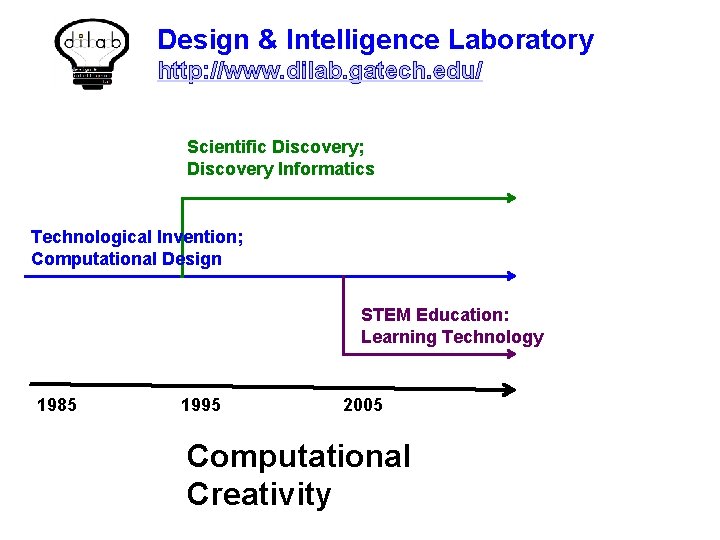
Design & Intelligence Laboratory http: //www. dilab. gatech. edu/ Scientific Discovery; Discovery Informatics Technological Invention; Computational Design STEM Education: Learning Technology 1985 1995 2005 Computational Creativity
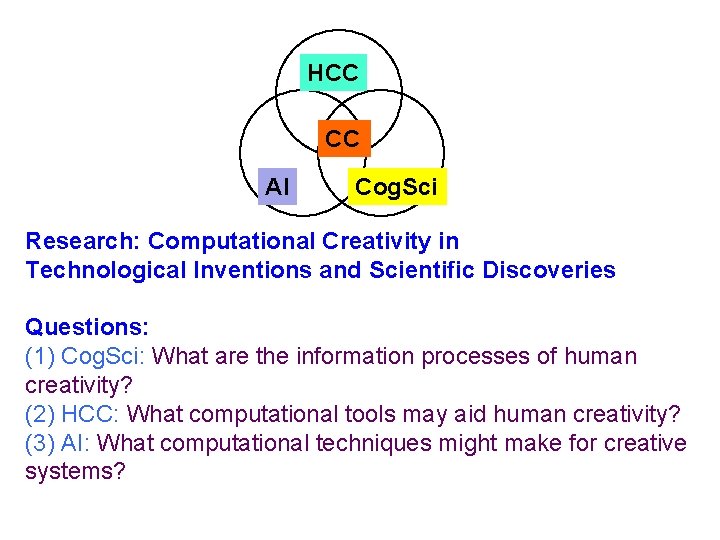
HCC CC AI Cog. Sci Research: Computational Creativity in Technological Inventions and Scientific Discoveries Questions: (1) Cog. Sci: What are the information processes of human creativity? (2) HCC: What computational tools may aid human creativity? (3) AI: What computational techniques might make for creative systems?
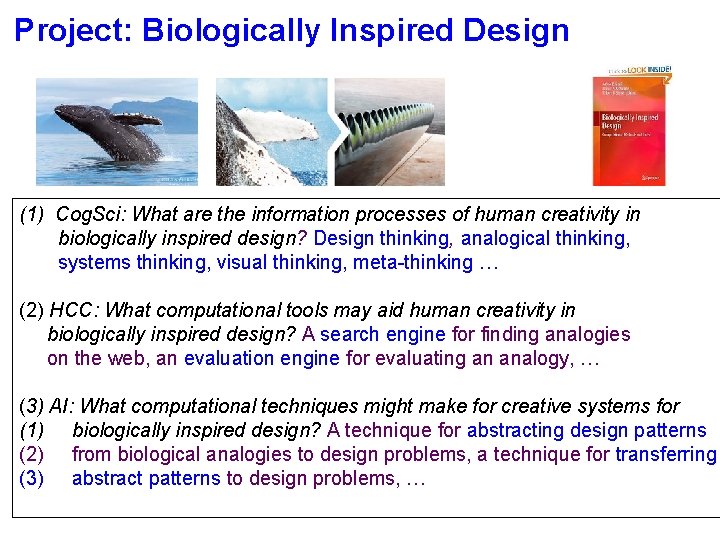
Project: Biologically Inspired Design (1) Cog. Sci: What are the information processes of human creativity in biologically inspired design? Design thinking, analogical thinking, systems thinking, visual thinking, meta-thinking … (2) HCC: What computational tools may aid human creativity in biologically inspired design? A search engine for finding analogies on the web, an evaluation engine for evaluating an analogy, … (3) AI: What computational techniques might make for creative systems for (1) biologically inspired design? A technique for abstracting design patterns (2) from biological analogies to design problems, a technique for transferring (3) abstract patterns to design problems, … Frank Fish, Liquid Life Laboratory, West Chester University
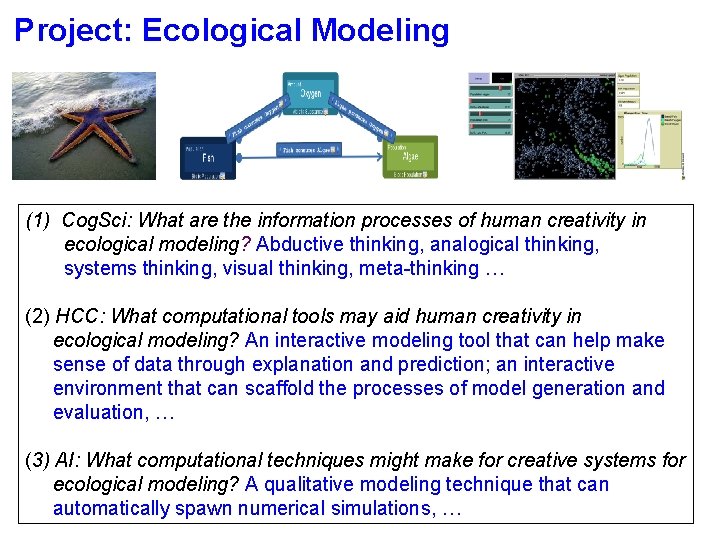
Project: Ecological Modeling (1) Cog. Sci: What are the information processes of human creativity in ecological modeling? Abductive thinking, analogical thinking, systems thinking, visual thinking, meta-thinking … (2) HCC: What computational tools may aid human creativity in ecological modeling? An interactive modeling tool that can help make sense of data through explanation and prediction; an interactive environment that can scaffold the processes of model generation and evaluation, … (3) AI: What computational techniques might make for creative systems for ecological modeling? A qualitative modeling technique that can automatically spawn numerical simulations, … Frank Fish, Liquid Life Laboratory, West Chester University
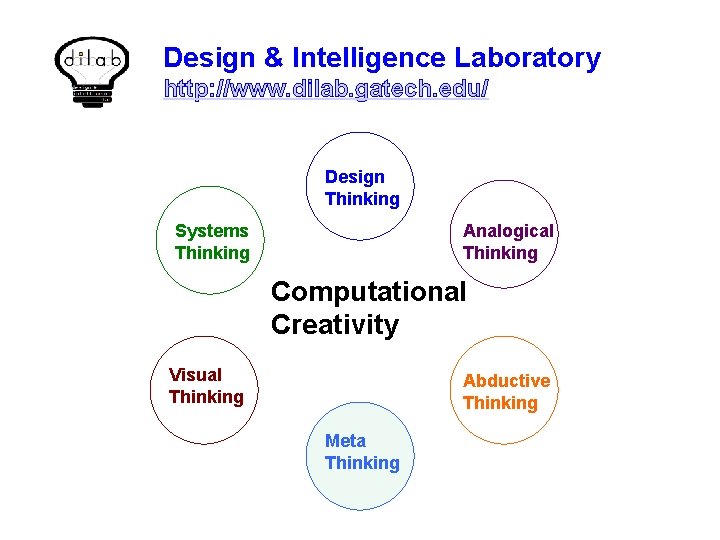
Design & Intelligence Laboratory http: //www. dilab. gatech. edu/ Design Thinking Systems Thinking Analogical Thinking Computational Creativity Visual Thinking Abductive Thinking Meta Thinking
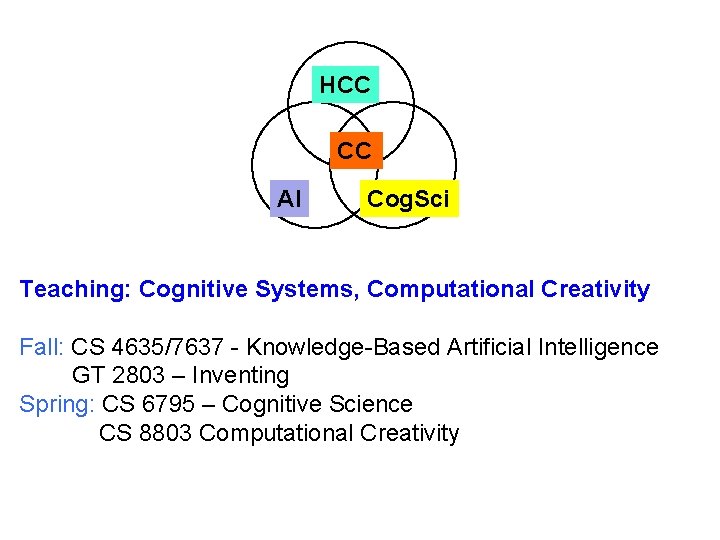
HCC CC AI Cog. Sci Teaching: Cognitive Systems, Computational Creativity Fall: CS 4635/7637 - Knowledge-Based Artificial Intelligence GT 2803 – Inventing Spring: CS 6795 – Cognitive Science CS 8803 Computational Creativity