APUSH Review Americas History Chapter 21 8 th
- Slides: 13
APUSH Review: America’s History, Chapter 21 (8 th Edition) Shout Out to Alex and the Milton APUSH class from Vermont. Thanks for your support, you ROCK!
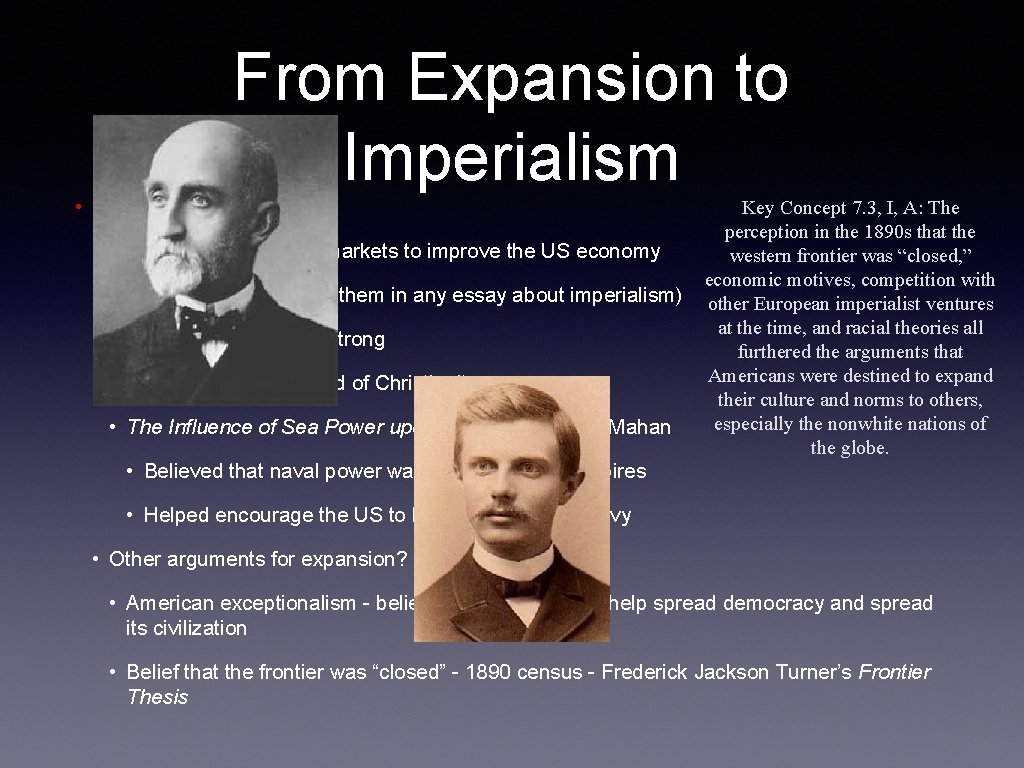
From Expansion to Imperialism • Foundations of Empire • Many sought overseas markets to improve the US economy • Two books to know (use them in any essay about imperialism) • Our Country - Josiah Strong • Advocated the spread of Christianity overseas • The Influence of Sea Power upon History - Alfred T. Mahan Key Concept 7. 3, I, A: The perception in the 1890 s that the western frontier was “closed, ” economic motives, competition with other European imperialist ventures at the time, and racial theories all furthered the arguments that Americans were destined to expand their culture and norms to others, especially the nonwhite nations of the globe. • Believed that naval power was a key to strong empires • Helped encourage the US to build a new, steel, Navy • Other arguments for expansion? • American exceptionalism - belief that the US should help spread democracy and spread its civilization • Belief that the frontier was “closed” - 1890 census - Frederick Jackson Turner’s Frontier Thesis
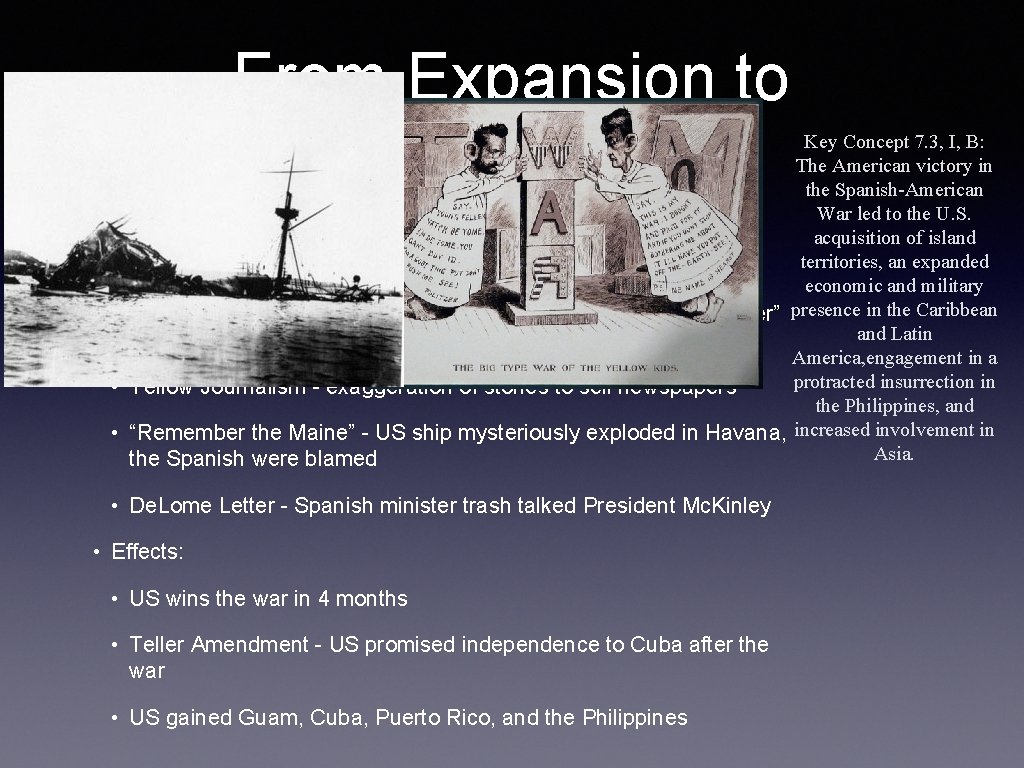
From Expansion to Imperialism Key Concept 7. 3, I, B: The American victory in the Spanish-American War led to the U. S. • The War of 1898 acquisition of island territories, an expanded • Causes: economic and military • Spanish placed Cubans in concentration camps, General “Butcher” presence in the Caribbean and Latin Weyler America, engagement in a protracted insurrection in • Yellow Journalism - exaggeration of stories to sell newspapers the Philippines, and • “Remember the Maine” - US ship mysteriously exploded in Havana, increased involvement in Asia. the Spanish were blamed • De. Lome Letter - Spanish minister trash talked President Mc. Kinley • Effects: • US wins the war in 4 months • Teller Amendment - US promised independence to Cuba after the war • US gained Guam, Cuba, Puerto Rico, and the Philippines
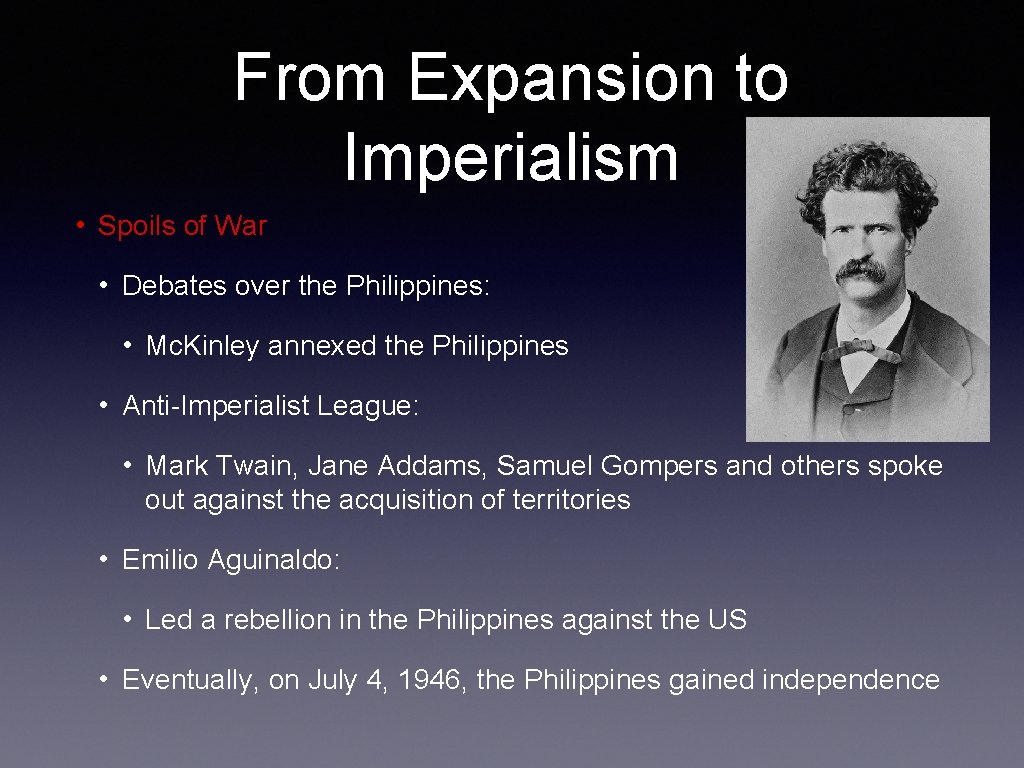
From Expansion to Imperialism • Spoils of War • Debates over the Philippines: • Mc. Kinley annexed the Philippines • Anti-Imperialist League: • Mark Twain, Jane Addams, Samuel Gompers and others spoke out against the acquisition of territories • Emilio Aguinaldo: • Led a rebellion in the Philippines against the US • Eventually, on July 4, 1946, the Philippines gained independence
A Power Among Powers • The Open Door in Asia • Secretary of State John Hay: • “Open Door Notes” - sought opportunity for all countries to have access to trade in China • Russo-Japanese War (1905) • Mediated by T. Roosevelt • Japan became an emerging world power • Root-Takahira Agreement: • US recognized Japan’s jurisdiction in Manchuria
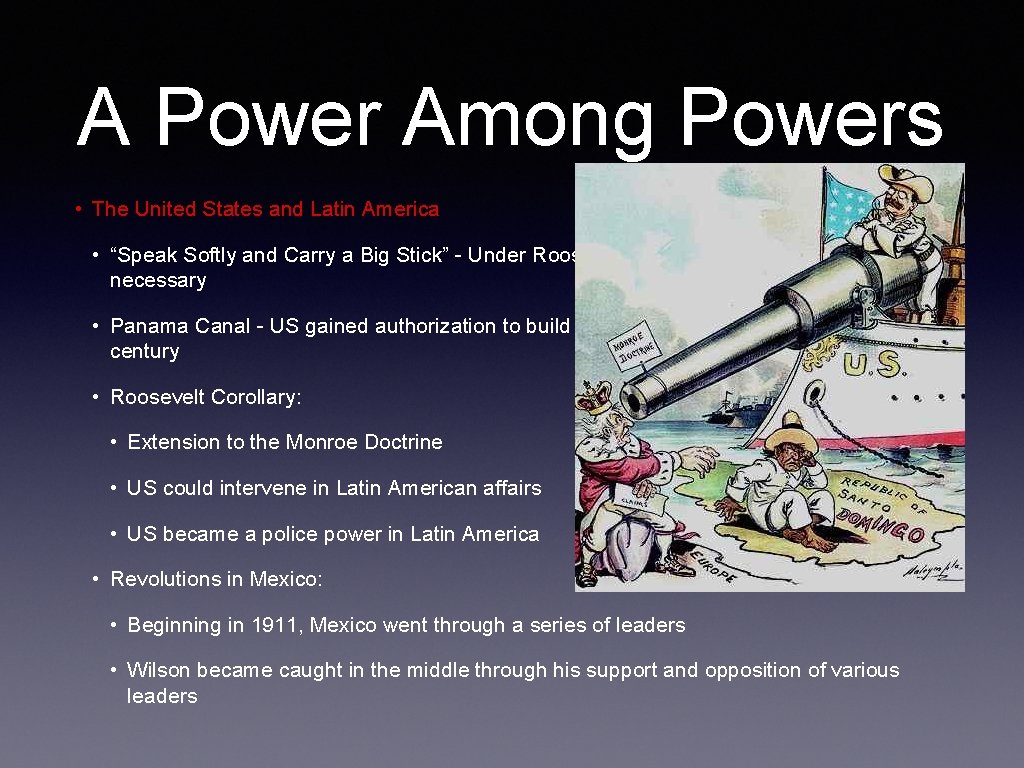
A Power Among Powers • The United States and Latin America • “Speak Softly and Carry a Big Stick” - Under Roosevelt, the US would use its new navy if necessary • Panama Canal - US gained authorization to build the canal and controlled it for the 20 th century • Roosevelt Corollary: • Extension to the Monroe Doctrine • US could intervene in Latin American affairs • US became a police power in Latin America • Revolutions in Mexico: • Beginning in 1911, Mexico went through a series of leaders • Wilson became caught in the middle through his support and opposition of various leaders
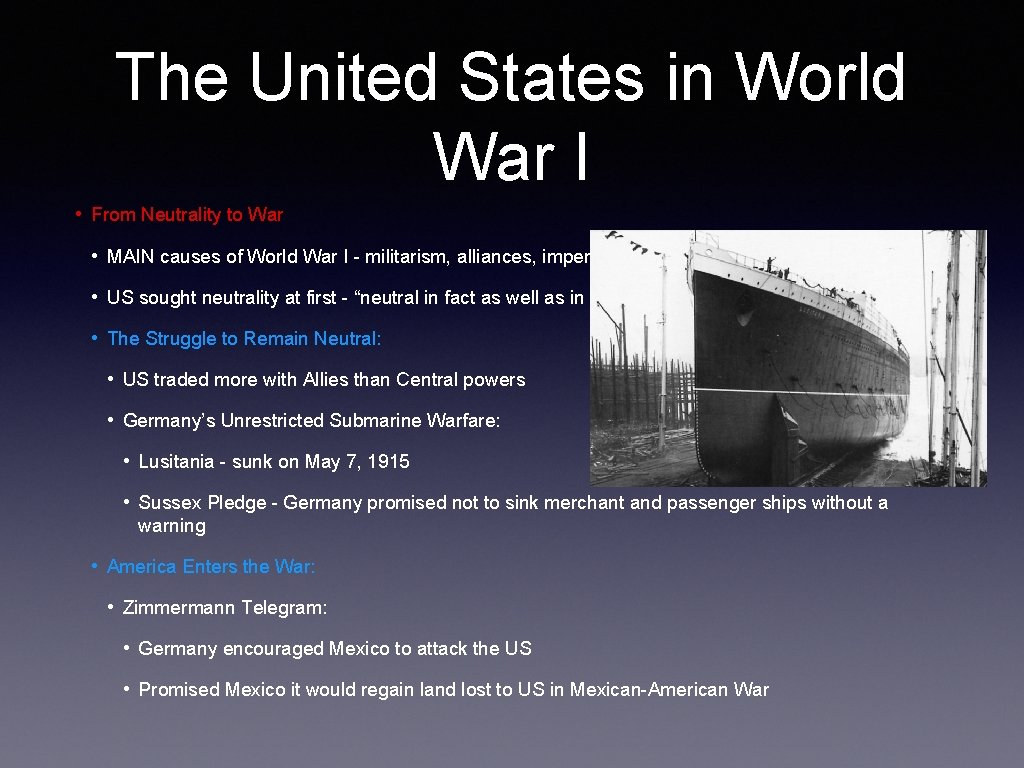
The United States in World War I • From Neutrality to War • MAIN causes of World War I - militarism, alliances, imperialism, nationalism • US sought neutrality at first - “neutral in fact as well as in name” • The Struggle to Remain Neutral: • US traded more with Allies than Central powers • Germany’s Unrestricted Submarine Warfare: • Lusitania - sunk on May 7, 1915 • Sussex Pledge - Germany promised not to sink merchant and passenger ships without a warning • America Enters the War: • Zimmermann Telegram: • Germany encouraged Mexico to attack the US • Promised Mexico it would regain land lost to US in Mexican-American War
The United States in World War I • “Over There” • Americans Join the War • Congress instituted conscription (draft) • American Expeditionary Force (AEF) • US joined fighting in 1917 • Bolshevik Revolution (1917) • Russia became communist, withdrew from WWI • 11/11/18 - armistice to end fighting • The American Fighting Force • 4 million men were in the military during WWI - 10% were African American • Fought in segregated units, excluded from victory parade in Paris • Influenza killed as many as 50 million after WWI worldwide
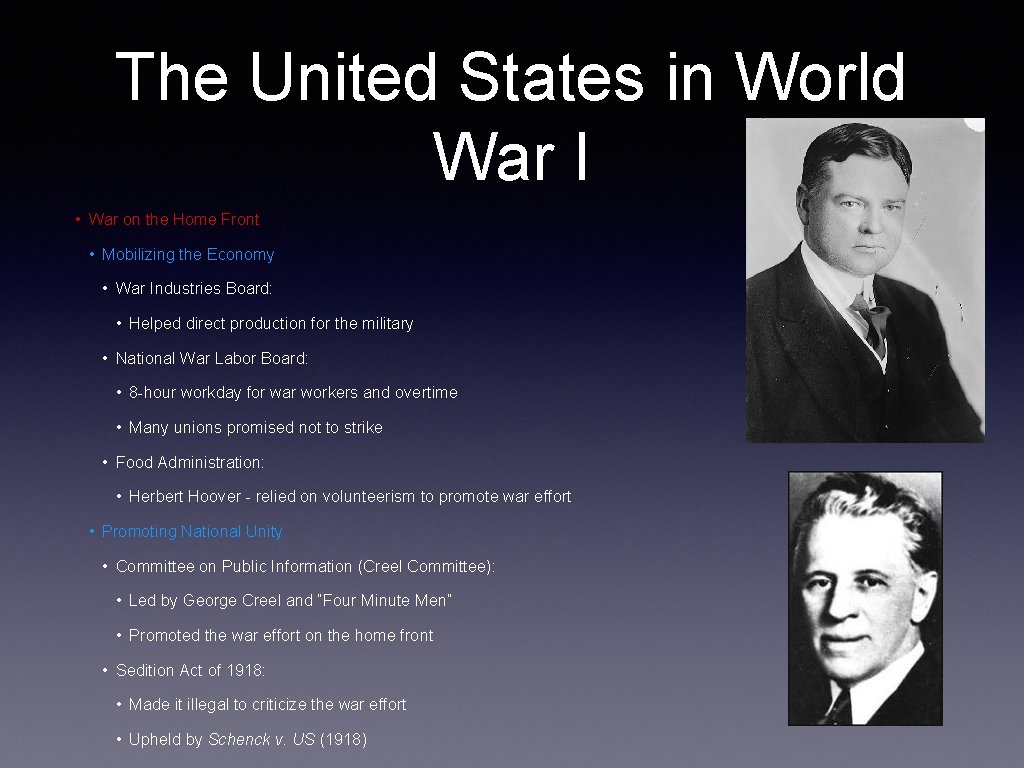
The United States in World War I • War on the Home Front • Mobilizing the Economy • War Industries Board: • Helped direct production for the military • National War Labor Board: • 8 -hour workday for war workers and overtime • Many unions promised not to strike • Food Administration: • Herbert Hoover - relied on volunteerism to promote war effort • Promoting National Unity • Committee on Public Information (Creel Committee): • Led by George Creel and “Four Minute Men” • Promoted the war effort on the home front • Sedition Act of 1918: • Made it illegal to criticize the war effort • Upheld by Schenck v. US (1918)
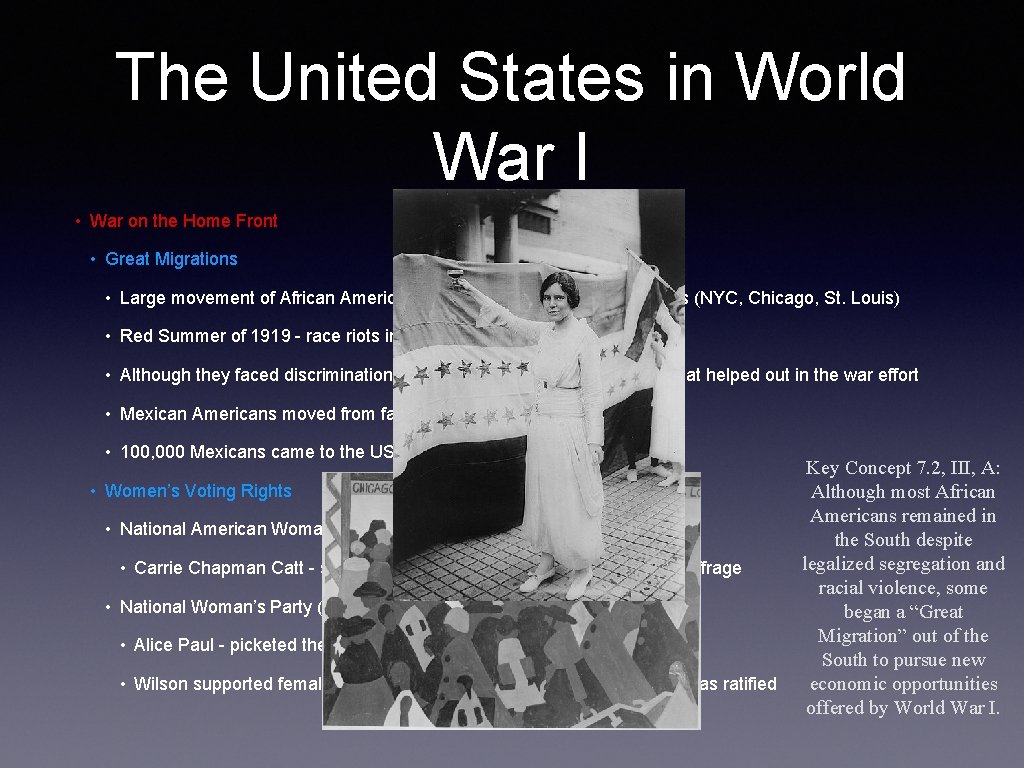
The United States in World War I • War on the Home Front • Great Migrations • Large movement of African Americans from the South to Northern cities (NYC, Chicago, St. Louis) • Red Summer of 1919 - race riots in many northern cities • Although they faced discrimination, many blacks benefitted from jobs that helped out in the war effort • Mexican Americans moved from farms to cities to work in factories • 100, 000 Mexicans came to the US between 1917 and 1920 • Women’s Voting Rights • National American Woman. Suffrage Association (NAWSA): • Carrie Chapman Catt - supported the war effort in the hopes to gain suffrage • National Woman’s Party (NWP): • Alice Paul - picketed the White House, went on a hunger strike • Wilson supported female suffrage, and in 1920, the 19 th amendment was ratified Key Concept 7. 2, III, A: Although most African Americans remained in the South despite legalized segregation and racial violence, some began a “Great Migration” out of the South to pursue new economic opportunities offered by World War I.
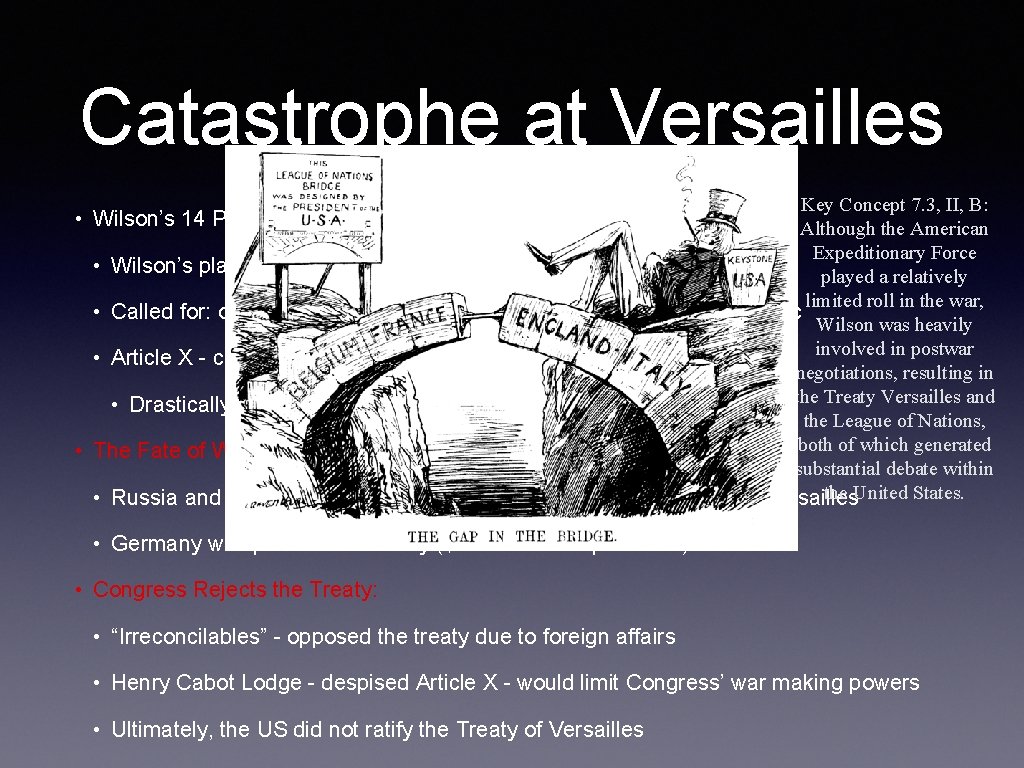
Catastrophe at Versailles Key Concept 7. 3, II, B: • Wilson’s 14 Points: Although the American Expeditionary Force • Wilson’s plans for post World War I played a relatively limited roll in the war, • Called for: open diplomacy, arms reduction, free trade, sovereignty, etc Wilson was heavily involved in postwar • Article X - called for the creation of the League of Nations negotiations, resulting in the Treaty Versailles and • Drastically different than Washington’s Farewell Address the League of Nations, both of which generated • The Fate of Wilson’s Ideas: substantial debate within the United States. • Russia and Germany were excluded from the peace conference at Versailles • Germany was punished severely ($33 billion in reparations) • Congress Rejects the Treaty: • “Irreconcilables” - opposed the treaty due to foreign affairs • Henry Cabot Lodge - despised Article X - would limit Congress’ war making powers • Ultimately, the US did not ratify the Treaty of Versailles
Quick Recap • Arguments for overseas expansion - Alfred T. Mahan • Debates over Philippines and expansion • Roosevelt Corollary • Reasons for US entrance into WWI • Creel Committee • Great Migration • Schenck v. US (1919) • ***14 Points, Treaty of Versailles***
See You Back Here for chapter 22! • Thanks for Watching • Please subscribe, share with others • Check out all my videos related to the new curriculum • Best of luck on all your tests!