Answering Questions Questions in the tUd form n
- Slides: 11
Answering Questions
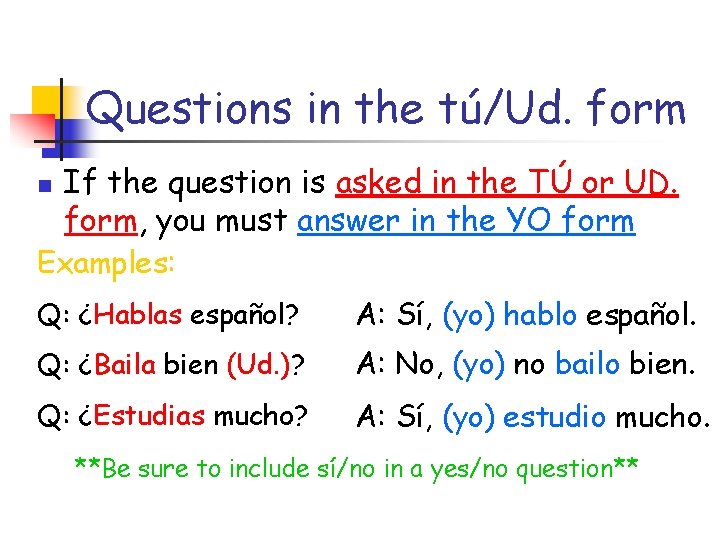
Questions in the tú/Ud. form n If the question is asked in the TÚ or UD. form, you must answer in the YO form Examples: Q: ¿Hablas español? A: Sí, (yo) hablo español. Q: ¿Baila bien (Ud. )? A: No, (yo) no bailo bien. Q: ¿Estudias mucho? A: Sí, (yo) estudio mucho. **Be sure to include sí/no in a yes/no question**
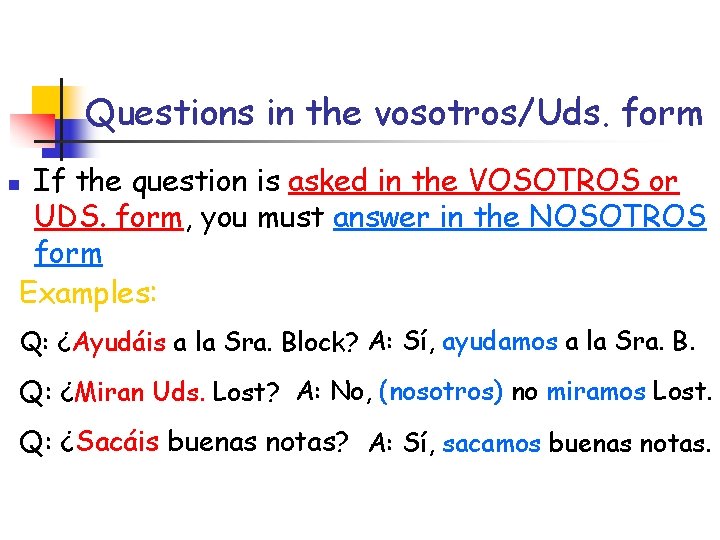
Questions in the vosotros/Uds. form If the question is asked in the VOSOTROS or UDS. form, you must answer in the NOSOTROS form Examples: n Q: ¿Ayudáis a la Sra. Block? A: Sí, ayudamos a la Sra. B. Q: ¿Miran Uds. Lost? A: No, (nosotros) no miramos Lost. Q: ¿Sacáis buenas notas? A: Sí, sacamos buenas notas.
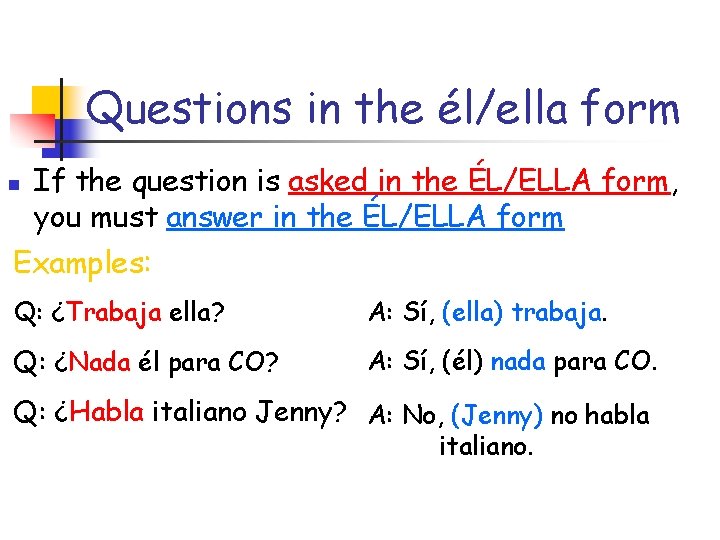
Questions in the él/ella form n If the question is asked in the ÉL/ELLA form, you must answer in the ÉL/ELLA form Examples: Q: ¿Trabaja ella? A: Sí, (ella) trabaja. Q: ¿Nada él para CO? A: Sí, (él) nada para CO. Q: ¿Habla italiano Jenny? A: No, (Jenny) no habla italiano.
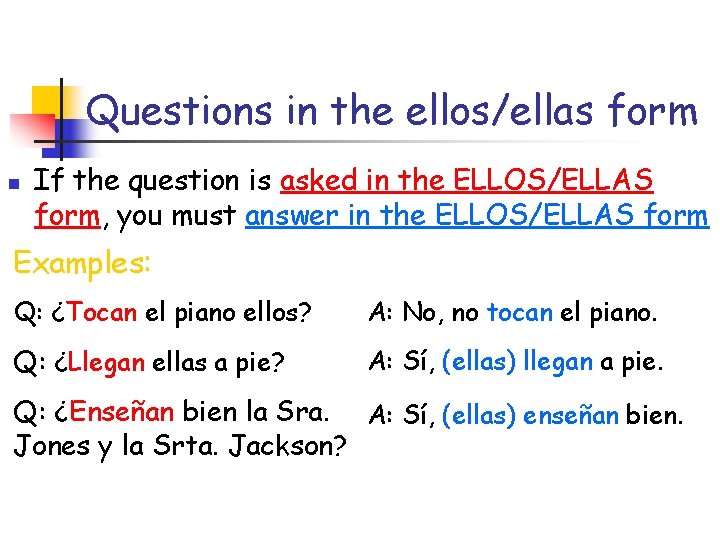
Questions in the ellos/ellas form n If the question is asked in the ELLOS/ELLAS form, you must answer in the ELLOS/ELLAS form Examples: Q: ¿Tocan el piano ellos? A: No, no tocan el piano. Q: ¿Llegan ellas a pie? A: Sí, (ellas) llegan a pie. Q: ¿Enseñan bien la Sra. A: Sí, (ellas) enseñan bien. Jones y la Srta. Jackson?
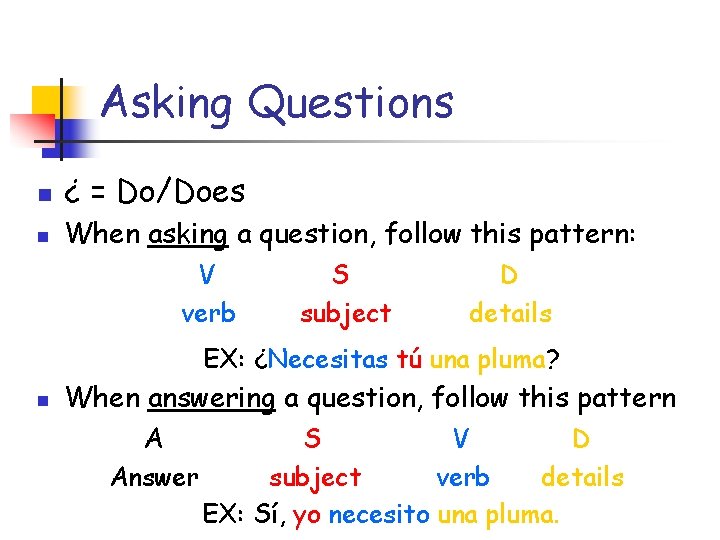
Asking Questions n ¿ = Do/Does n When asking a question, follow this pattern: V verb S subject D details EX: ¿Necesitas tú una pluma? n When answering a question, follow this pattern A S V D Answer subject verb details EX: Sí, yo necesito una pluma.
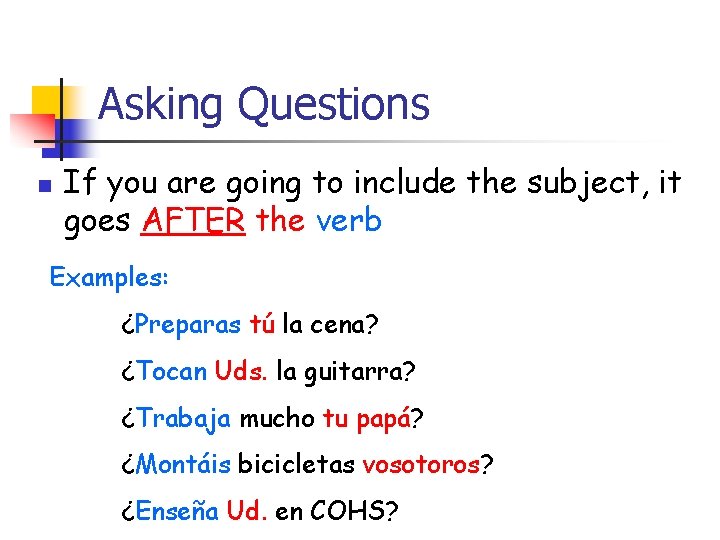
Asking Questions n If you are going to include the subject, it goes AFTER the verb Examples: ¿Preparas tú la cena? ¿Tocan Uds. la guitarra? ¿Trabaja mucho tu papá? ¿Montáis bicicletas vosotoros? ¿Enseña Ud. en COHS?
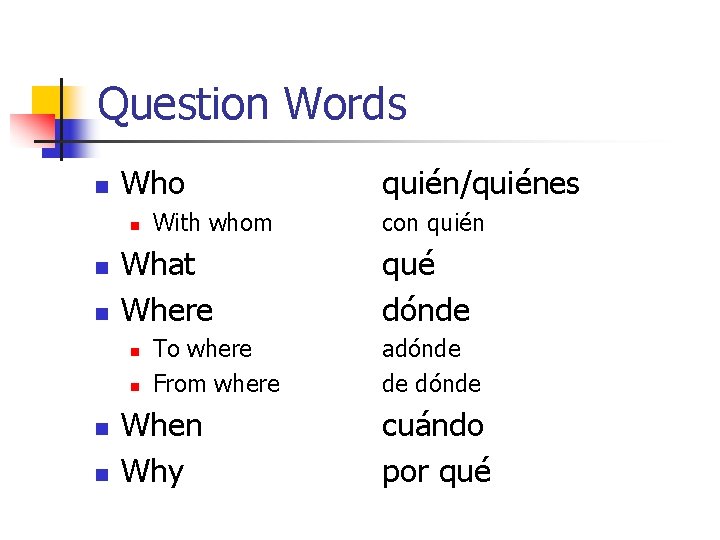
Question Words n Who n n n What Where n n With whom To where From where When Why quién/quiénes con quién qué dónde adónde de dónde cuándo por qué
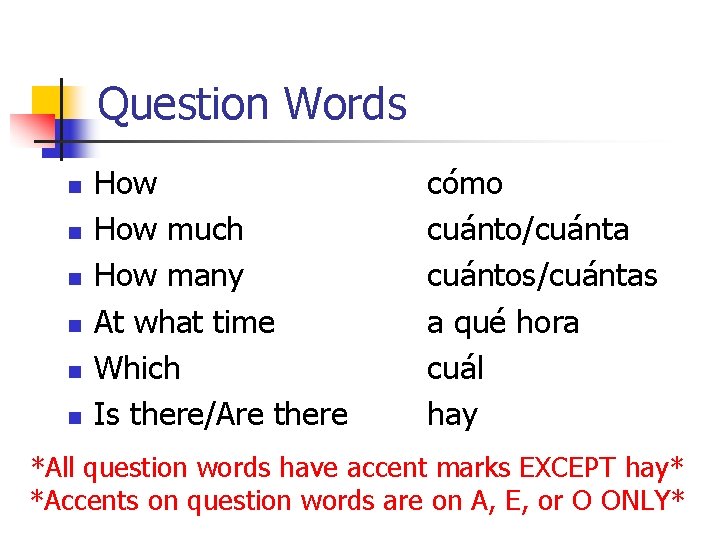
Question Words n n n How much How many At what time Which Is there/Are there cómo cuánto/cuánta cuántos/cuántas a qué hora cuál hay *All question words have accent marks EXCEPT hay* *Accents on question words are on A, E, or O ONLY*
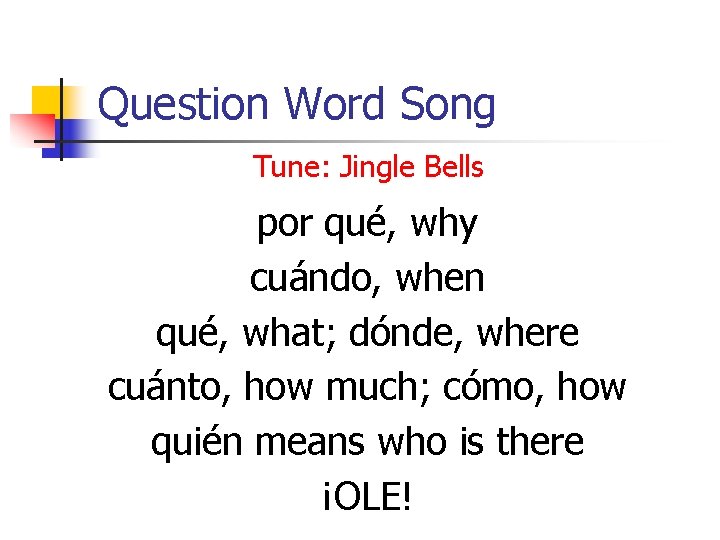
Question Word Song Tune: Jingle Bells por qué, why cuándo, when qué, what; dónde, where cuánto, how much; cómo, how quién means who is there ¡OLE!
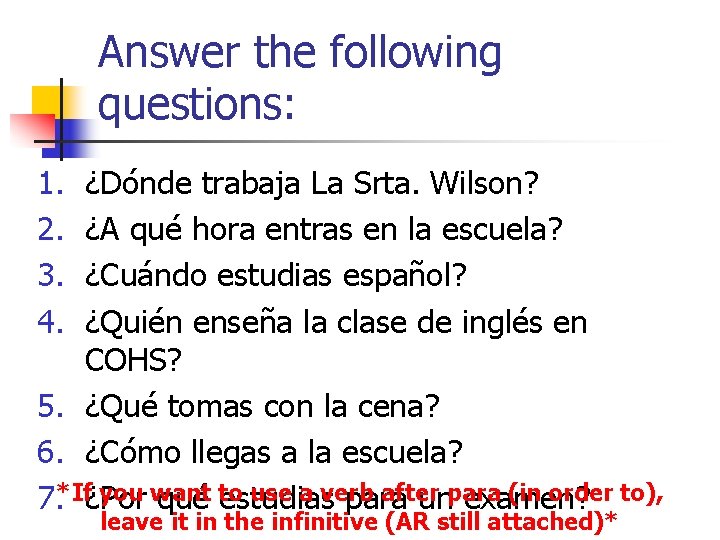
Answer the following questions: 1. 2. 3. 4. ¿Dónde trabaja La Srta. Wilson? ¿A qué hora entras en la escuela? ¿Cuándo estudias español? ¿Quién enseña la clase de inglés en COHS? 5. ¿Qué tomas con la cena? 6. ¿Cómo llegas a la escuela? you want use a verb after (in order to), 7. *If¿Por qué to estudias para unpara examen? leave it in the infinitive (AR still attached)*