Ancient China Xia Dynasty to Era of Warring


- Slides: 20
Ancient China Xia Dynasty to Era of Warring States
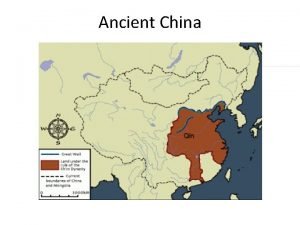
China 1 st Cities 1, 500 yrs. After Ur First signs of Chinese Civilization 3, 500 yrs. ago along Huang He(Yellow) River Later along Yangtze River “Longest Enduring” Civilization Geographically Isolated East- Pacific Ocean West- Takla Makan Desert Southwest- Himalaya Mountains North- Warlike, Nomadic Barbarians of the Steppes
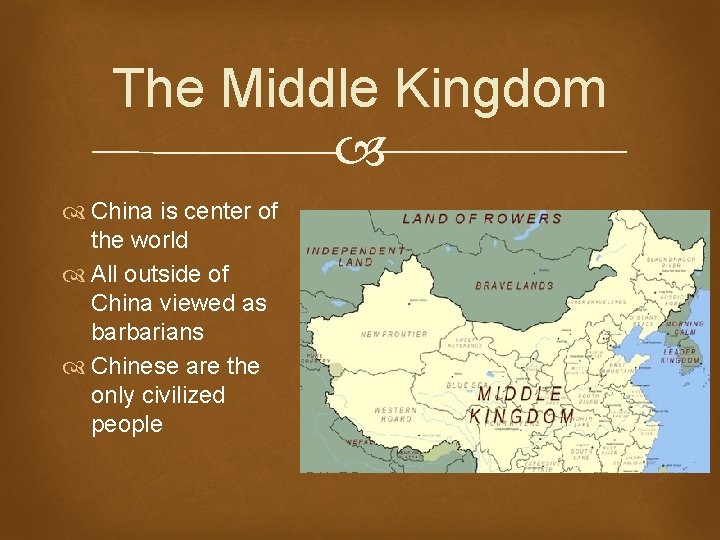
The Middle Kingdom China is center of the world All outside of China viewed as barbarians Chinese are the only civilized people
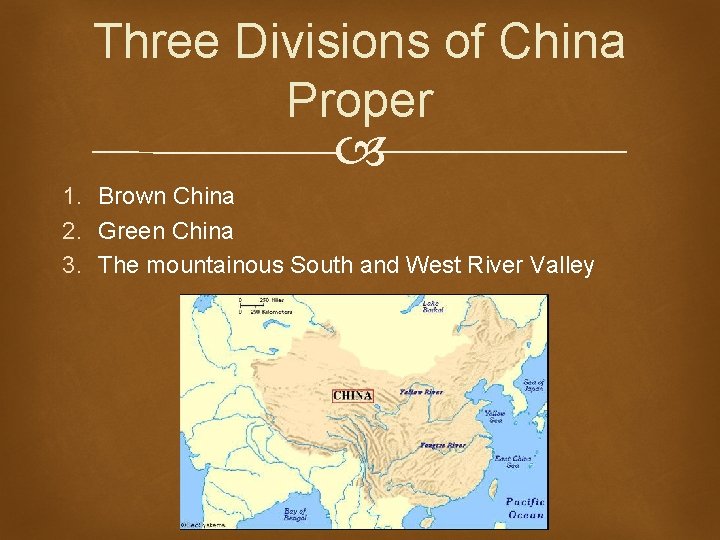
Three Divisions of China Proper 1. Brown China 2. Green China 3. The mountainous South and West River Valley
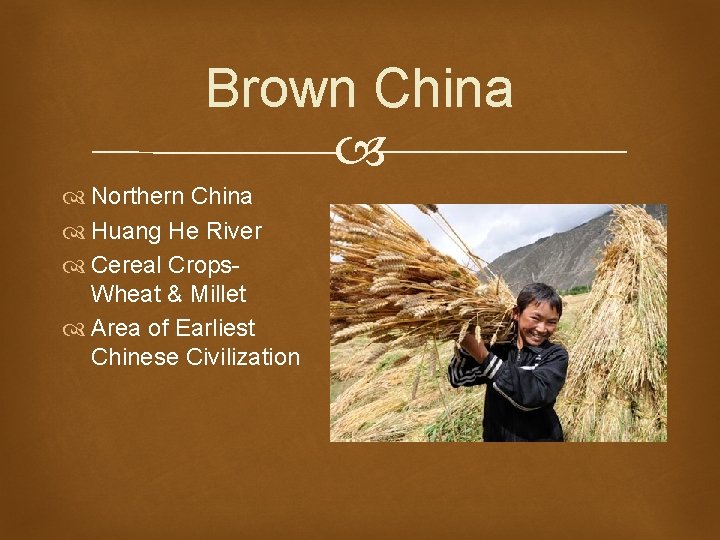
Brown China Northern China Huang He River Cereal Crops. Wheat & Millet Area of Earliest Chinese Civilization
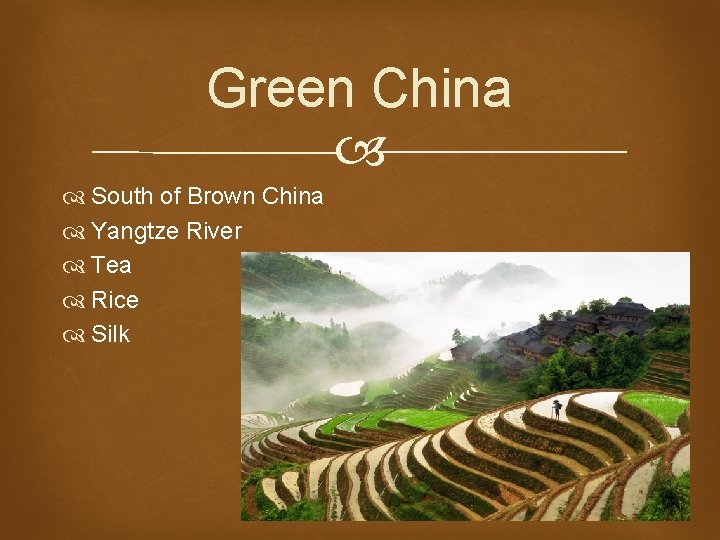
Green China South of Brown China Yangtze River Tea Rice Silk
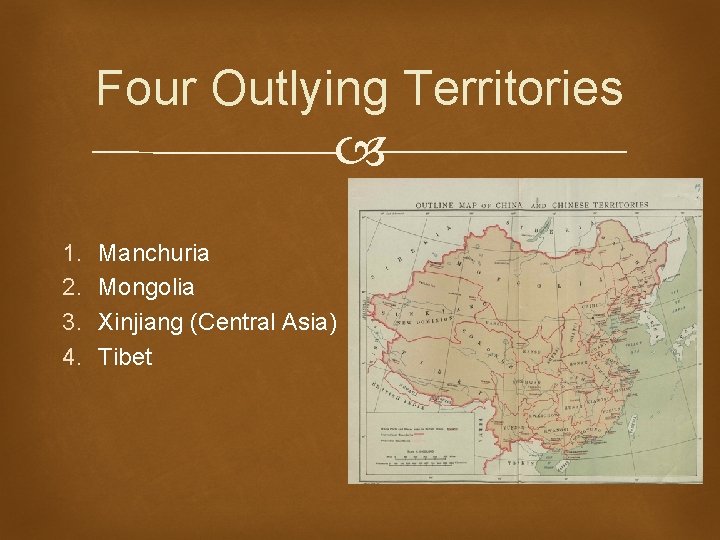
Four Outlying Territories 1. 2. 3. 4. Manchuria Mongolia Xinjiang (Central Asia) Tibet
Xia Dynasty Legendary Dynasty Little evidence other than mention in writings from later dynasties
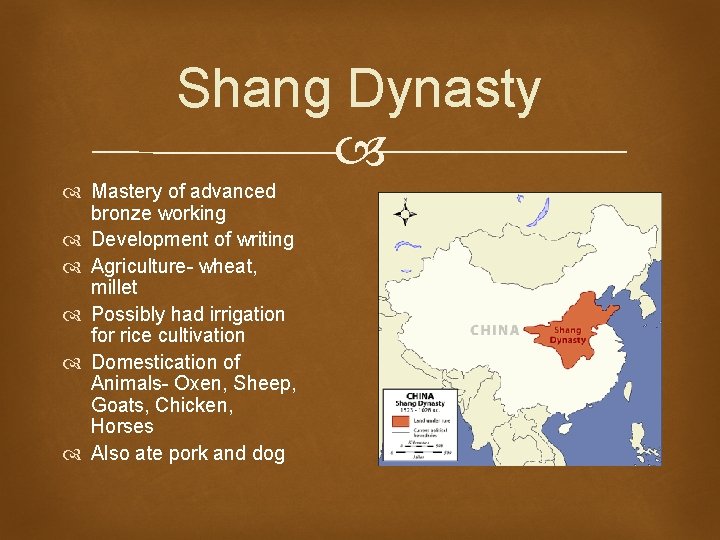
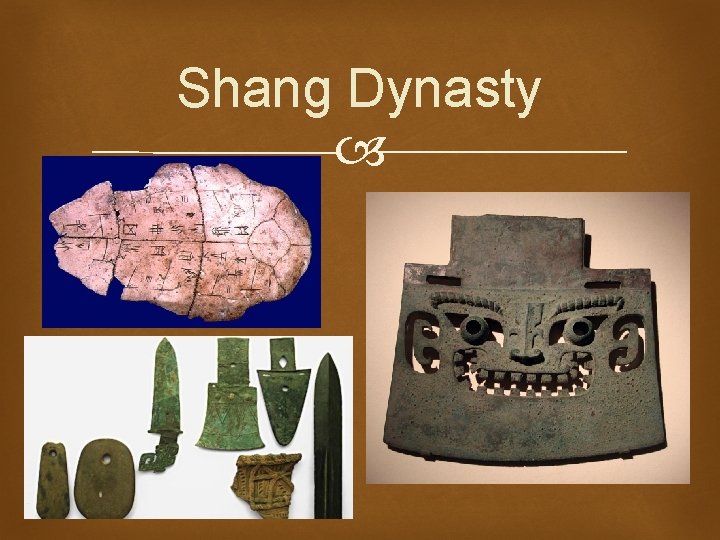
Shang Dynasty Mastery of advanced bronze working Development of writing Agriculture- wheat, millet Possibly had irrigation for rice cultivation Domestication of Animals- Oxen, Sheep, Goats, Chicken, Horses Also ate pork and dog
Shang Dynasty
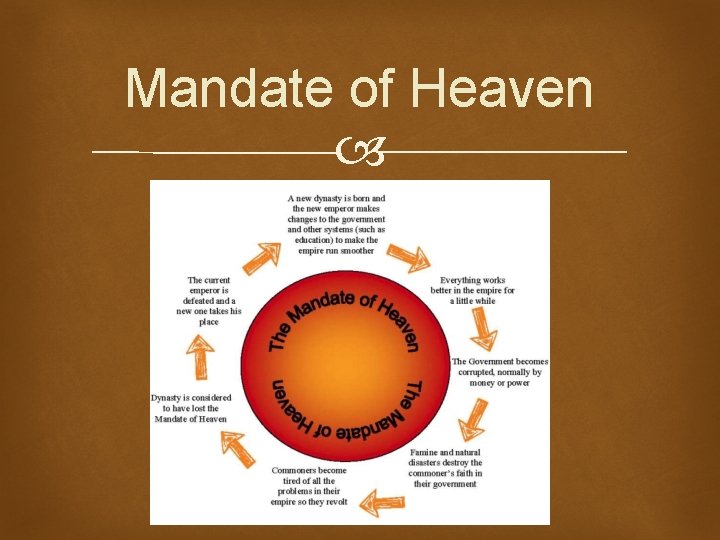
Mandate of Heaven
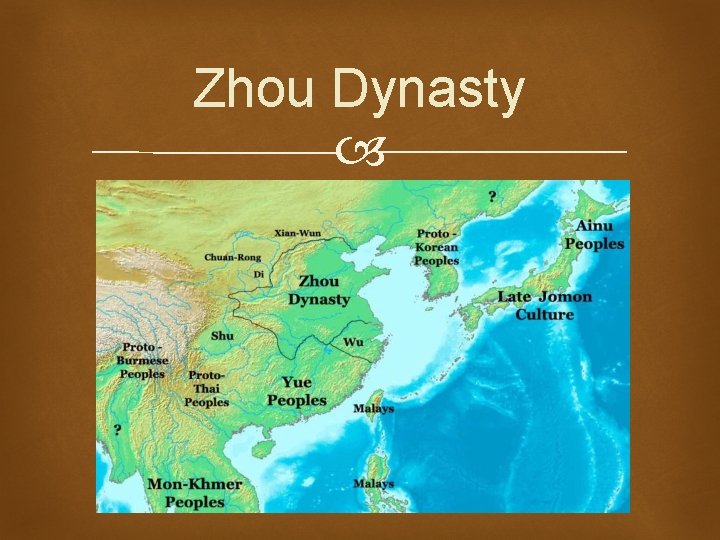
Zhou Dynasty
Zhou Dynasty Overthrow Shang c. 12 th century BCE Used Mandate of Heaven to legitimize rule Originally from further west of Shang territory Kept written records of rule: tax rolls, import/export lists, historical accounts of rulers Western Zhou- (11 th-8 th centuries BCE) capital cities in west Eastern Zhou- (8 th-5 th centuries BCE) capital moved east to Luoyang Expanded territory beyond boundaries of the Shang Ruled through decentralized loyalties with local leaders retaining much autonomy (semi-feudal) Growing reliance of professional bureaucrats, shi (men of service)
Major Social Classes of the Shang & Zhou The Elites Free Artisans and Craftsmen Merchants and Traders Peasants Slaves
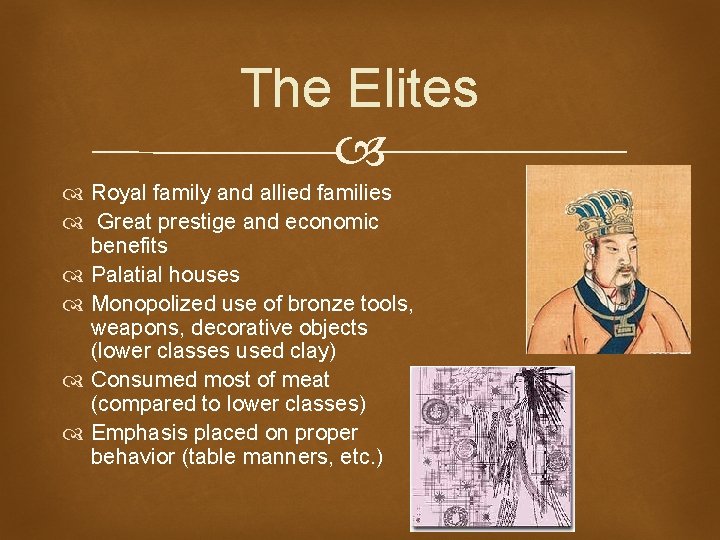
The Elites Royal family and allied families Great prestige and economic benefits Palatial houses Monopolized use of bronze tools, weapons, decorative objects (lower classes used clay) Consumed most of meat (compared to lower classes) Emphasis placed on proper behavior (table manners, etc. )
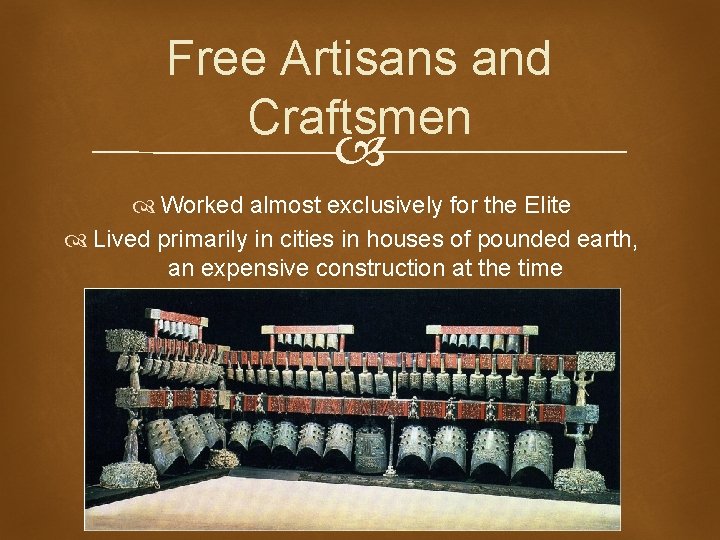
Free Artisans and Craftsmen Worked almost exclusively for the Elite Lived primarily in cities in houses of pounded earth, an expensive construction at the time
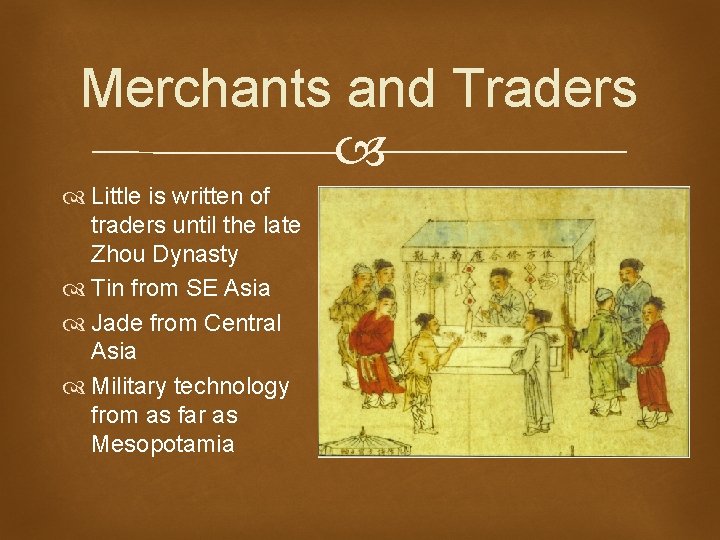
Merchants and Traders Little is written of traders until the late Zhou Dynasty Tin from SE Asia Jade from Central Asia Military technology from as far as Mesopotamia
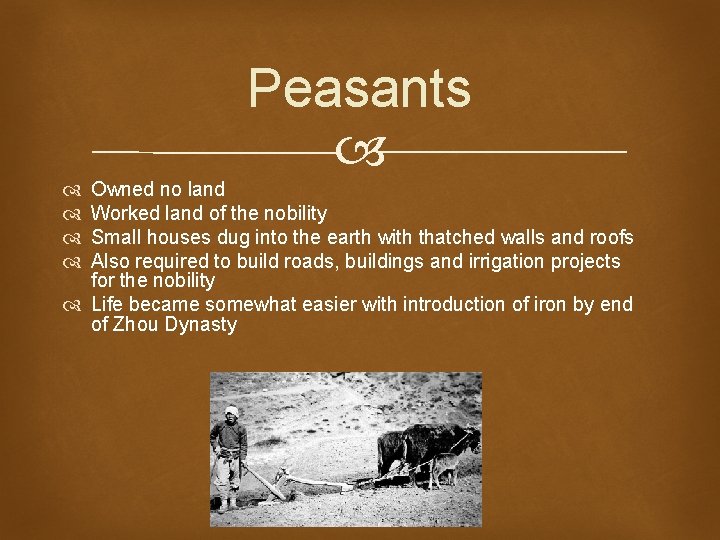
Peasants Owned no land Worked land of the nobility Small houses dug into the earth with thatched walls and roofs Also required to build roads, buildings and irrigation projects for the nobility Life became somewhat easier with introduction of iron by end of Zhou Dynasty
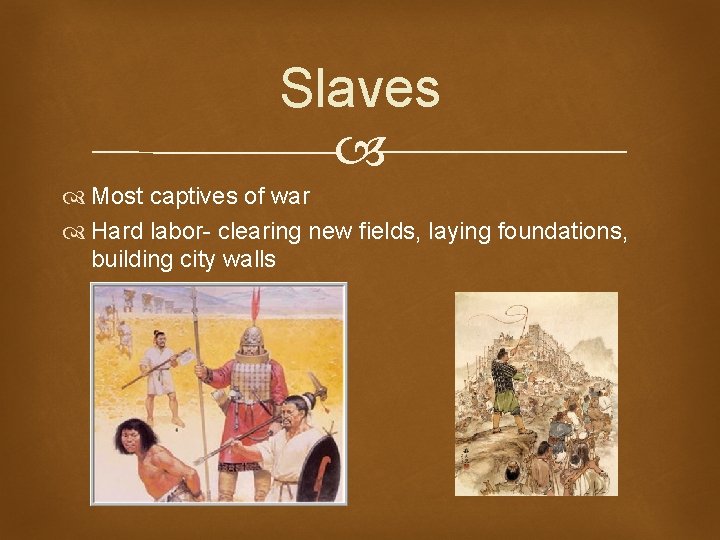
Slaves Most captives of war Hard labor- clearing new fields, laying foundations, building city walls
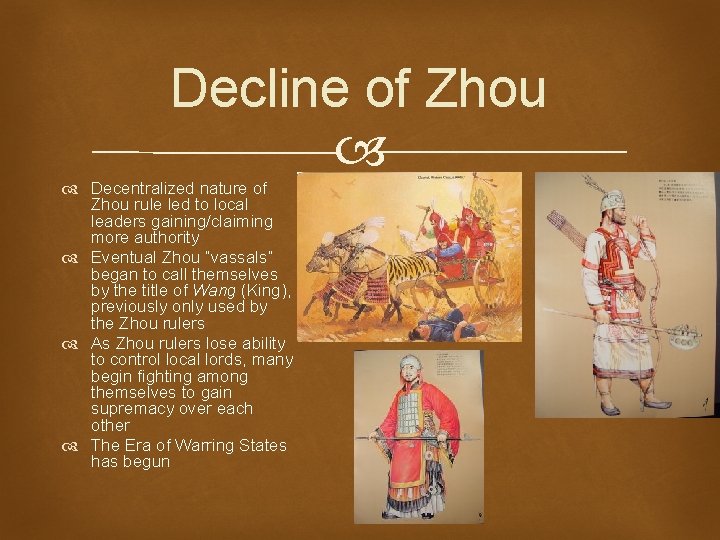
Decline of Zhou Decentralized nature of Zhou rule led to local leaders gaining/claiming more authority Eventual Zhou “vassals” began to call themselves by the title of Wang (King), previously only used by the Zhou rulers As Zhou rulers lose ability to control local lords, many begin fighting among themselves to gain supremacy over each other The Era of Warring States has begun